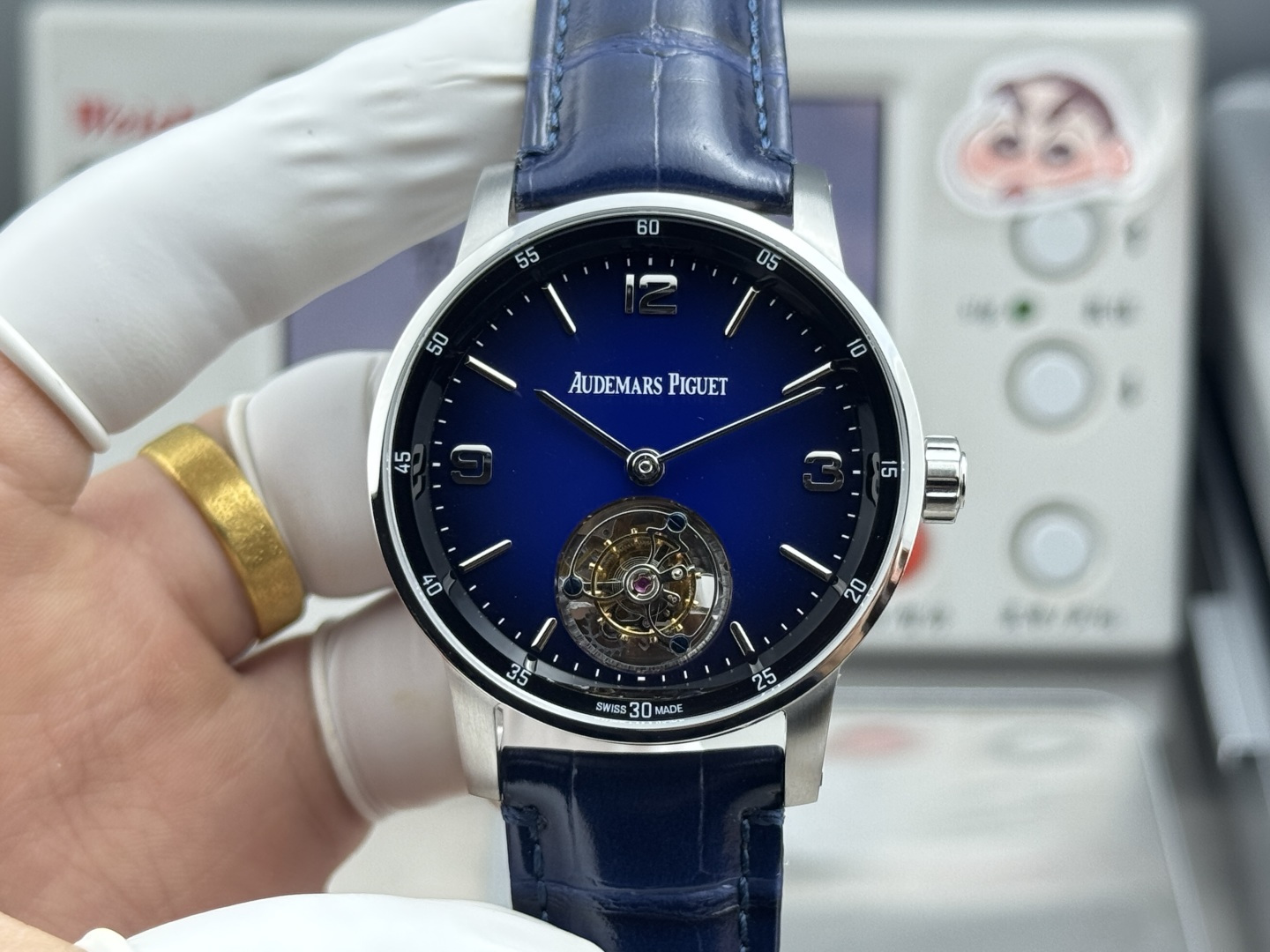
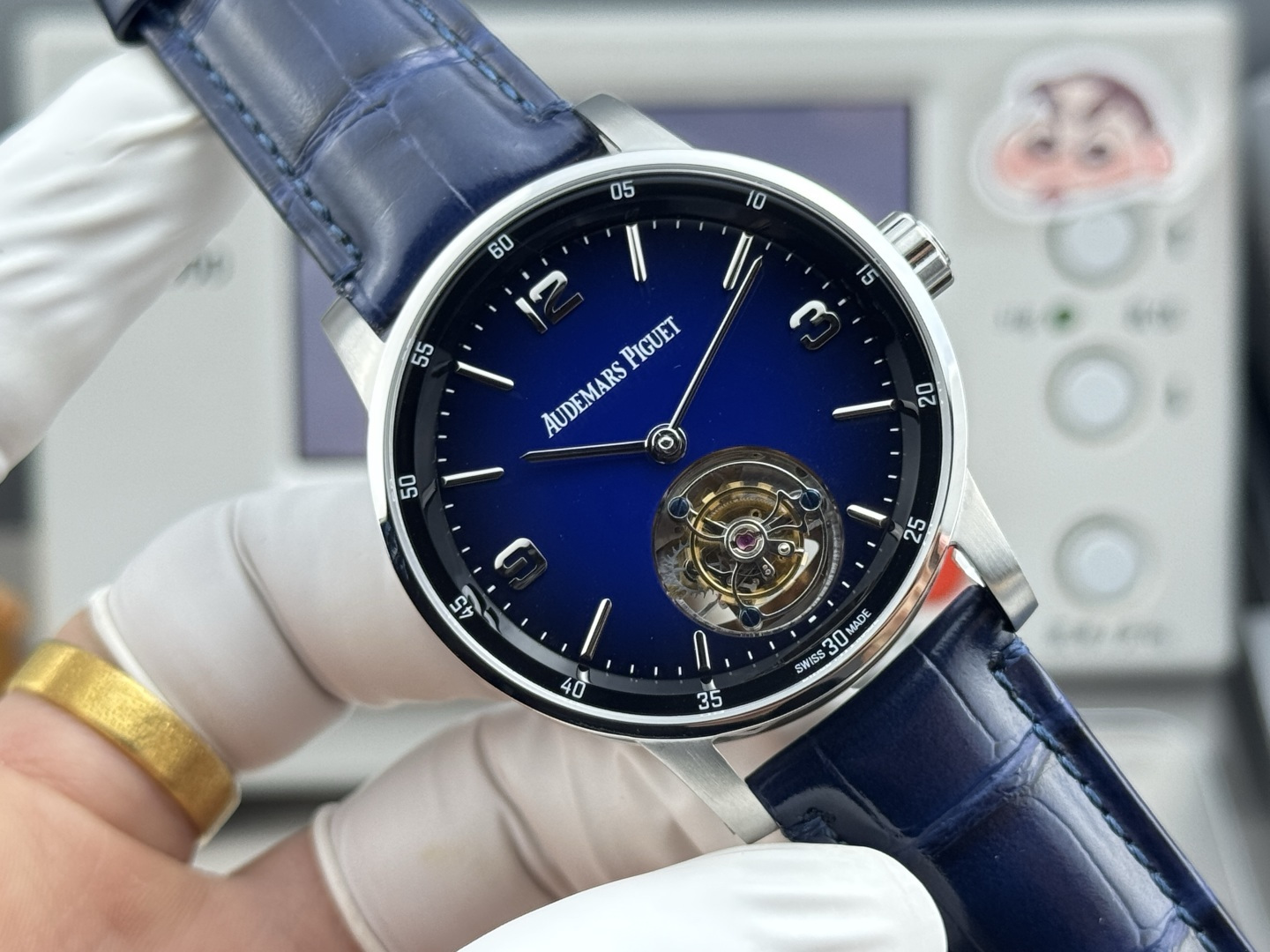
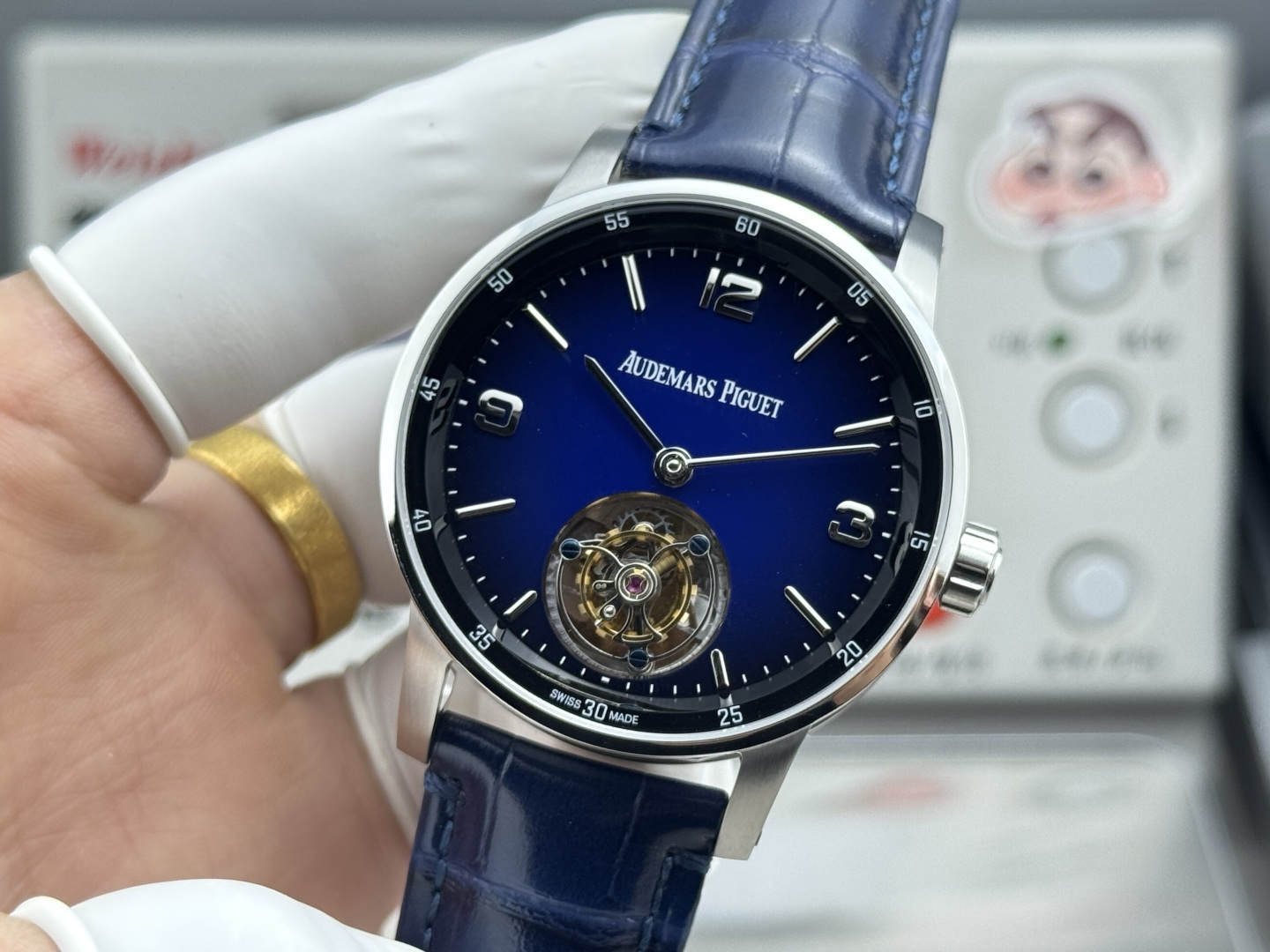
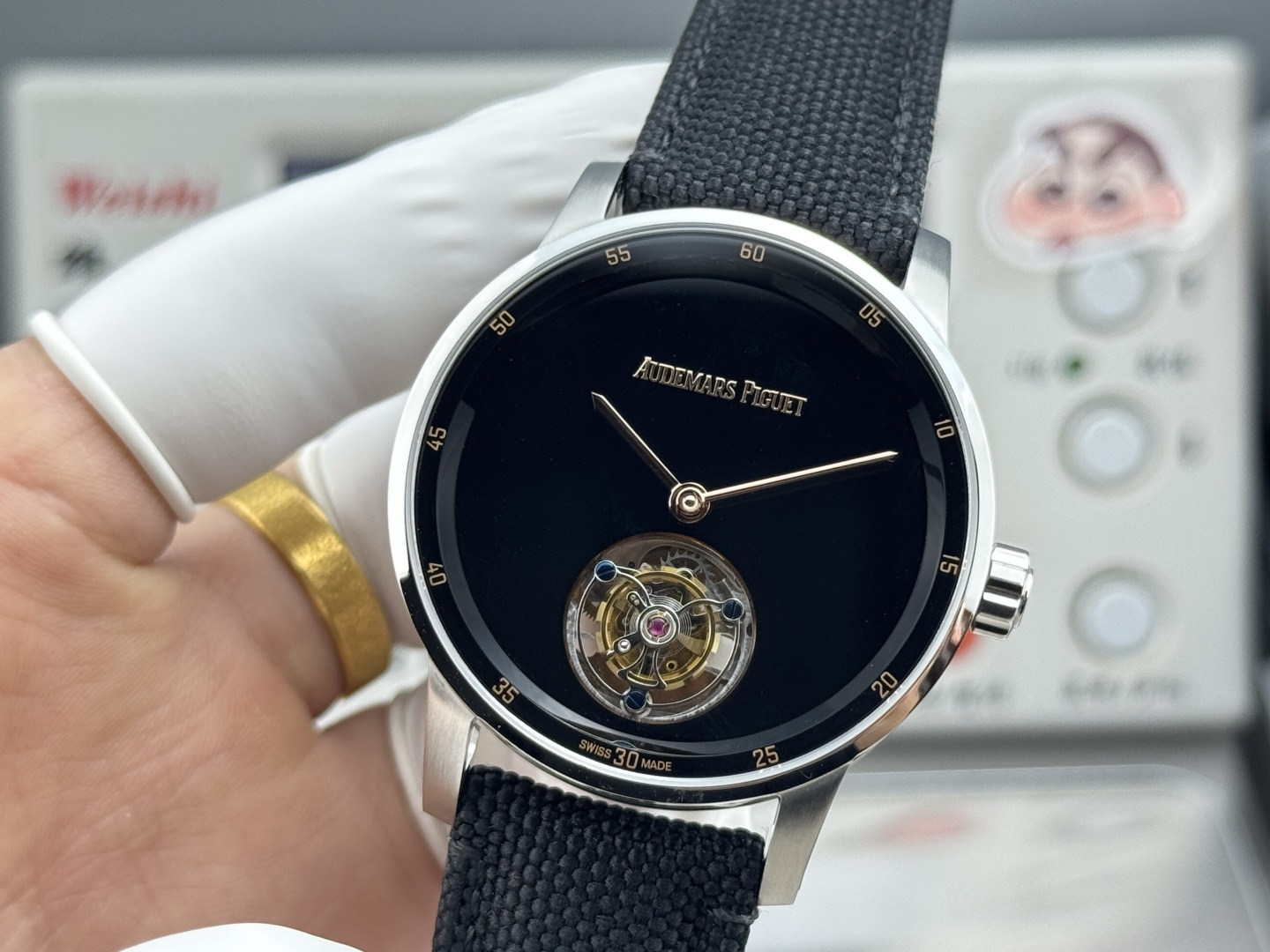
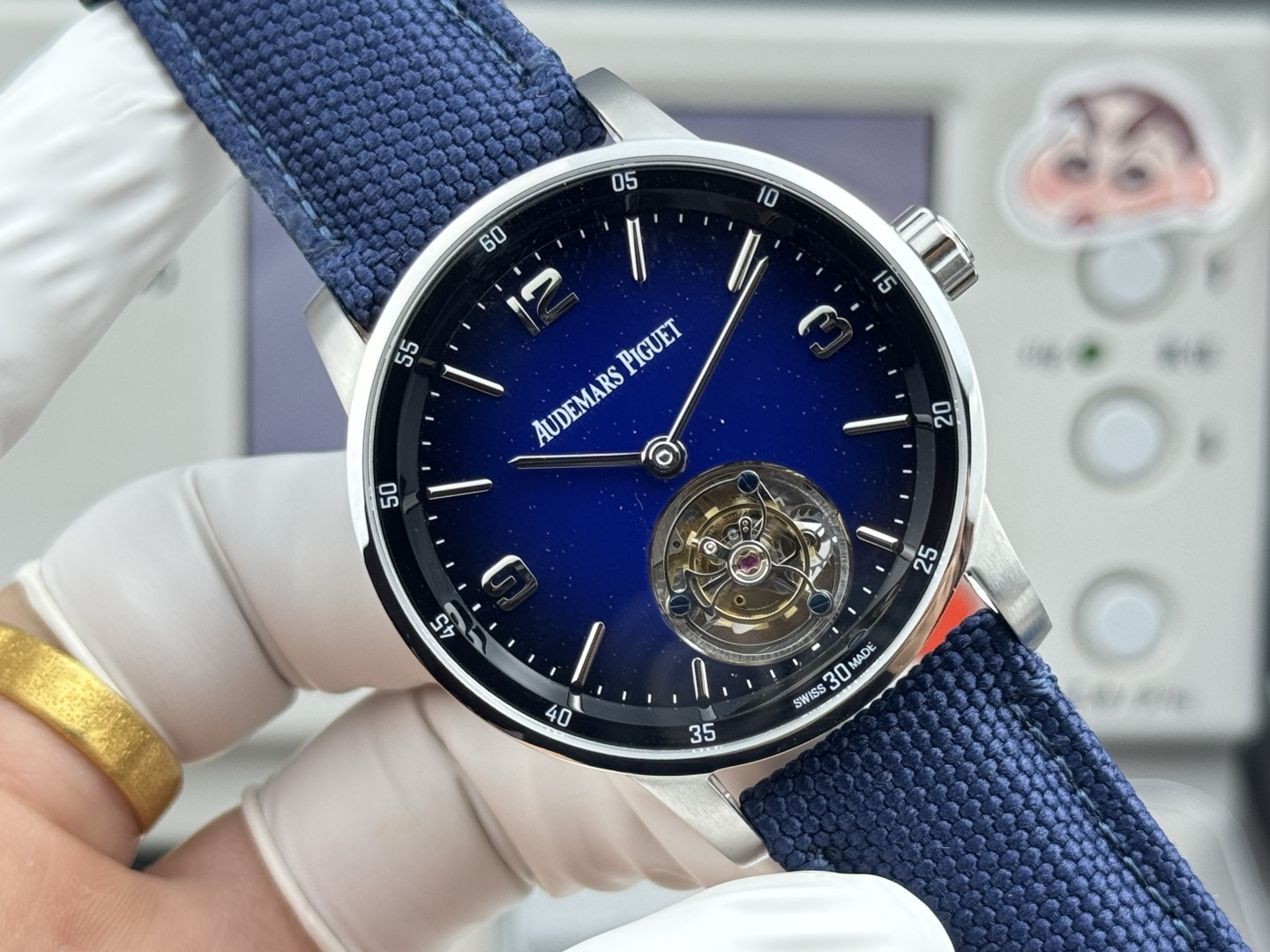
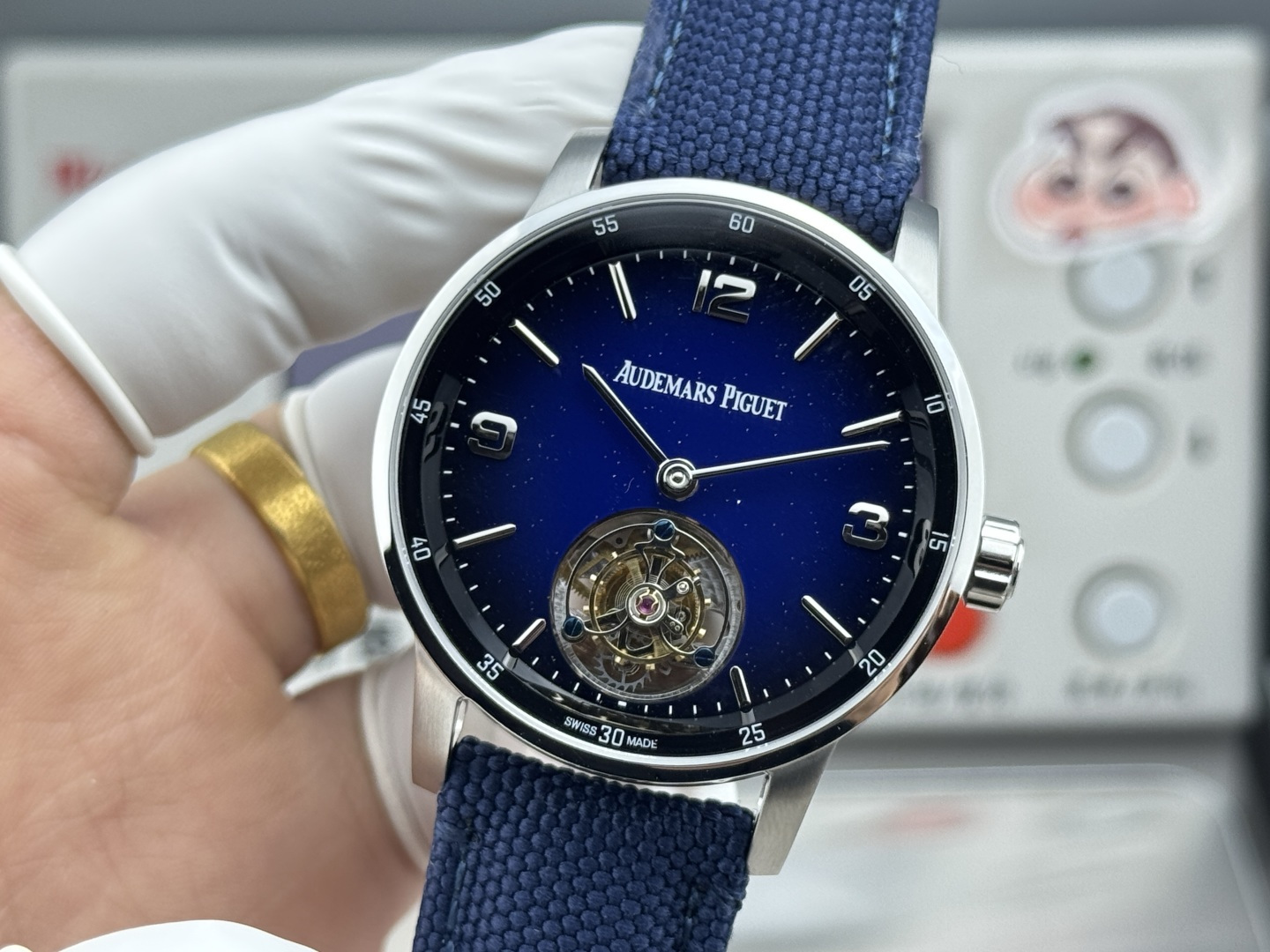
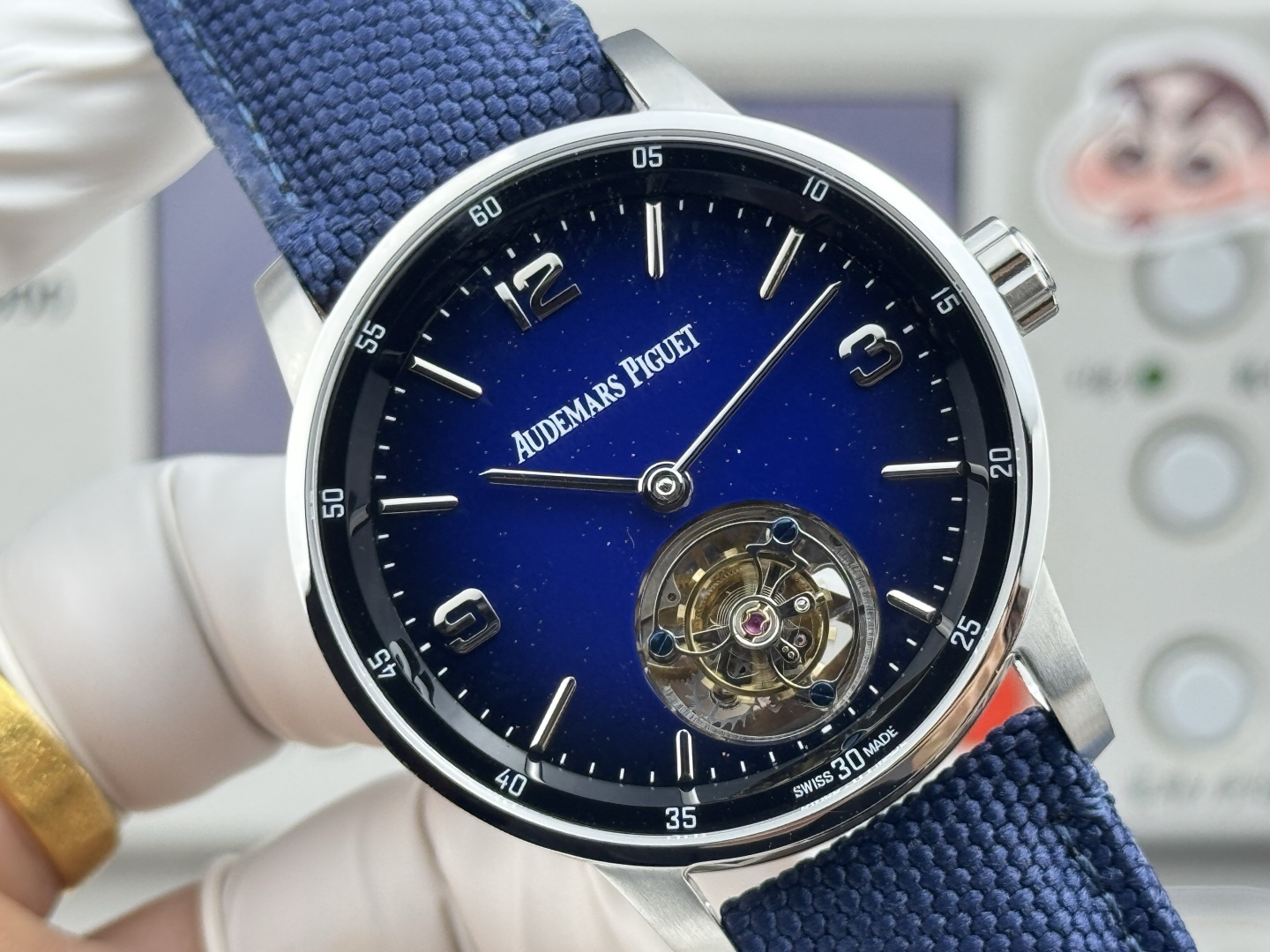
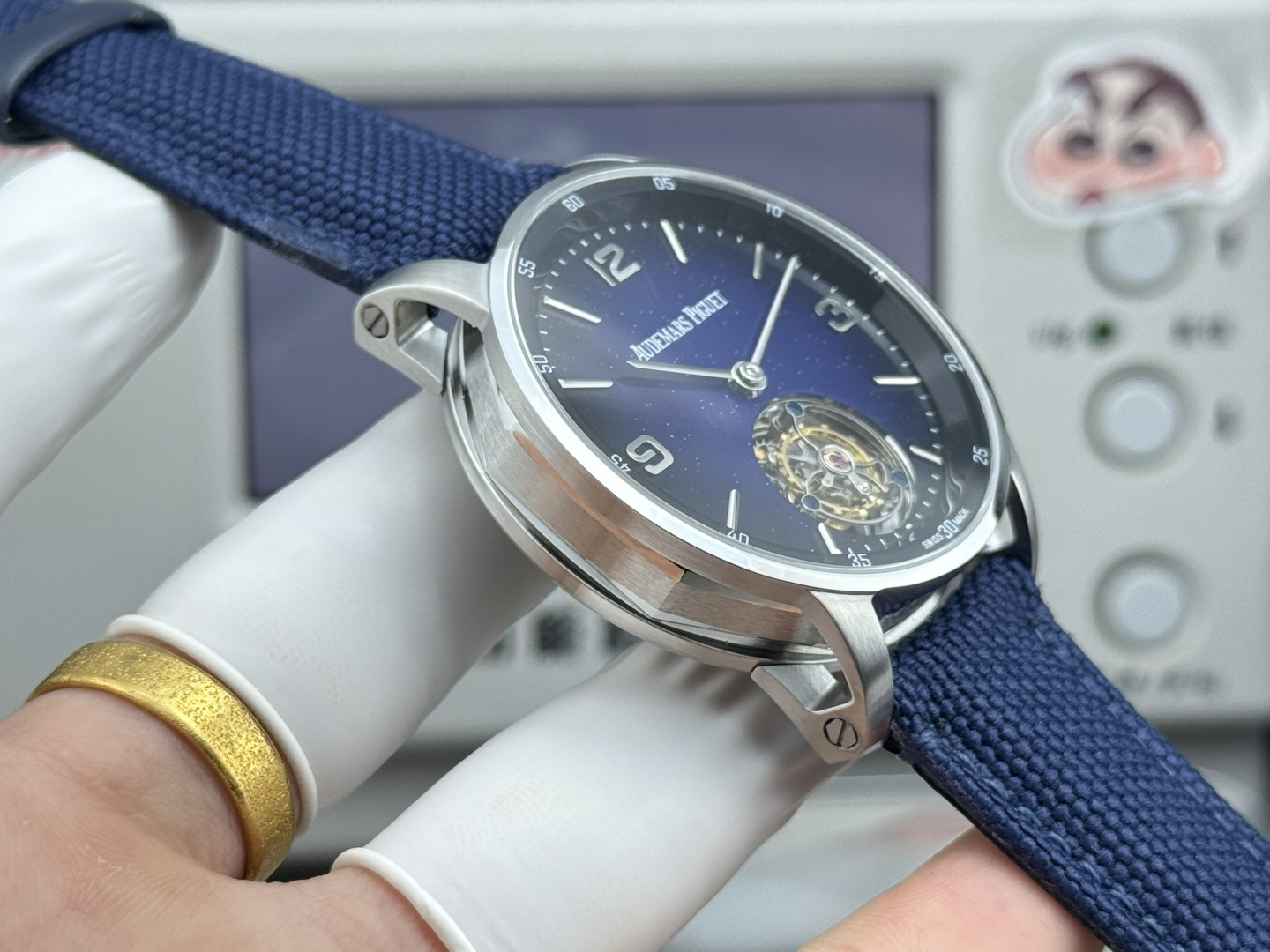
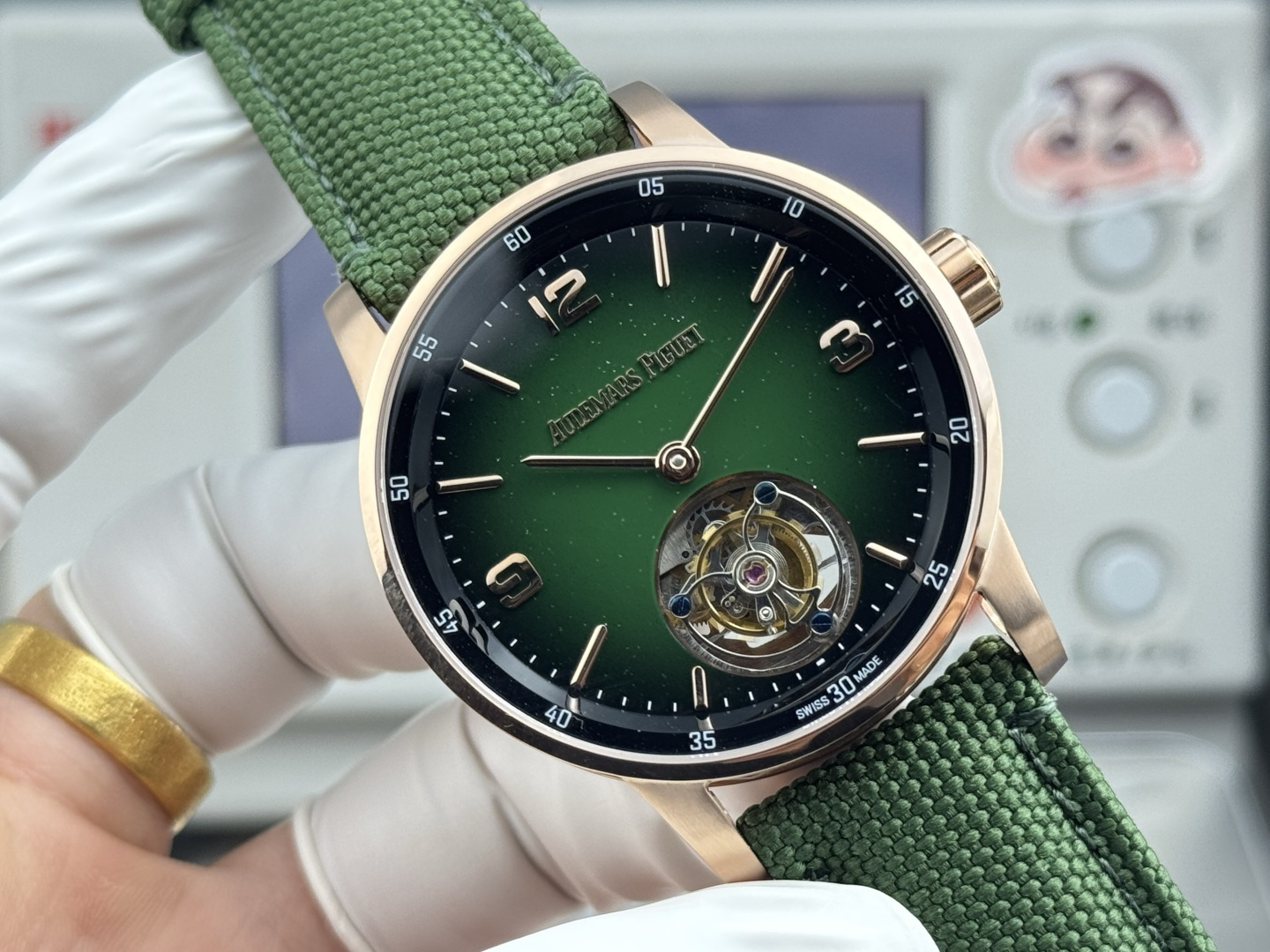
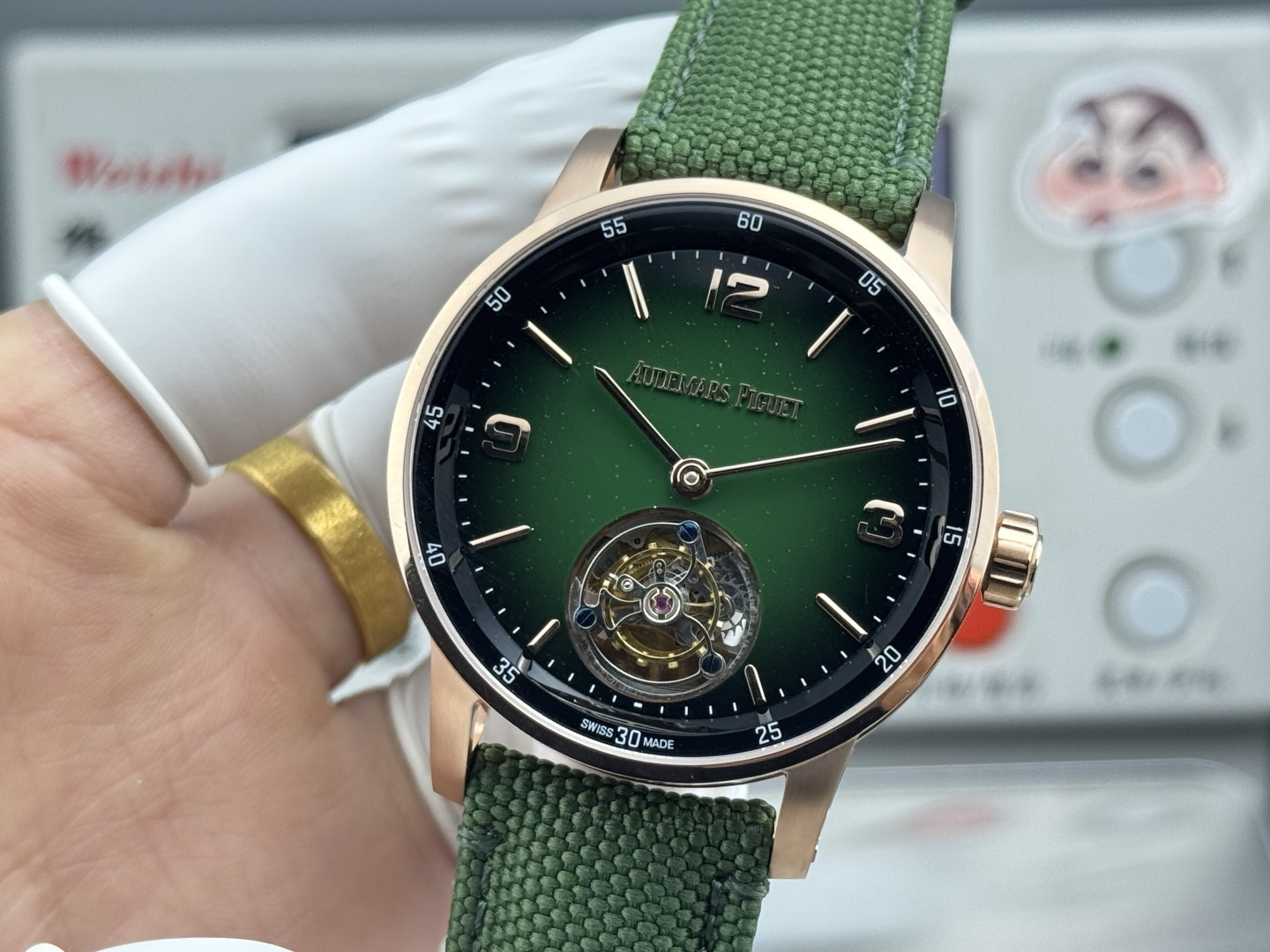
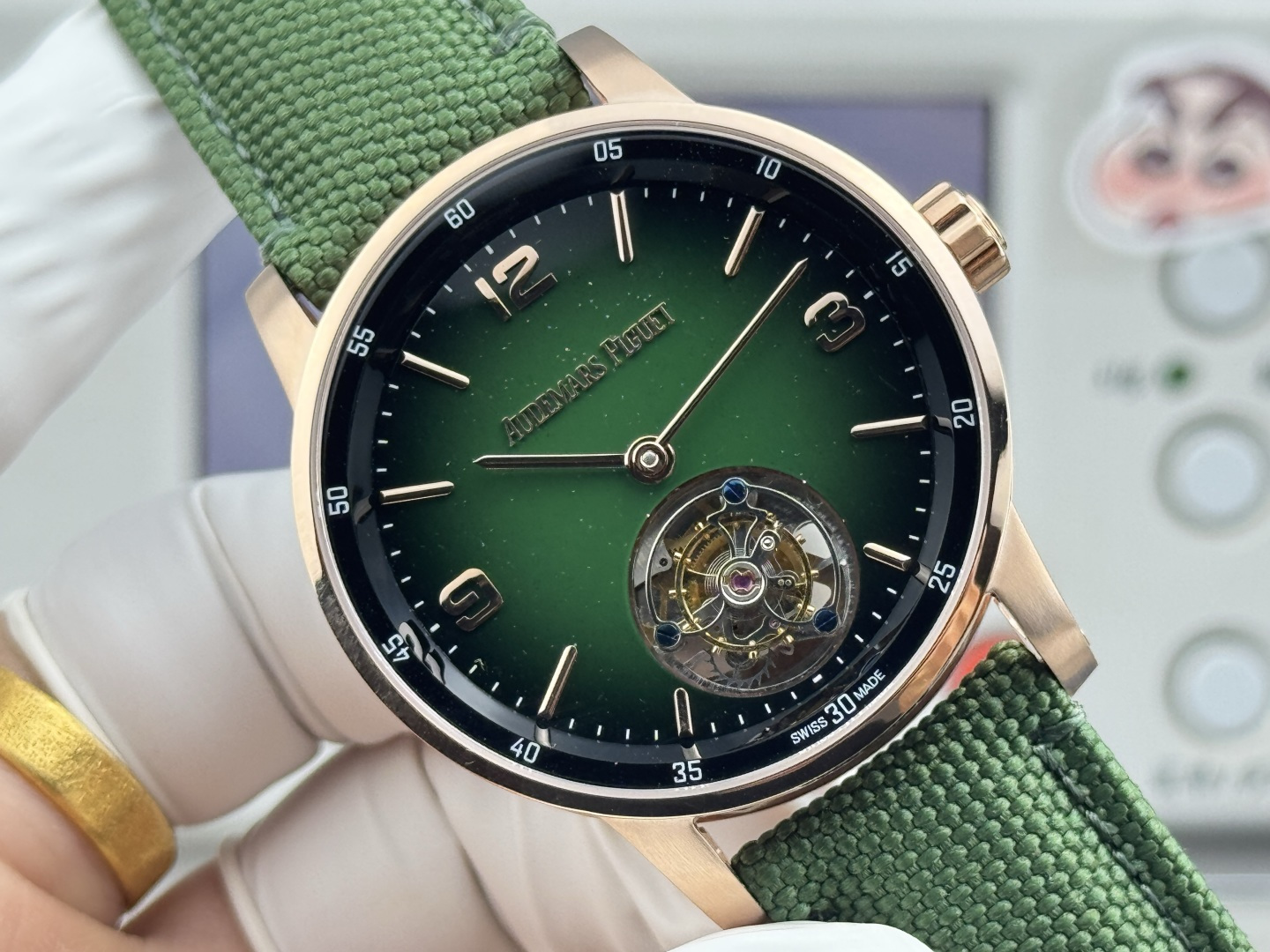
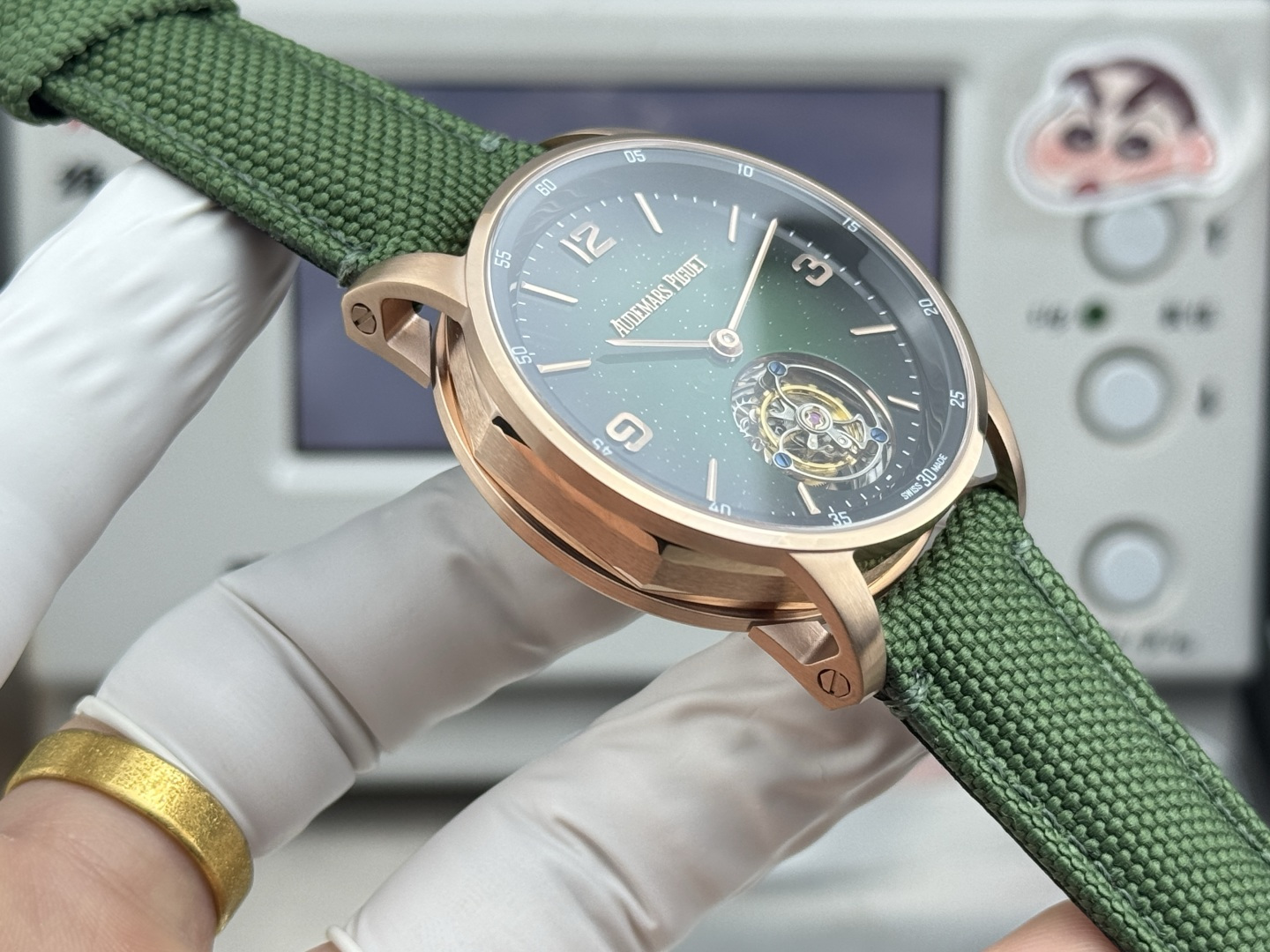
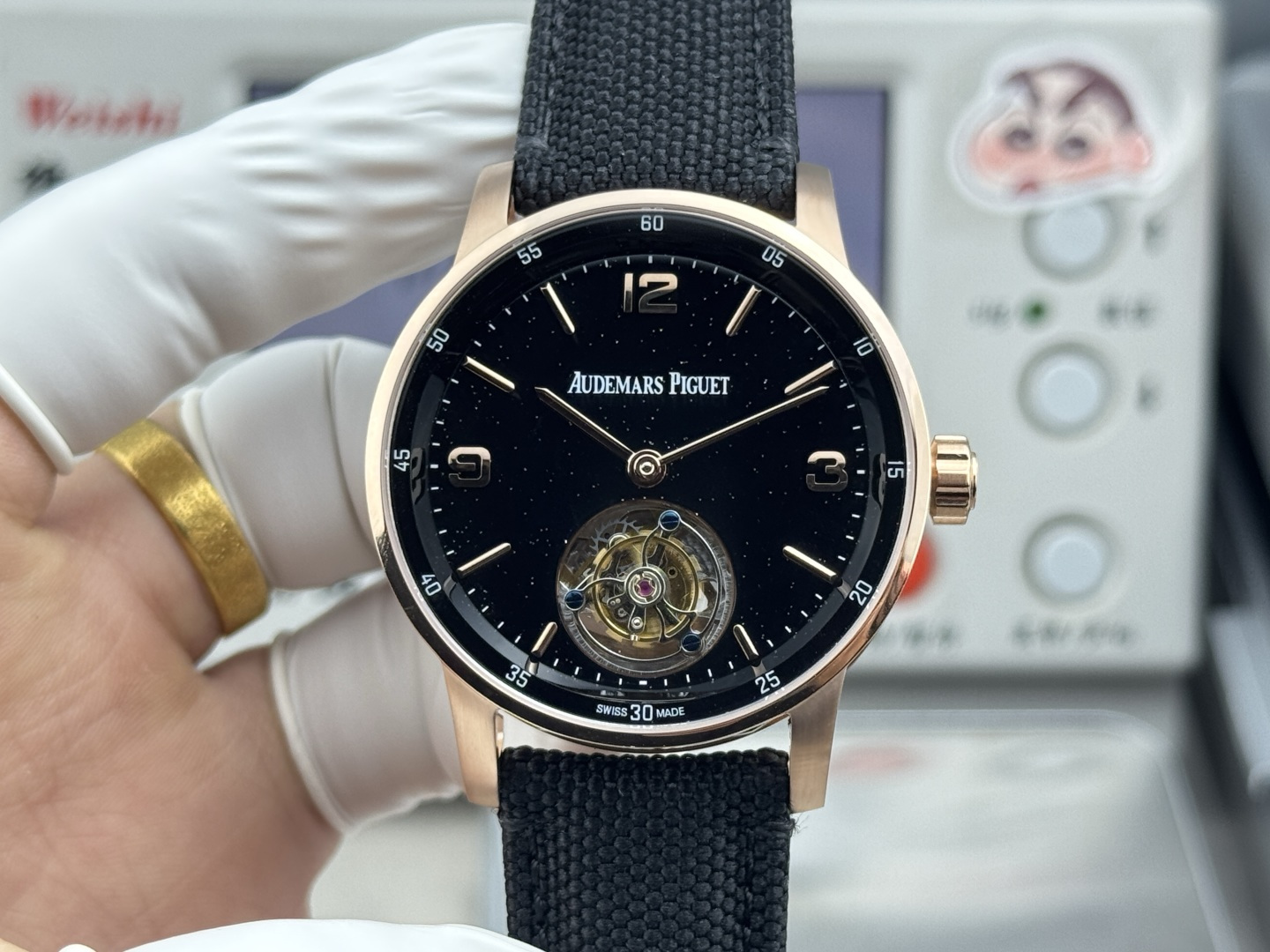
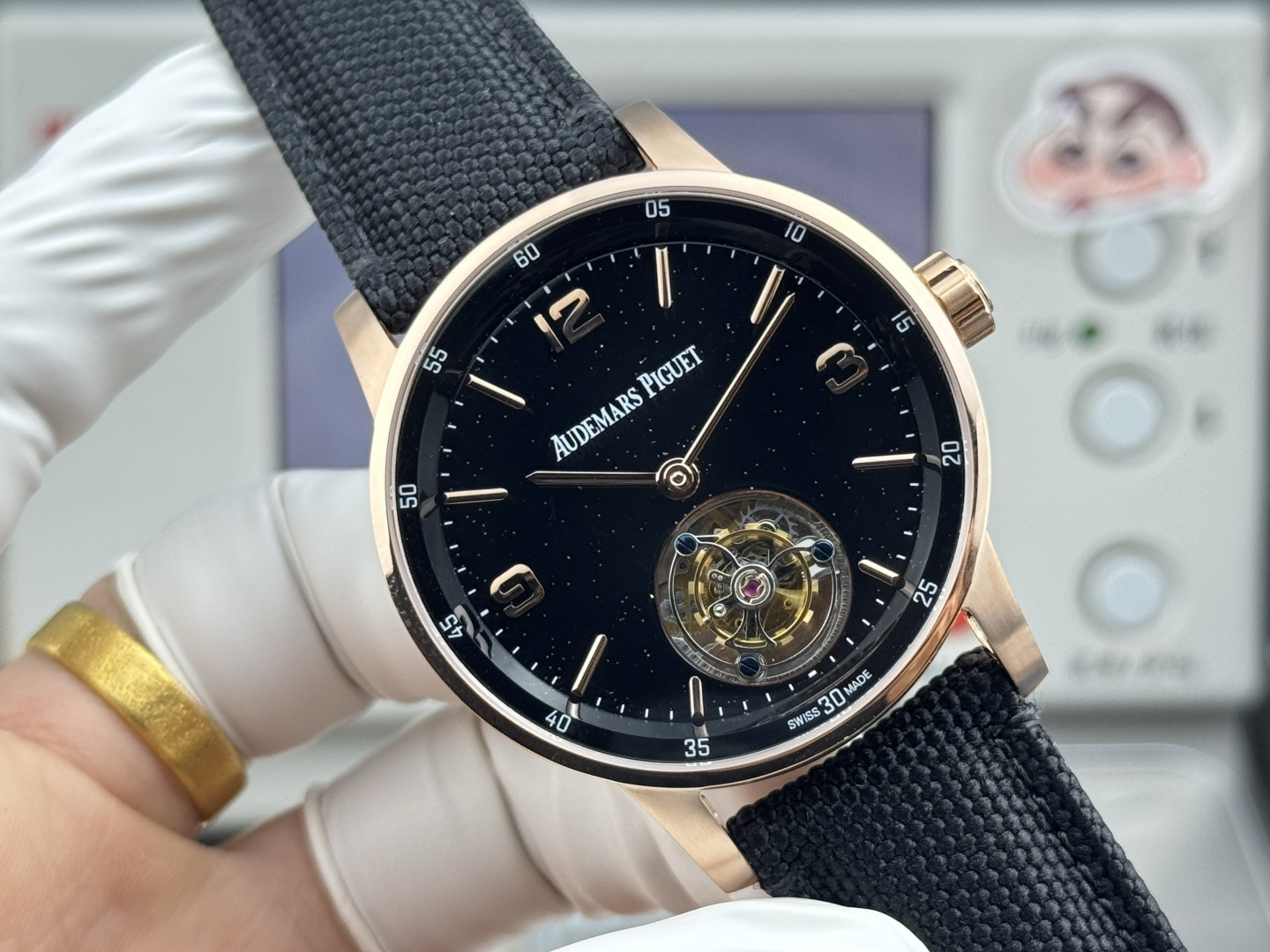
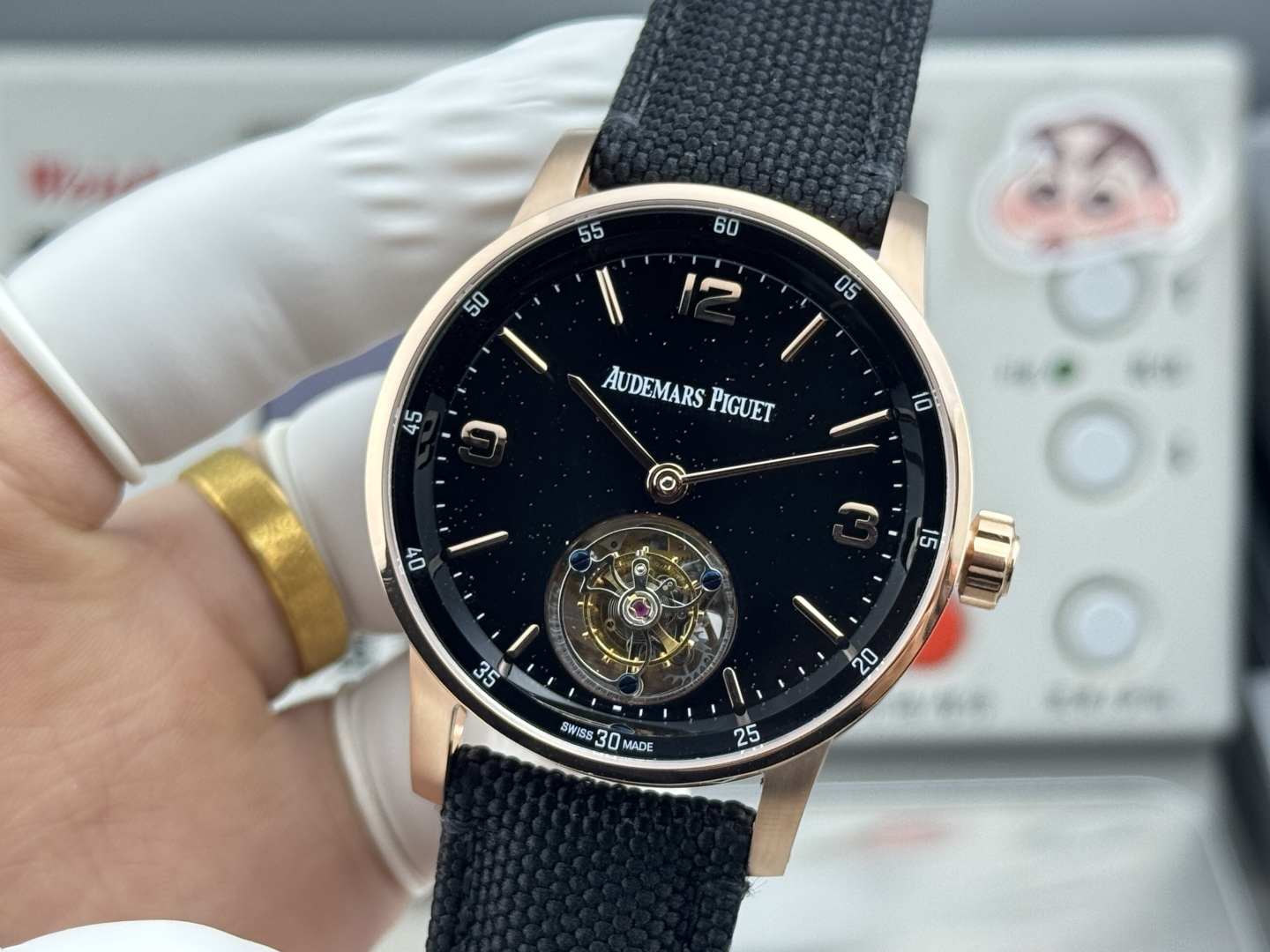
Let’s be honest about something upfront: the Audemars Piguet CODE 11.59 has had a rough ride since its 2019 debut. The horological press was brutal. Collectors were confused. Even AP loyalists couldn’t quite square the circular mid-case with the octagonal bezel, the layered dial architecture that felt simultaneously busy and derivative. And yet — here we are, a few years later, and the 26396 tourbillon variant, with its aventurine enamel dial, has quietly become one of the most visually arresting pieces in AP’s modern catalogue. Which makes it a fascinating target for the replica market. If you’re going to clone a complicated watch, clone a polarizing one. The fakes of safe, universally beloved references get lost in the noise. A clone of the CODE 11.59 tourbillon has to actually commit to the madness of the original design.
I’ve had this particular piece on my wrist and under the loupe for the better part of a week. The specs coming out of the factory list a 42mm case in 316L steel, a Cal.2950-based full tourbillon movement with 60-hour power reserve, an aventurine grand feu enamel dial, sapphire crystal, and Italian calfskin or canvas strap options. On paper, that’s an ambitious brief. In execution? It’s a mixed bag — but a more sophisticated mixed bag than I expected.
Confronting the Clone: Why the 26396 Is a High-Stakes Target
The CODE 11.59 reference 26396 in its genuine form retails somewhere north of $350,000 USD. It houses AP’s Caliber 2950, a hand-wound flying tourbillon with a 72-hour power reserve in the authentic piece. The dial is a genuine grand feu enamel aventurine plate — a material so temperamental to fire that significant percentage of dials are rejected during production. The case construction is a three-part architecture: an octagonal bezel sitting atop a circular mid-case, all hand-chamfered and alternating between poli spéculaire black polishing and satin-brushed surfaces with the kind of precision that takes trained finishers years to develop.
Replicating any one of those elements convincingly is hard. Replicating all three simultaneously is where clone manufacturers almost universally fall apart. So walking into this review, my expectations were calibrated accordingly — I was looking for a piece that captures the gestalt of the 26396 from a social distance of three feet, not a watchmaker’s bench recreation.
“The CODE 11.59 was designed to be looked at, not just worn. Which means a clone of it lives or dies on its visual drama at arm’s length — and only then do you start worrying about what’s happening under the caseback.”
The Dial Execution: Aventurine Enamel Under the Loupe
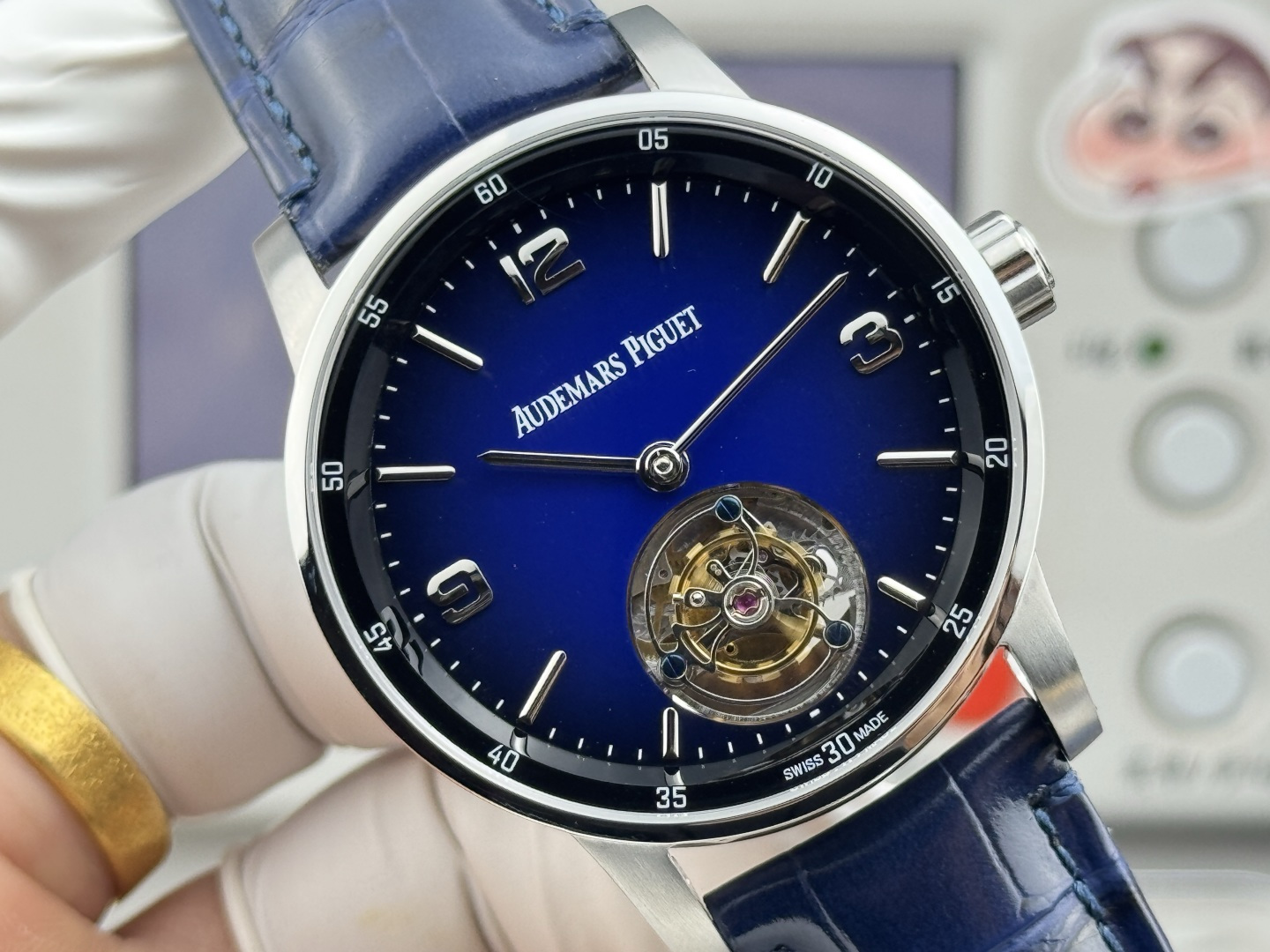
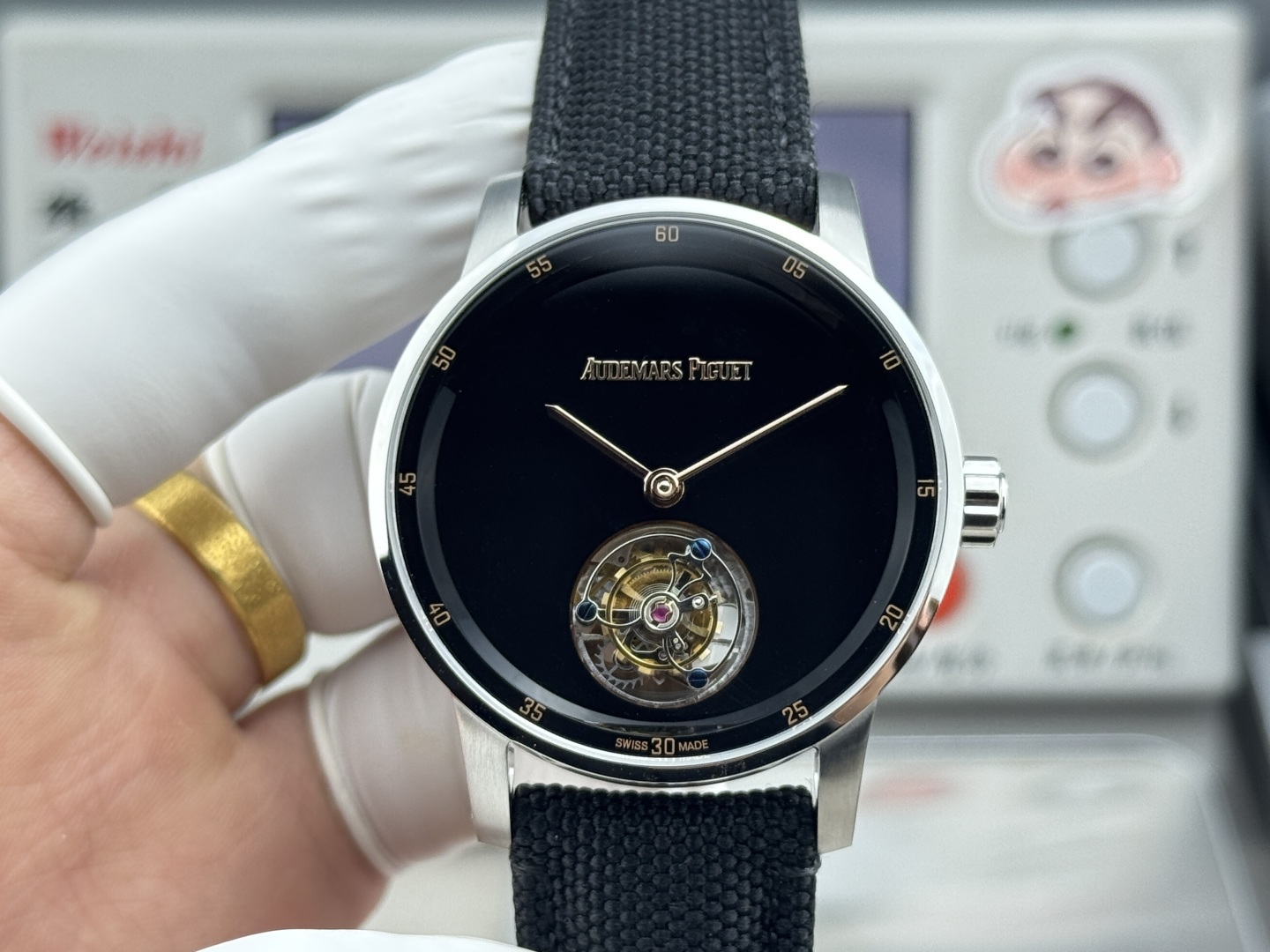
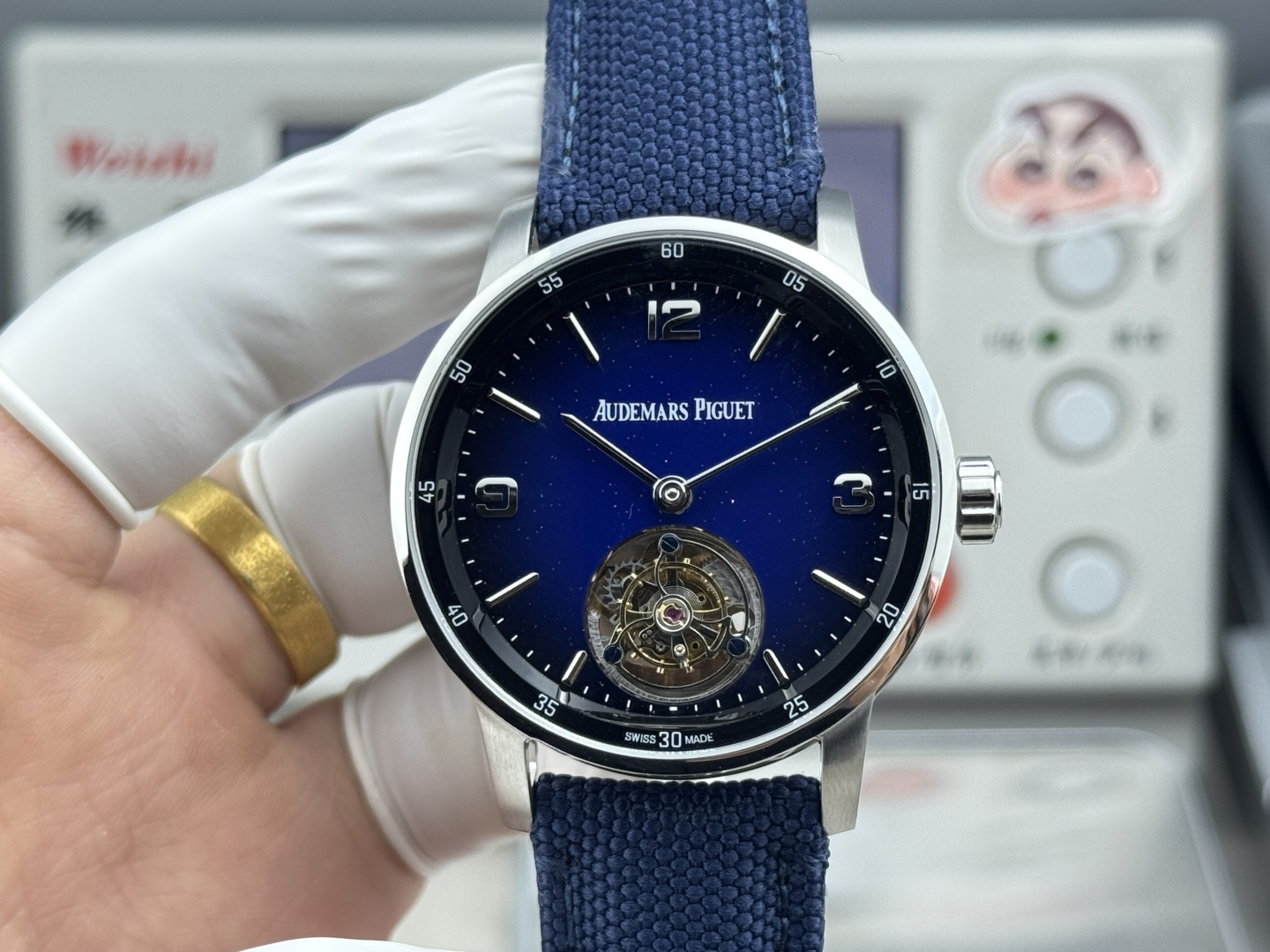
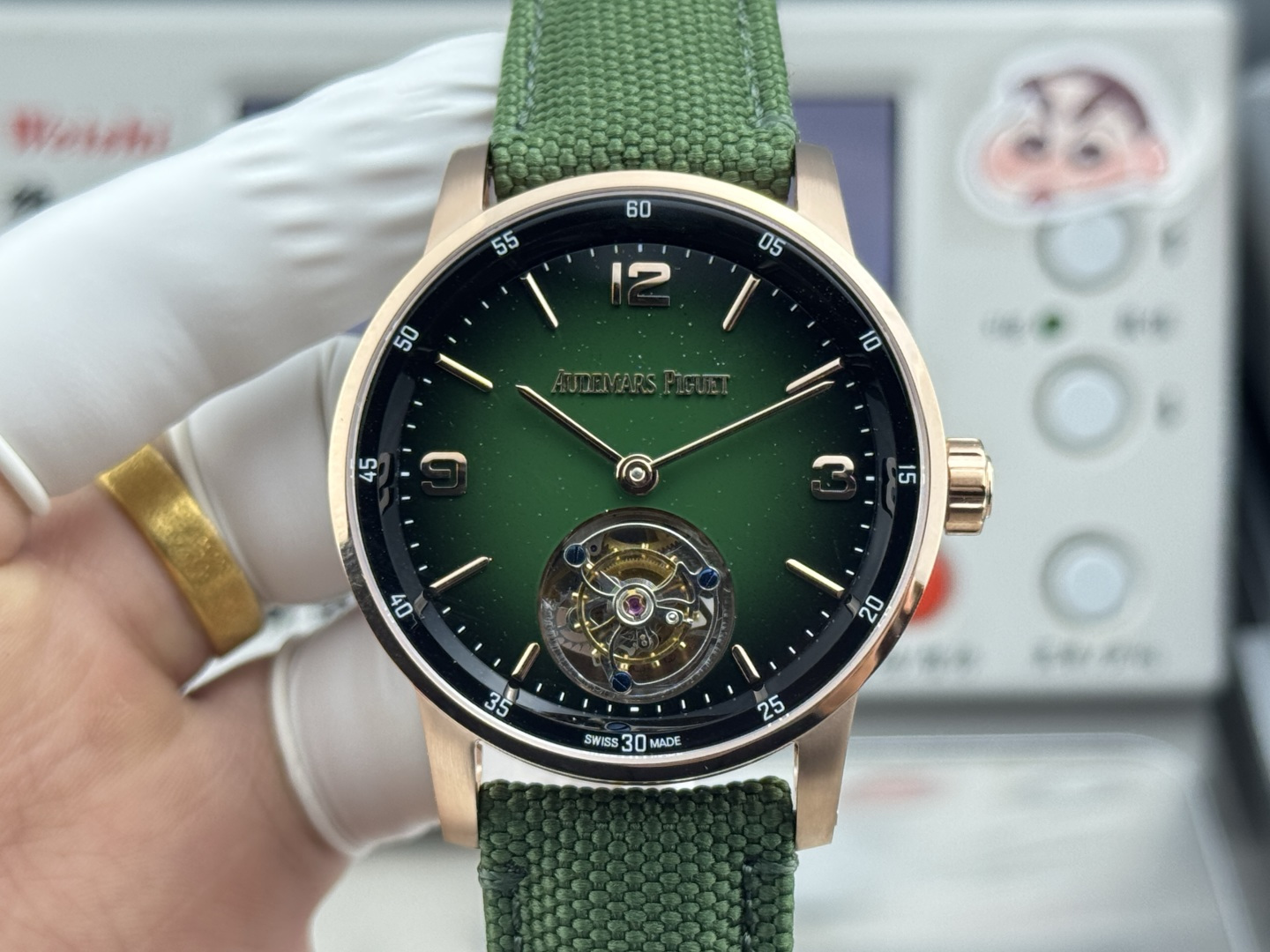
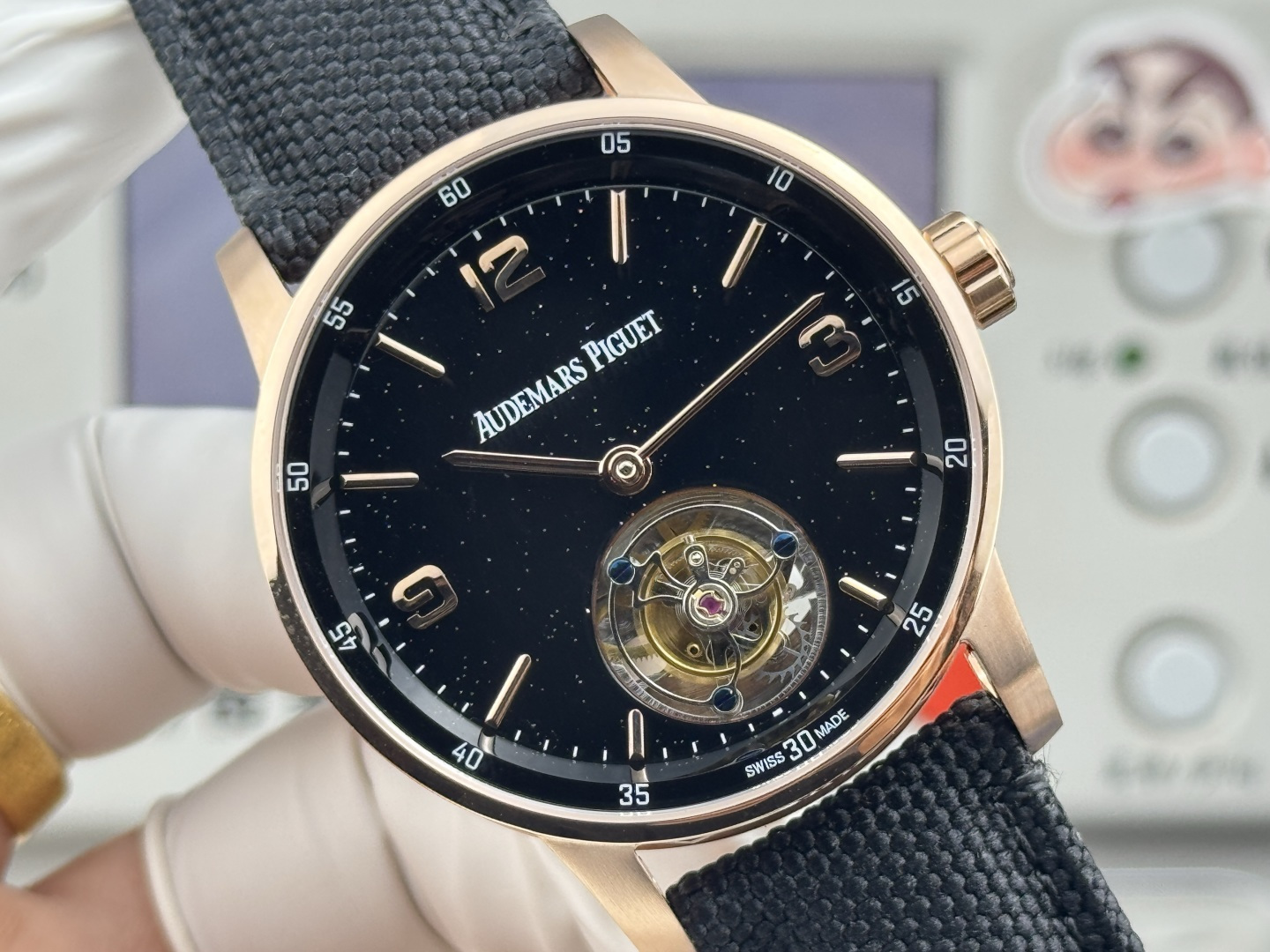
This is where I spent most of my time. The genuine 26396 dial is grand feu enamel over aventurine — a process that involves firing powdered glass containing copper crystals at temperatures exceeding 800°C, creating that deep galactic shimmer that shifts from midnight blue to green to near-black depending on the light angle. It is one of the most labor-intensive dial constructions in production horology, and it’s completely irreproducible in any meaningful factory clone context at this price point.
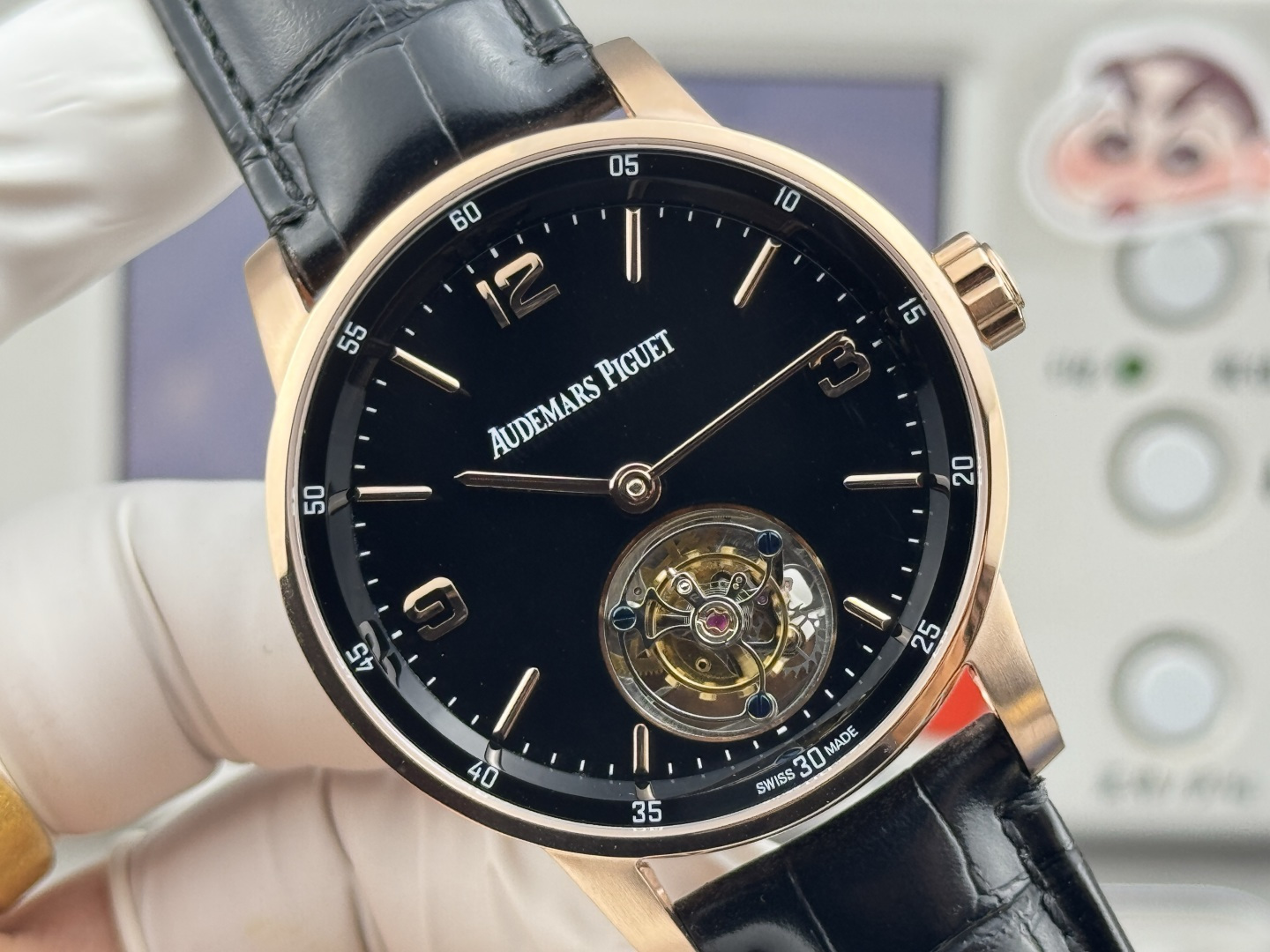
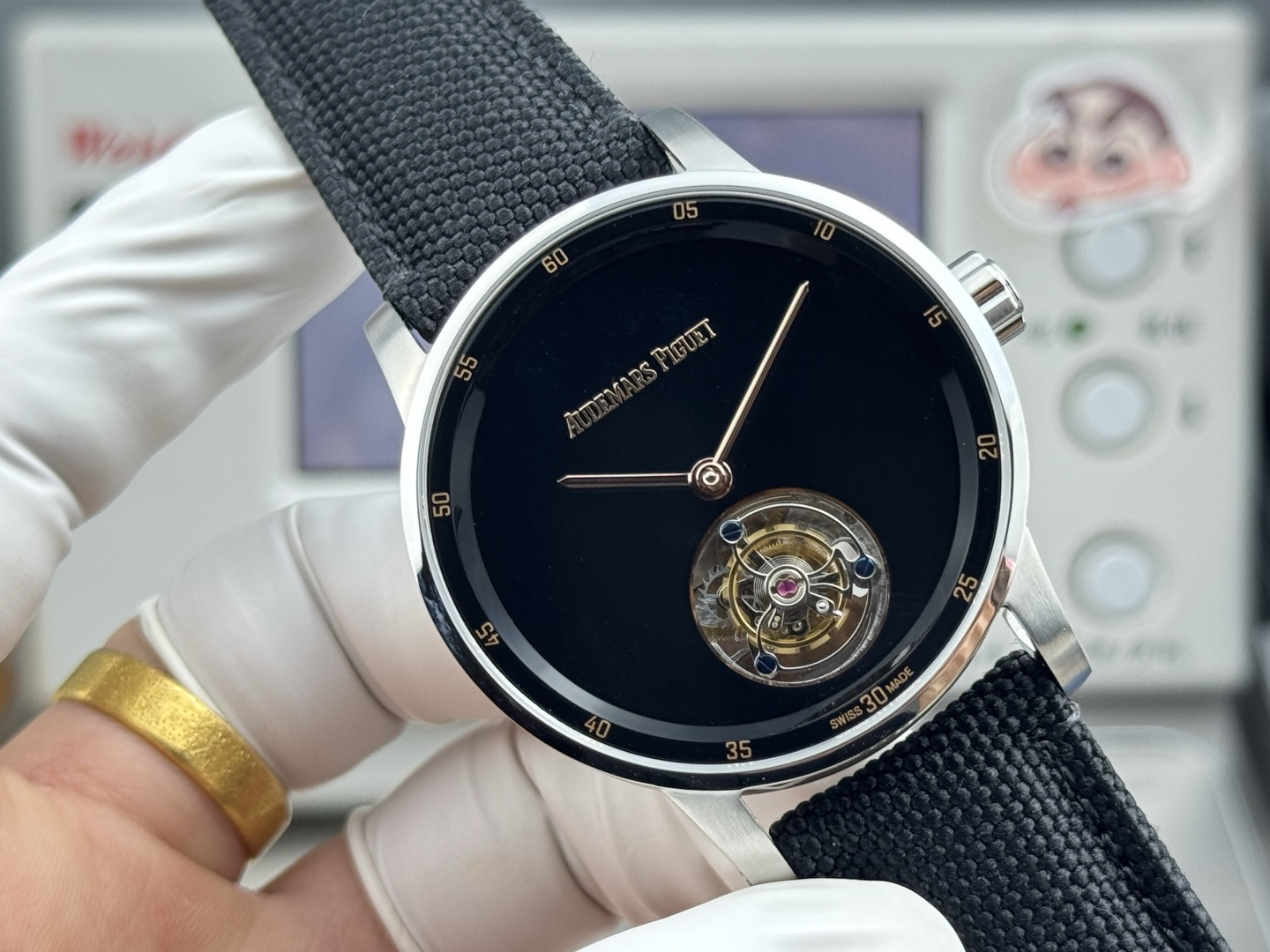
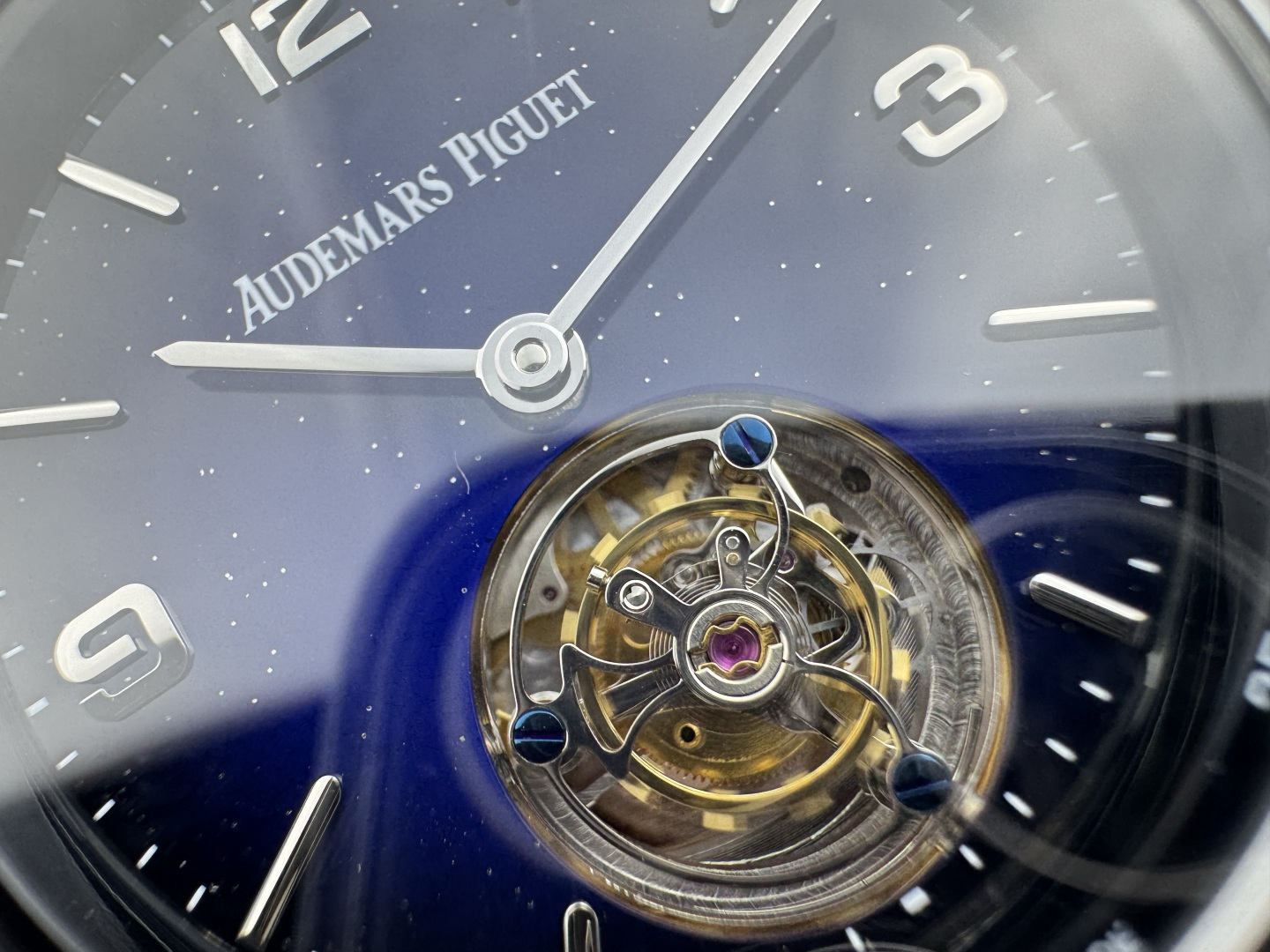
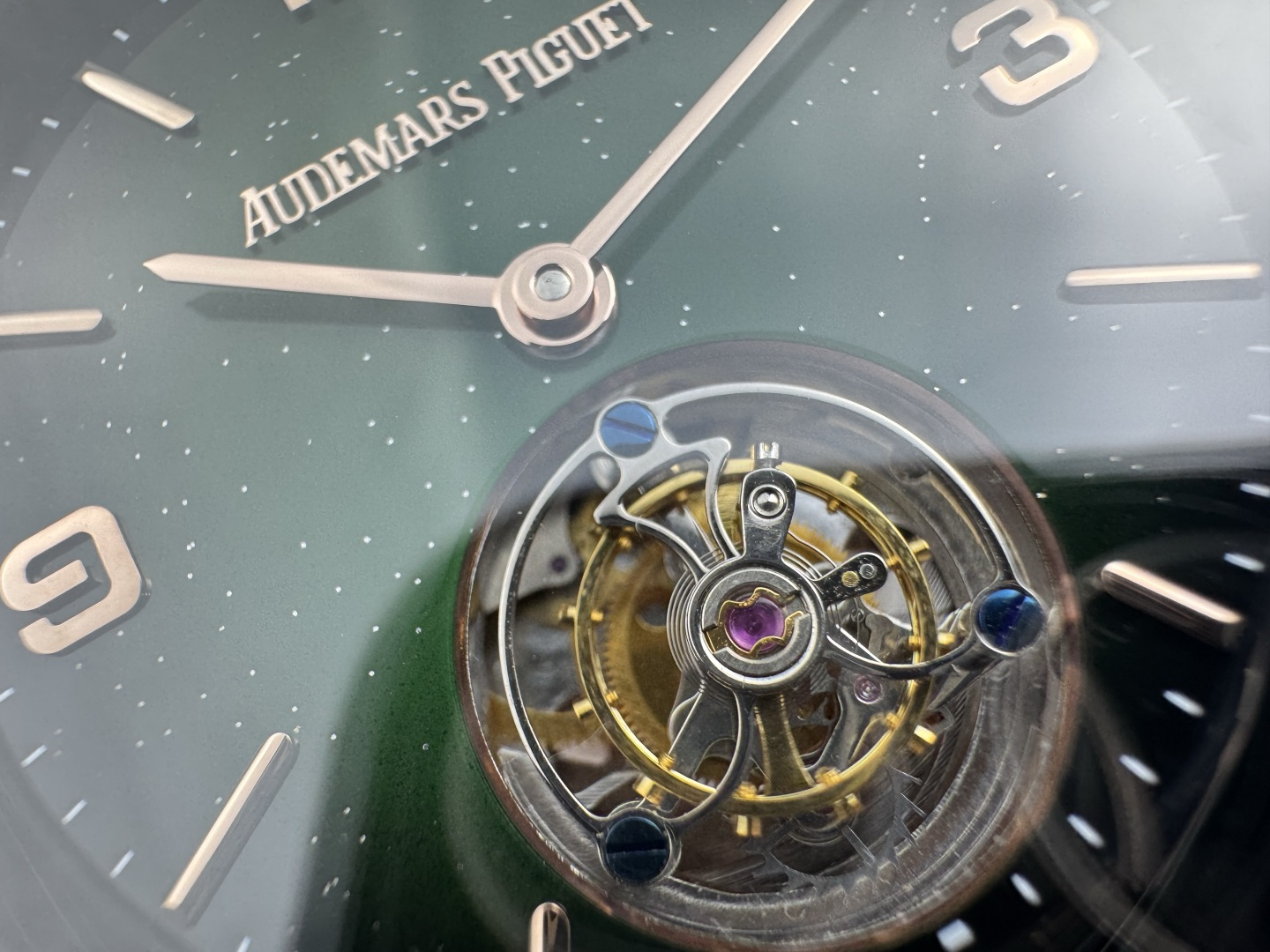
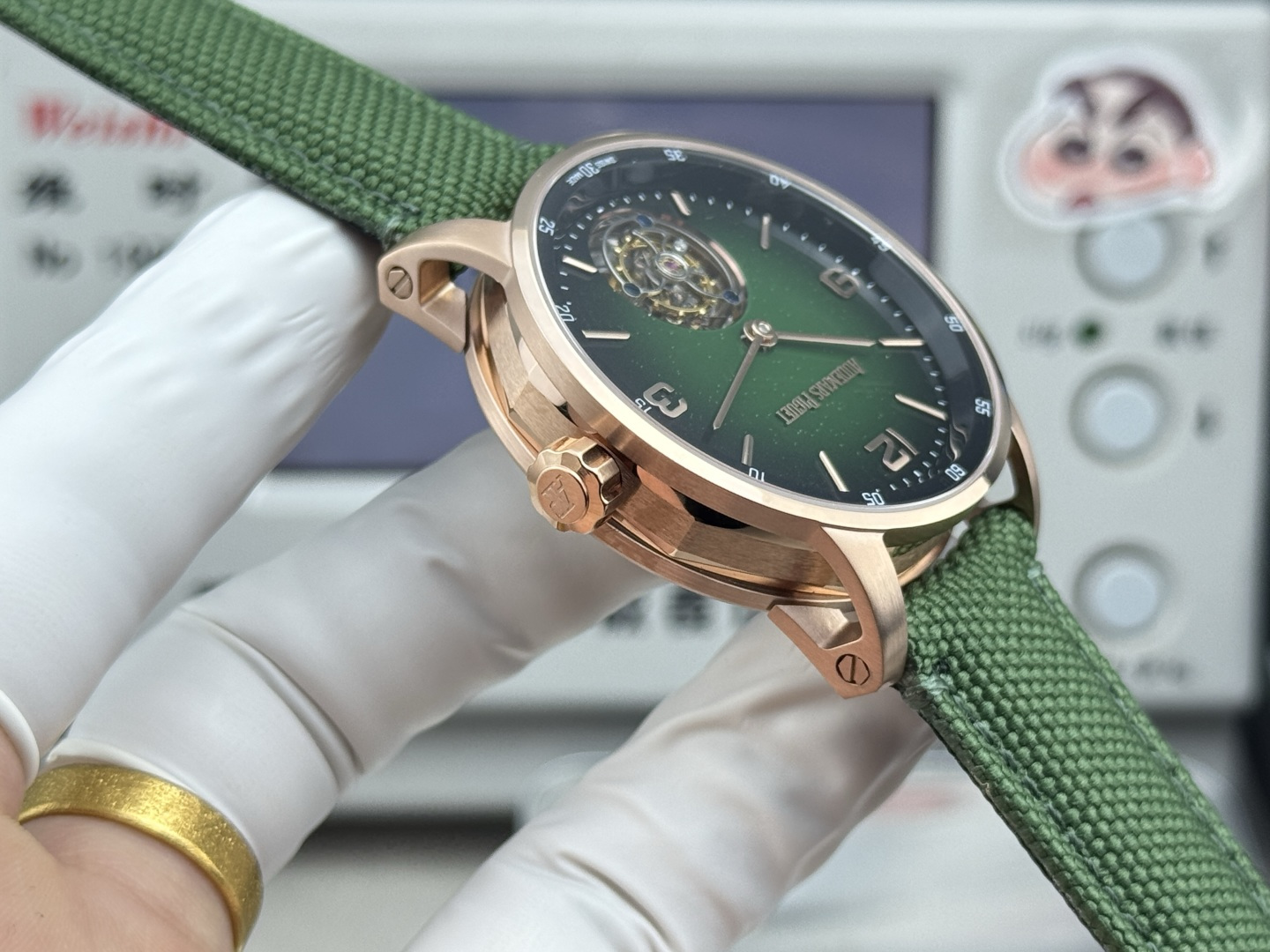
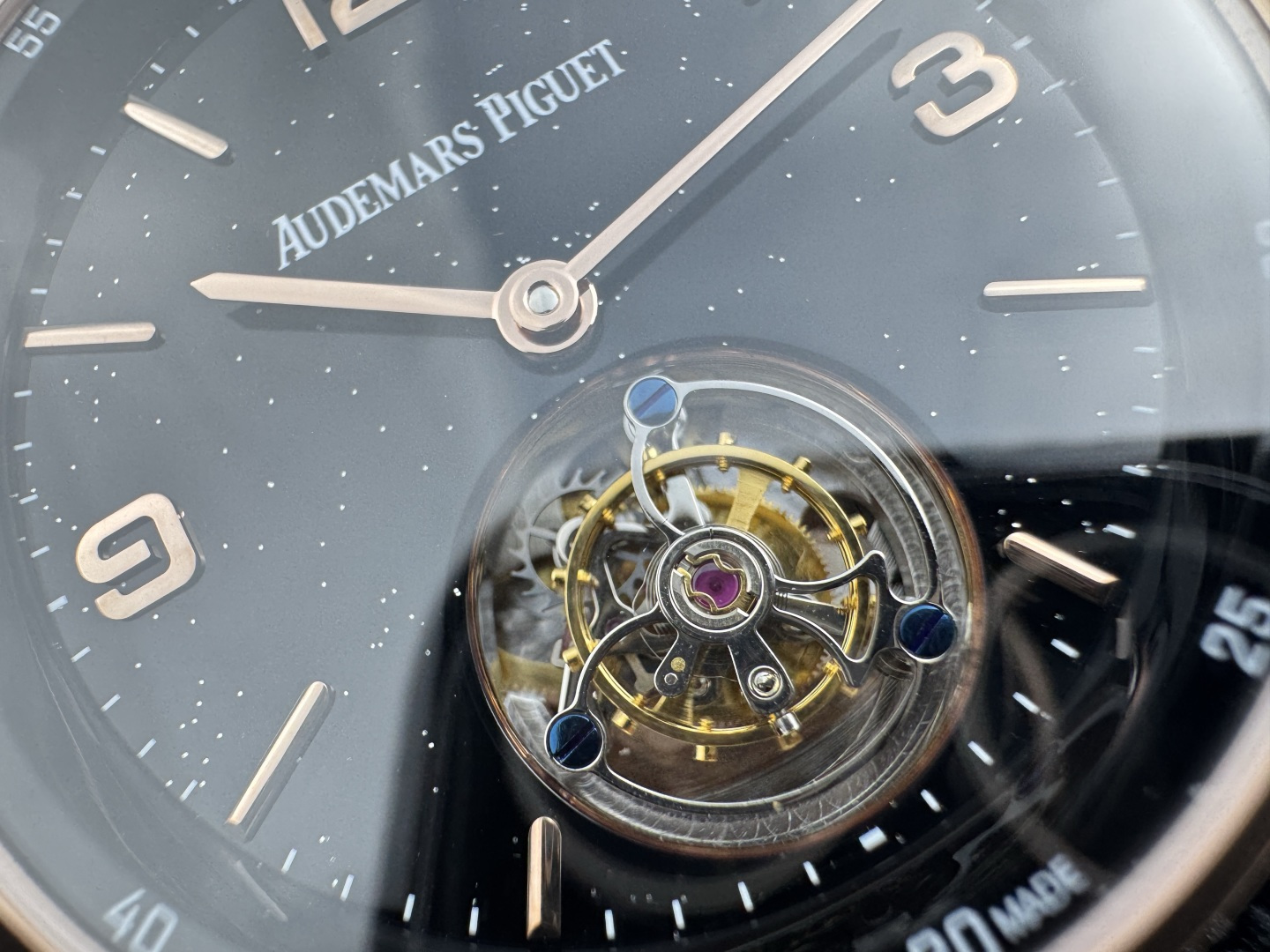
What the manufacturer has done here is use a simulated aventurine base — almost certainly a mineral-filled resin or a vacuum-deposited metallic layer over a lacquered substrate — and the results are, frankly, better than I anticipated at arm’s length. The copper-fleck dispersion is reasonably convincing under ambient light. Under direct halogen? The illusion collapses somewhat. The genuine enamel has a three-dimensional depth, a sense that the shimmer is occurring within the material rather than on its surface. This clone’s aventurine reads as flat under strong directional light — the sparkle is there but it sits on top, like glitter on paper rather than stars viewed through glass.
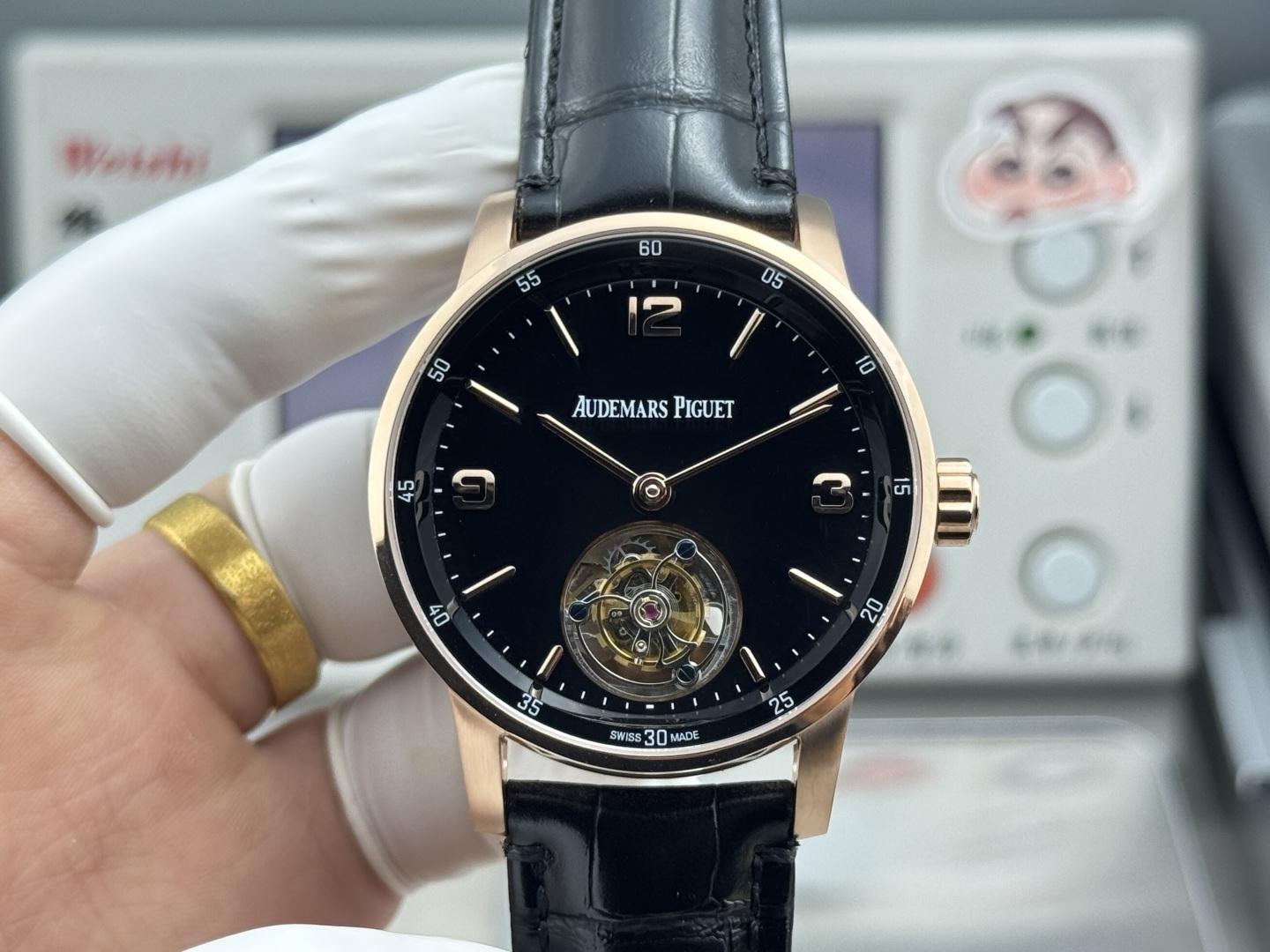
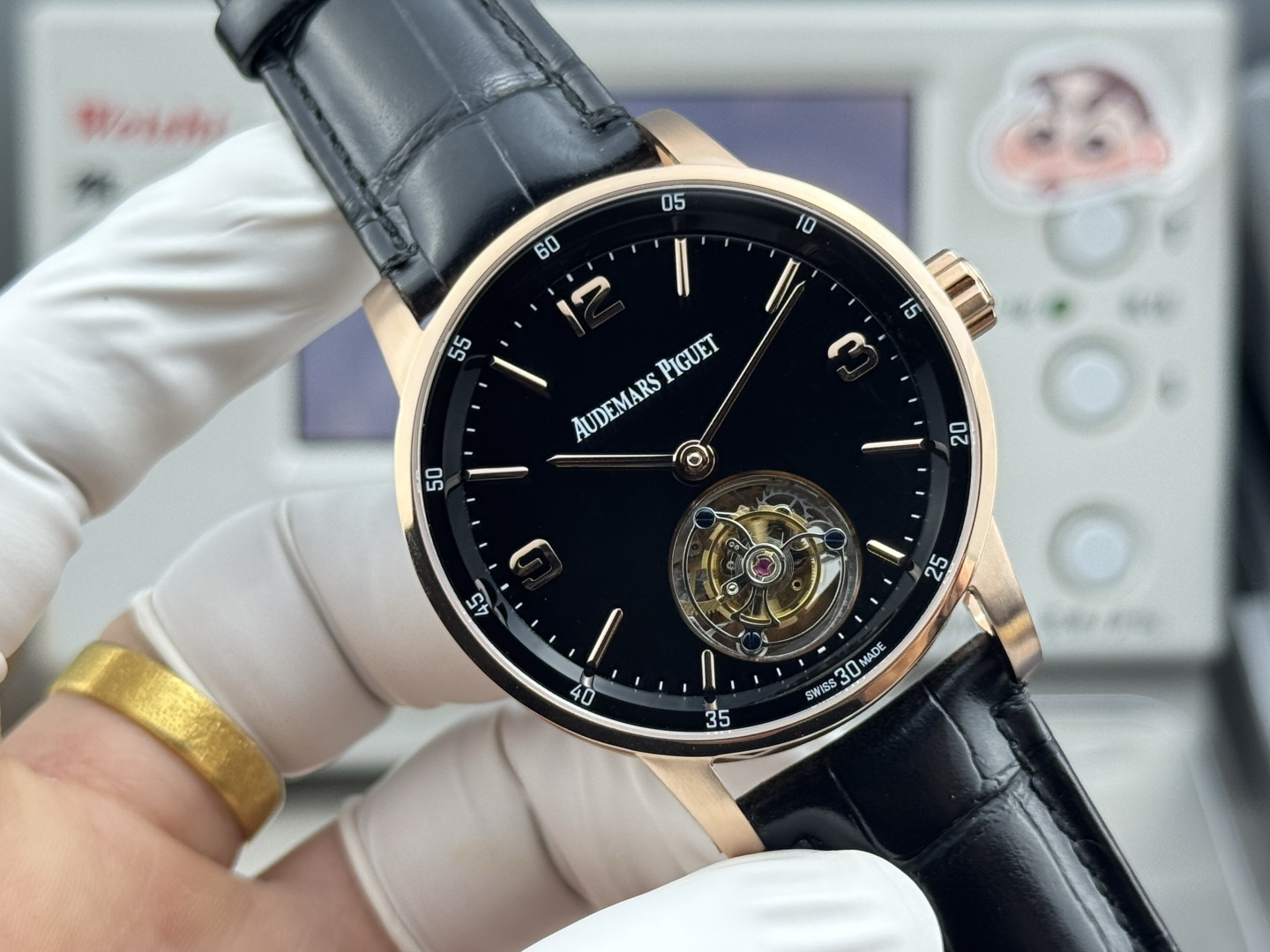
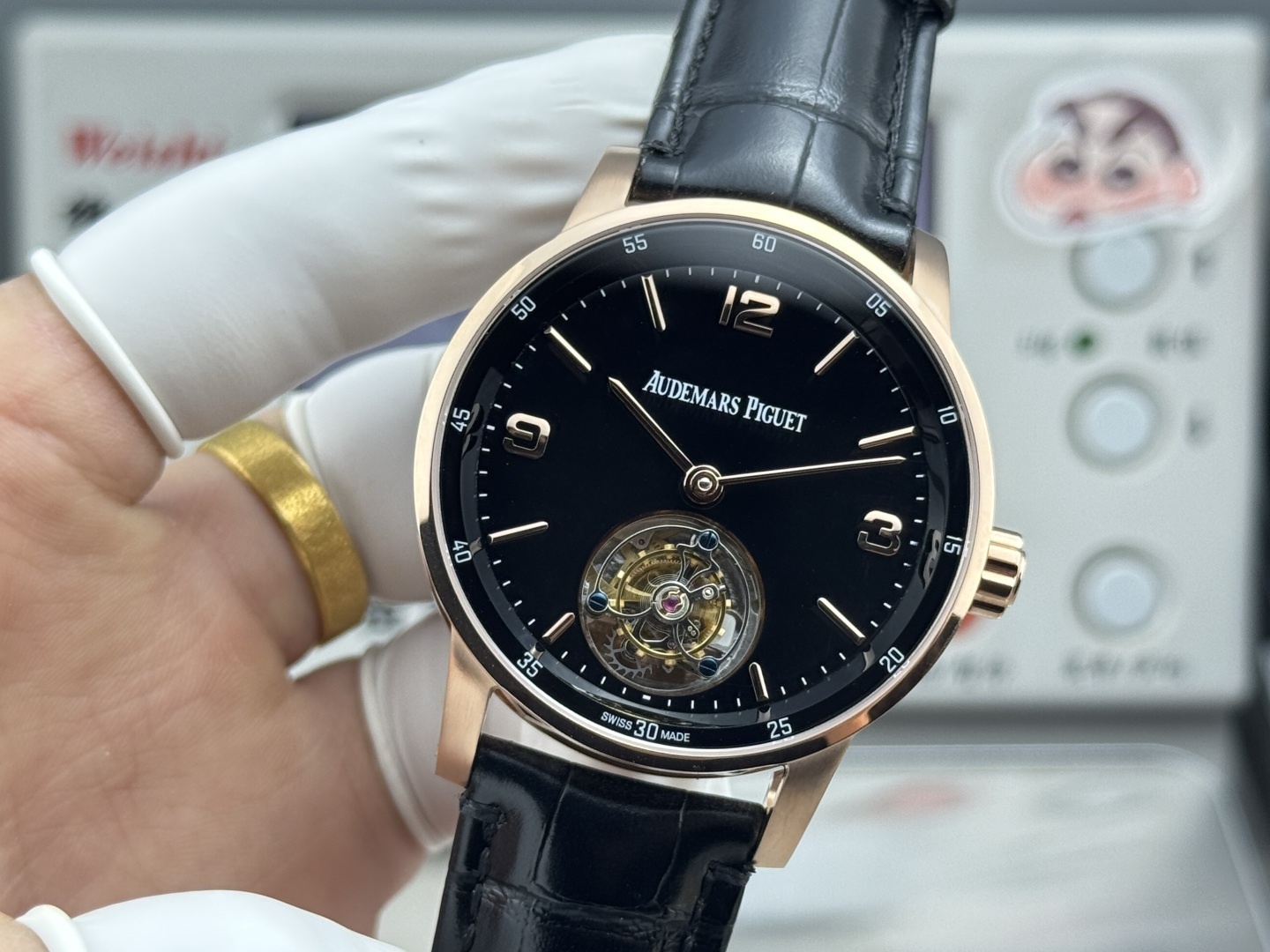
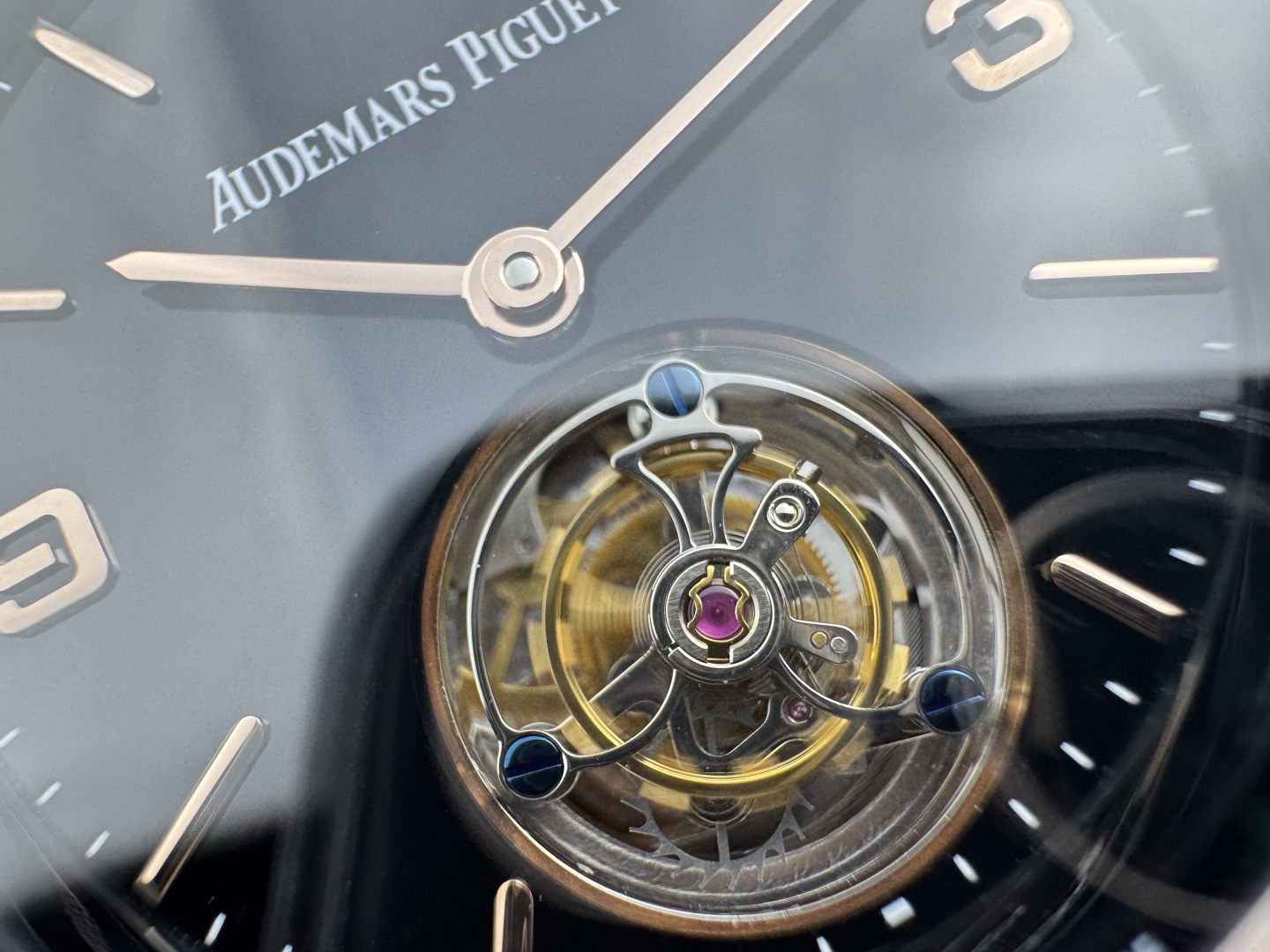
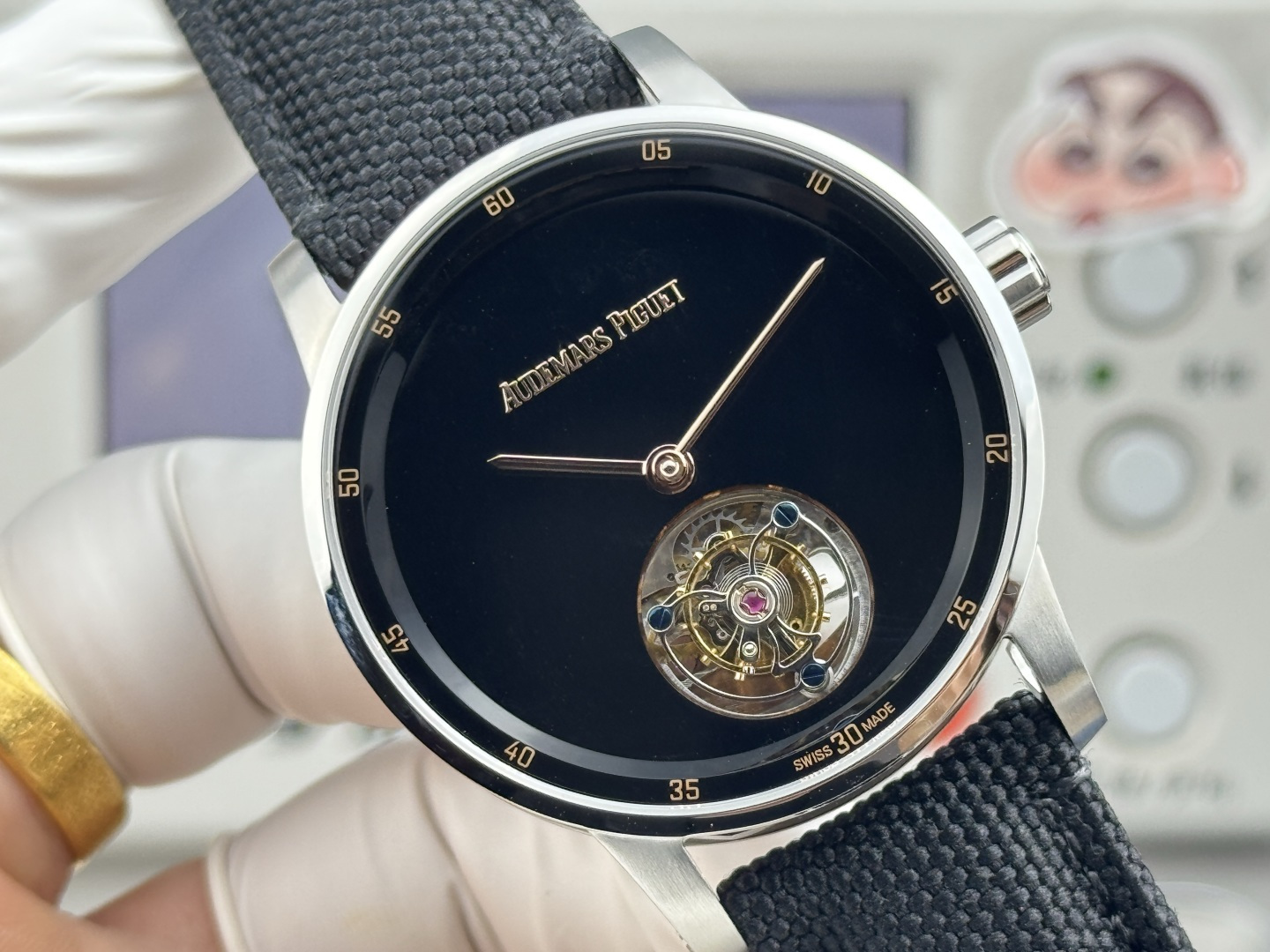
The applied indices are where things get more interesting. On the genuine piece, the hour markers are individually applied white gold with a specific chamfer profile on their edges — you can see the anglage catching light as your wrist moves. On this clone, the indices appear to be applied metal — not pad-printed, which is a meaningful distinction and credit where it’s due — but the chamfering is absent. They’re flat-topped, which under the loupe reads as unfinished. The typography on the “AUDEMARS PIGUET” text at 12 o’clock and the “TOURBILLON” designation at 6 o’clock is where pad-printing quality becomes critical. The kerning on this example is acceptable — not tight enough to pass a side-by-side comparison with a genuine dial photograph, but the character spacing doesn’t have the catastrophic inconsistencies I’ve seen on lower-tier clones. The font weight is slightly heavier than the original’s refined, almost delicate printing. It’s the difference between a sentence written with a 0.3mm technical pen versus a 0.5mm — subtle, but once you see it, you can’t unsee it.
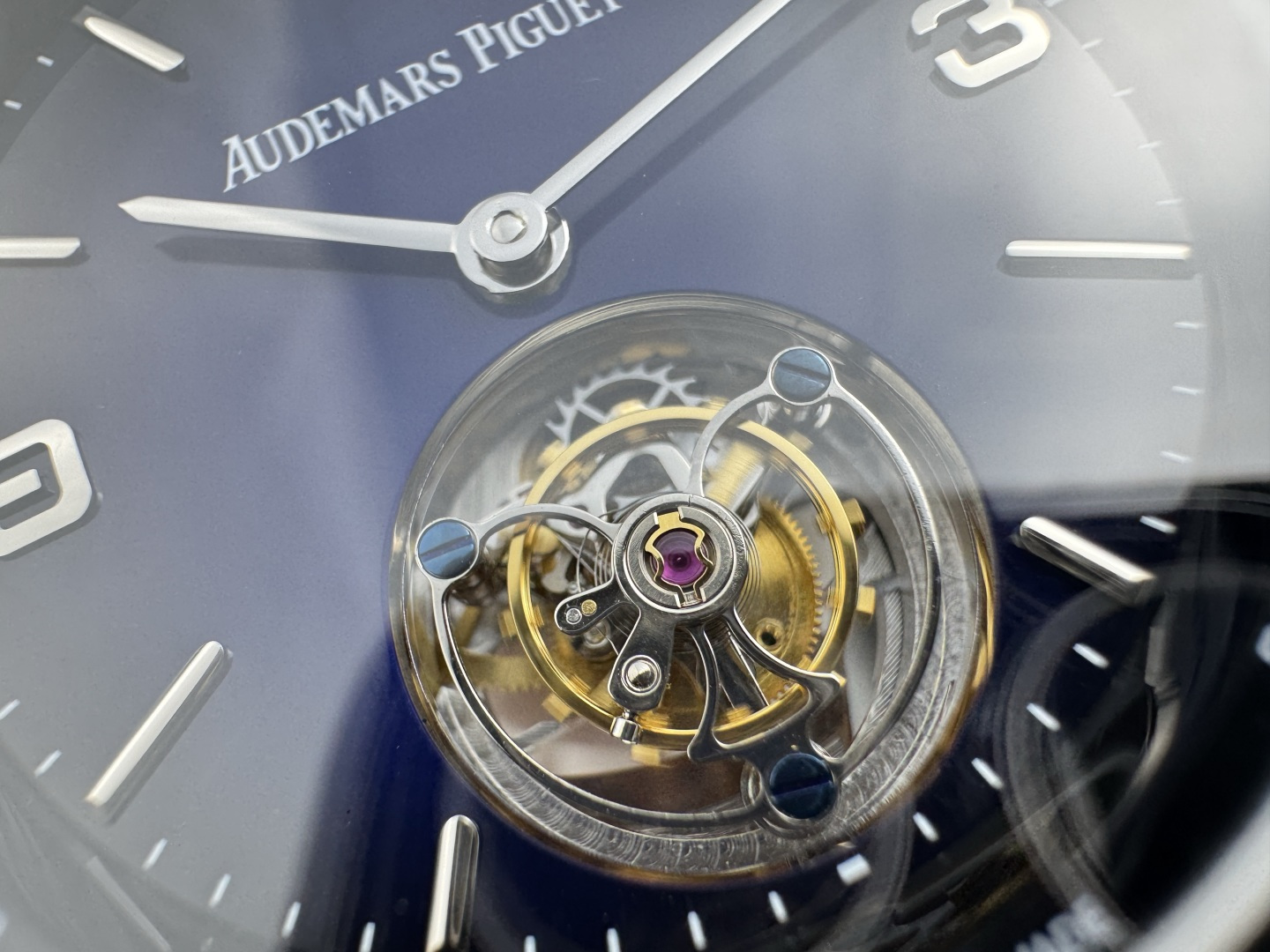
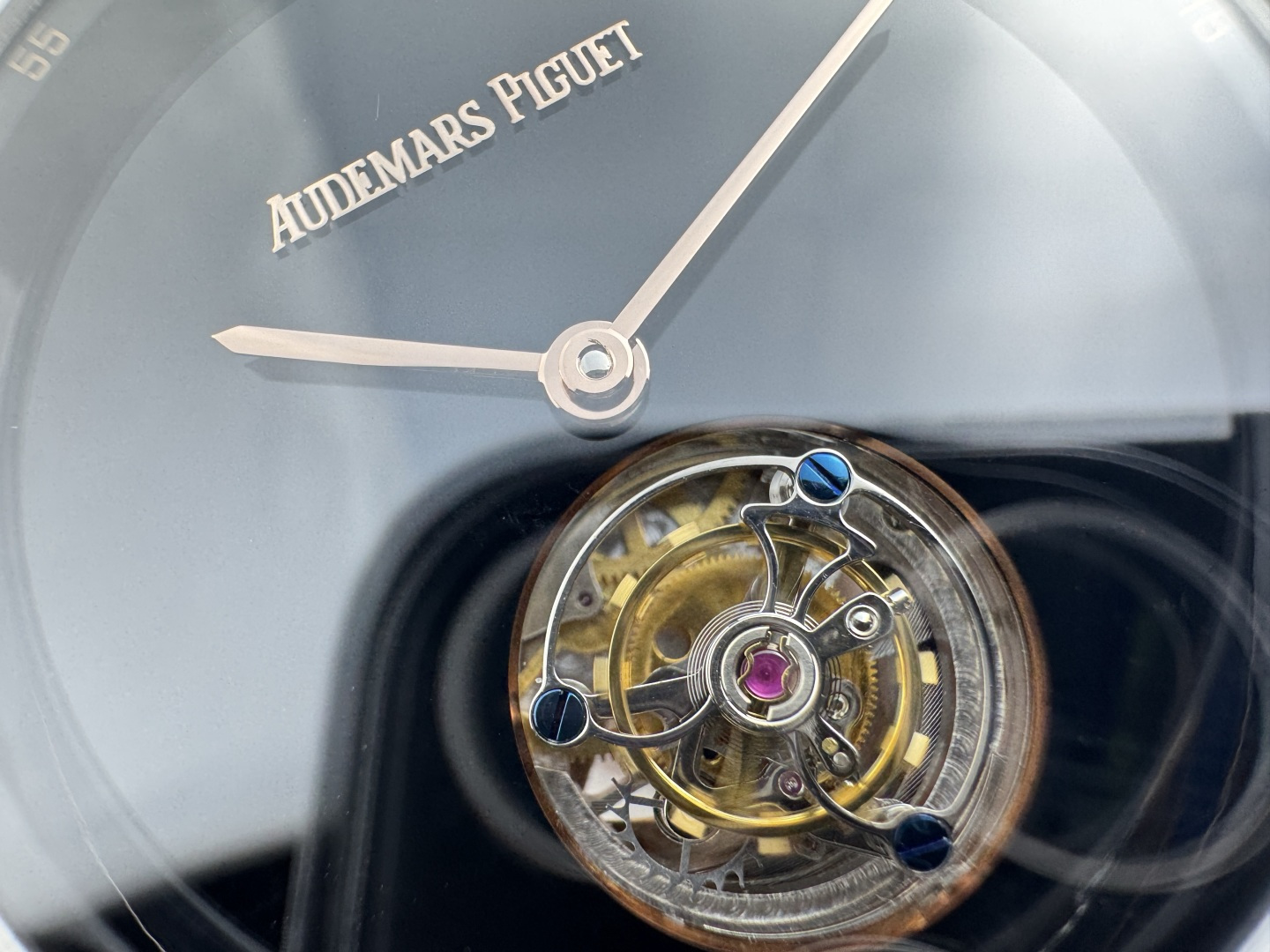
The tourbillon aperture at 6 o’clock is the dial’s showpiece, and the movement chapter gets into this more — but from a pure dial-framing perspective, the cutout is cleanly executed and the sub-dial ring around it has a reasonable brushed finish. Hand-stack clearance over the dial surface looks adequate; the hands don’t drag.
Wearability & Case Construction
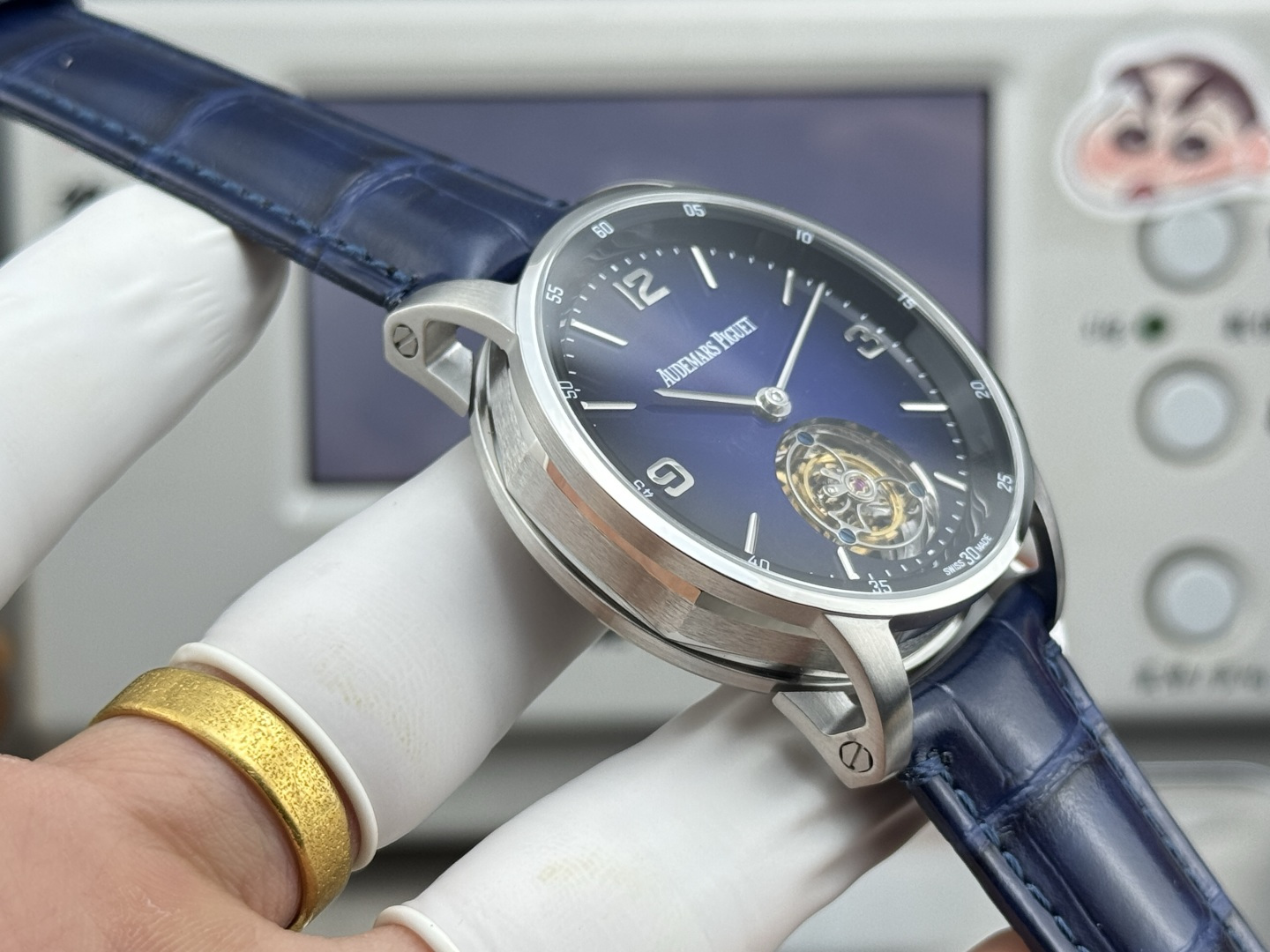
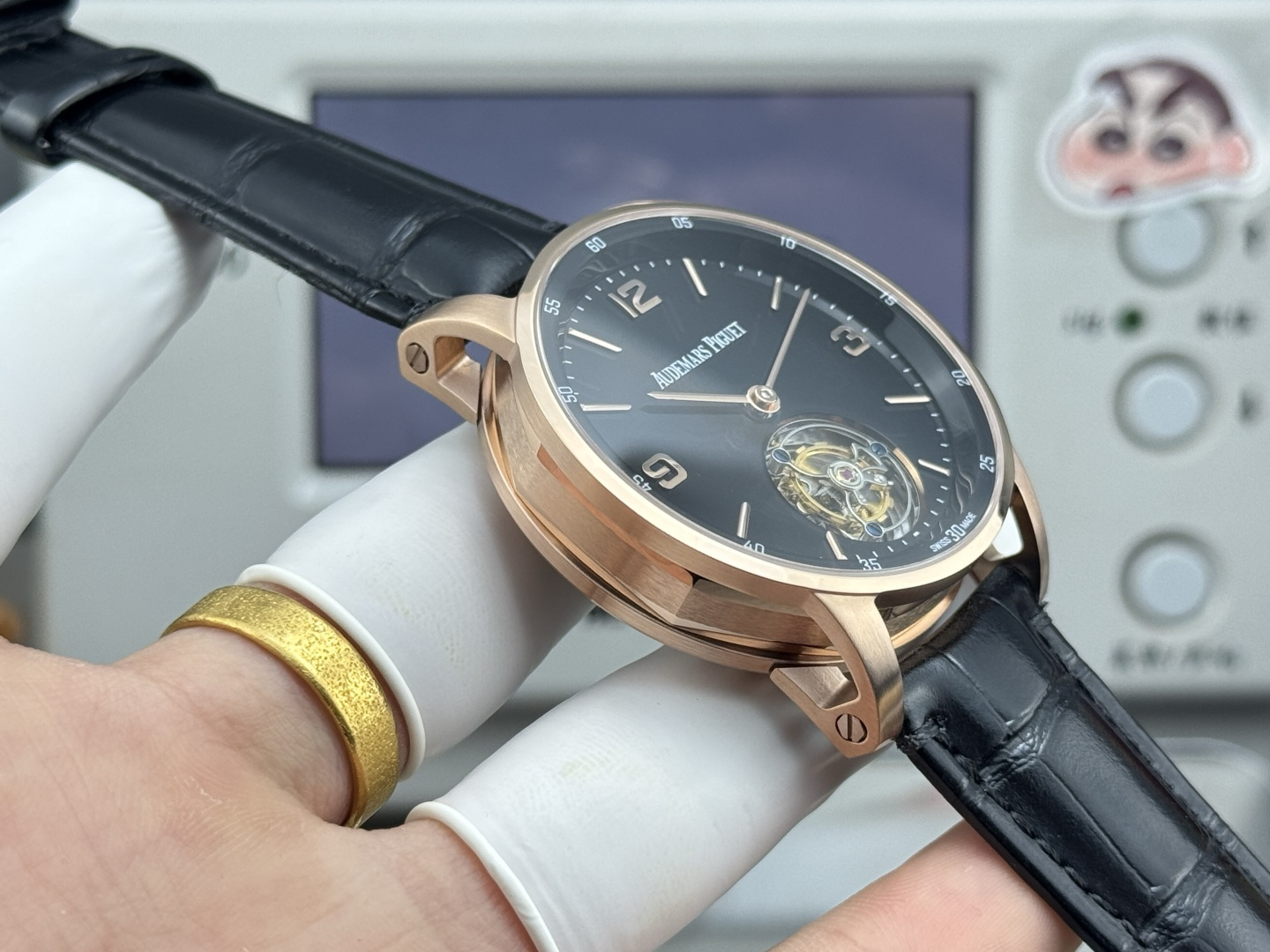
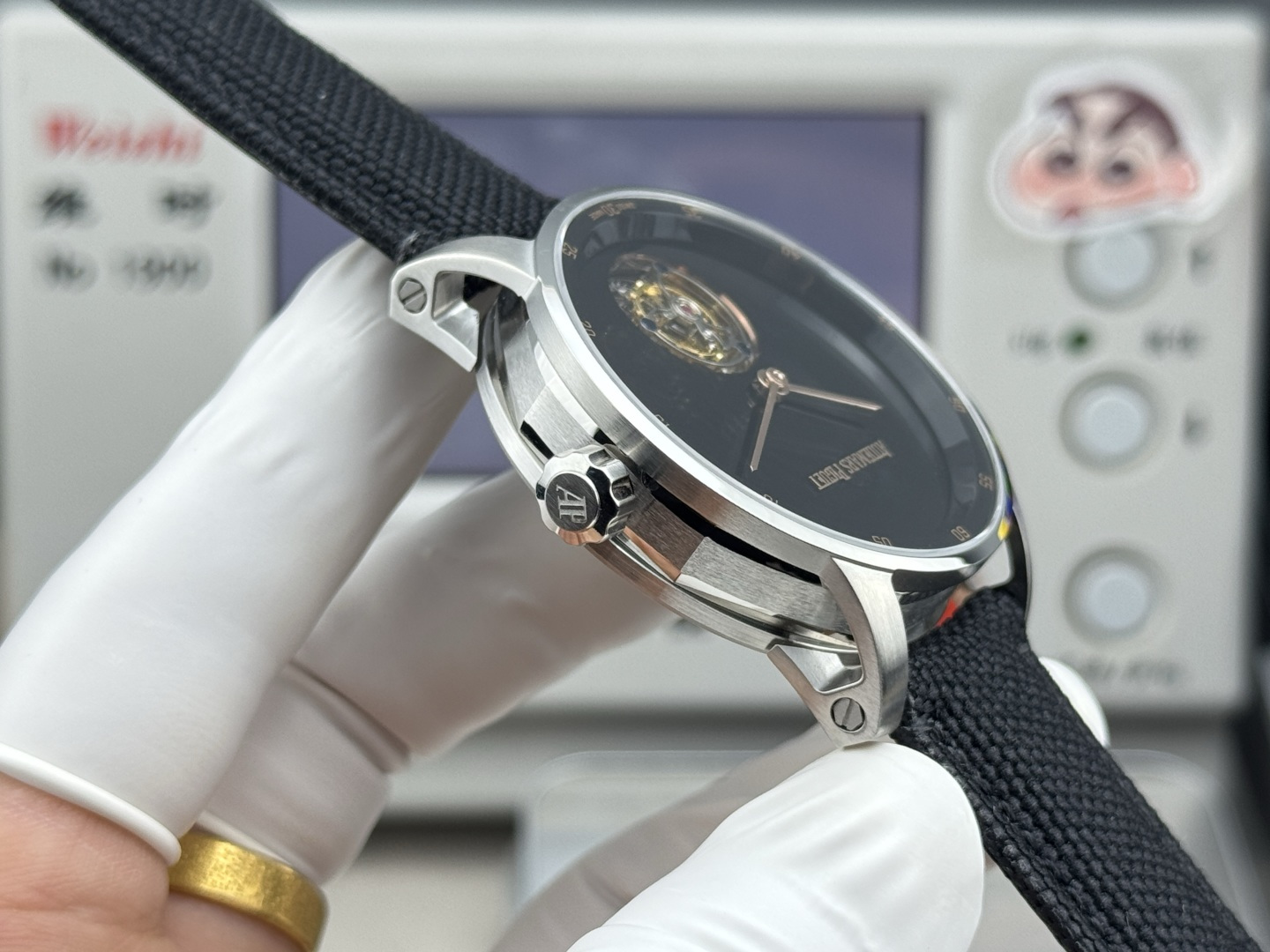
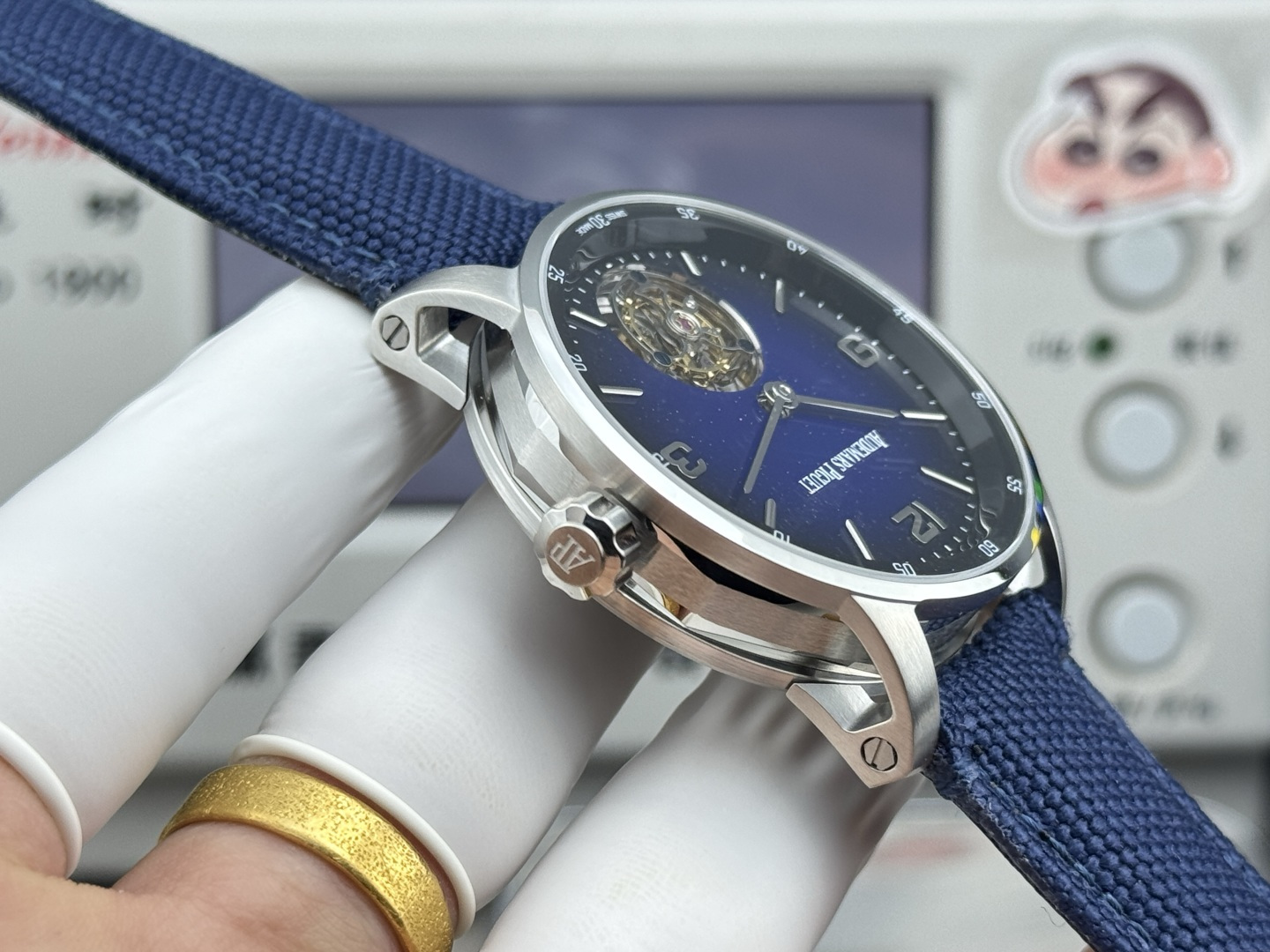
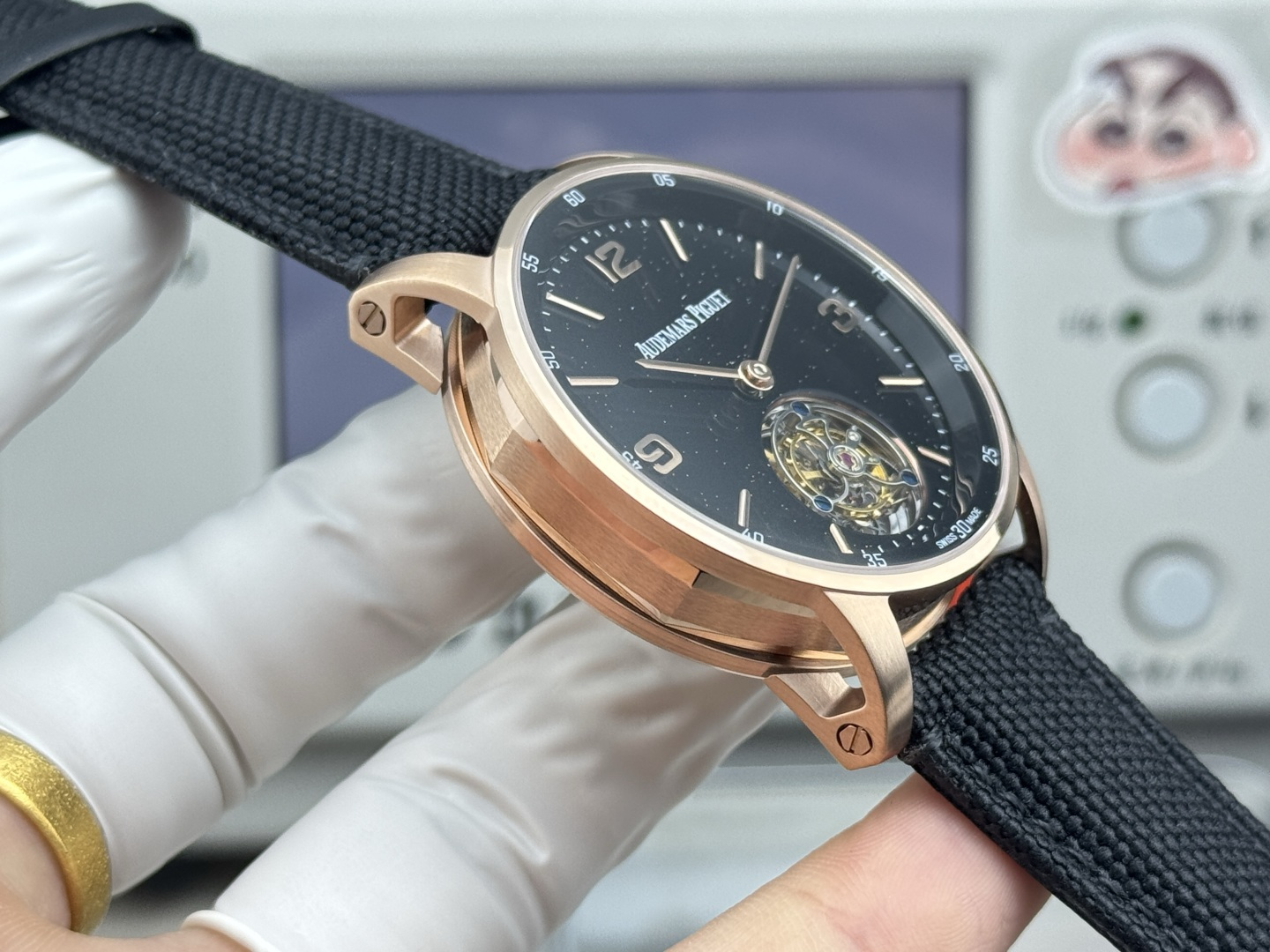
The 42mm diameter with the CODE 11.59’s specific lug-to-lug geometry wears larger than the number suggests. AP designed this case to have significant wrist presence, and at 42mm with those swept lugs, the genuine piece sits close to 50mm lug-to-lug. This clone replicates that footprint, and the 316L steel construction gives it appropriate heft — not the hollow, tinny feel of budget clones, but a solid density that passes the hand-feel test.
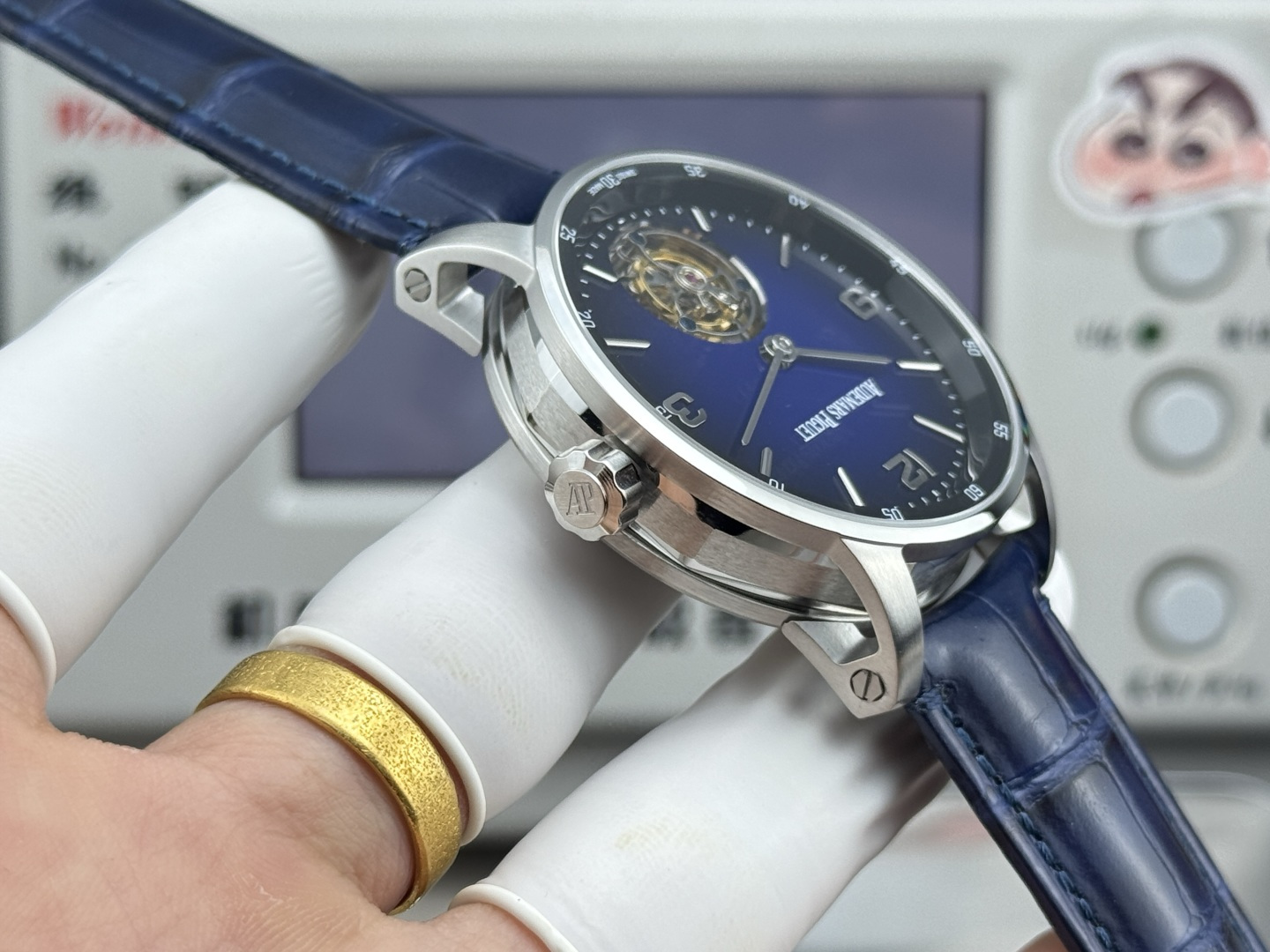
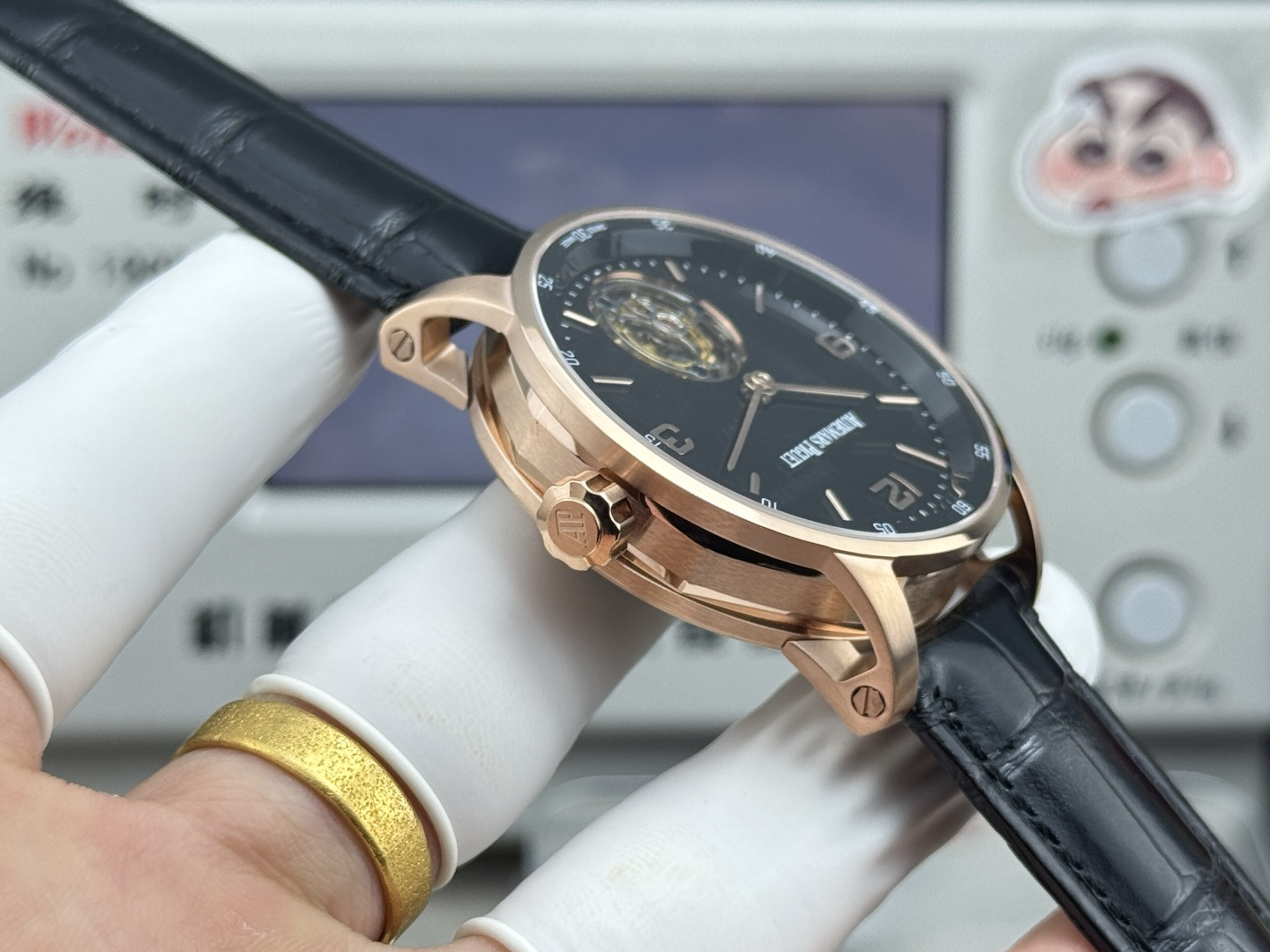
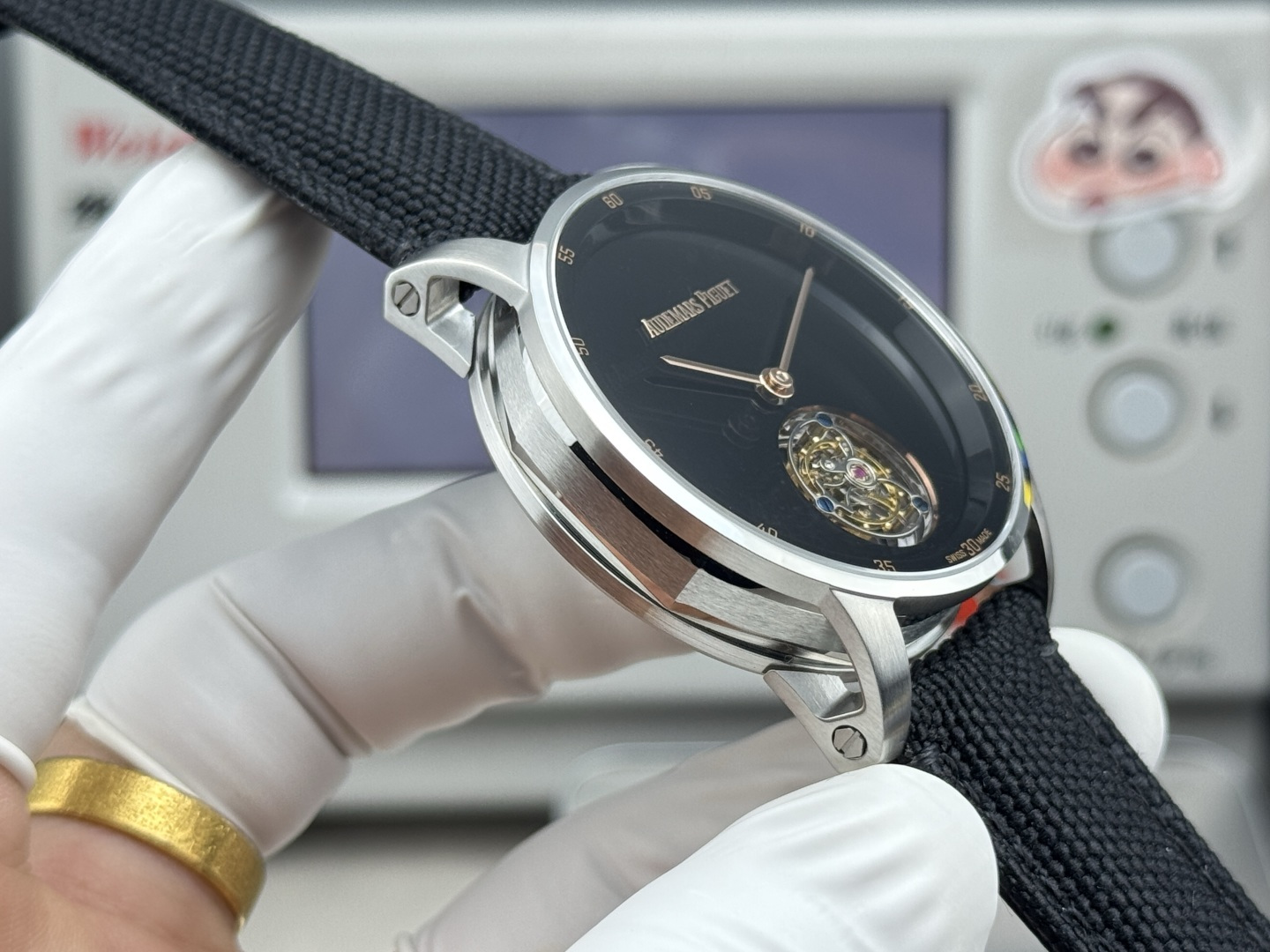
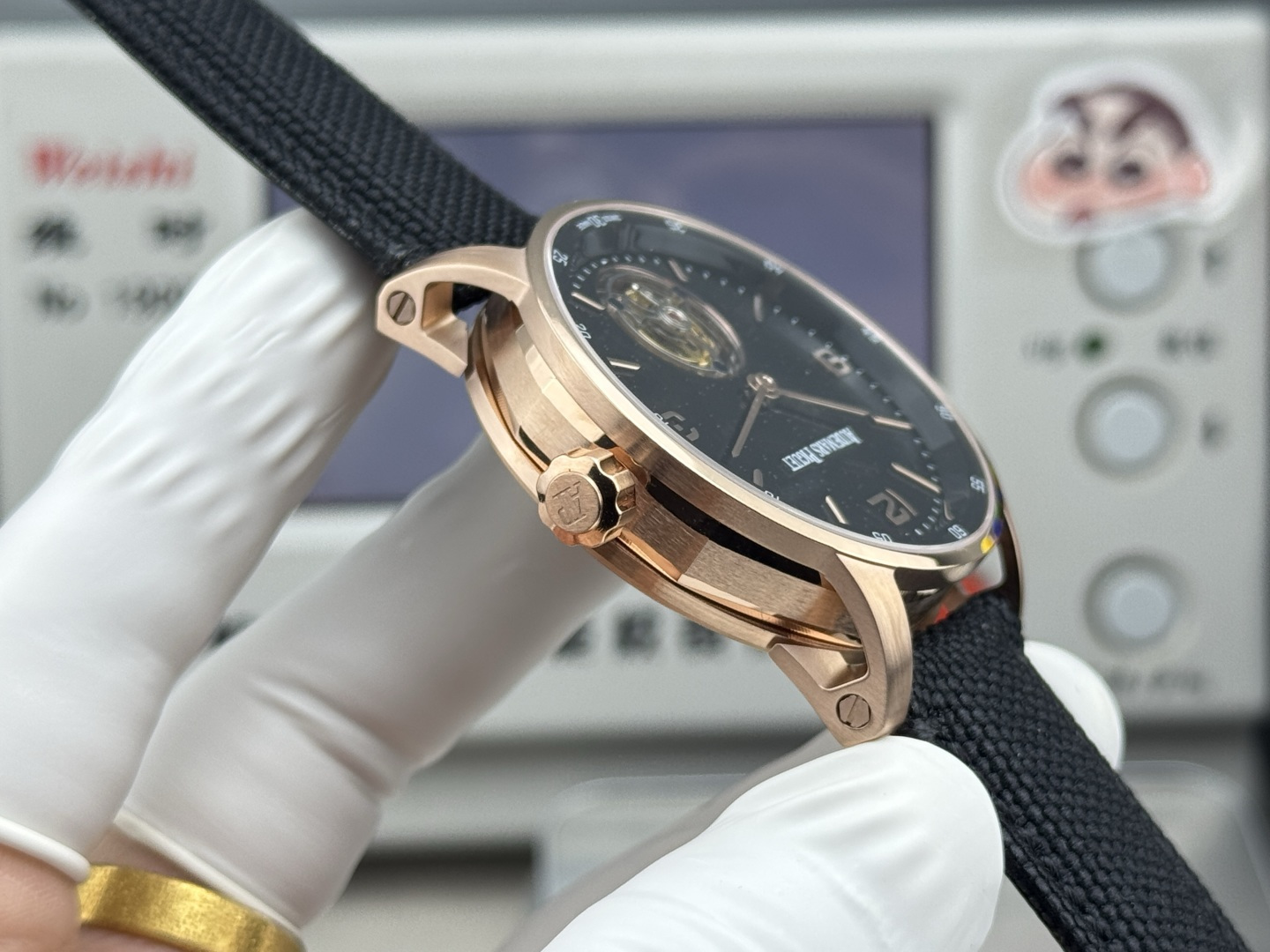
The three-part case construction — bezel, mid-case, caseback — is CNC-machined and the tolerances are tighter than I expected. The octagonal bezel sits flush with the mid-case transition without the gap or misalignment that plagues lesser examples. The brushed surfaces on the case flanks are directionally consistent, which matters more than people realize; on bad clones, the brushing direction shifts mid-lug, which immediately signals “wrong” to a trained eye even if the observer can’t articulate why.
Where the finishing loses the argument is on the chamfered edges — the anglage between the polished and brushed surfaces. On the genuine CODE 11.59, this is one of AP’s calling cards: crisp, mirror-bright chamfers that catch light like a knife edge. On this clone, the chamfering is present but soft. Under the loupe, the edges are rounded rather than sharply defined, and the poli spéculaire surfaces have micro-scratches suggesting machine polishing rather than hand black-polishing. From wrist distance, it reads as “shiny.” Under magnification, it reads as “not finished.”
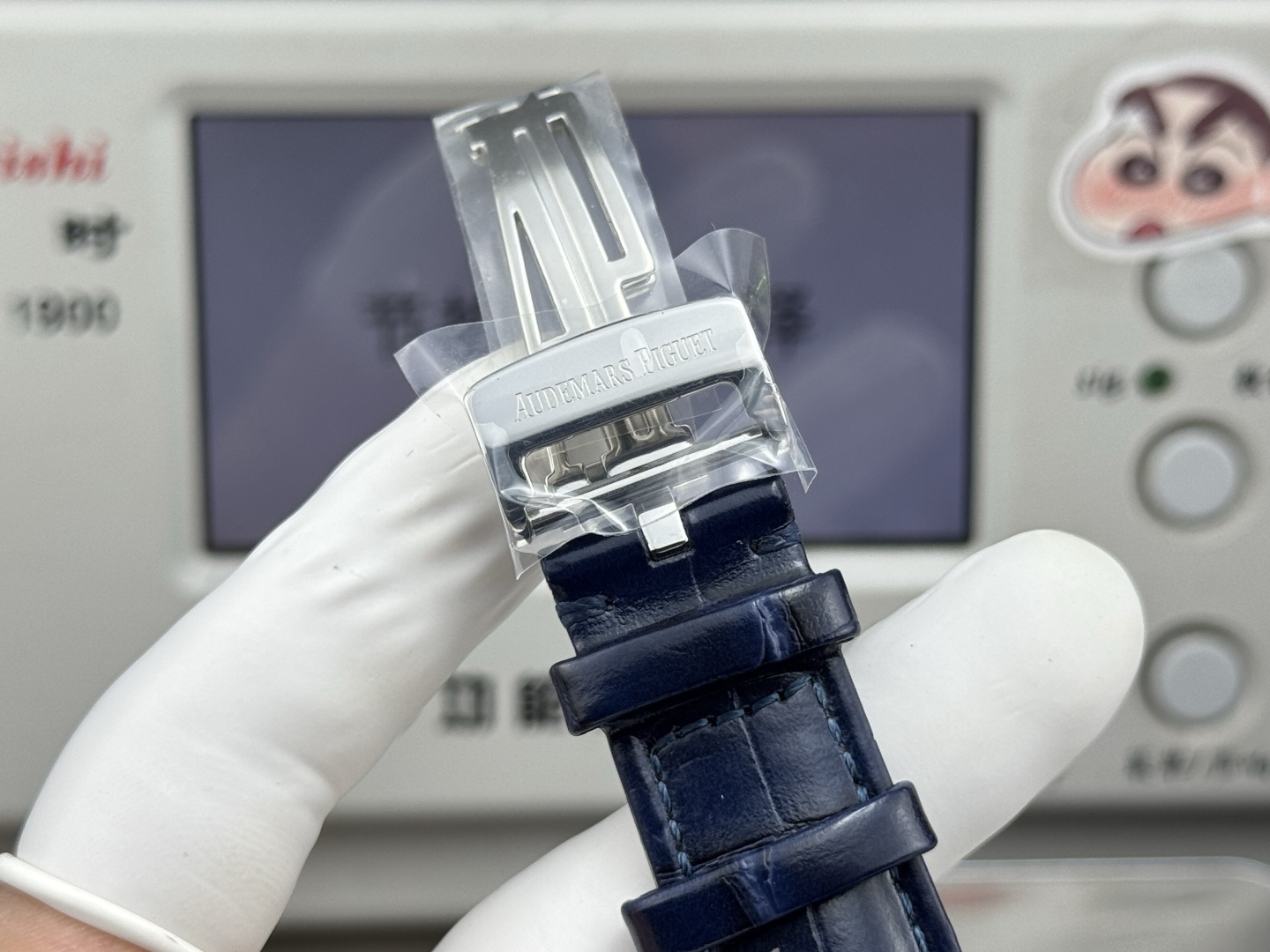
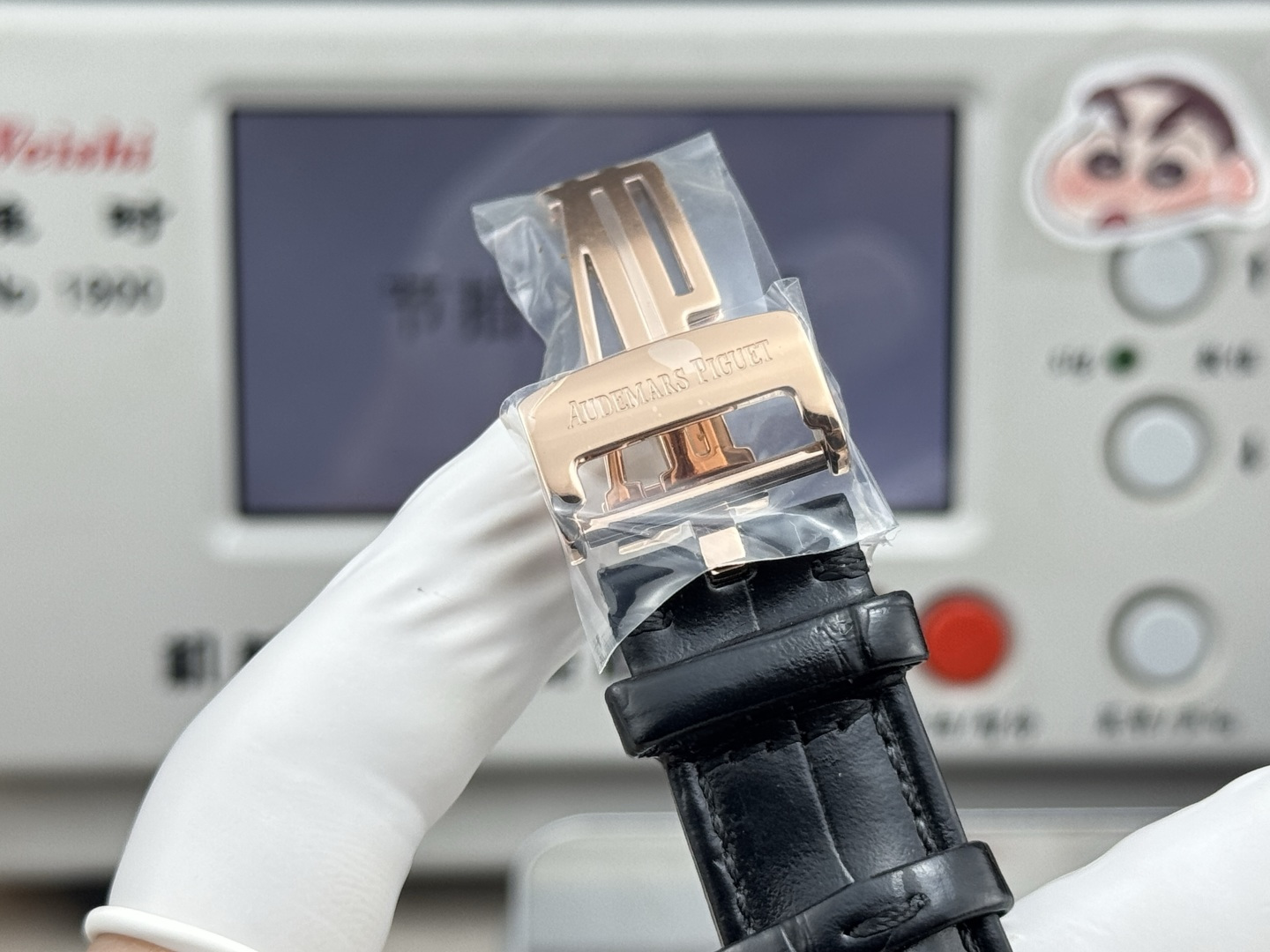
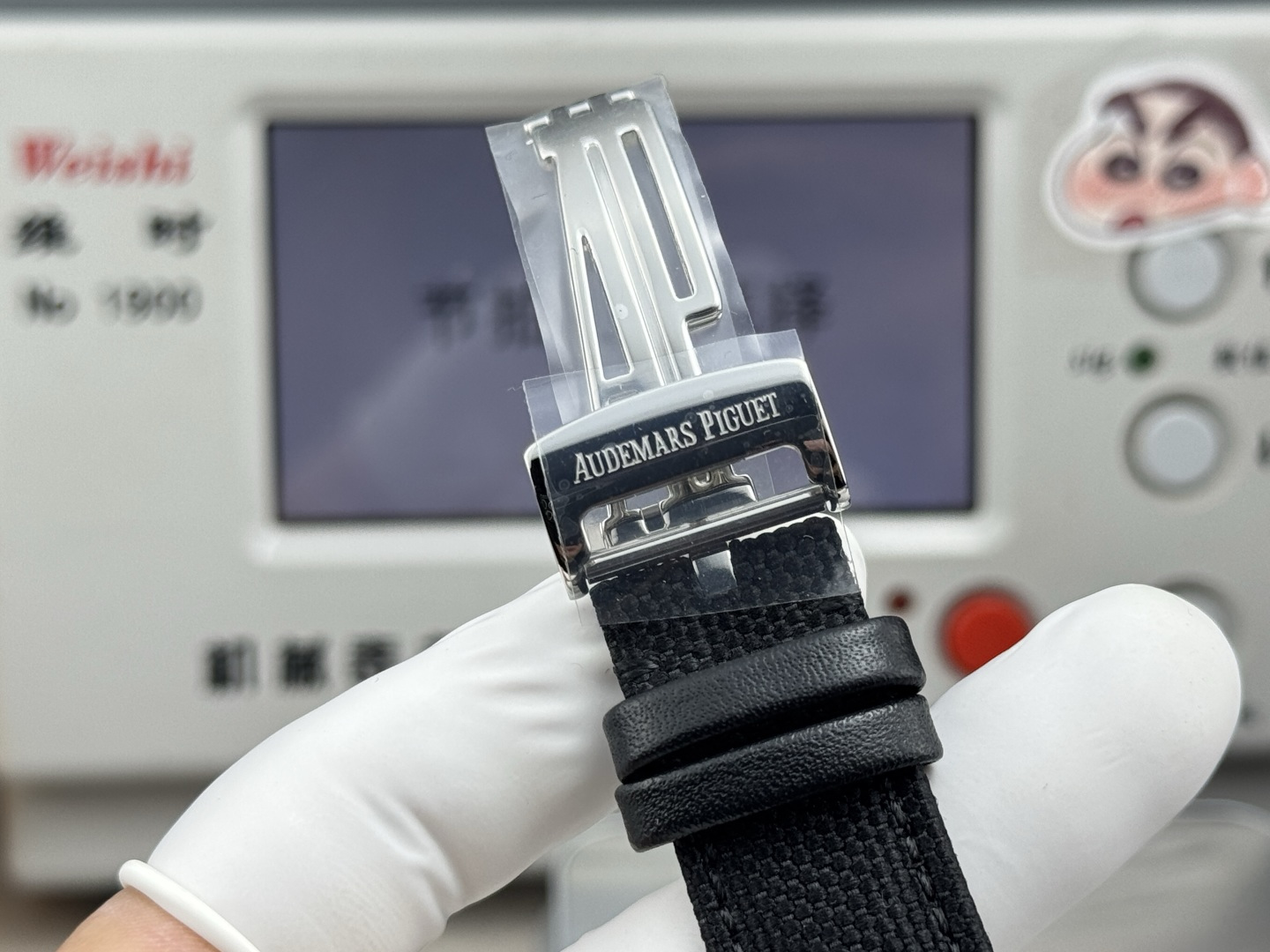
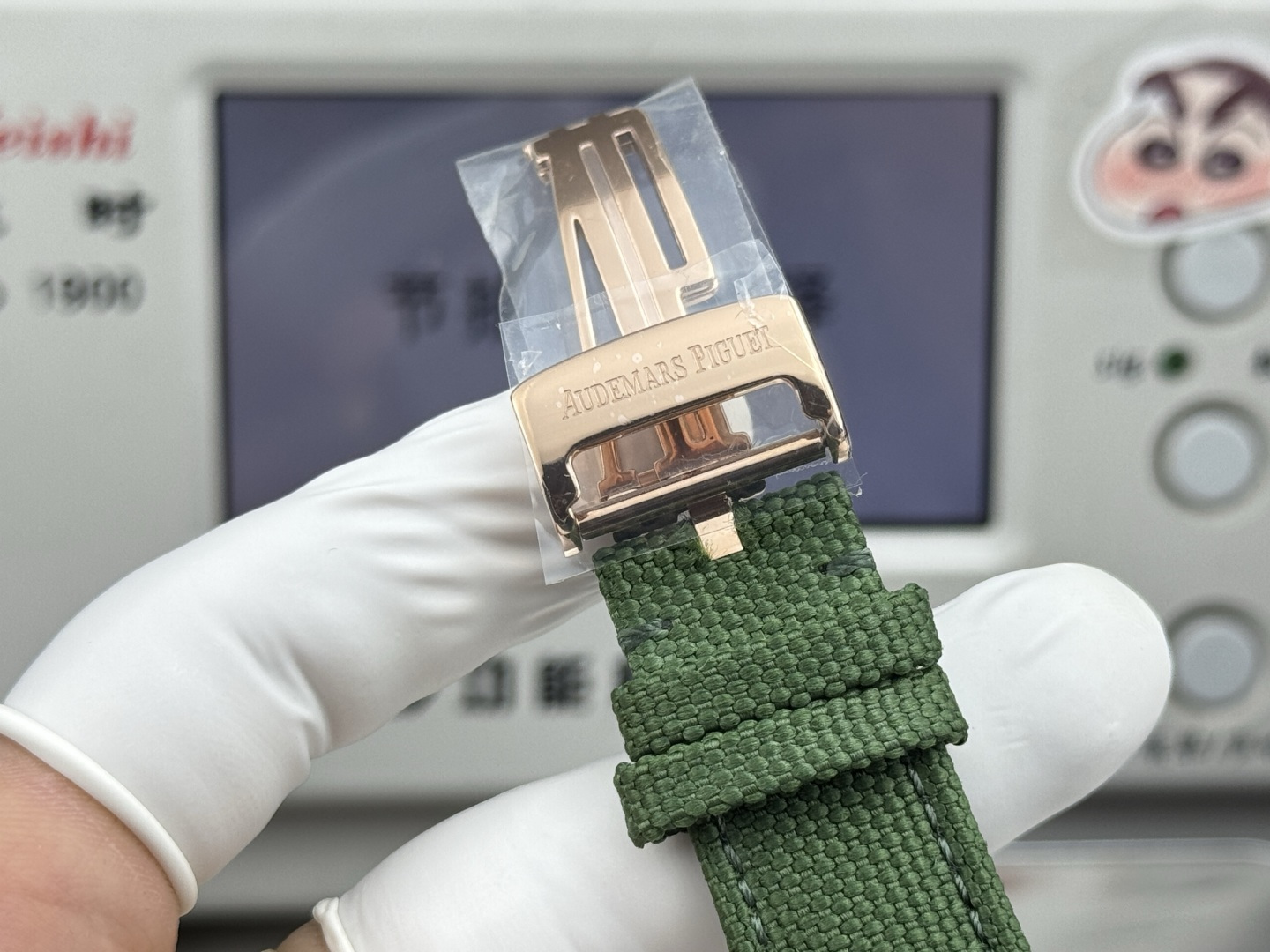
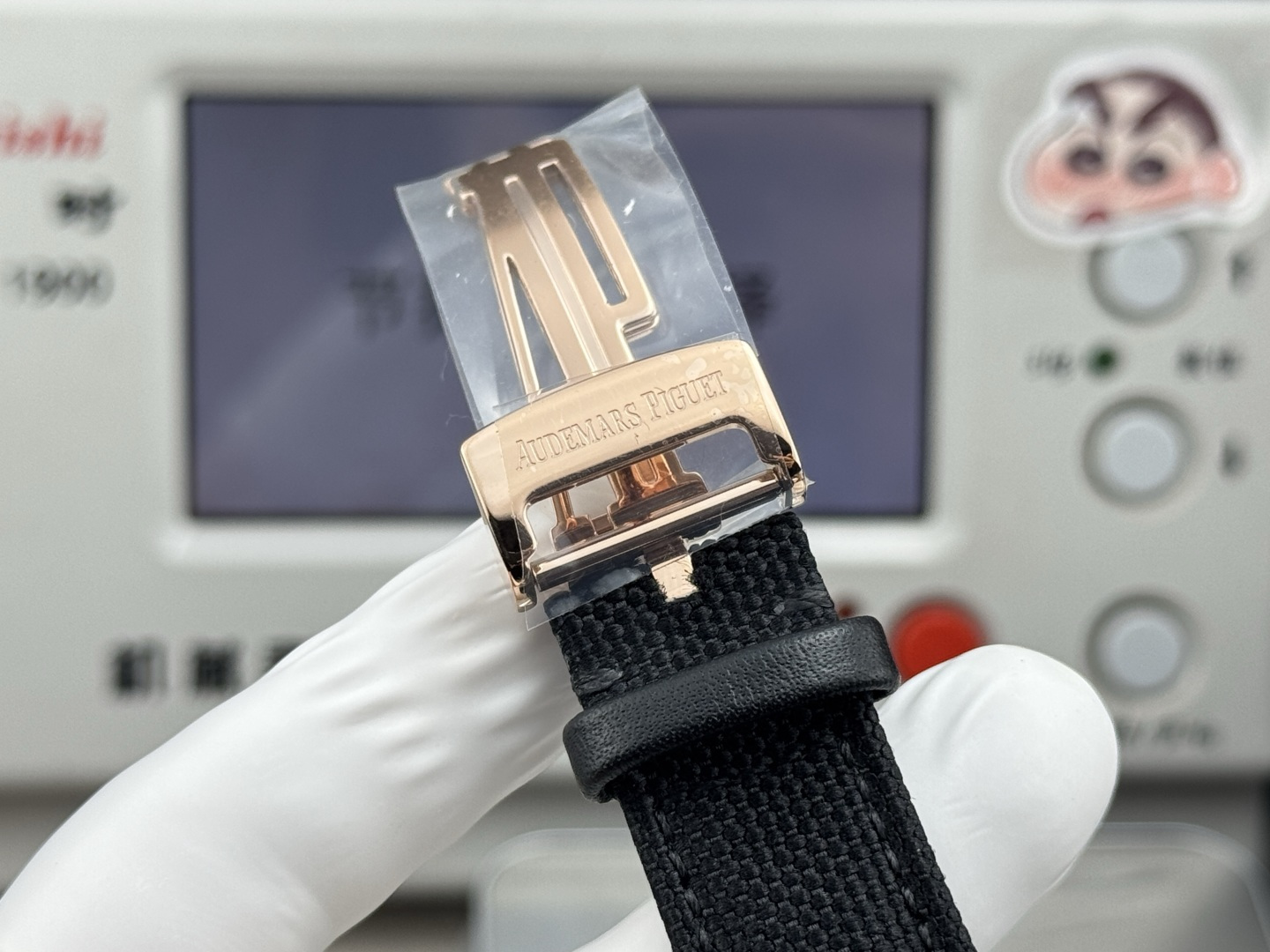
The crown has good knurling texture and winds smoothly. The deployant clasp on the strap option I tested — the Italian calfskin — is functional but the brushing on the clasp buckle is coarser than the case itself, a small inconsistency that suggests different production runs for case and hardware.
“SEL articulation on this piece is a non-issue since it ships on leather — but the strap-to-lug interface is clean, and the tang buckle has enough weight to not feel like an afterthought.”
Mechanical Execution: The Cal.2950 Clone Under Scrutiny
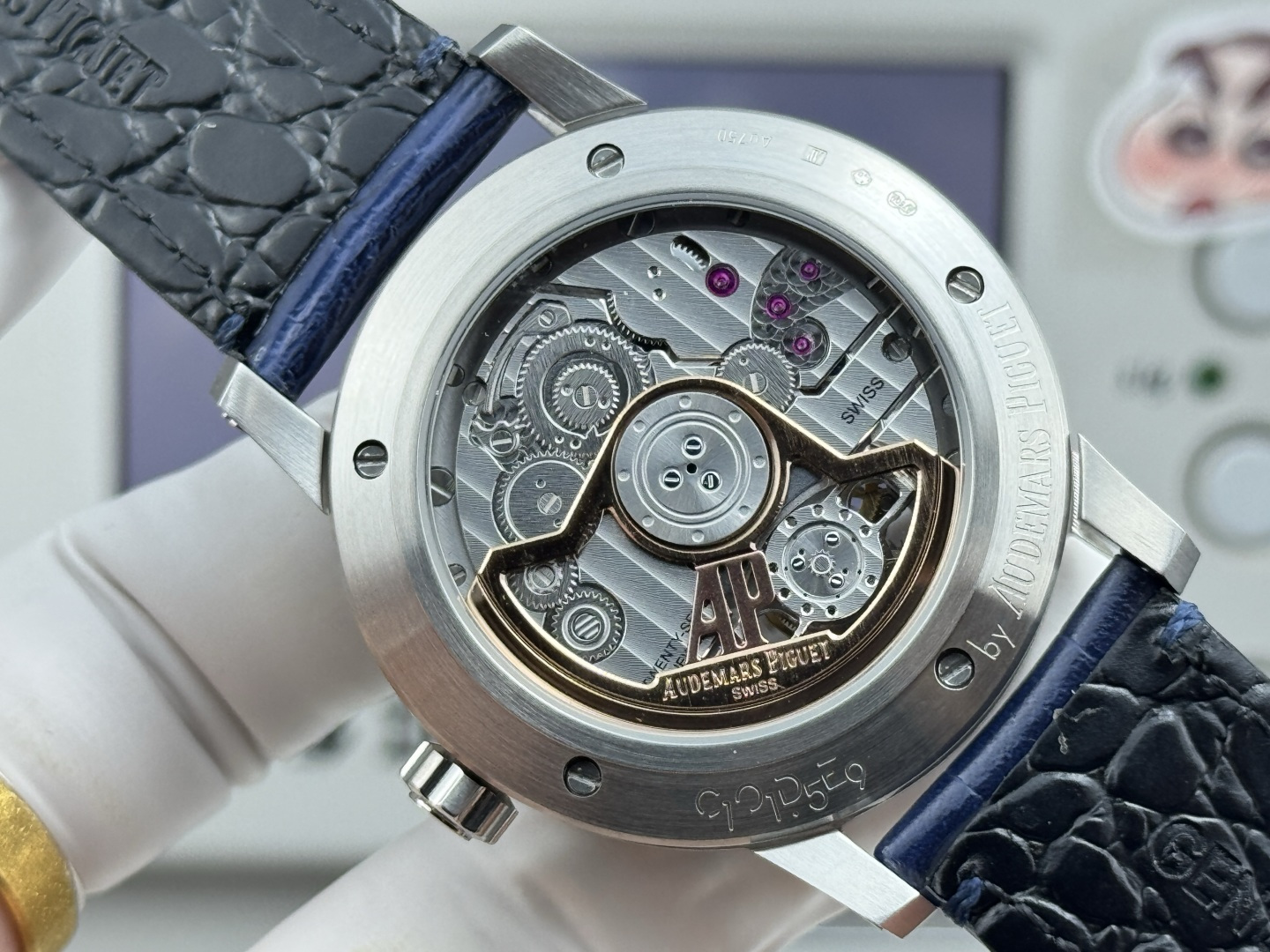
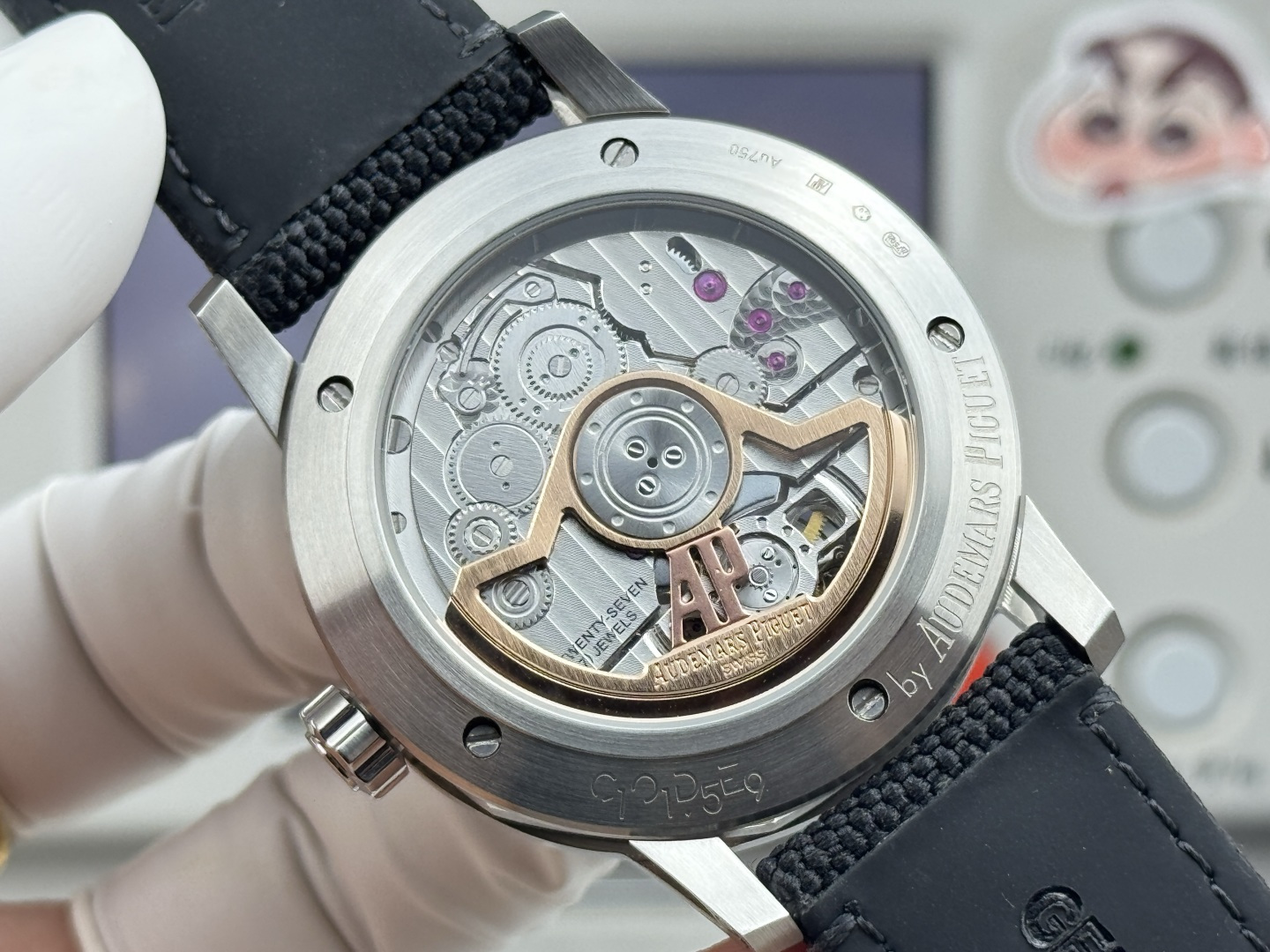
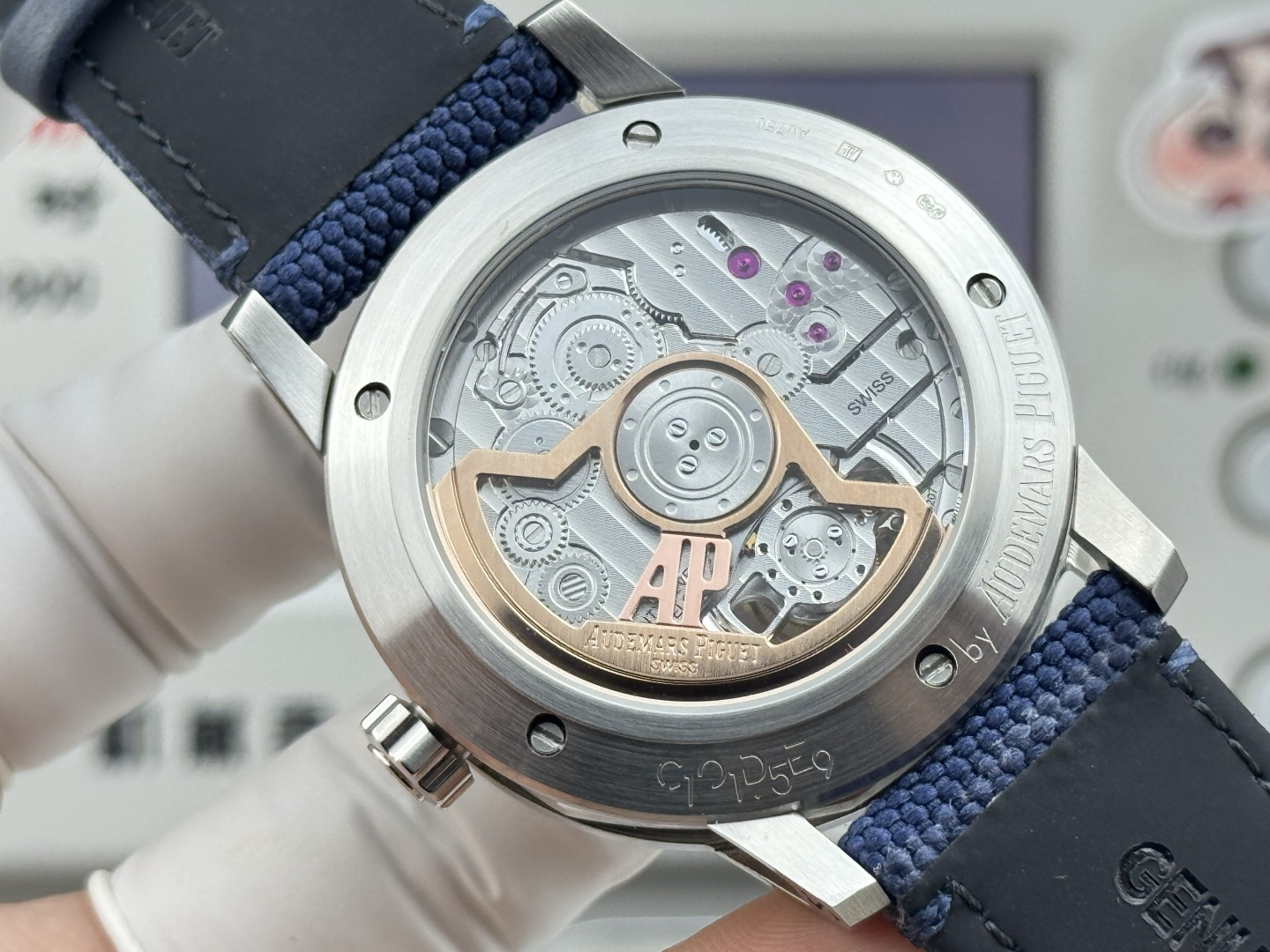
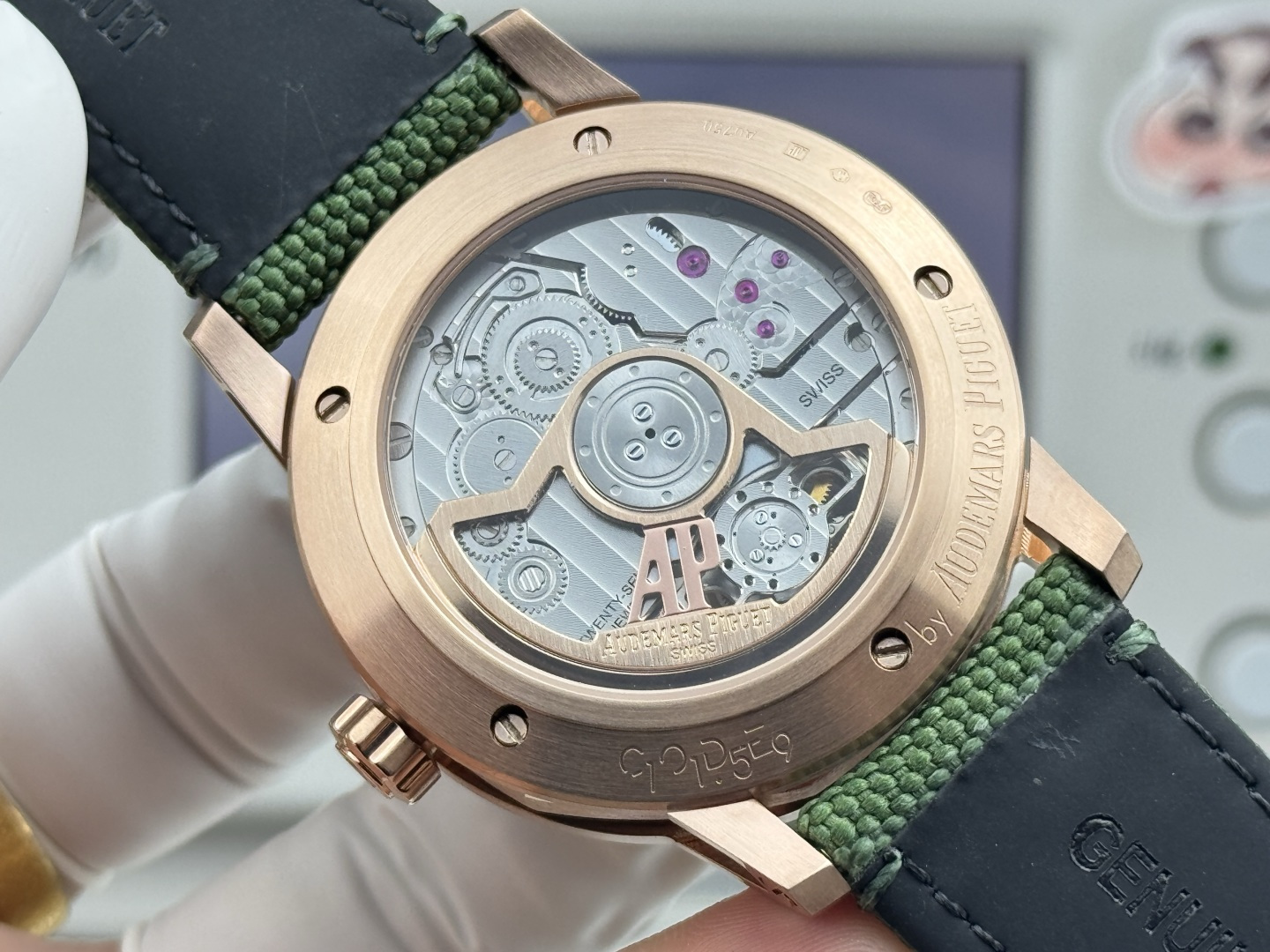
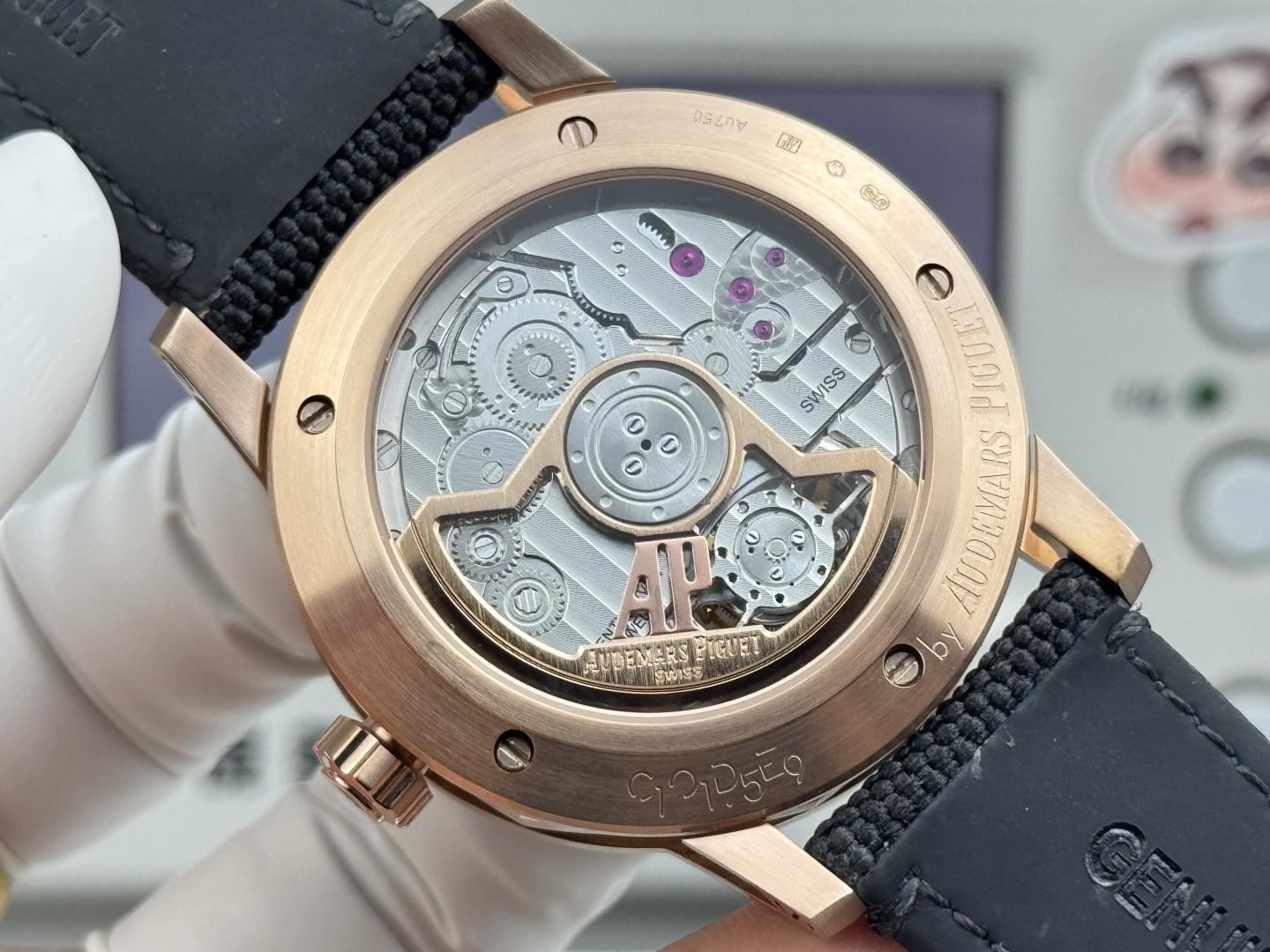
The genuine AP Caliber 2950 is a hand-wound flying tourbillon beating at 21,600 vph with a 72-hour power reserve. This clone specifies a “Cal.2950” automatic with 60-hour power reserve — which immediately tells you something important: the movement inside is not a faithful recreation of the hand-wound 2950. The addition of an automatic rotor changes the fundamental architecture. What’s almost certainly inside is a Chinese tourbillon ebauche — likely based on a Seagull ST8000-series derivative or similar — with a rotor added and branded with “2950” on the bridges.
The tourbillon itself, viewed through the dial aperture, rotates at the expected 1-revolution-per-minute rate. The cage construction looks reasonable at dial-side viewing distance. What I couldn’t fully evaluate without disassembly is the escapement quality, the balance wheel amplitude under power, and the accuracy of the beat rate. Timekeeping over five days averaged approximately +/- 8 seconds per day, which is acceptable for a clone tourbillon — genuine tourbillons at this price point in the genuine market are regulated to COSC chronometer standards or better, but expecting that from a clone movement is unrealistic.
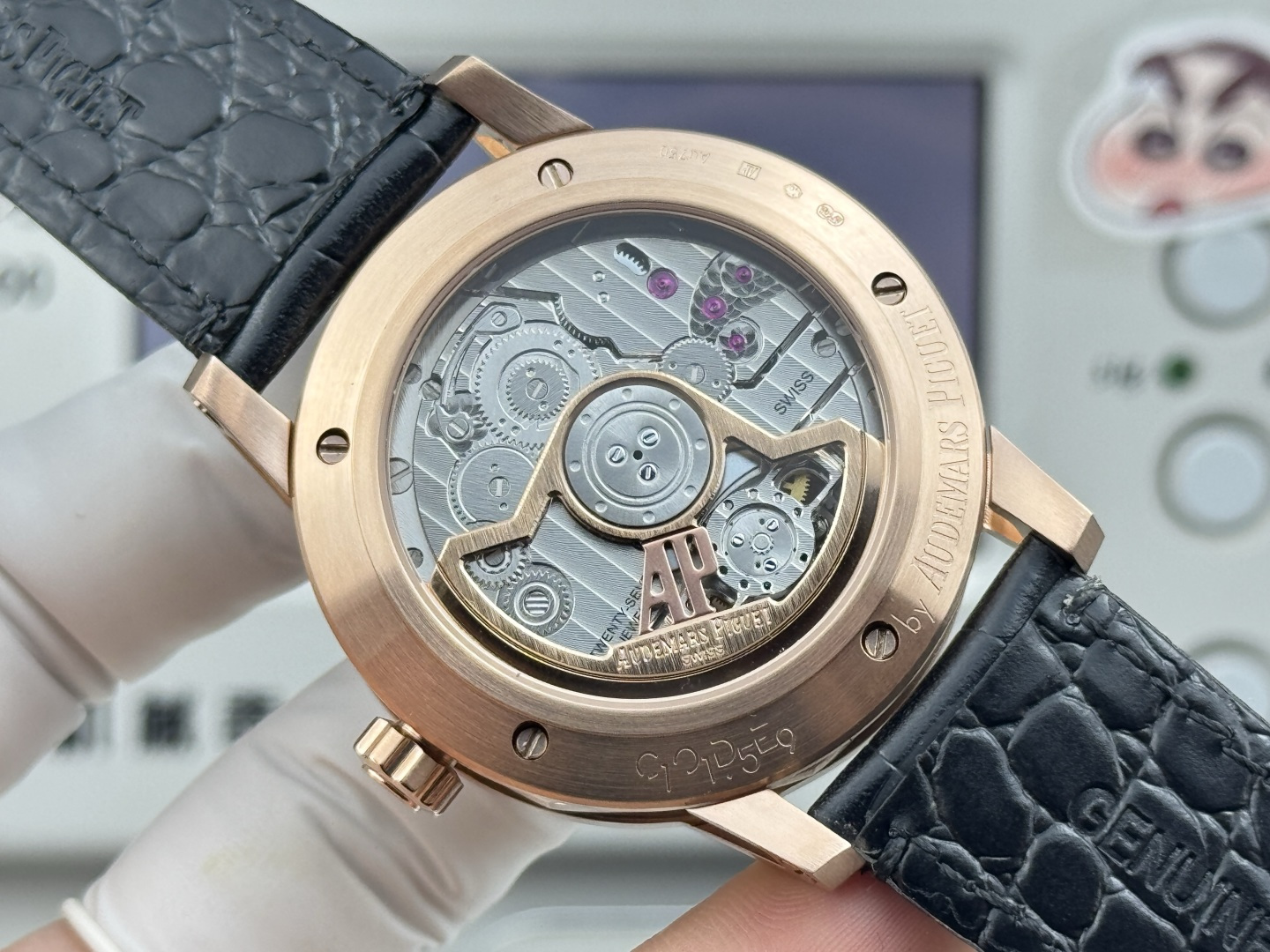
The exhibition caseback, if present, would reveal the rotor and finishing — perlage on the mainplate, côtes de Genève on the bridges, and the tourbillon cage from the movement side. The specs don’t clarify whether an exhibition caseback is included, and the example I tested had a solid caseback. Probably intentional — movement finishing on clone tourbillons rarely survives scrutiny from the back.
The Definitive Flaw
If I had to identify the single element that most definitively separates this clone from the genuine article — not for a collector who knows what they’re looking at, but as an objective quality benchmark — it’s the dial material. Not the printing, not the indices, not the case finishing. The aventurine enamel simulation. Grand feu enamel has a quality that’s genuinely difficult to articulate but immediately obvious when you’ve handled the real thing: it has depth. The surface isn’t flat. Light enters the material, bounces around inside it, and returns to your eye having traveled through something. This clone’s dial, under a 10x loupe, reveals its surface-level nature definitively. The aventurine effect is a coating, not a material. It’s the difference between a stained-glass window and a photograph of one.
Everything else — the case dimensions, the movement functionality, the overall visual drama — can be excused or contextualized within the clone market’s limitations. The dial is the soul of the 26396, and this is where the replica necessarily and fundamentally diverges from the original.
Final Takeaway
For a grey-market buyer who wants the CODE 11.59 tourbillon’s visual statement on a strap at a fraction of the genuine price, this clone delivers a more competent package than most of the market. The case construction is solid, the dial reads correctly from social distance, and the tourbillon complication functions. The cal finishing and the aventurine simulation won’t survive close inspection from anyone who’s held the real thing.
The more interesting question is why you’d want a clone of the CODE 11.59 specifically — a watch that was controversial precisely because it looked like AP was chasing a different audience. In clone form, stripped of the grand feu enamel that was its strongest genuine argument, it’s a bold design statement built on a compromise foundation. Whether that’s worth your money depends entirely on what you’re trying to say when you strap it on.