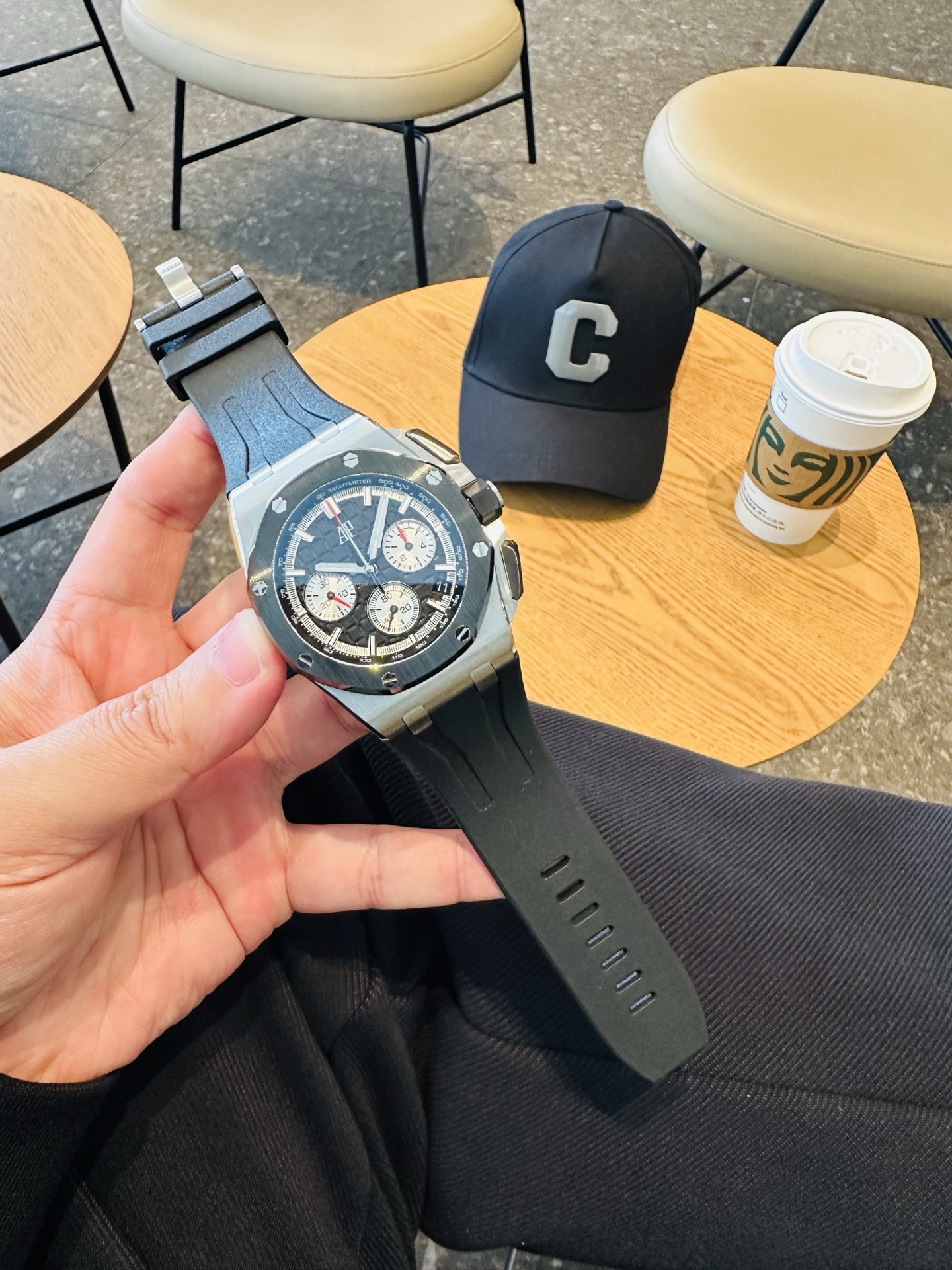
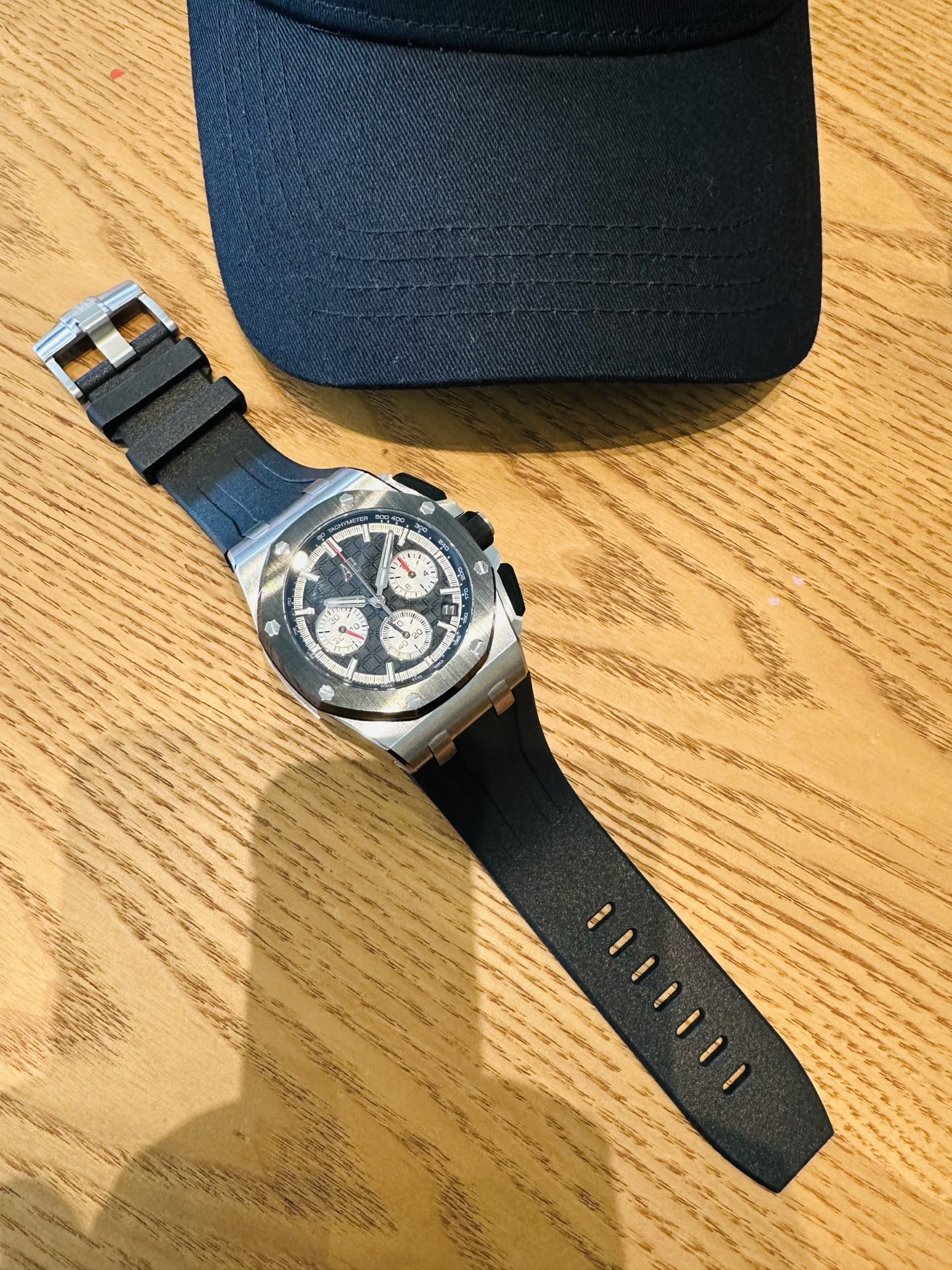
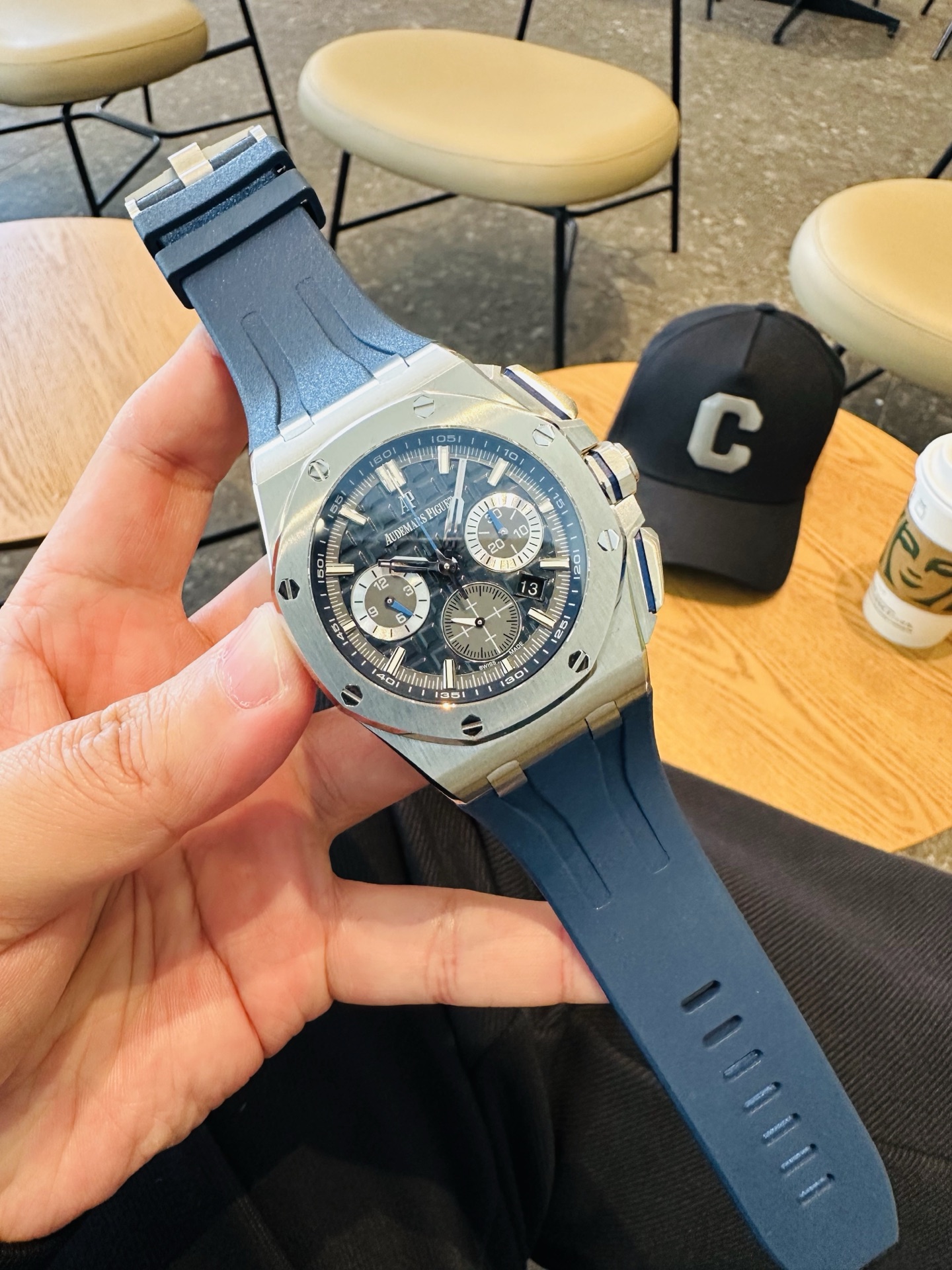
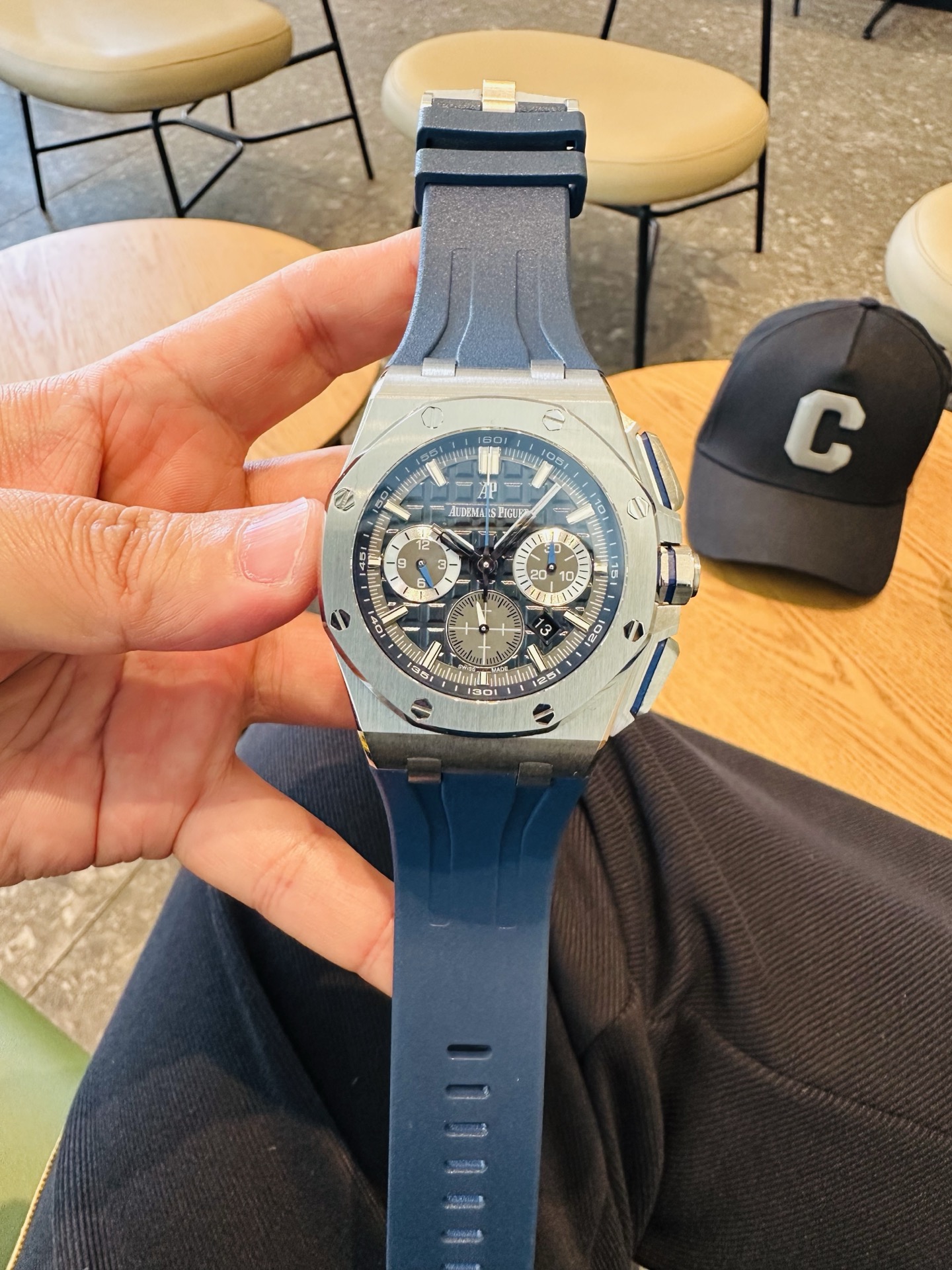
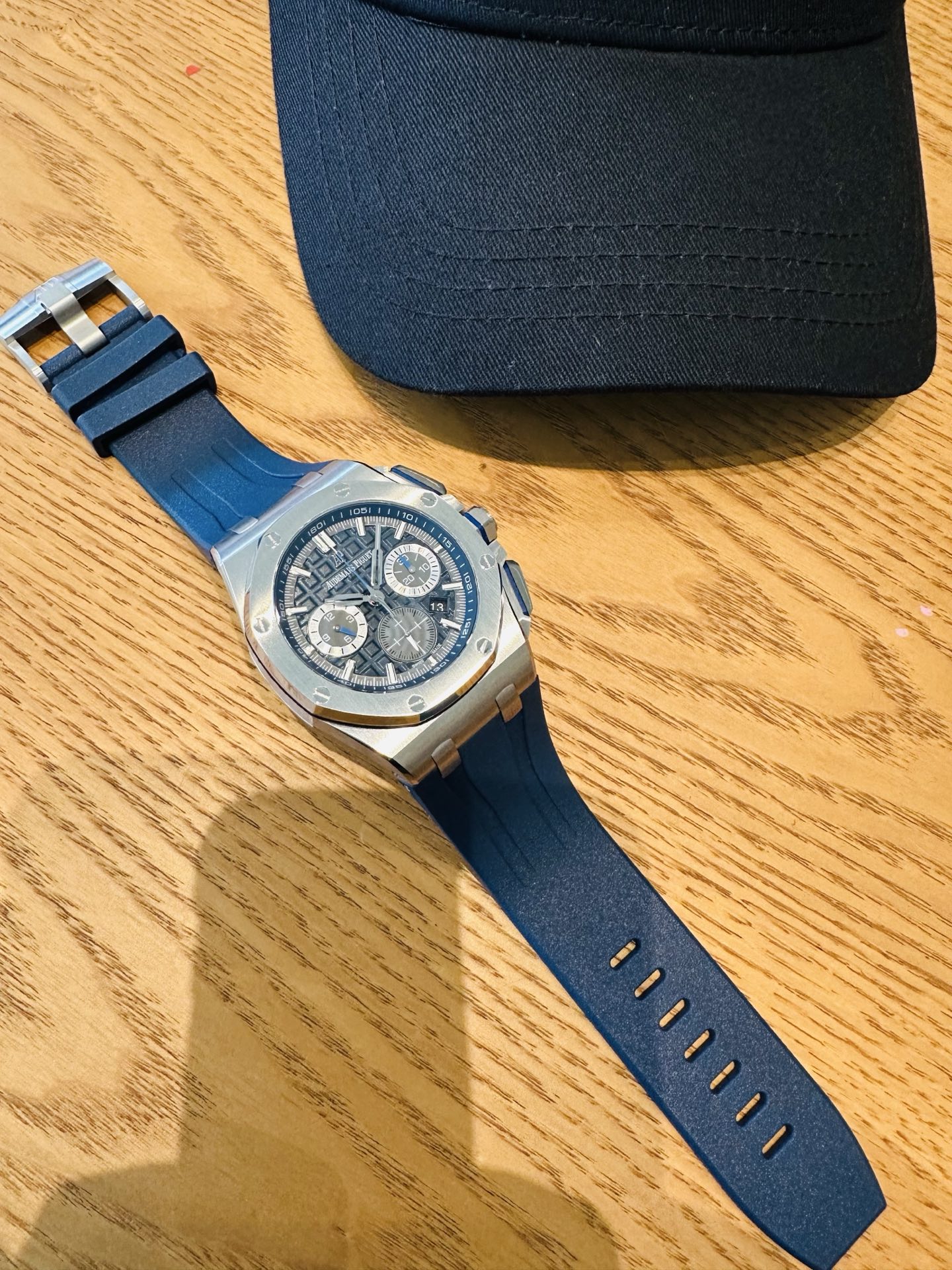
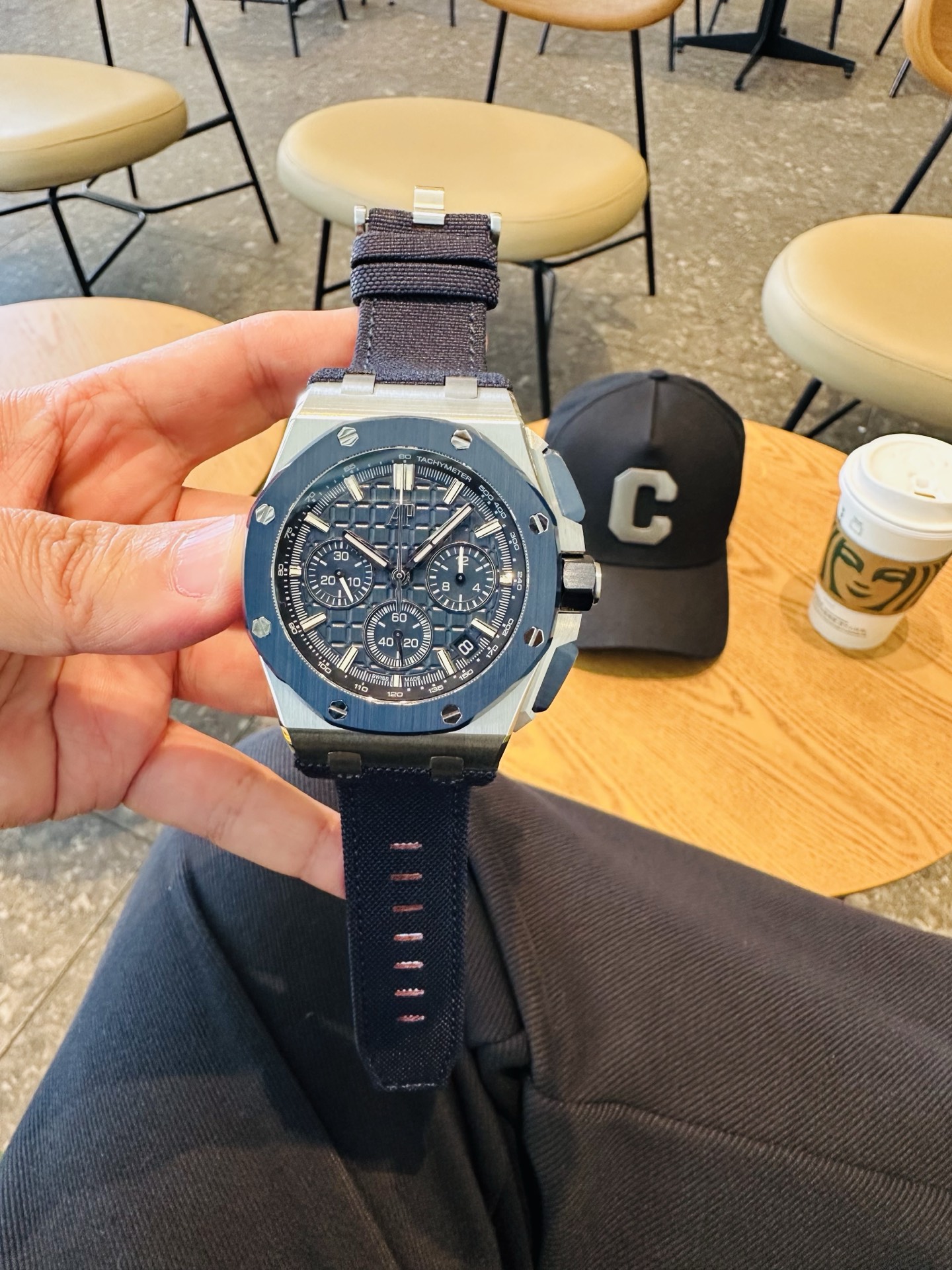
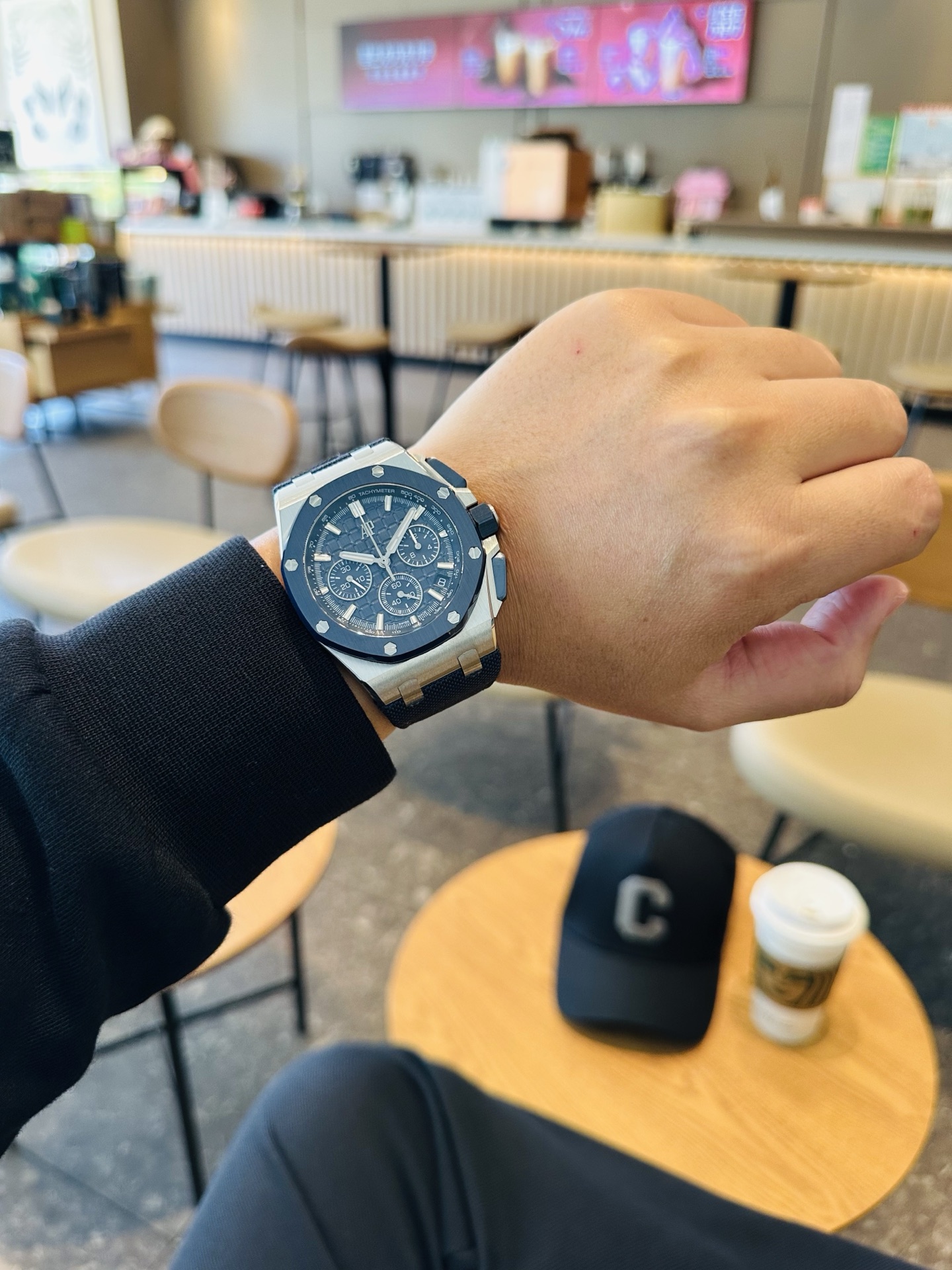
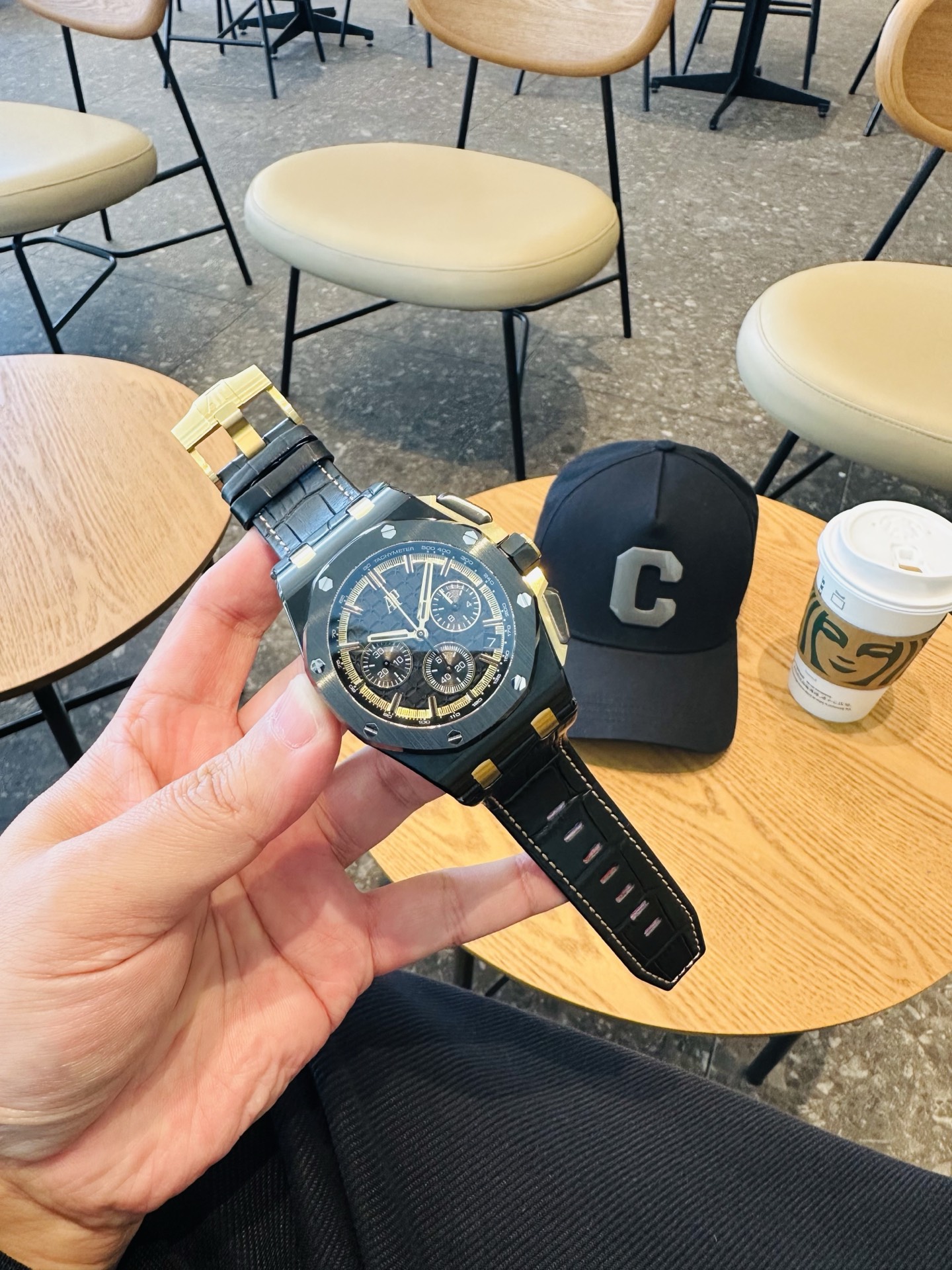
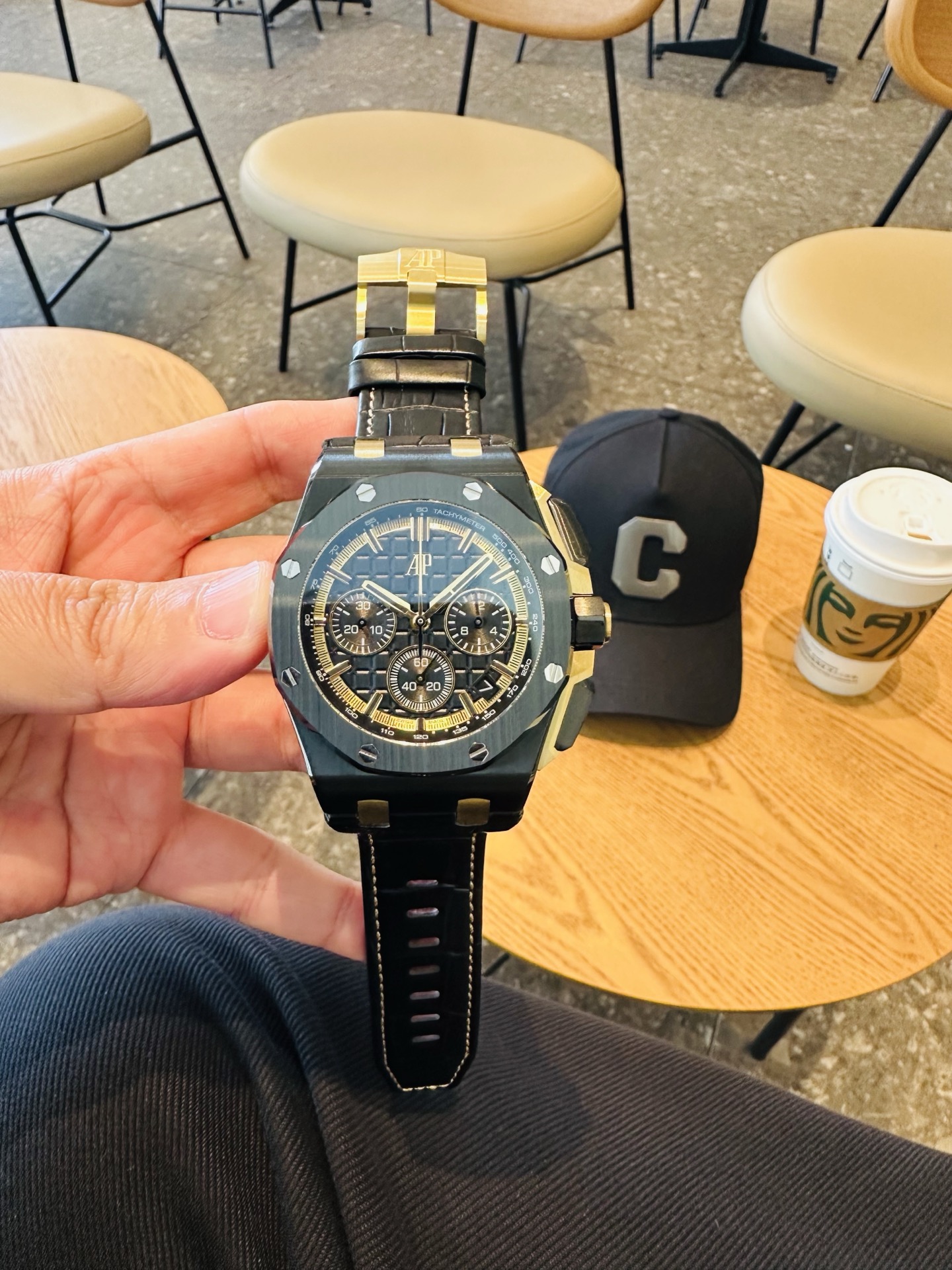
There is a particular kind of anticipation that arrives when a watch lands on your wrist and immediately feels different — not merely new, but considered. The Audemars Piguet Royal Oak Offshore 26420, as reimagined by LS Factory, carries that quality from the first moment you buckle the strap. This is not a casual refresh. It is a deliberate, architectural rethinking of one of horology’s most muscular and recognisable silhouettes, and it announces itself with the quiet confidence of something that has been genuinely engineered rather than simply assembled.
The Allure: A Giant With Something to Prove
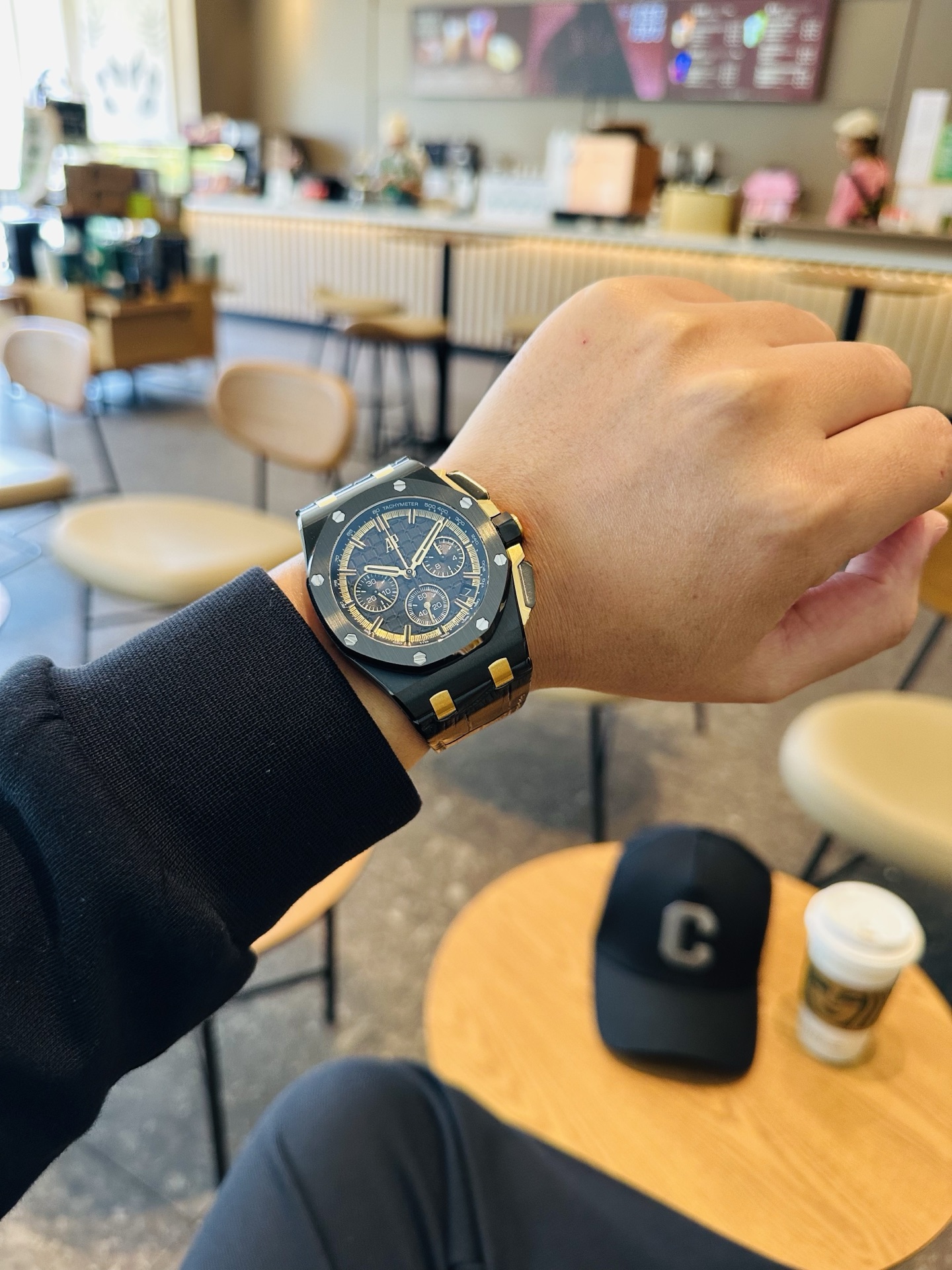
The Royal Oak Offshore has always occupied a singular position in the watch world — too bold for the boardroom, too refined for pure sport, and entirely too compelling to ignore. The 26420 reference, in its original guise, carried the legacy of the 26400 forward, though critics noted that the production replica market had largely recycled the older shell rather than committing to the genuine dimensional evolution the new reference demanded. LS Factory, to their considerable credit, refused that shortcut. What you encounter here is a watch that earns its identity through a genuinely new mould, and the difference is immediately legible, even to an untrained eye. The bezel sits with greater authority, the proportions feel resolved rather than compromised, and the whole ensemble carries the kind of visual weight that draws glances across a room without shouting for them.
Architecture in Metal: 43mm of Deliberate Engineering
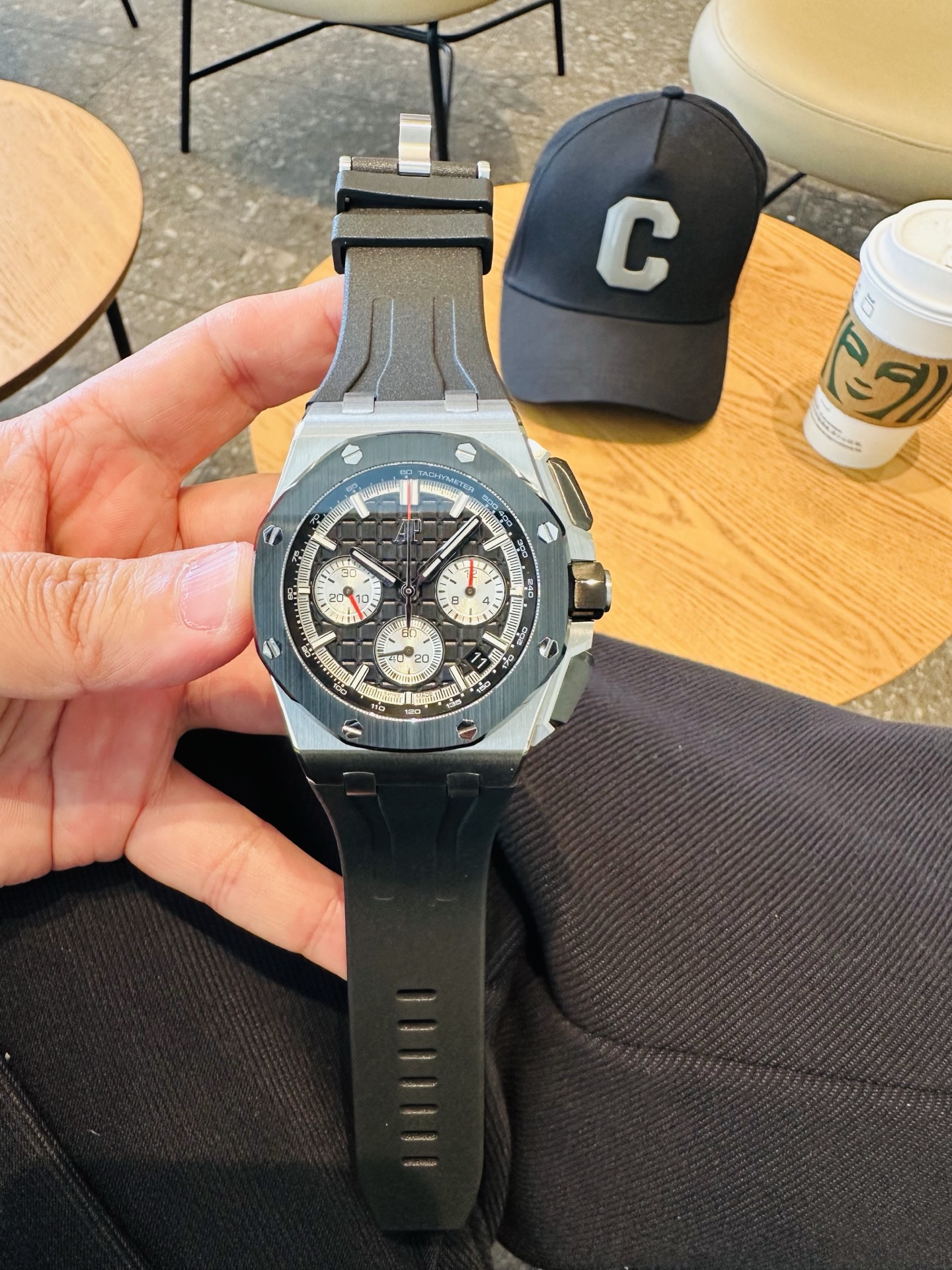
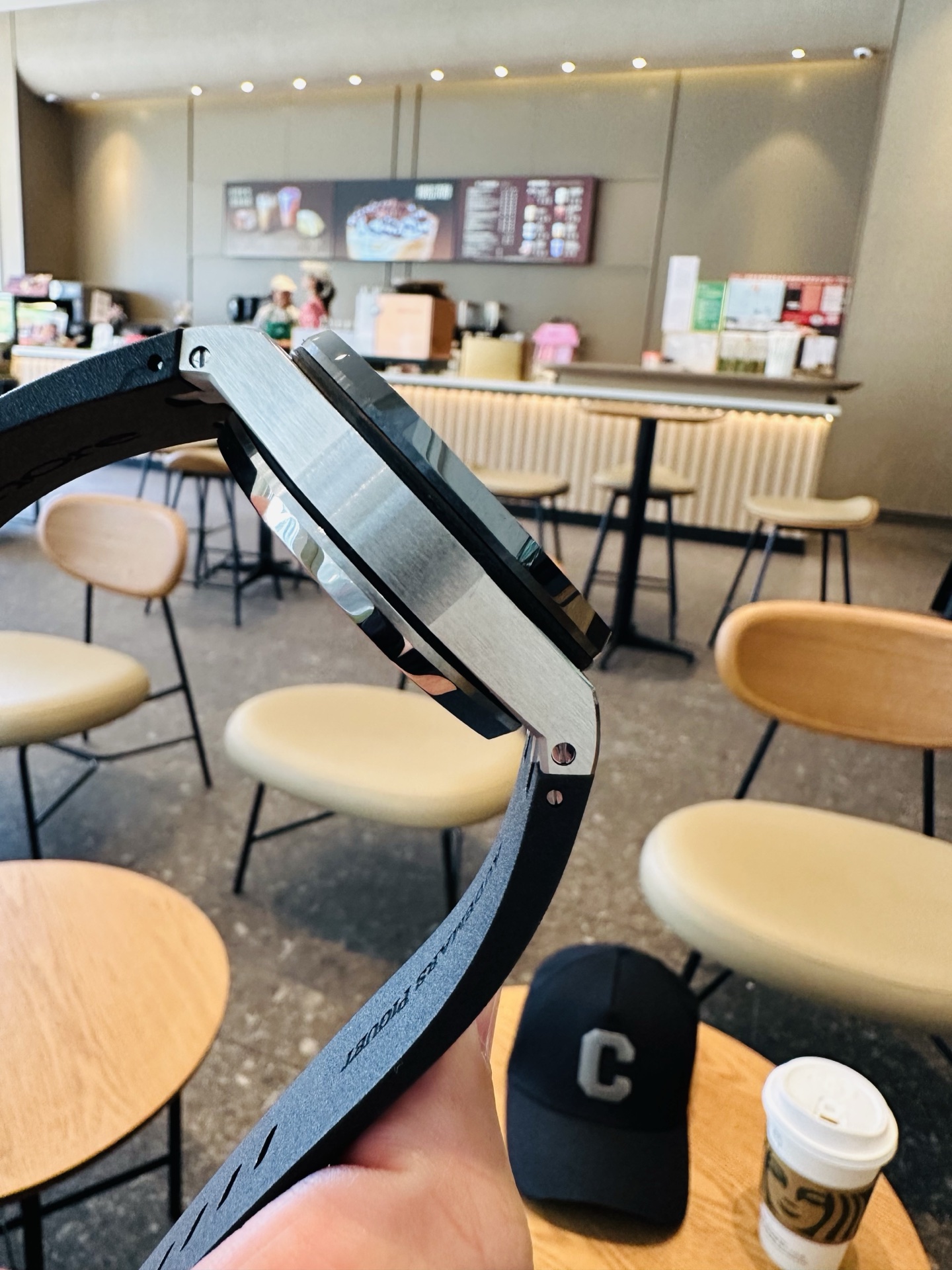
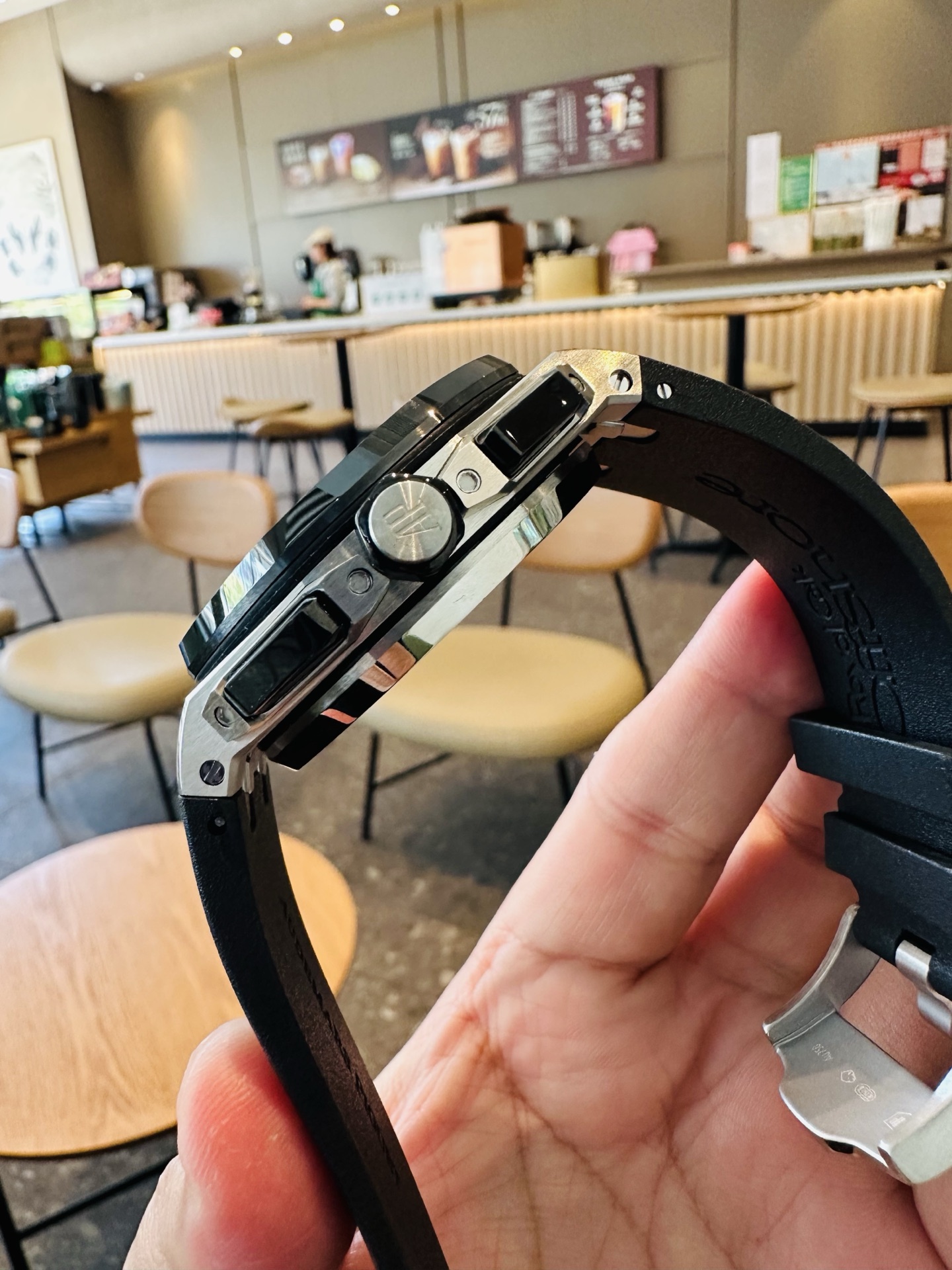
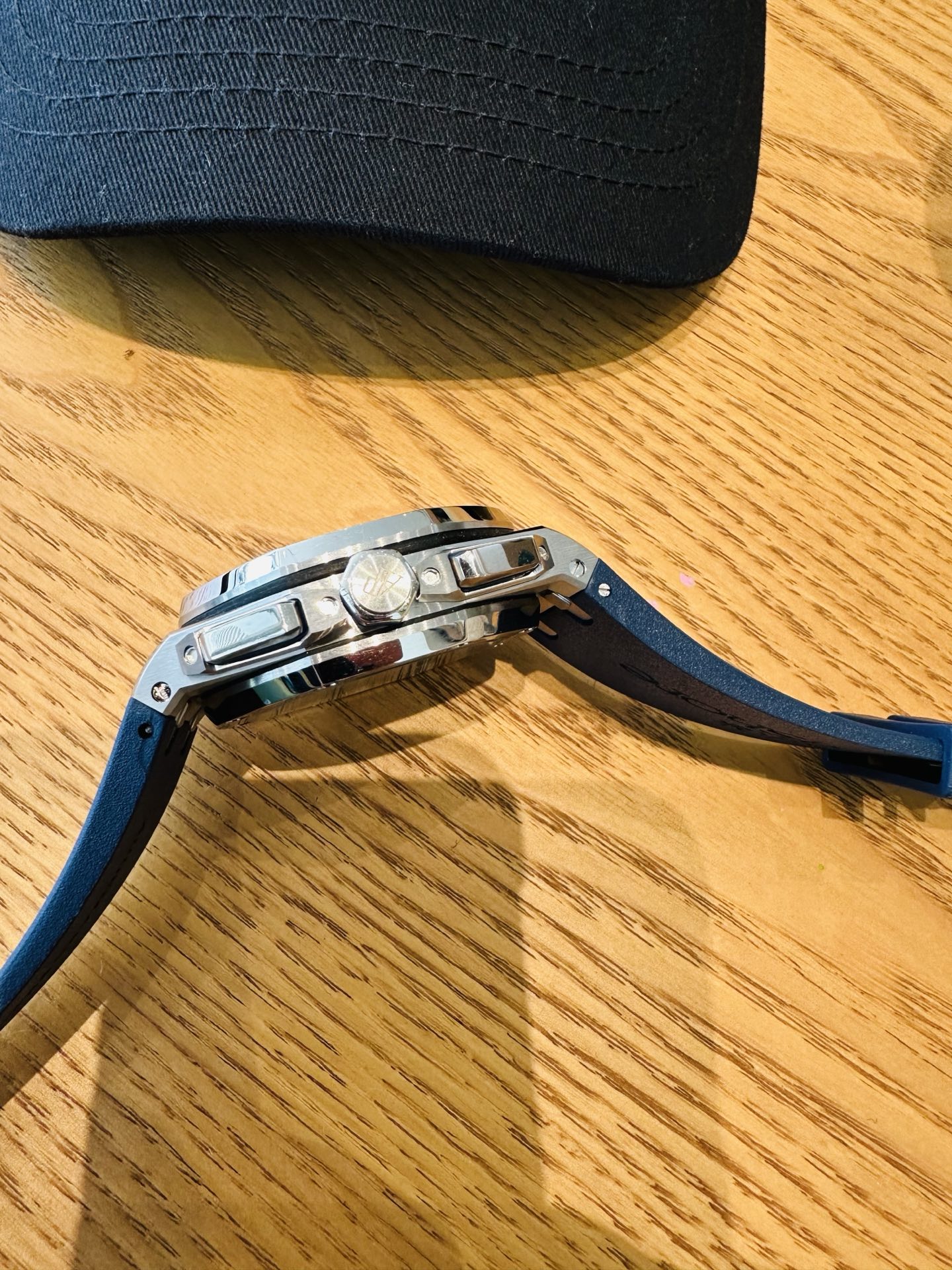
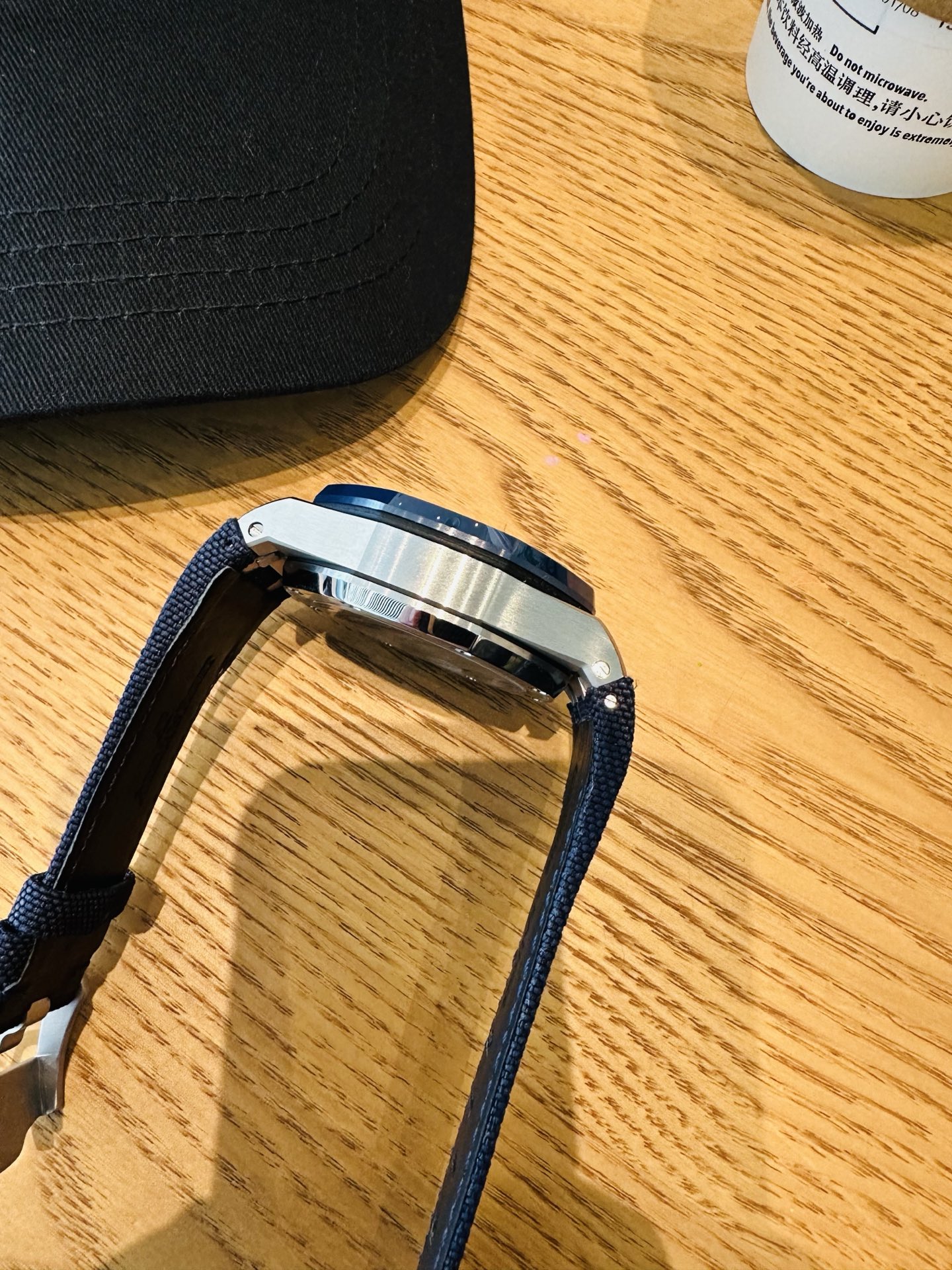
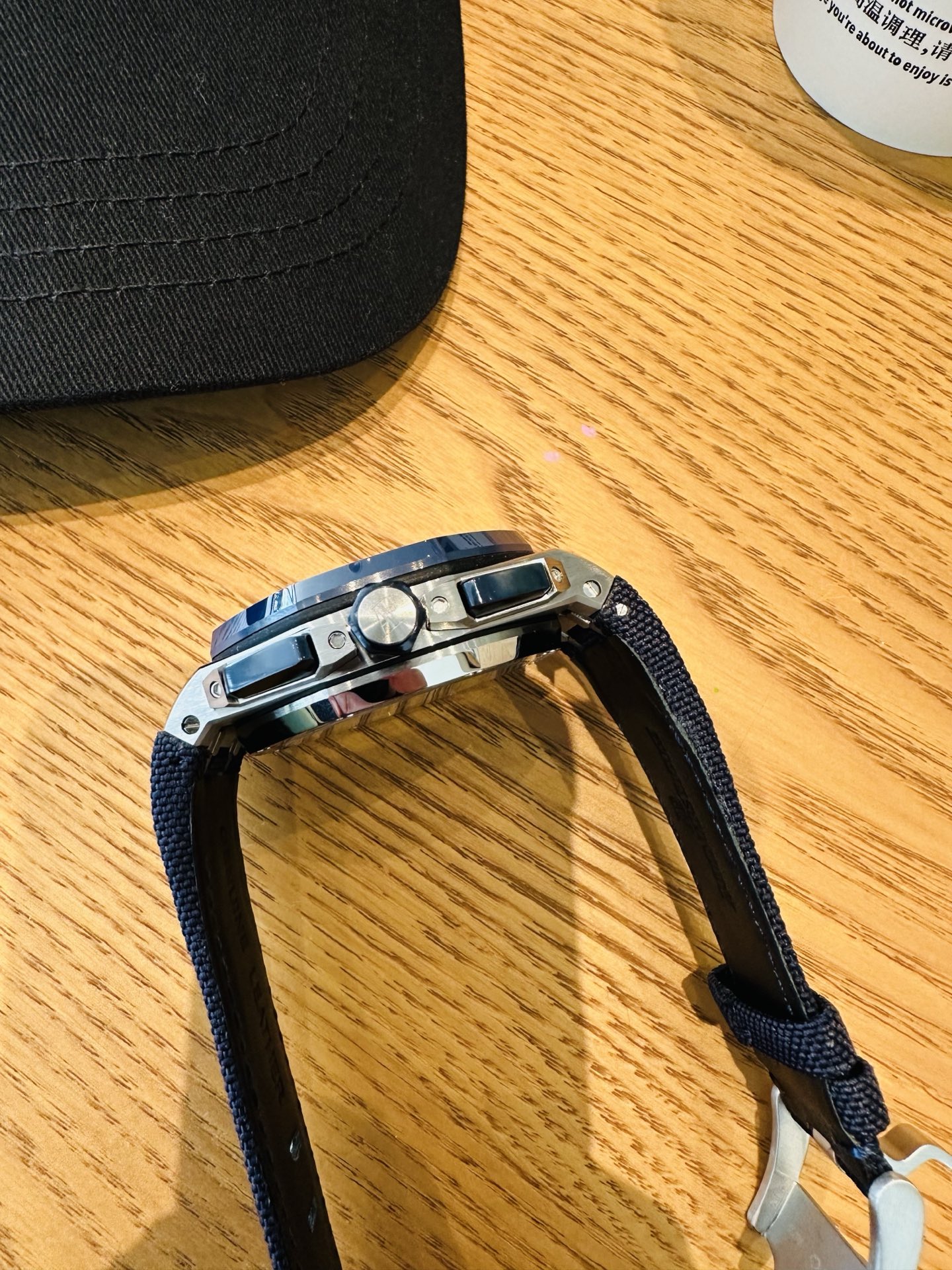
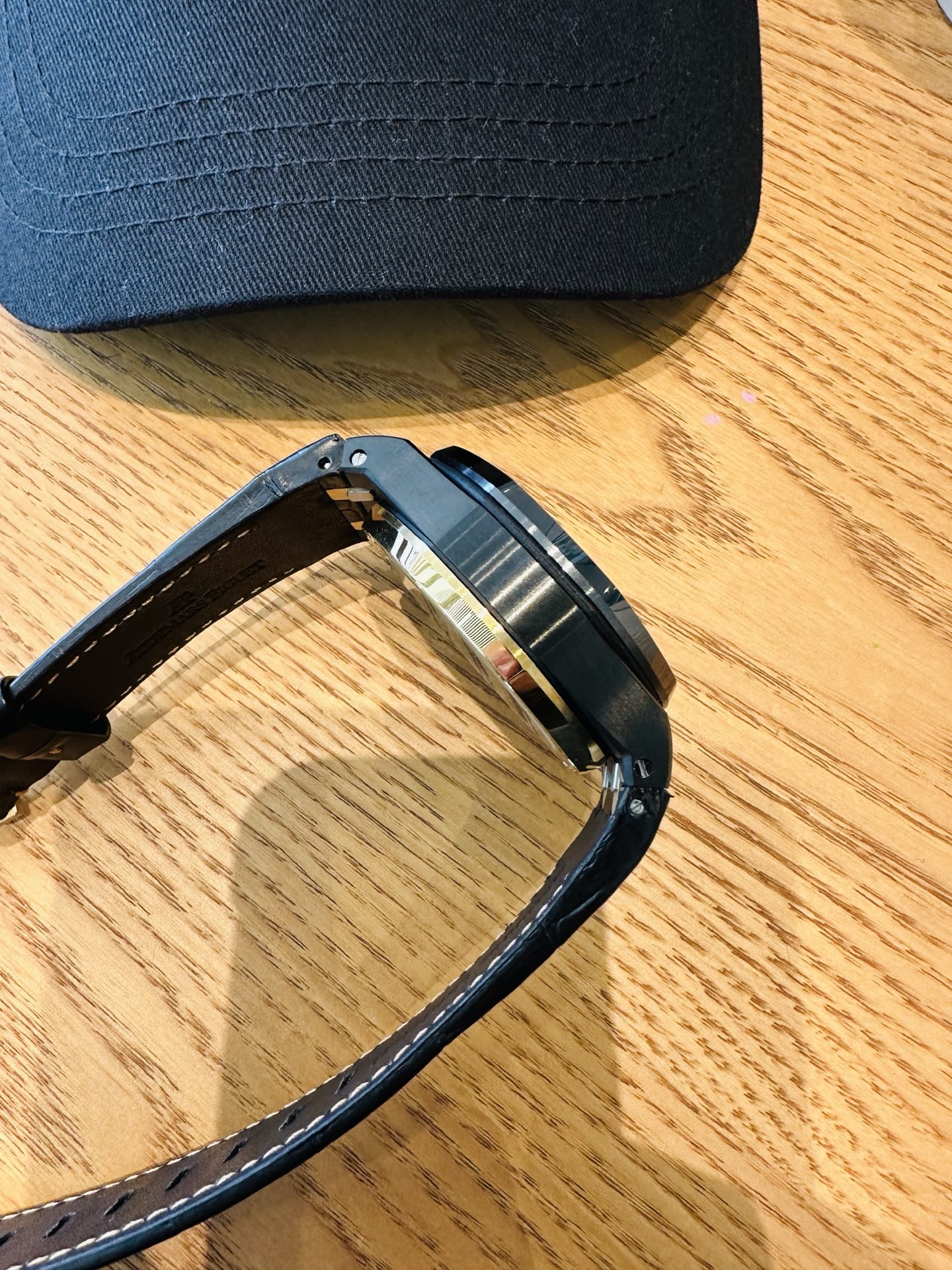
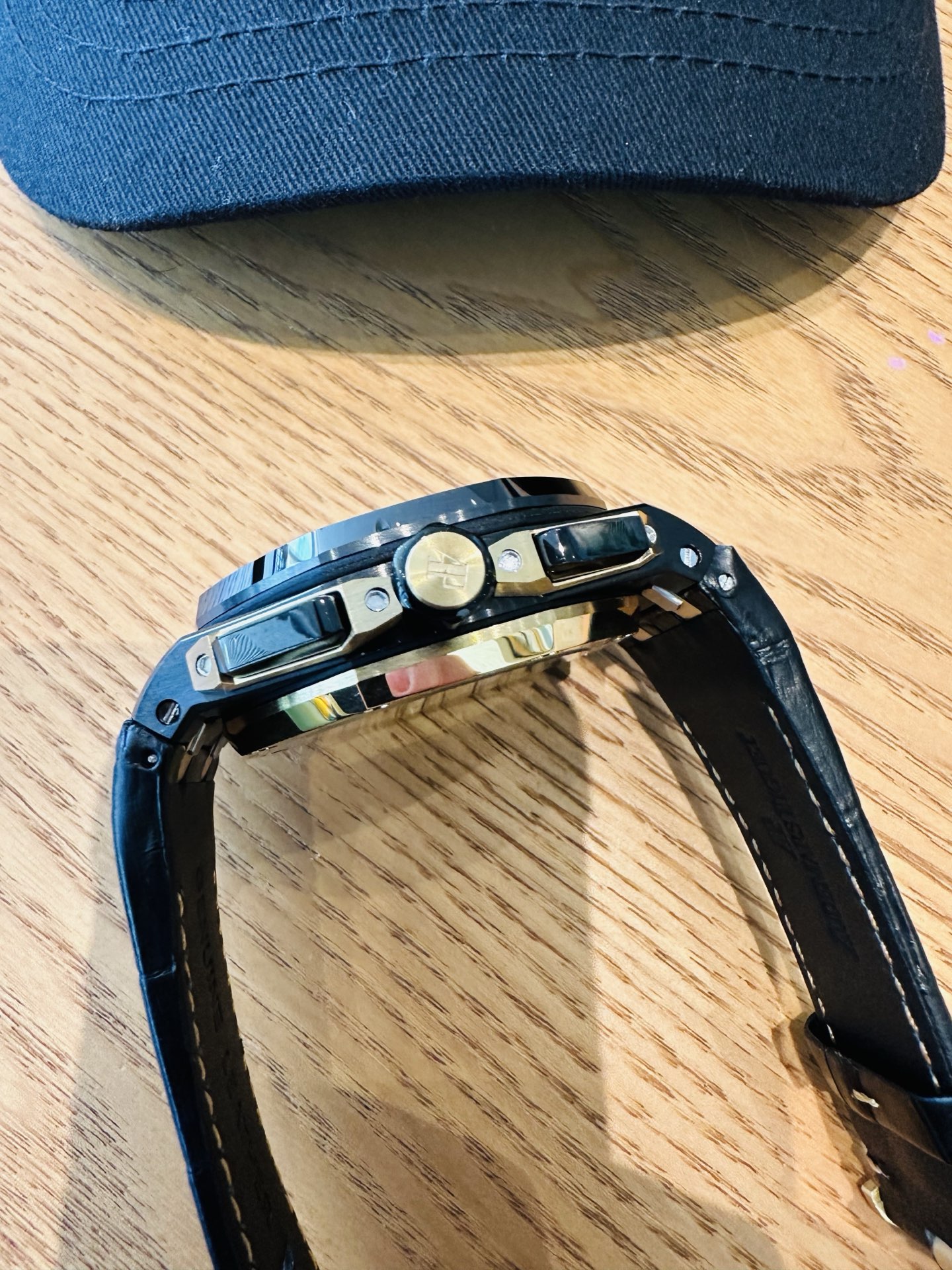
Lift the watch and the first thing you register is the quality of the steel — a solid block of Japanese 316L that carries a noticeably crisper, brighter lustre than the 306-grade alloy that populates much of the competing market. At 43 millimetres wide and 15.6 millimetres thick, the case occupies the wrist with authority, yet the redesigned ergonomic profile means it sits lower and more naturally against the skin than its dimensions might suggest. The polished chamfers are generously proportioned, catching ambient light with a sharpness that creates a genuine visual contrast against the satin-brushed flanks — that precise interplay of matte and mirror finishing is where the craft of a case is truly revealed, and here it reveals a careful hand.
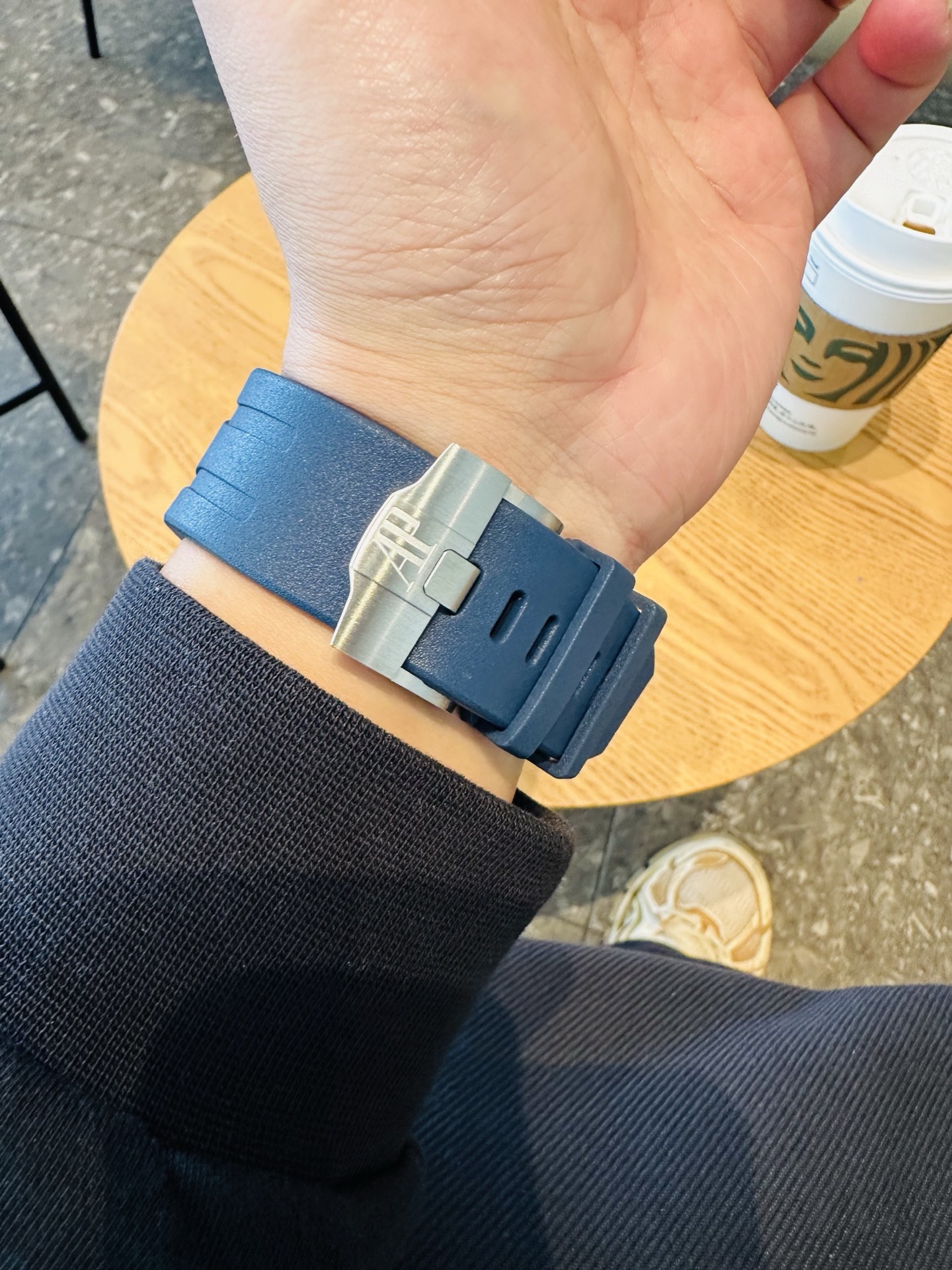
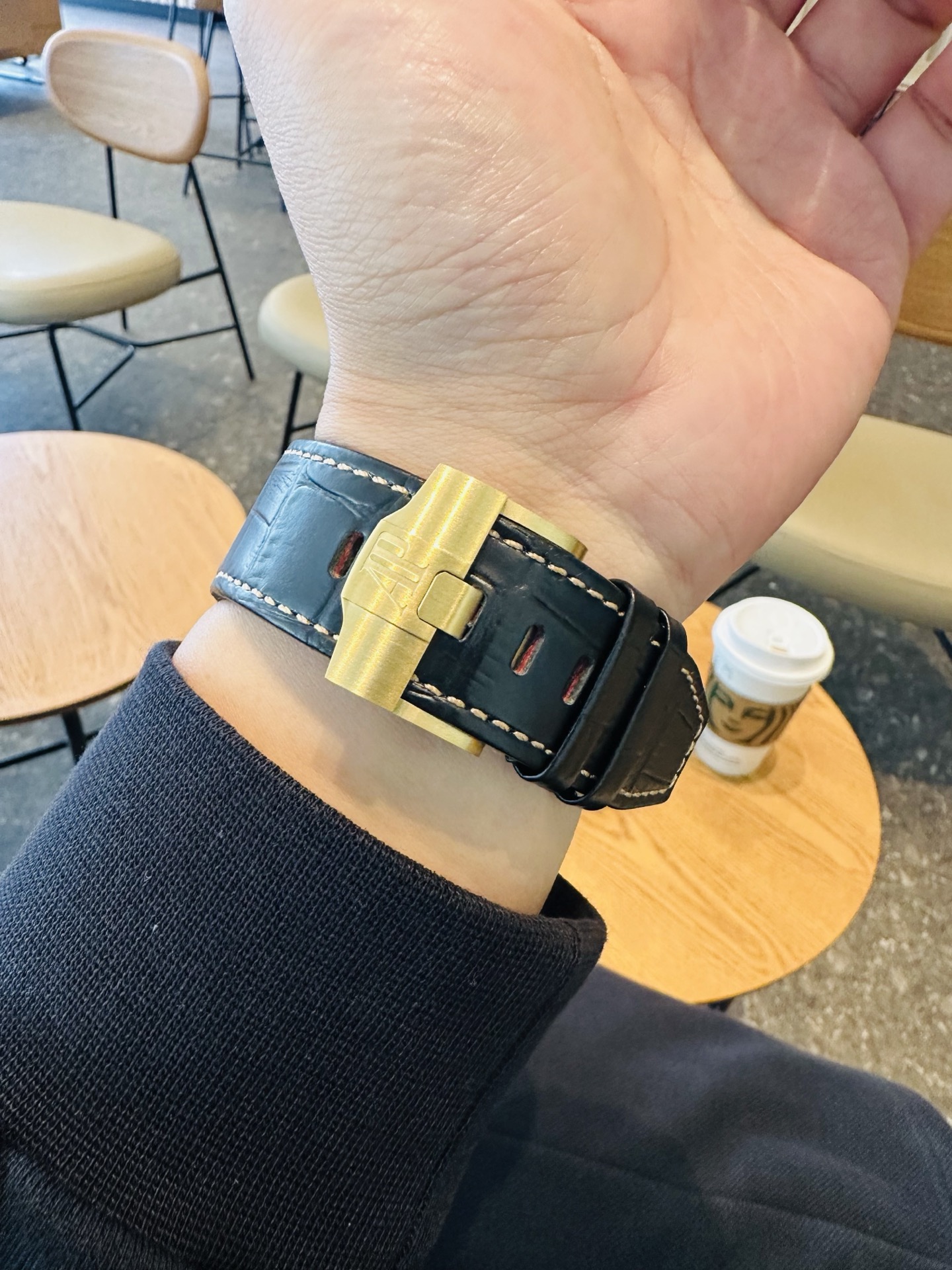
The bezel, available in black, blue, or green, is constructed from Korean-imported ceramic, a material choice that pays dividends in both scratch resistance and depth of colour. Ceramic bezels carry a particular quality of light absorption — they do not merely appear dark, they seem to pull colour inward — and on this piece the effect is striking against the polished steel of the case middle. The sapphire crystal above the dial carries an anti-reflective coating that keeps the view into the watch clean and unobstructed regardless of the angle, while the crown, positioned at three o’clock with the Offshore’s characteristic geometric collar, operates with a satisfying, positive action. The solid end links where the bracelet meets the case are precisely fitted, with none of the lateral play that so often betrays a lesser construction, and the deployant clasp closes with a reassuring solidity that speaks to the overall integrity of the piece.
Beneath the Crystal: A Dial That Rewards Patience
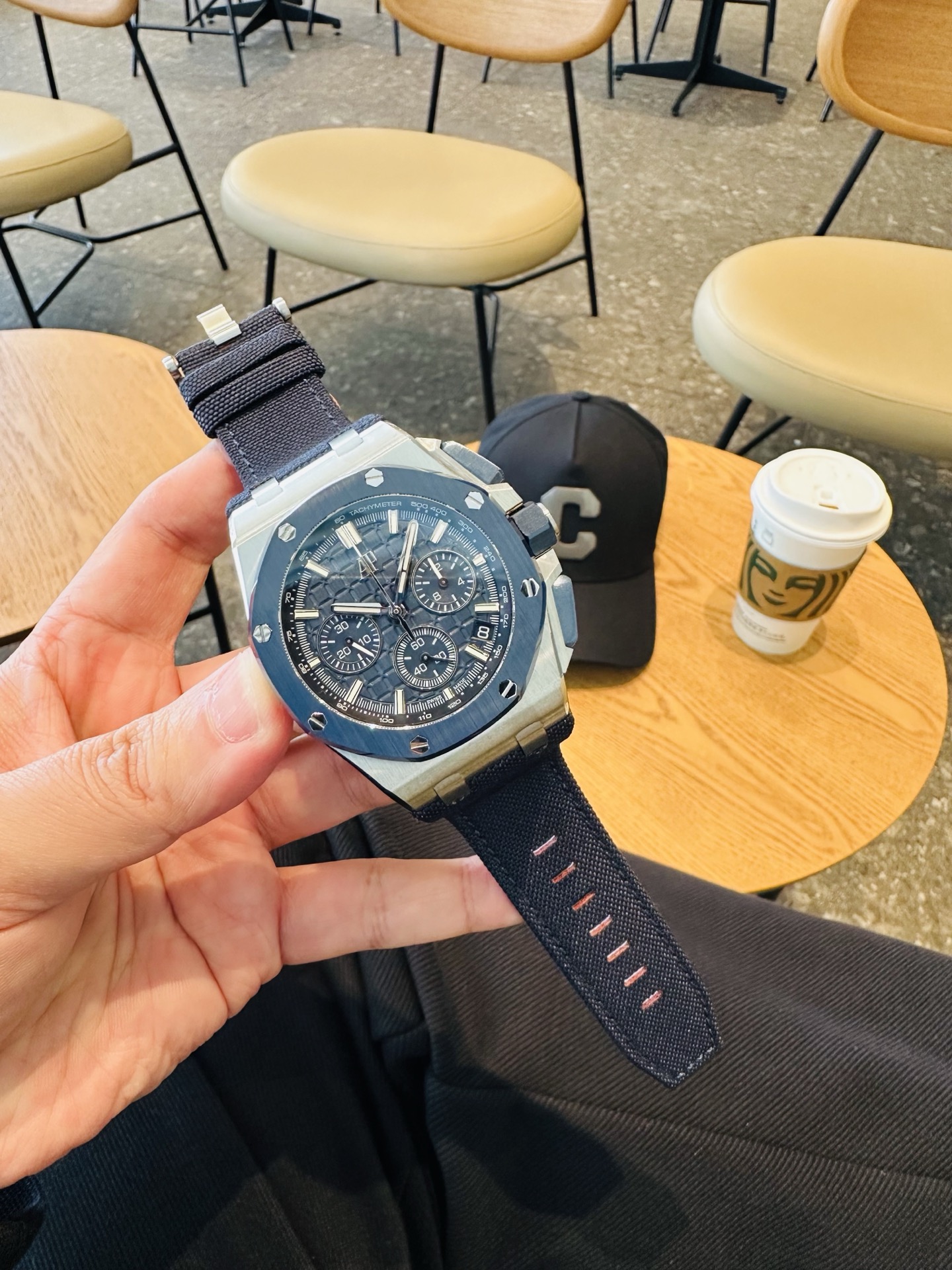
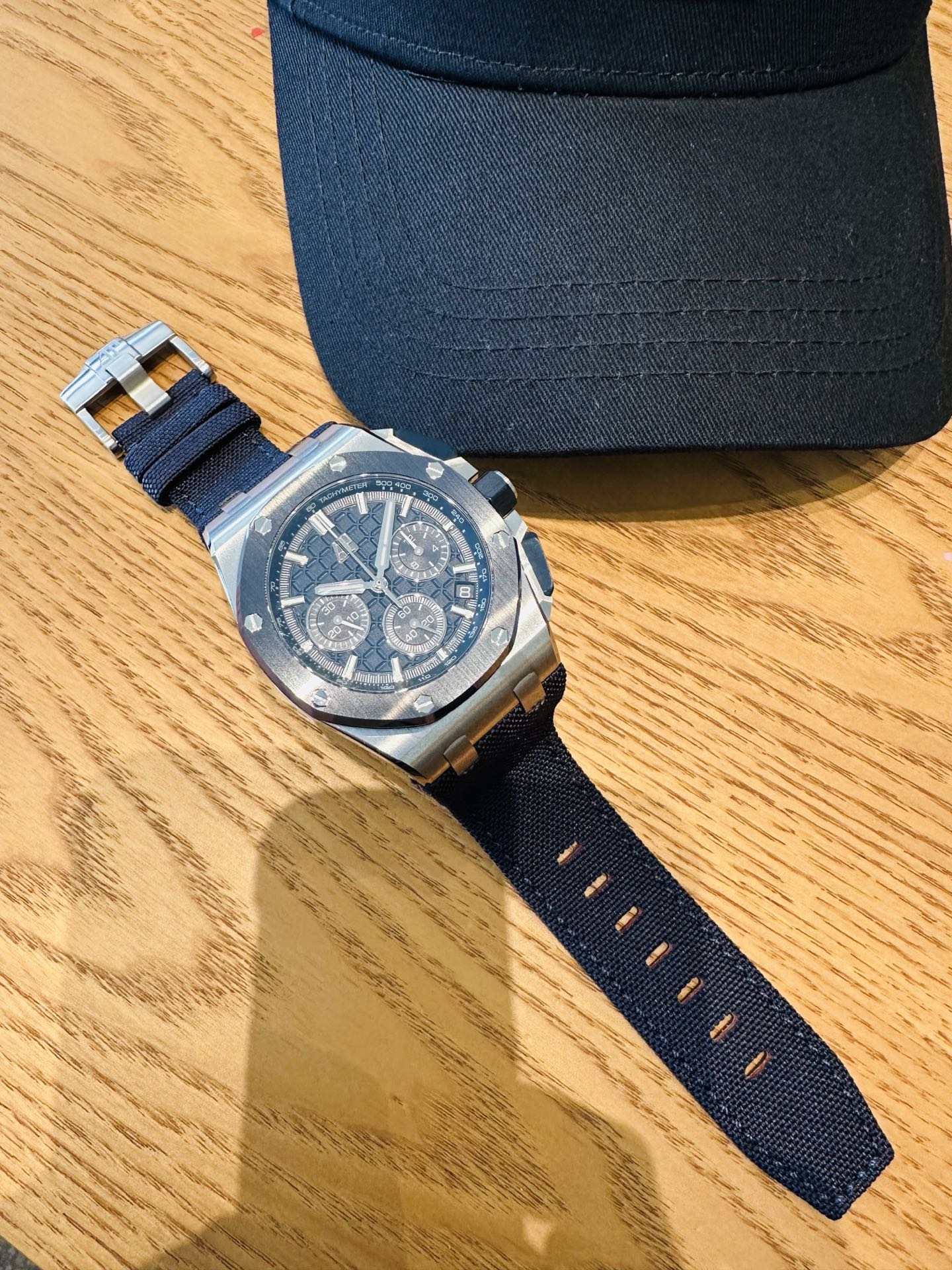
If the case is the architecture, the dial is the interior, and it is here that the 26420 upgrade makes its most visually striking statement. The iconic tapisserie texture — those interlocking squares that have defined the Royal Oak family since Gerald Genta’s original 1972 sketch — has been machined here via a slow CNC milling process rather than the hydraulic pressing method that produces a shallower, less defined result. The difference, when you tilt the watch under a directional light source, is immediately apparent: each square catches and releases the light independently, creating a shifting, almost three-dimensional surface that seems to move as the watch moves. The squares are now connected through a cross-hatched grid, a subtle but meaningful refinement that gives the pattern greater geometric cohesion and a cleaner, more contemporary resolution.
The sub-dials are arranged with the familiar Offshore logic — small seconds at nine o’clock, the chronograph registers distributed across the dial’s upper and lower registers — and the applied indices carry their lume with a precision that makes the hand-stack legible in low light without sacrificing the dial’s daytime elegance. The date aperture, pushed to the outermost edge of the dial in keeping with the original’s large-date complication, frames twin numerals with an architectural clarity that feels genuinely integrated rather than grafted on. The hands themselves have received a quiet refinement, their profiles slightly adjusted to harmonise with the upgraded dial geometry, and in motion they sweep across that textured surface with the kind of fluid authority that makes you want to keep checking the time simply for the pleasure of the view.
The Engine Room: A Calibre That Earns Its Keep
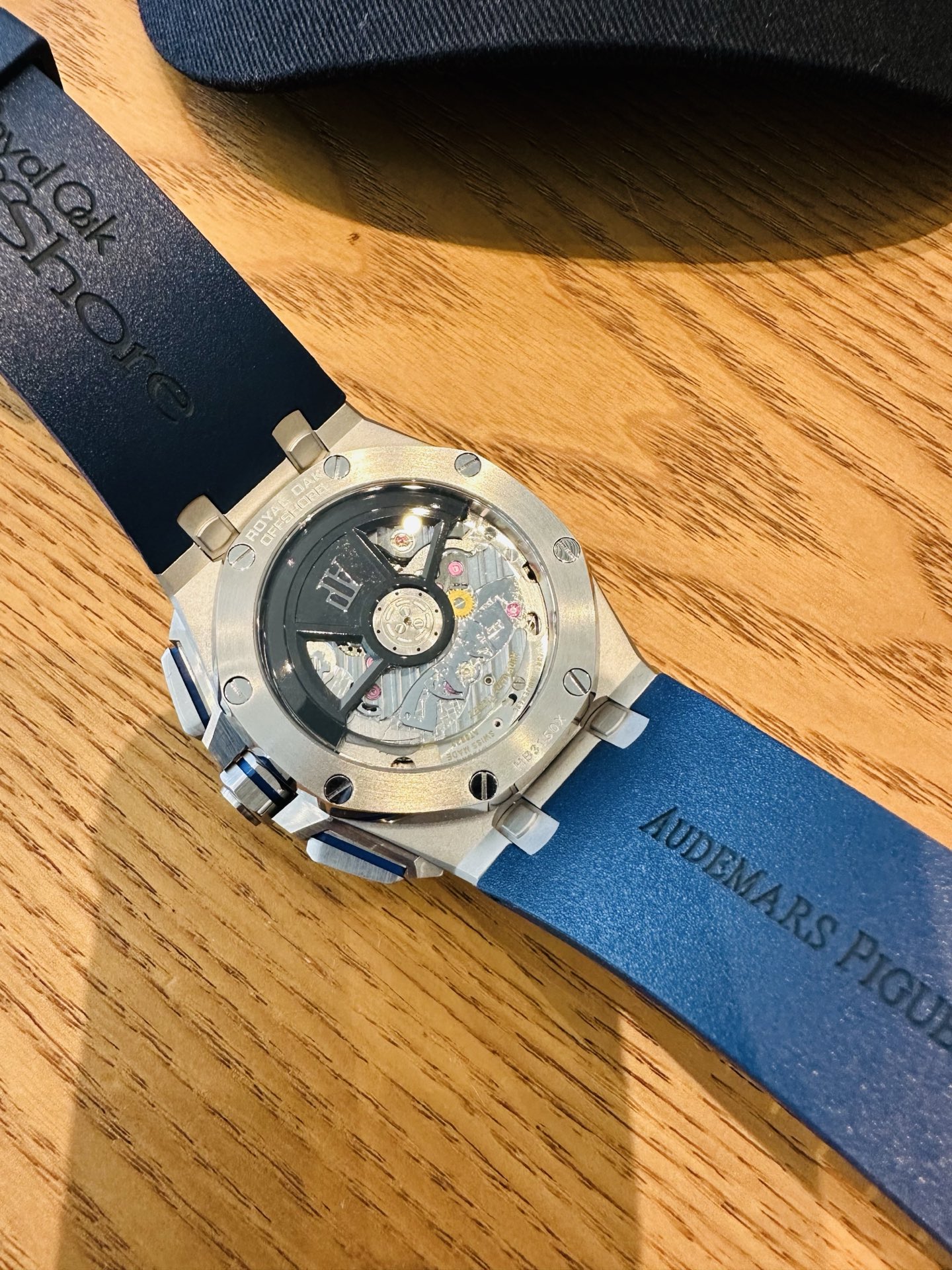
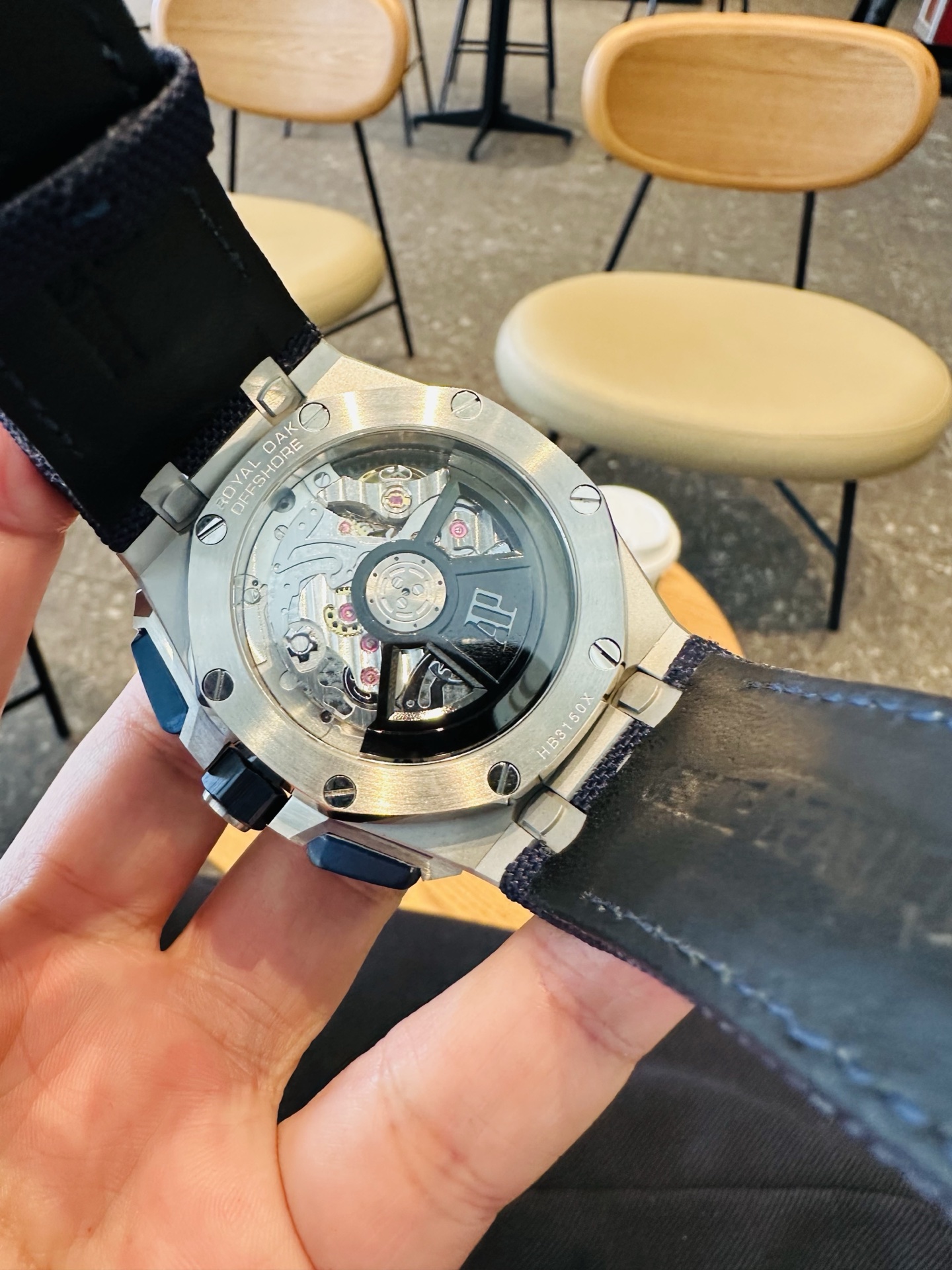
Turn the watch over and the exhibition caseback reveals the movement that drives this upgraded proposition — a Dandong 7750 base that has been substantially reworked to present the aesthetic of the Calibre 4401, complete with the large bridge architecture that gives the movement its visual coherence and its air of mechanical seriousness. The rotor sweeps with a smooth, weighted arc, the escapement ticks with a metronomic regularity that inspires confidence, and the large-plate construction means the view through the caseback is uncluttered and genuinely attractive rather than the busy, slightly chaotic impression that smaller-bridge movements can produce. The modification to accommodate the large-date complication required meaningful intervention in the movement’s calendar works, and the result is a mechanism that delivers the visual drama of the big date window without the awkward positional compromises that less careful conversions often produce. It is, in the most honest assessment, a capable and stable engine dressed in clothes that punch considerably above its technical station.
The Final Verdict: An Offshore That Refuses to Apologise
The fluoroelastomer strap — supple, grippy, and far more comfortable against the skin than its synthetic origins might suggest — completes a package that is, by any honest measure, the most resolved interpretation of the 26420 reference currently available at this tier of the market. The genuine leather options, constructed from top-grain hide with fabric panels wrapped rather than pressed, offer a more formal alternative without sacrificing the tactile quality that makes this watch pleasurable to live with daily.
What LS Factory has produced here is a piece that takes the Royal Oak Offshore’s inherent drama seriously. The new mould, the CNC-finished dial, the ceramic bezel, the upgraded steel, the reworked movement architecture — none of these decisions were inevitable, and each one represents a choice to do the harder, more expensive thing in pursuit of a more convincing result. The 26420, in this form, does not merely approximate the spirit of the original. It inhabits it, with enough conviction to make the question of provenance feel, at least for the duration of a long afternoon’s wear, entirely beside the point.