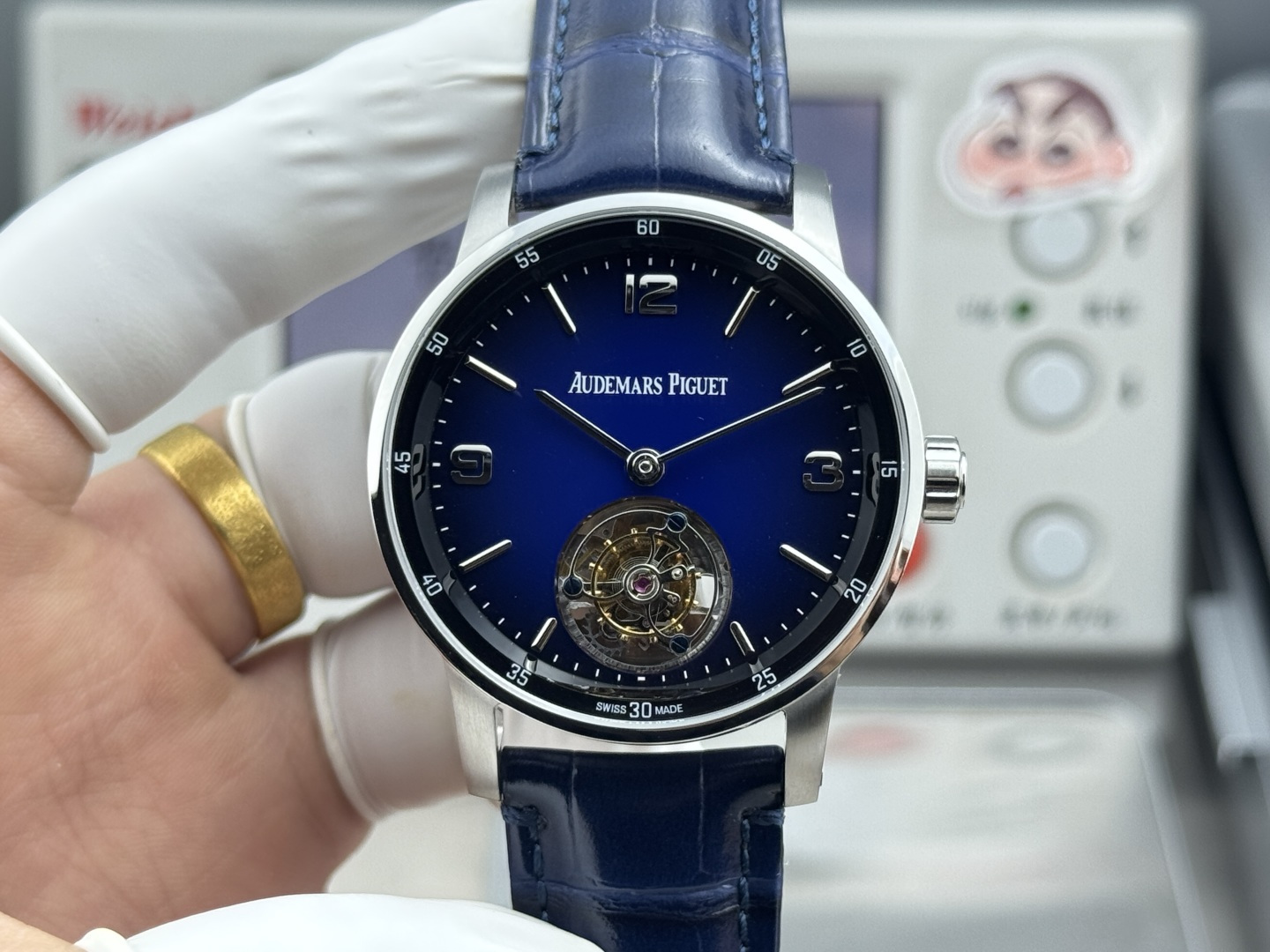
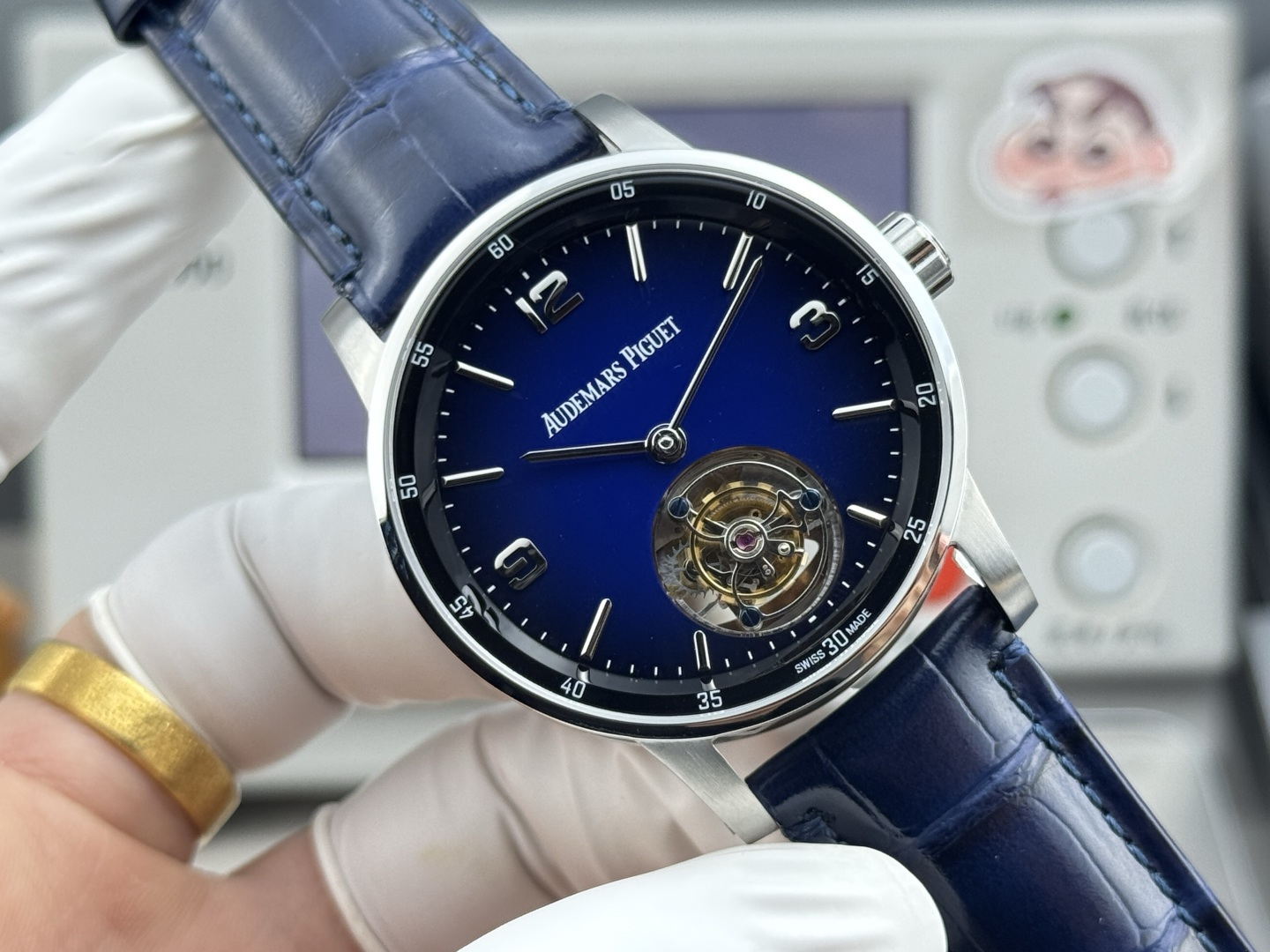
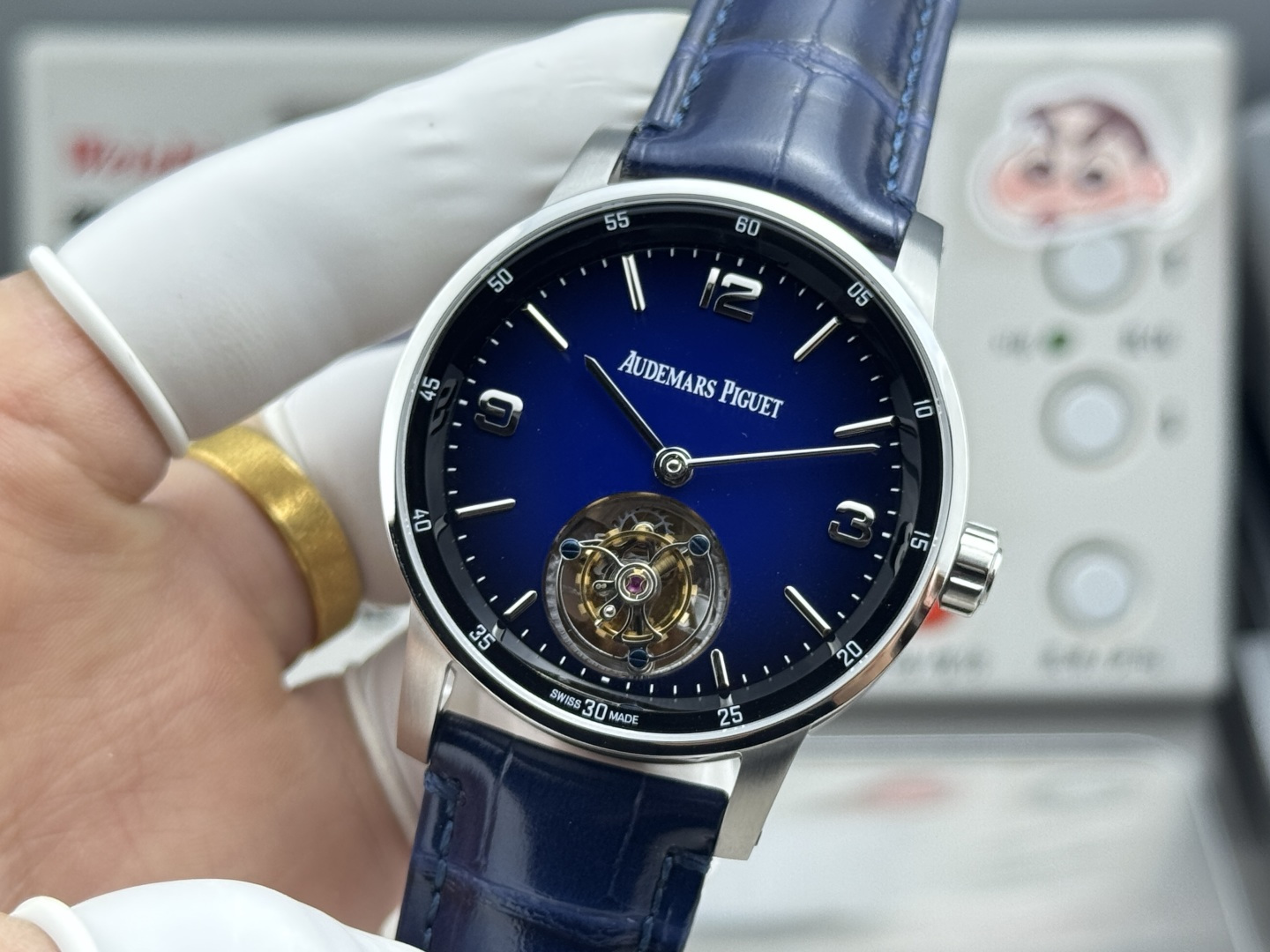
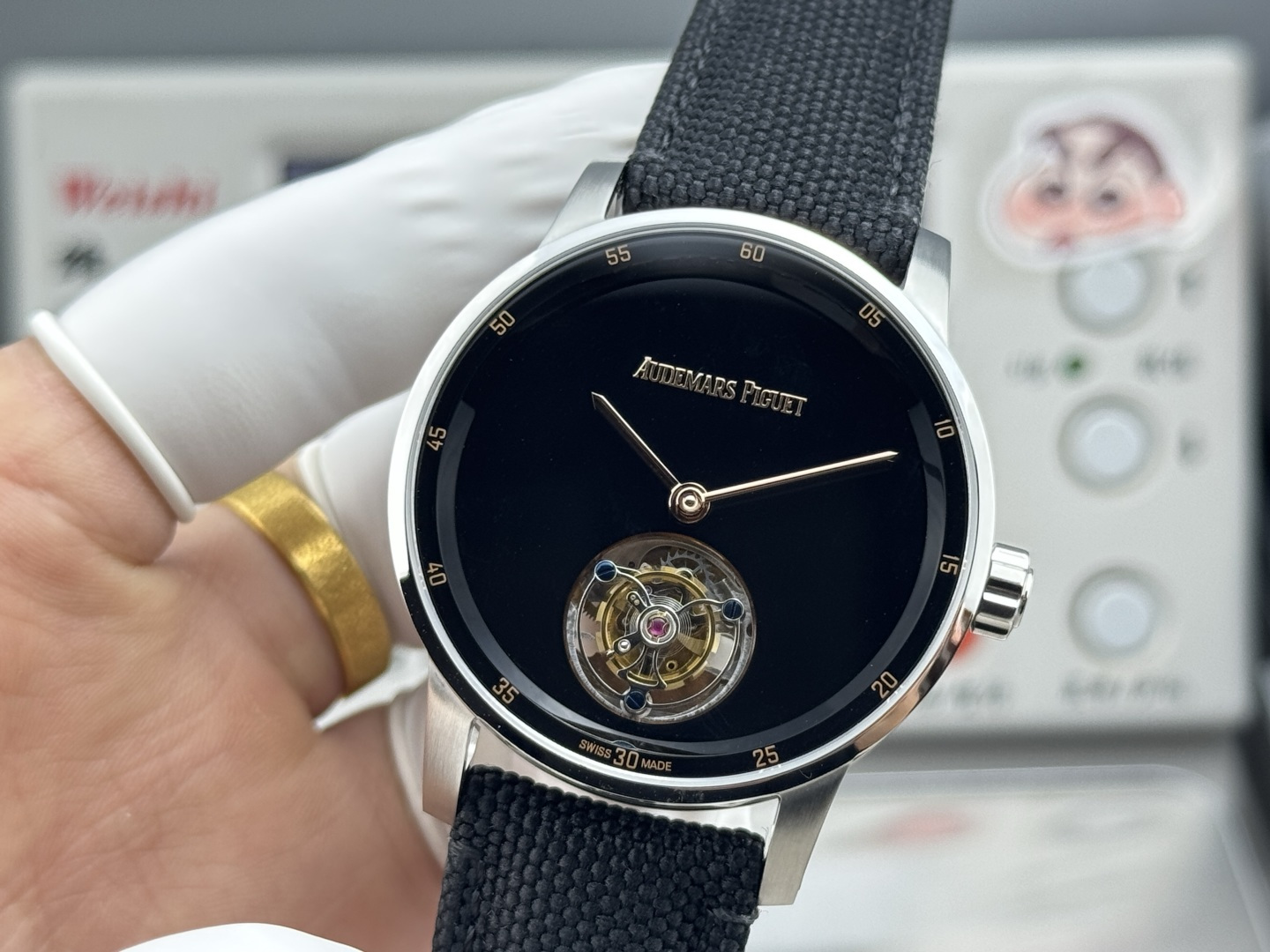
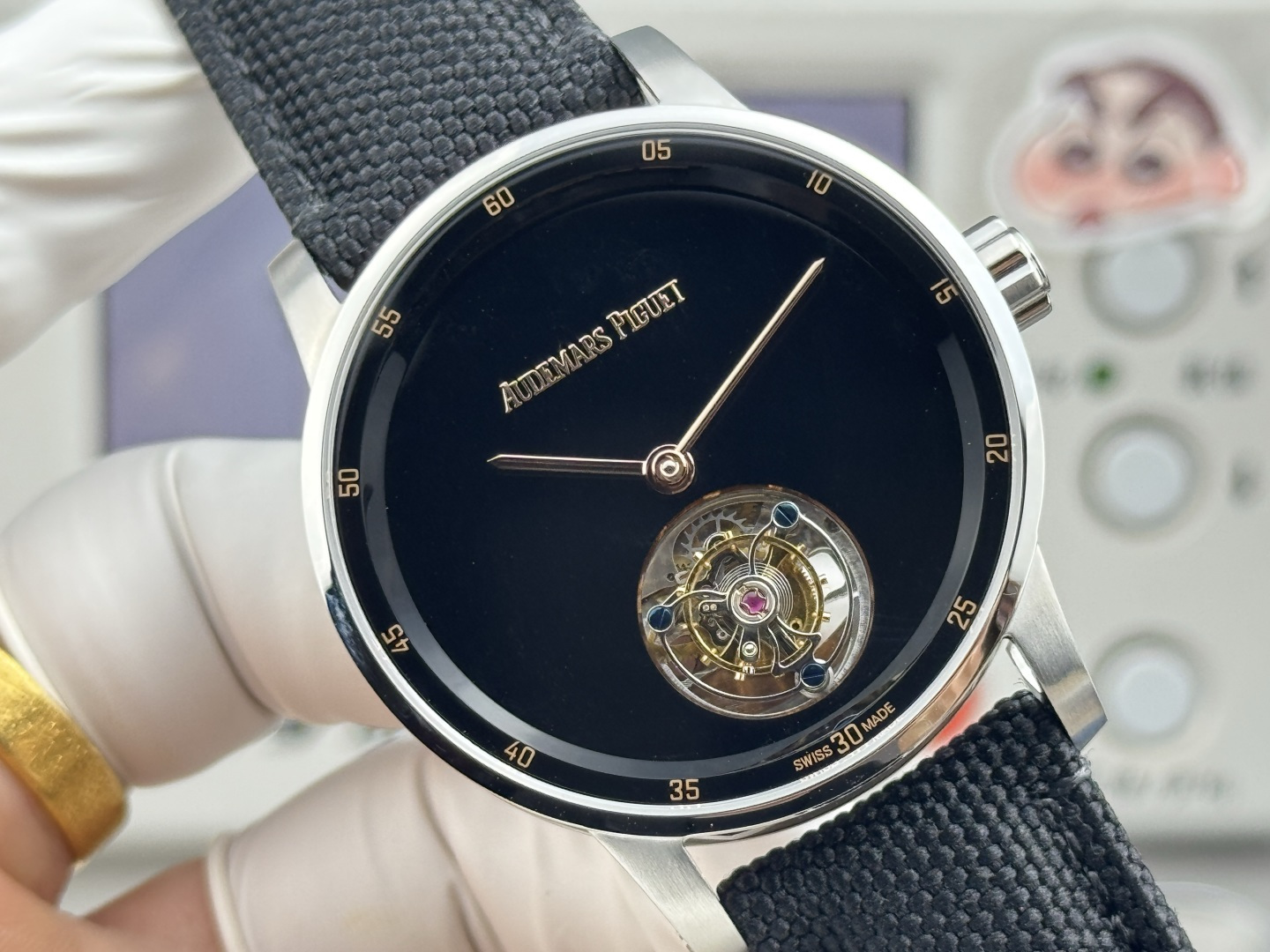
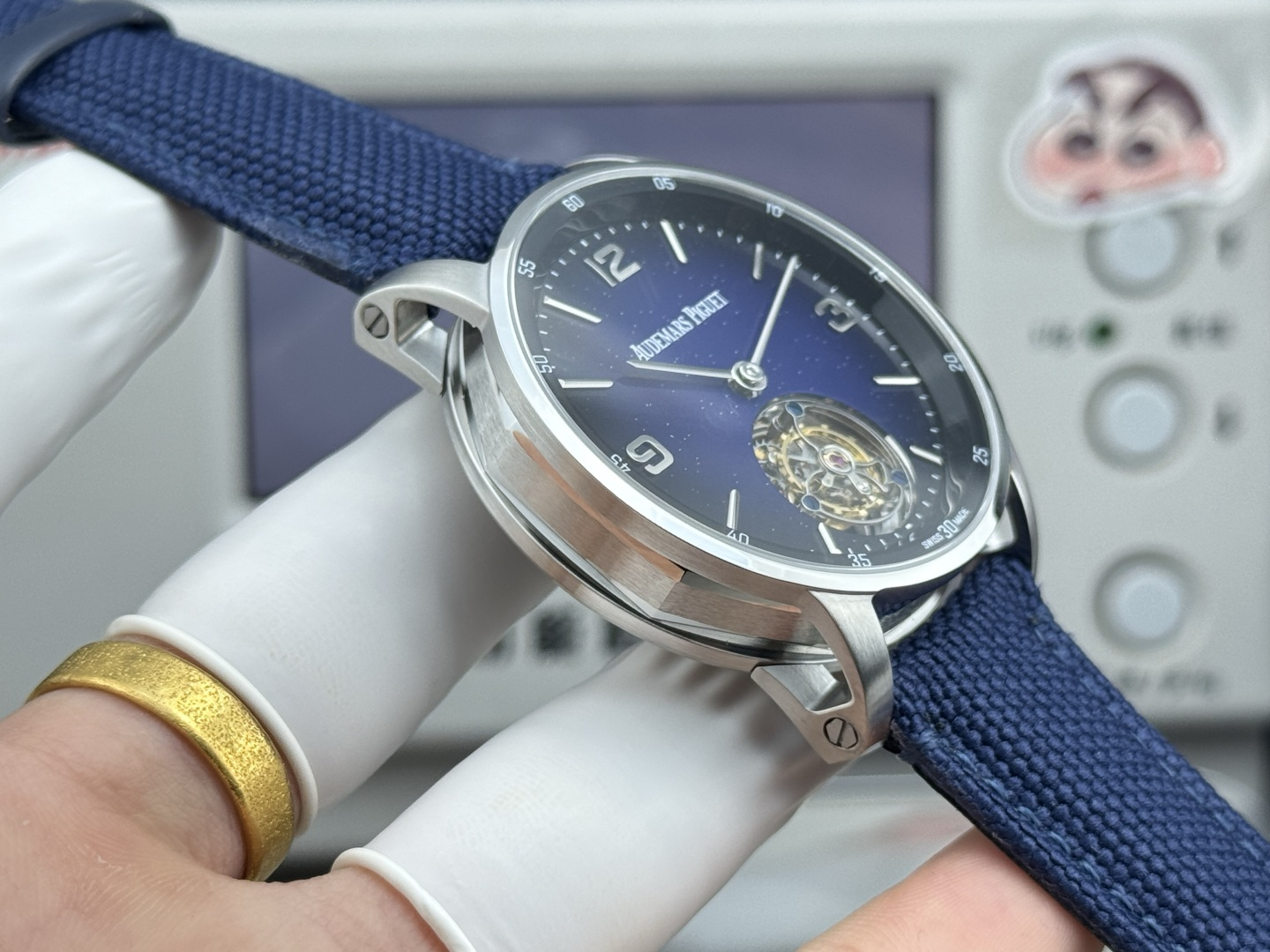
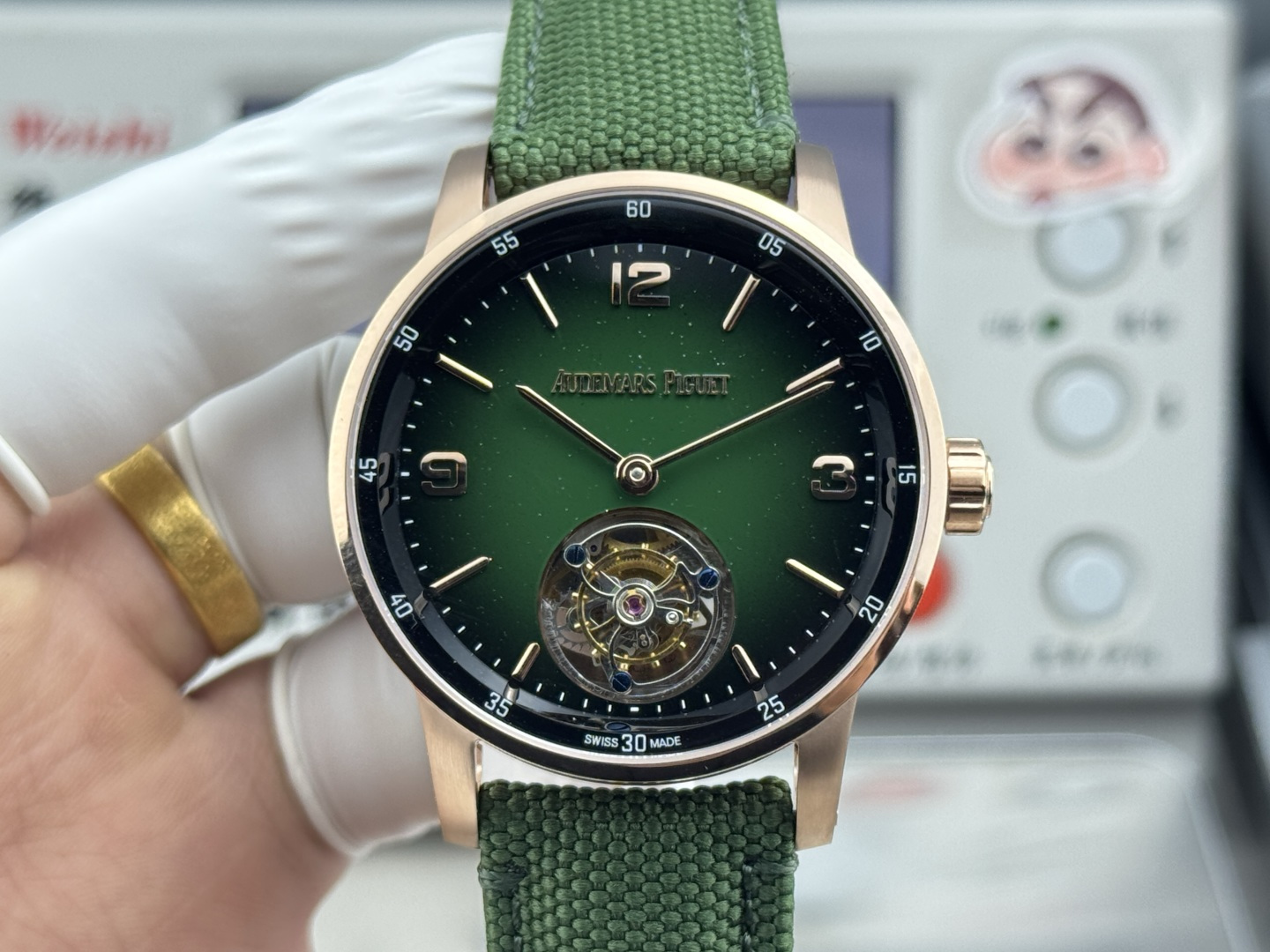
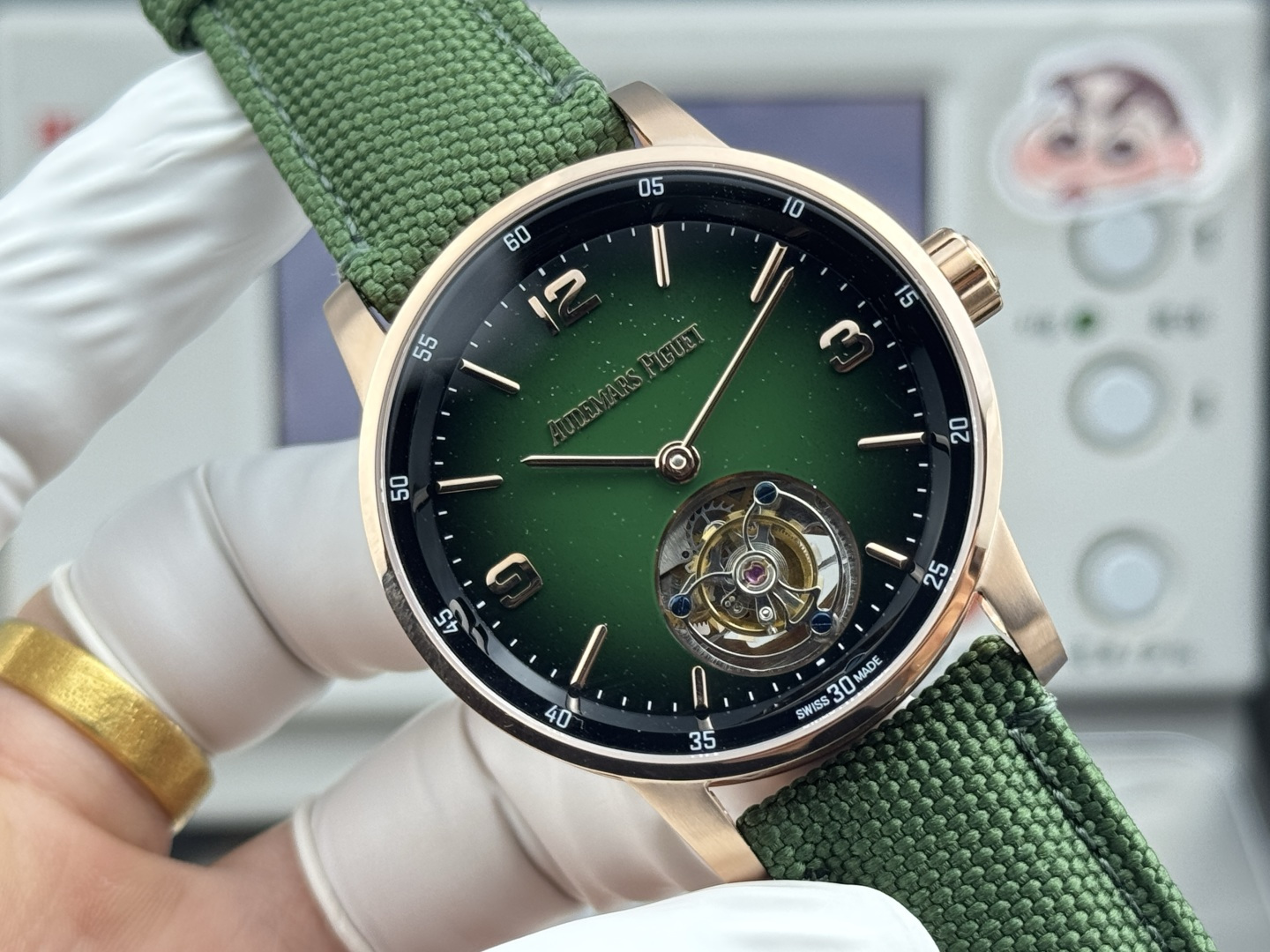
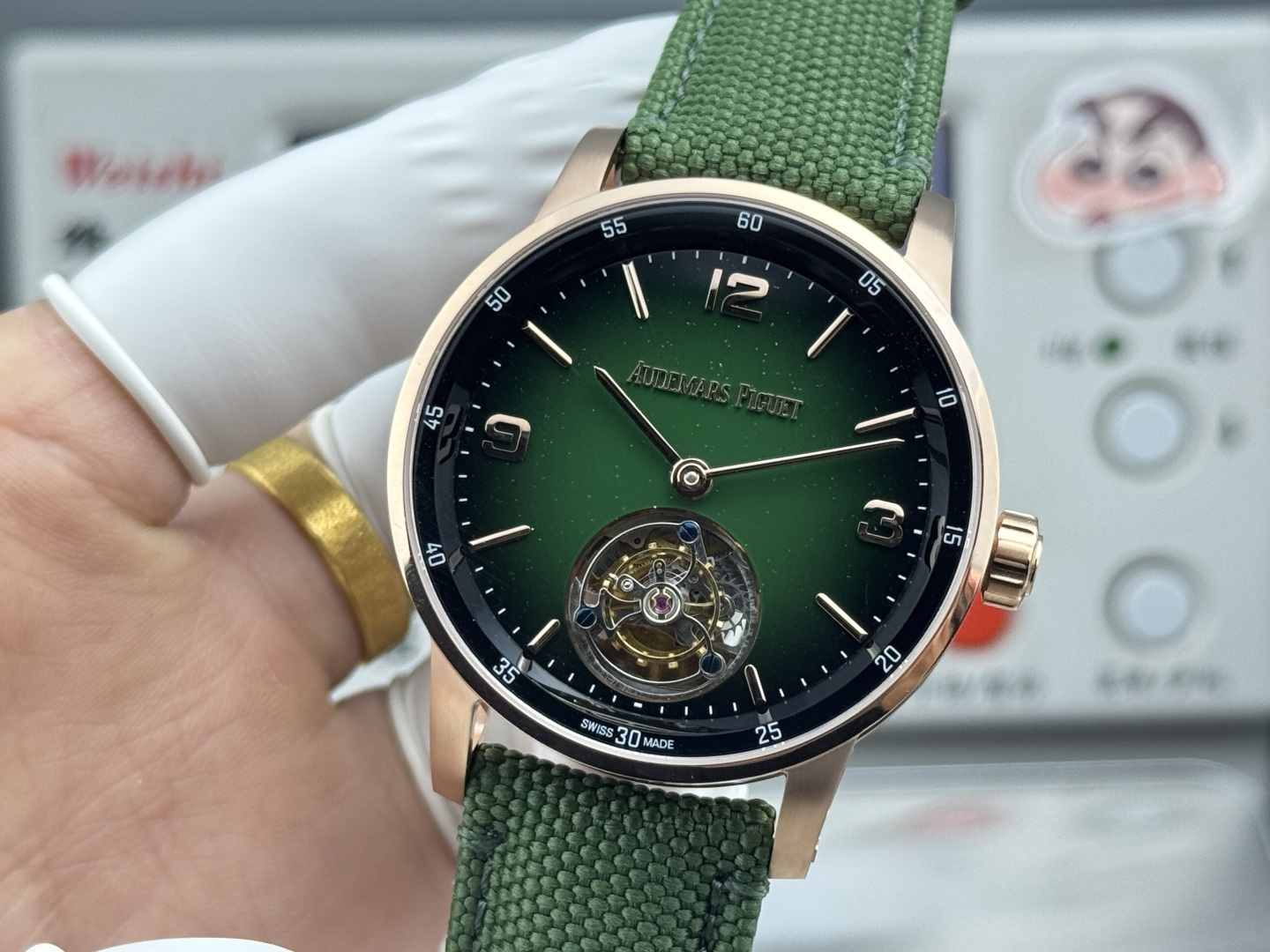
Let’s be honest about what Audemars Piguet’s CODE 11.59 is. When it dropped in 2019, the watch press collectively winced. The internet had opinions. Loudly. A case that looked like it couldn’t decide between a cushion and a round, a dial architecture that polarized collectors, and a price point that demanded you either be a true believer or a very confused tourist. Yet here we are, years later, and the reference 26396 — specifically the tourbillon variant with that deep, cosmic aventurine enamel dial — has quietly, stubbornly, become one of the most visually arresting things AP has put out in the post-Royal Oak era. Which makes the grey-market replica ecosystem’s attempt at cloning it genuinely fascinating. Because if you’re going to fake something, faking something this architecturally complex is either courageous or delusional. Let’s find out which.
Horological Context & Market Reality
The genuine AP 26396BC.GG.1232BC.01 — or whichever metal variant you’re cross-referencing — runs north of $350,000 USD at retail. It houses the hand-wound Caliber 2952, a skeletonized flying tourbillon of extraordinary pedigree, with finishing that would make a Vallée de Joux craftsman weep with professional pride. The dial is Grand Feu aventurine enamel, meaning actual powdered glass fused at temperatures exceeding 800°C onto a copper substrate, producing that signature galaxy-depth shimmer with suspended golden particles that catch light at angles no photograph truly captures.
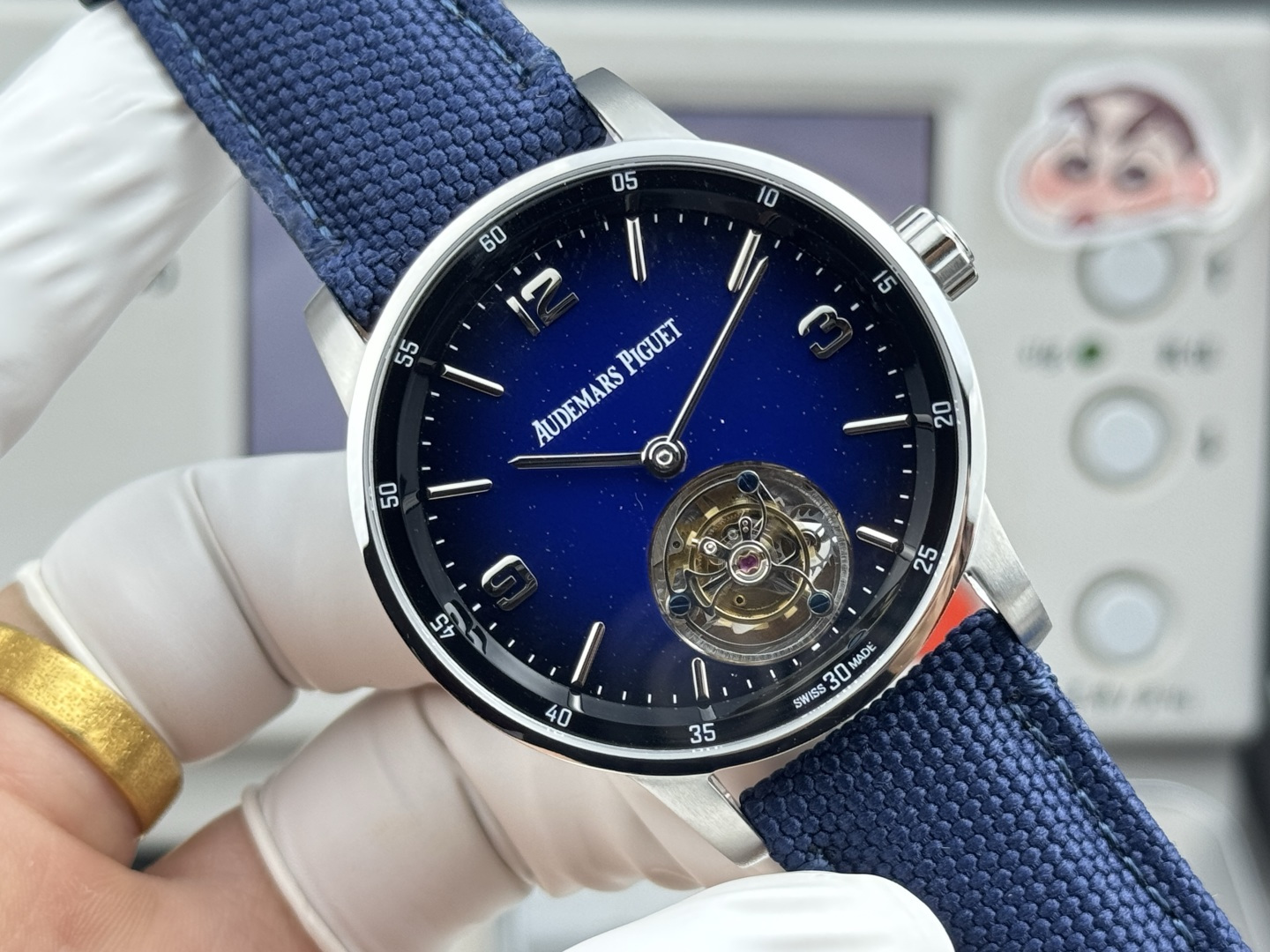
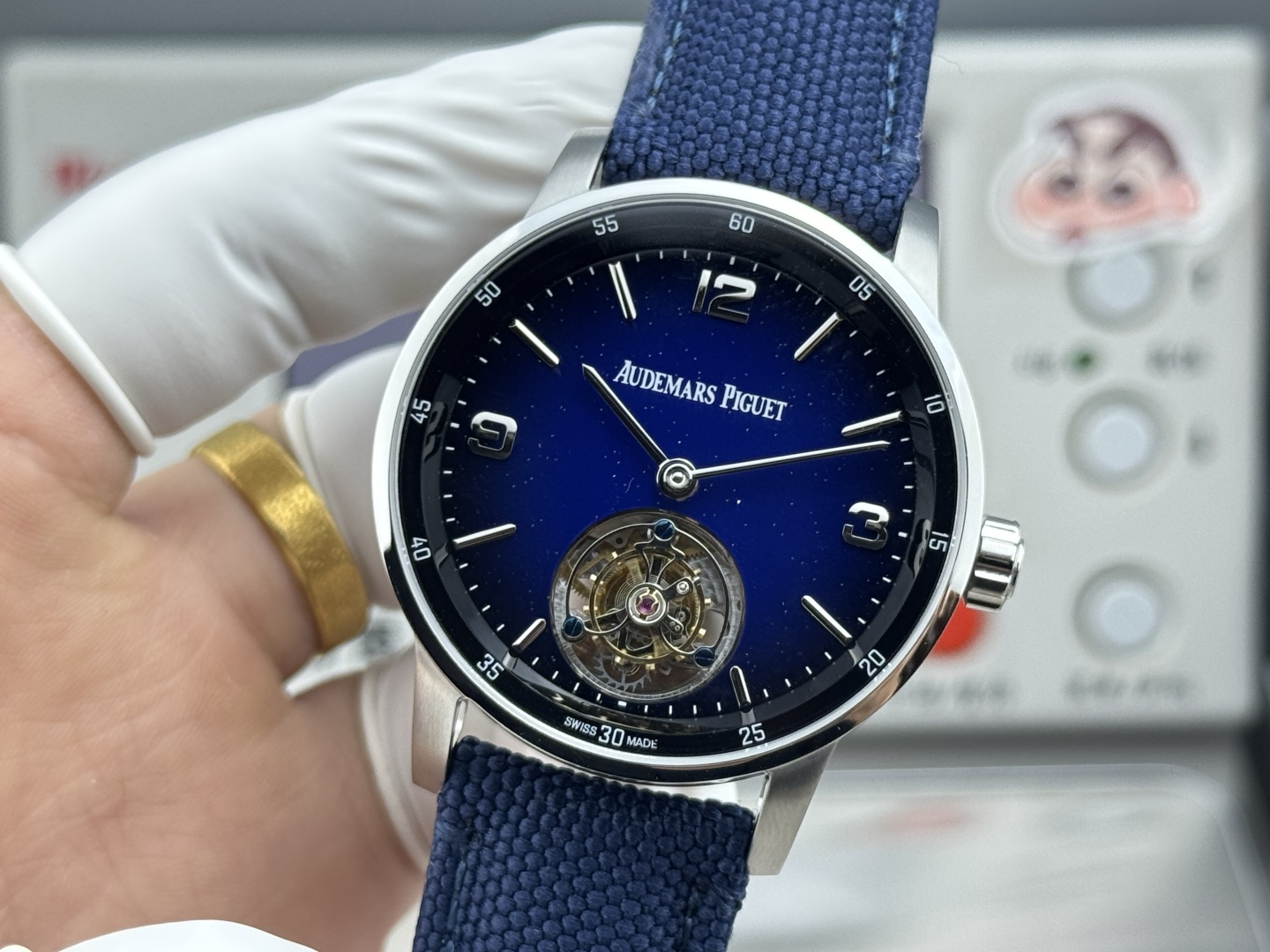
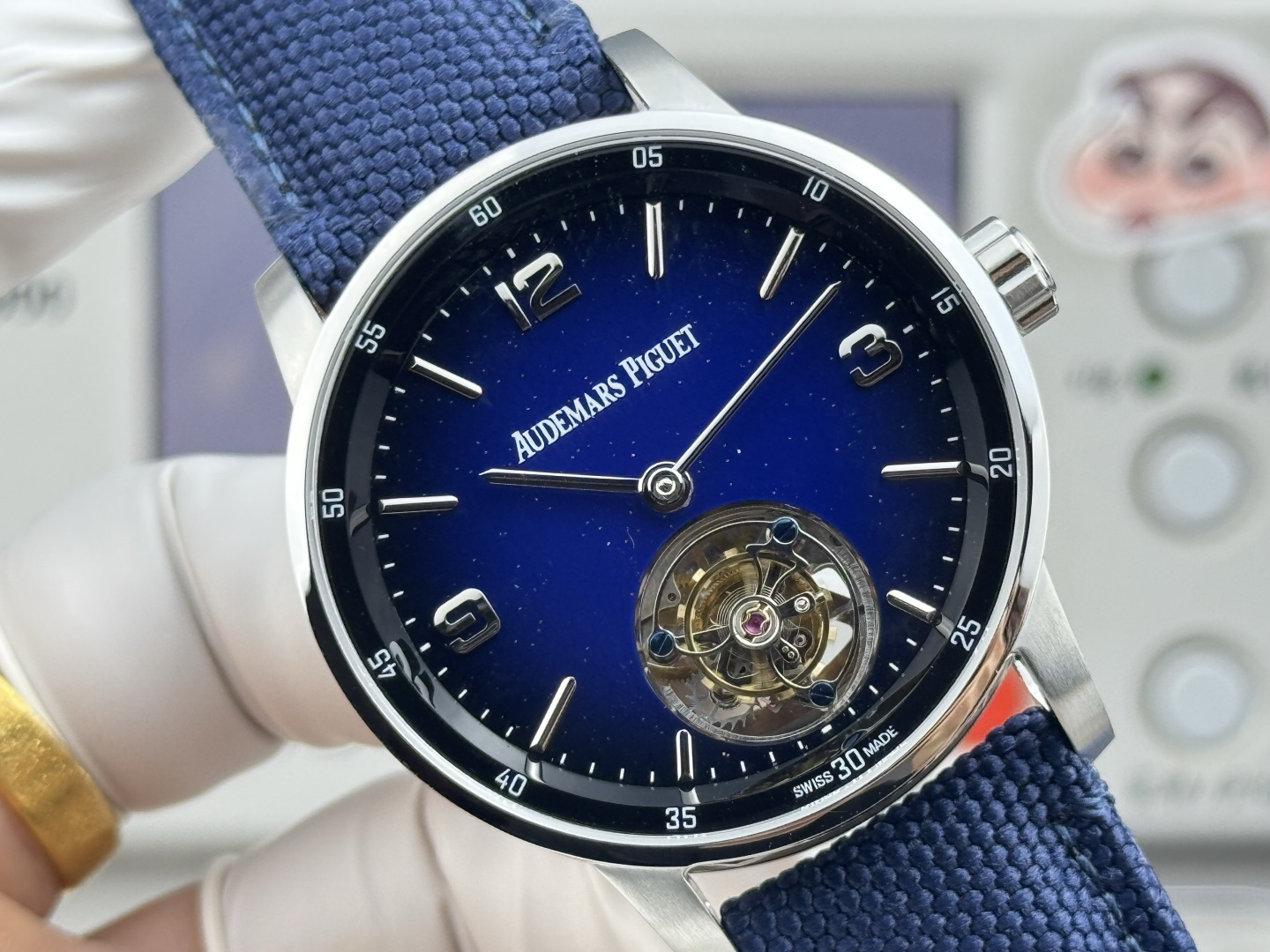
Now, the replica market’s answer to this is the piece on my bench today, claiming a Cal. 2950 automatic tourbillon movement, a 42mm 316L stainless steel case, and — crucially — what the Chinese spec sheet calls a 砂金石珐琅表盘, or aventurine enamel dial. That last claim alone is worth the price of admission for scrutiny. Because if they’ve pulled off even a passable aventurine simulation at this price tier, that changes the conversation about what grey-market manufacturing is currently capable of.
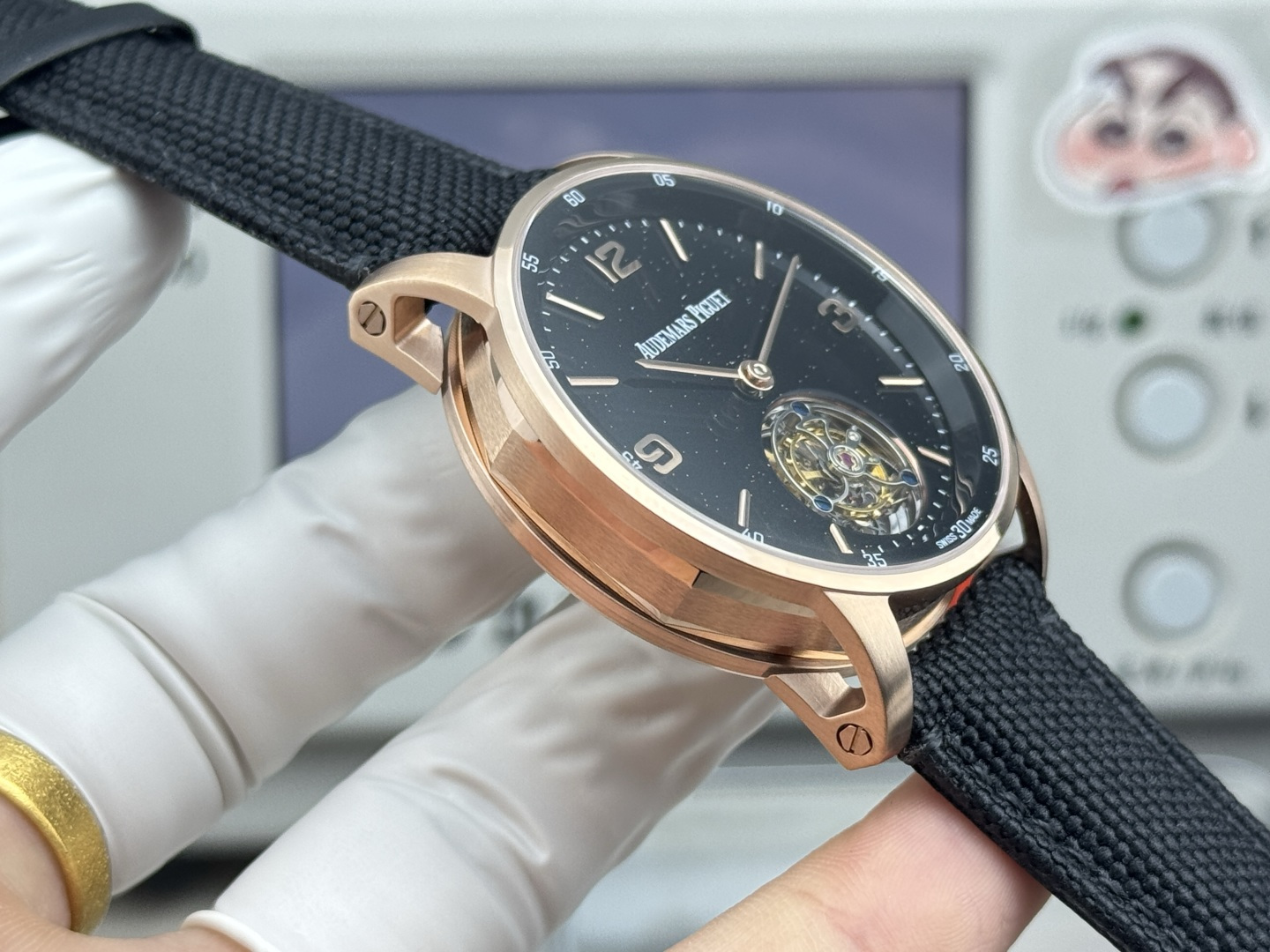
The CODE 11.59 was always going to be a clone-maker’s nightmare. The case geometry alone — that inner round case within an outer cushion case, with a sapphire crystal that curves at the flank — requires CNC precision that most factories simply won’t invest in for a replica run. So the first question isn’t about the movement. It’s about whether the case even makes geometric sense.
Case Architecture & Ergonomic Drape
On the wrist, the first thing you register is the weight. At 42mm, the 316L steel construction gives this piece a solid, planted feel that isn’t unpleasant. The lug-to-lug measurement sits comfortably within range for a mid-sized male wrist — not the featherweight of titanium, not the brick-like heft of a poorly balanced case, but somewhere serviceable in between.
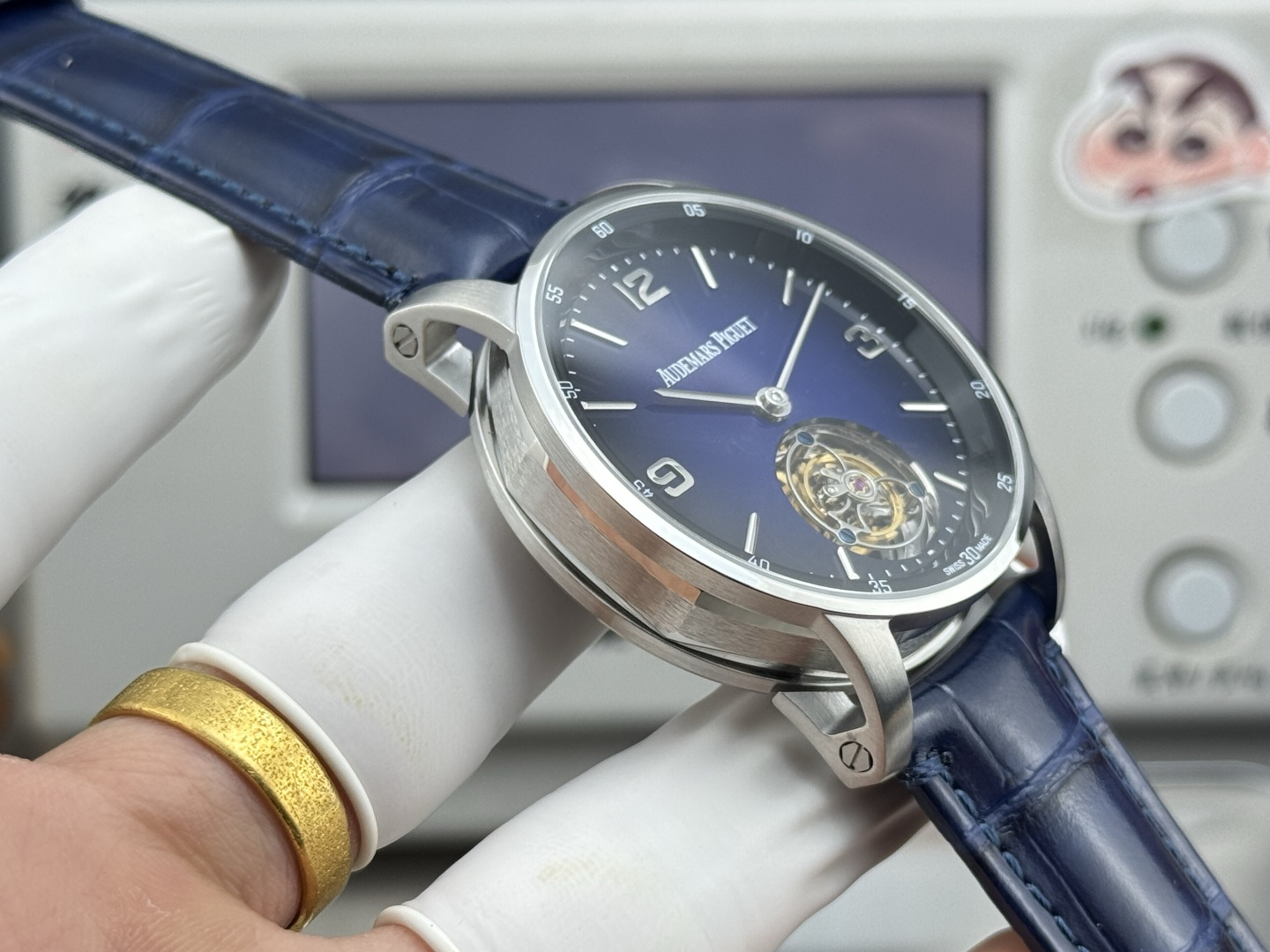
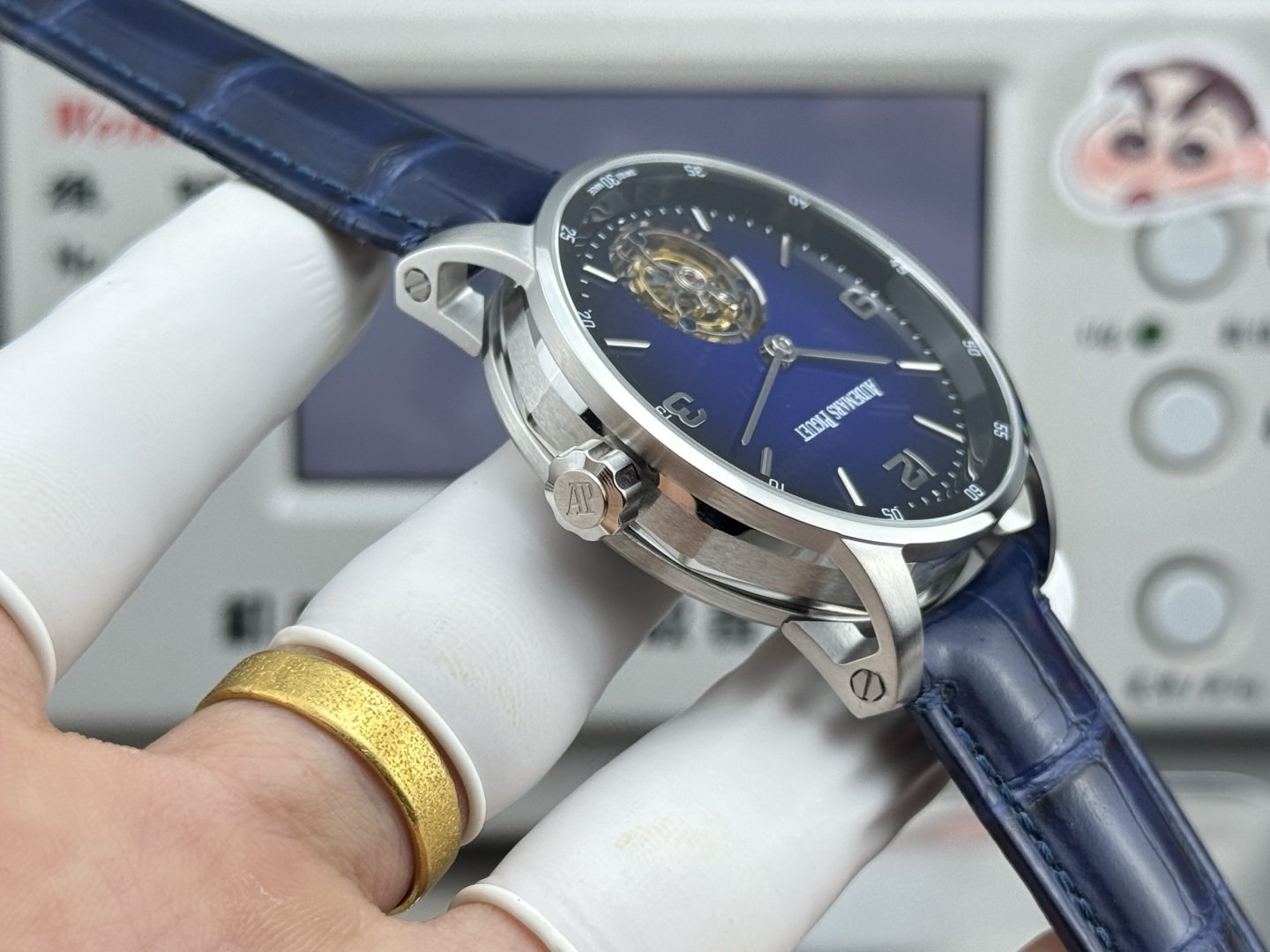
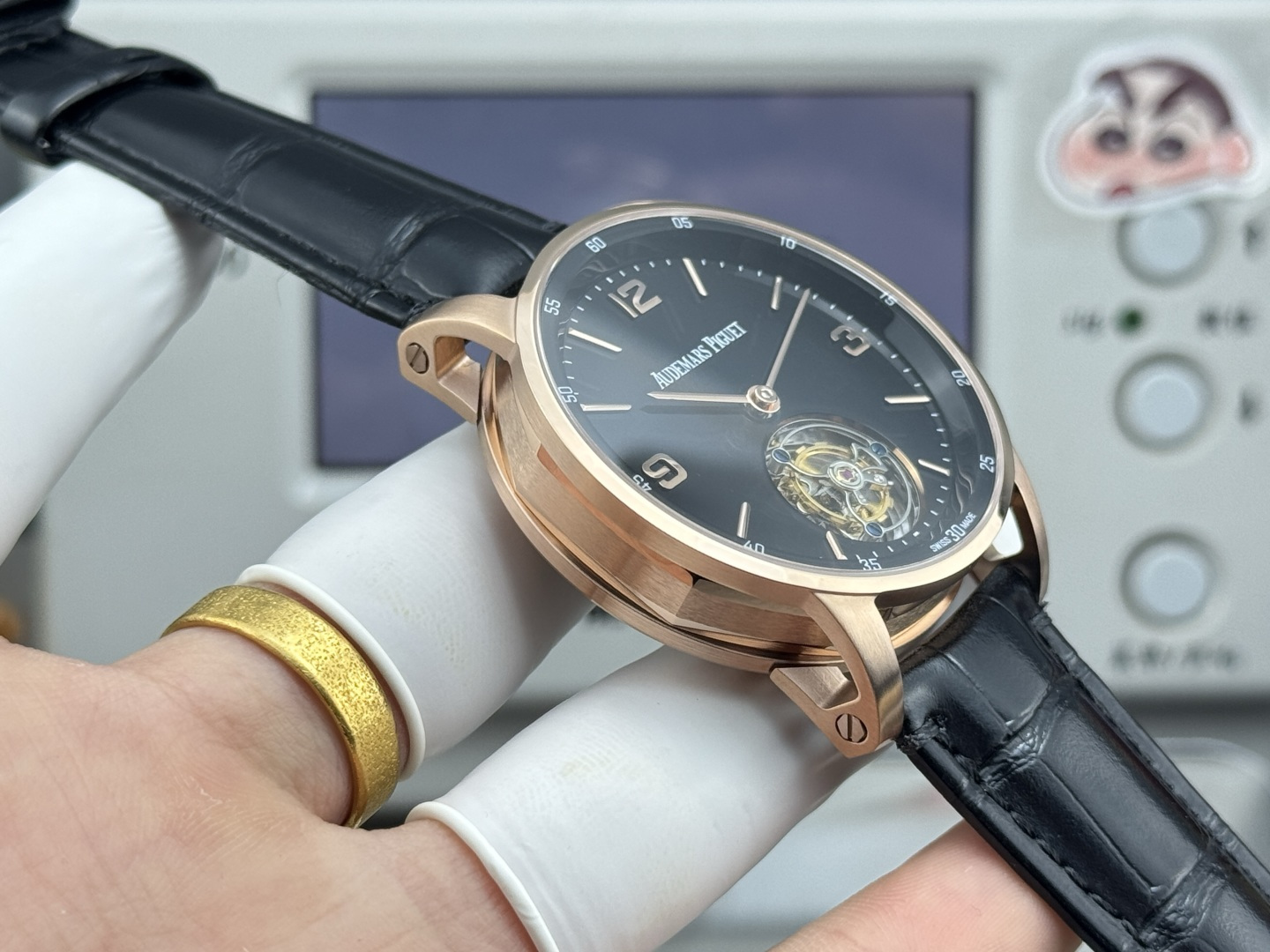
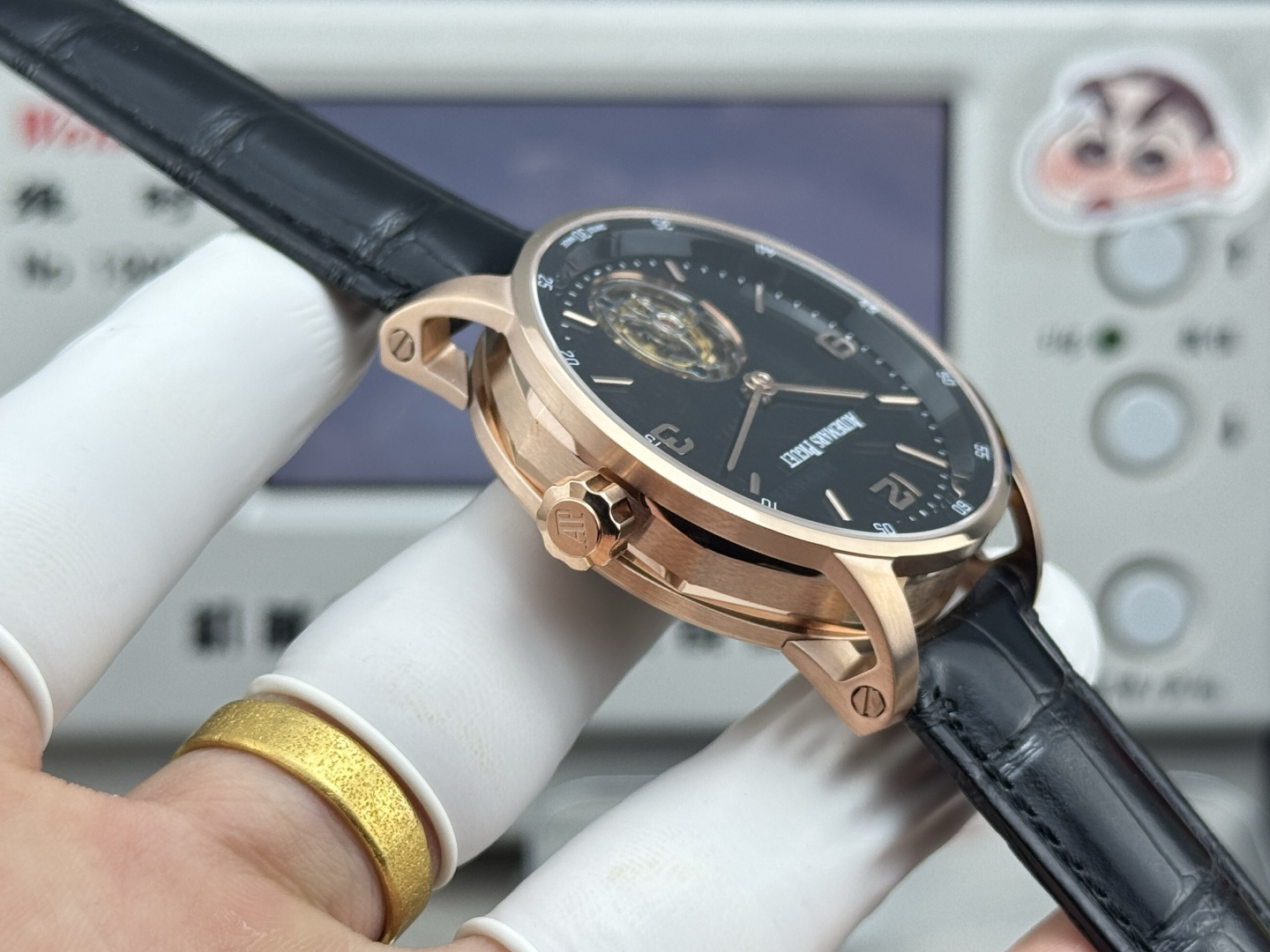
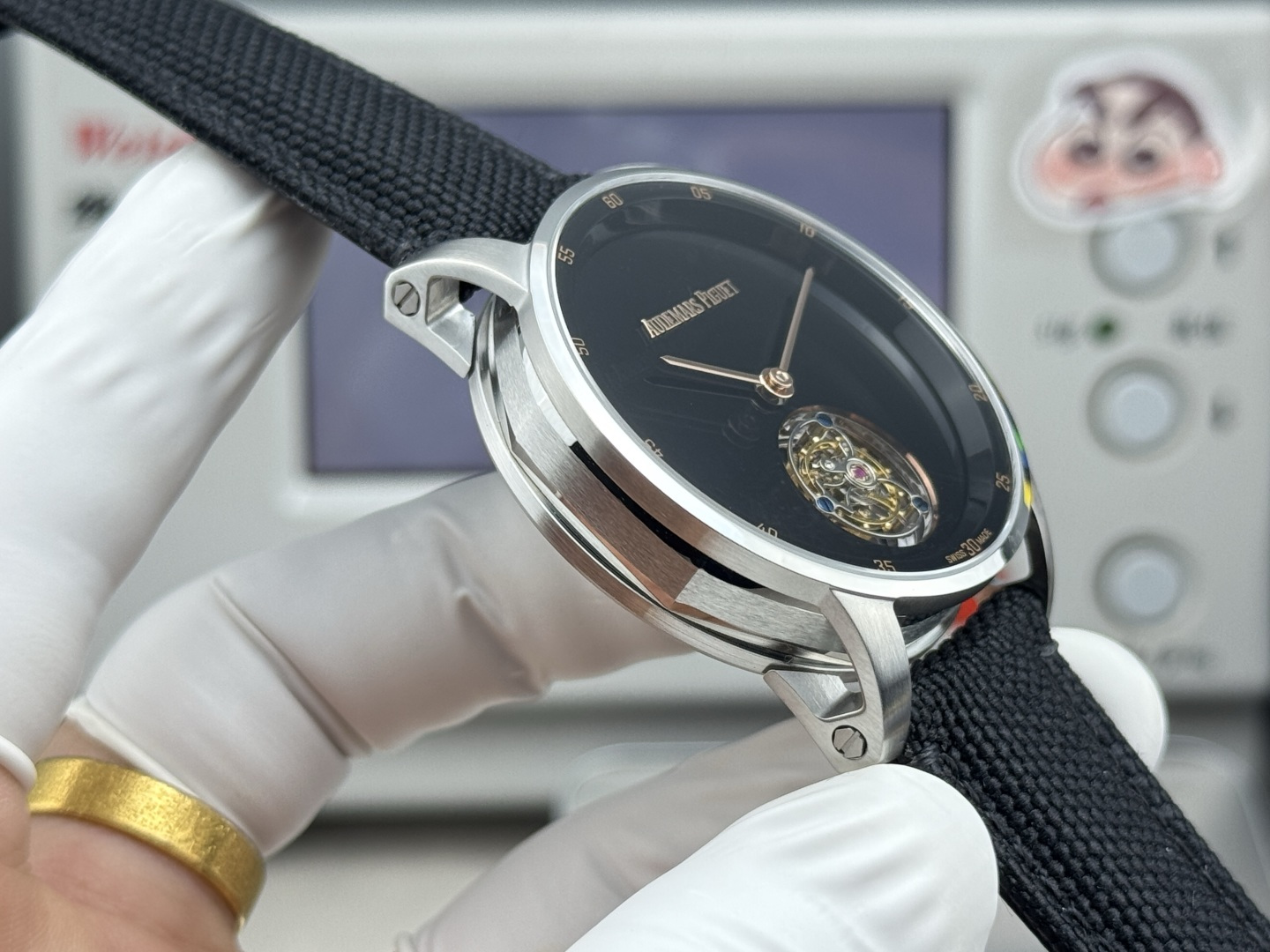
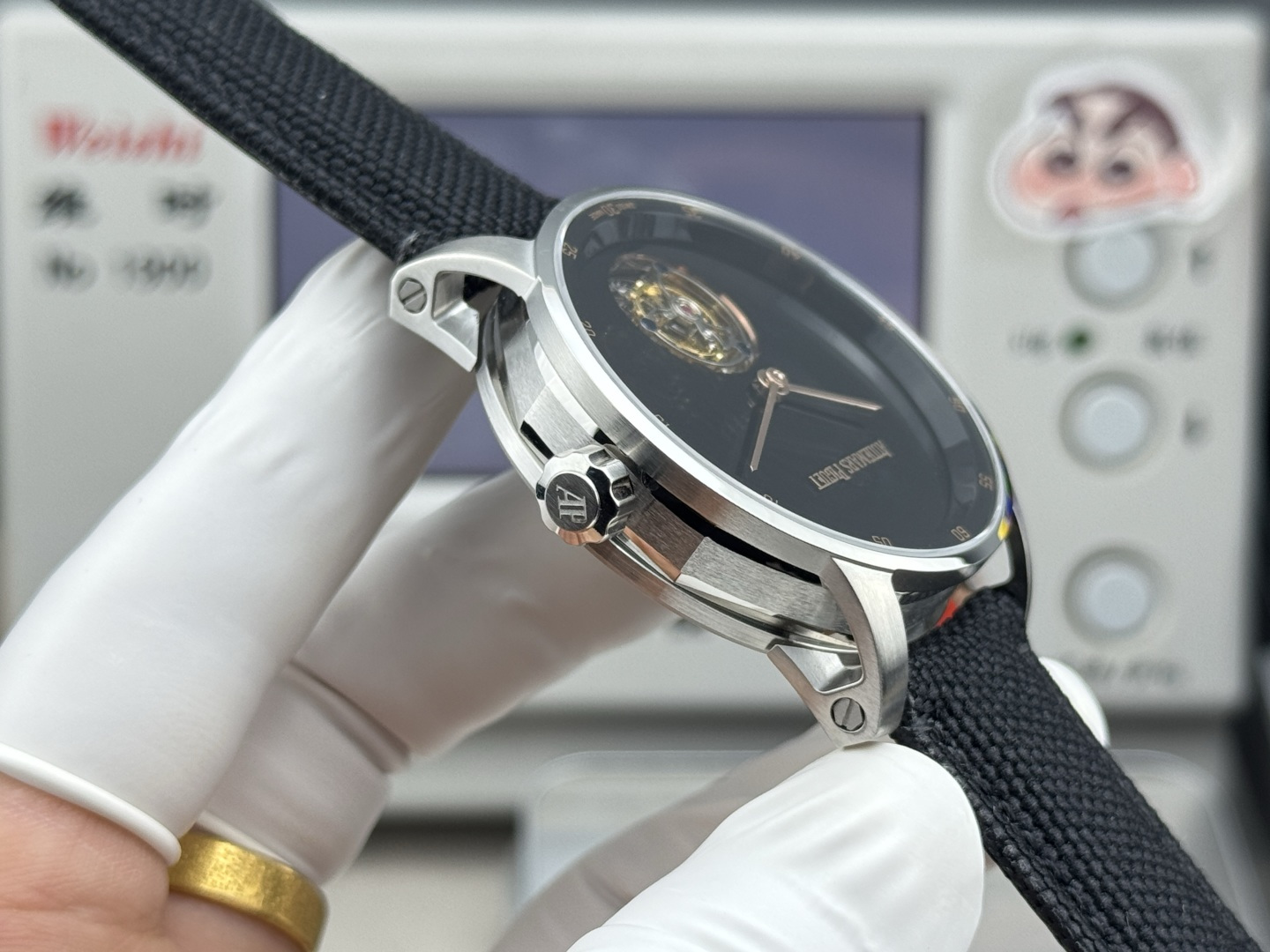
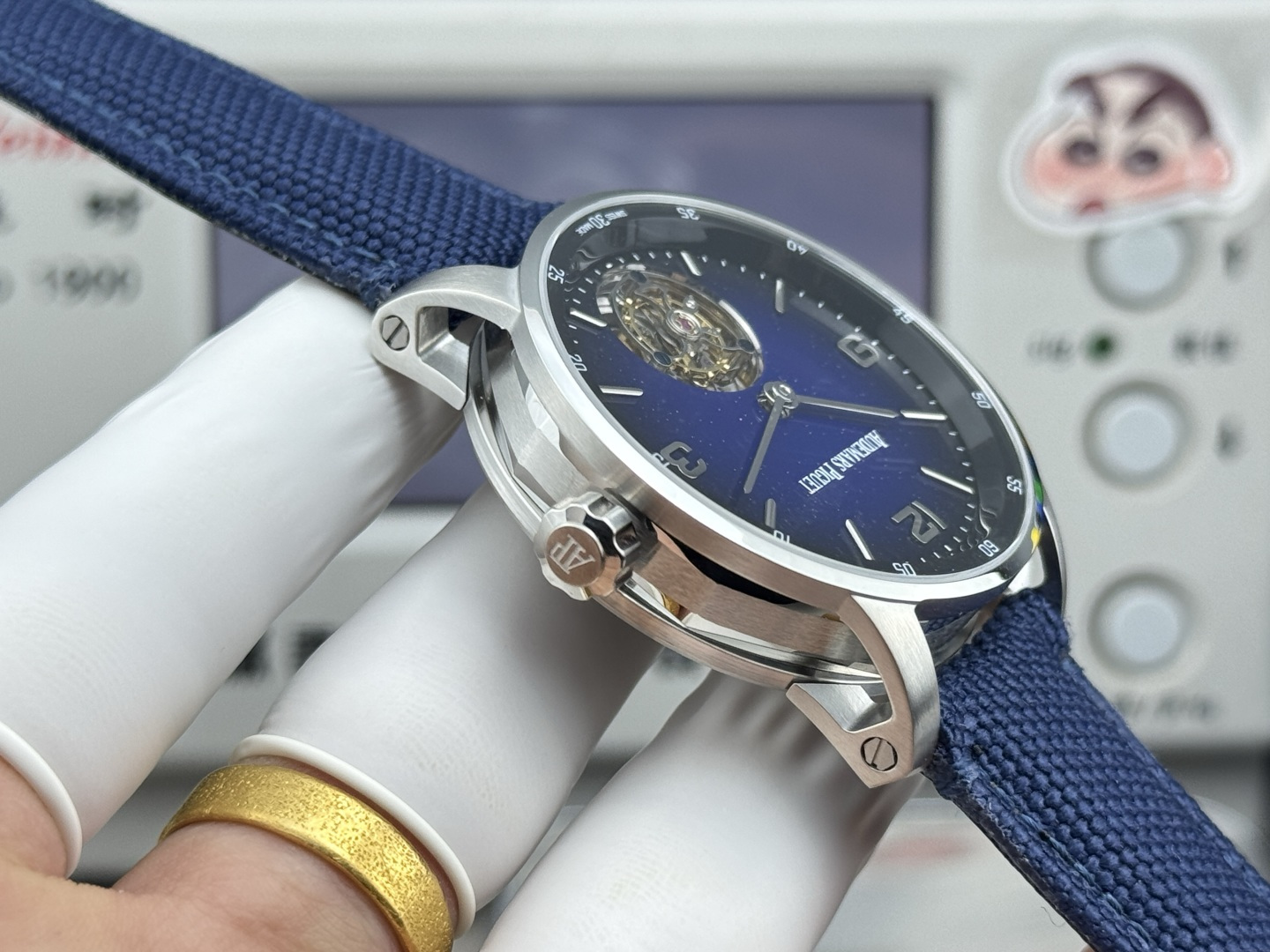
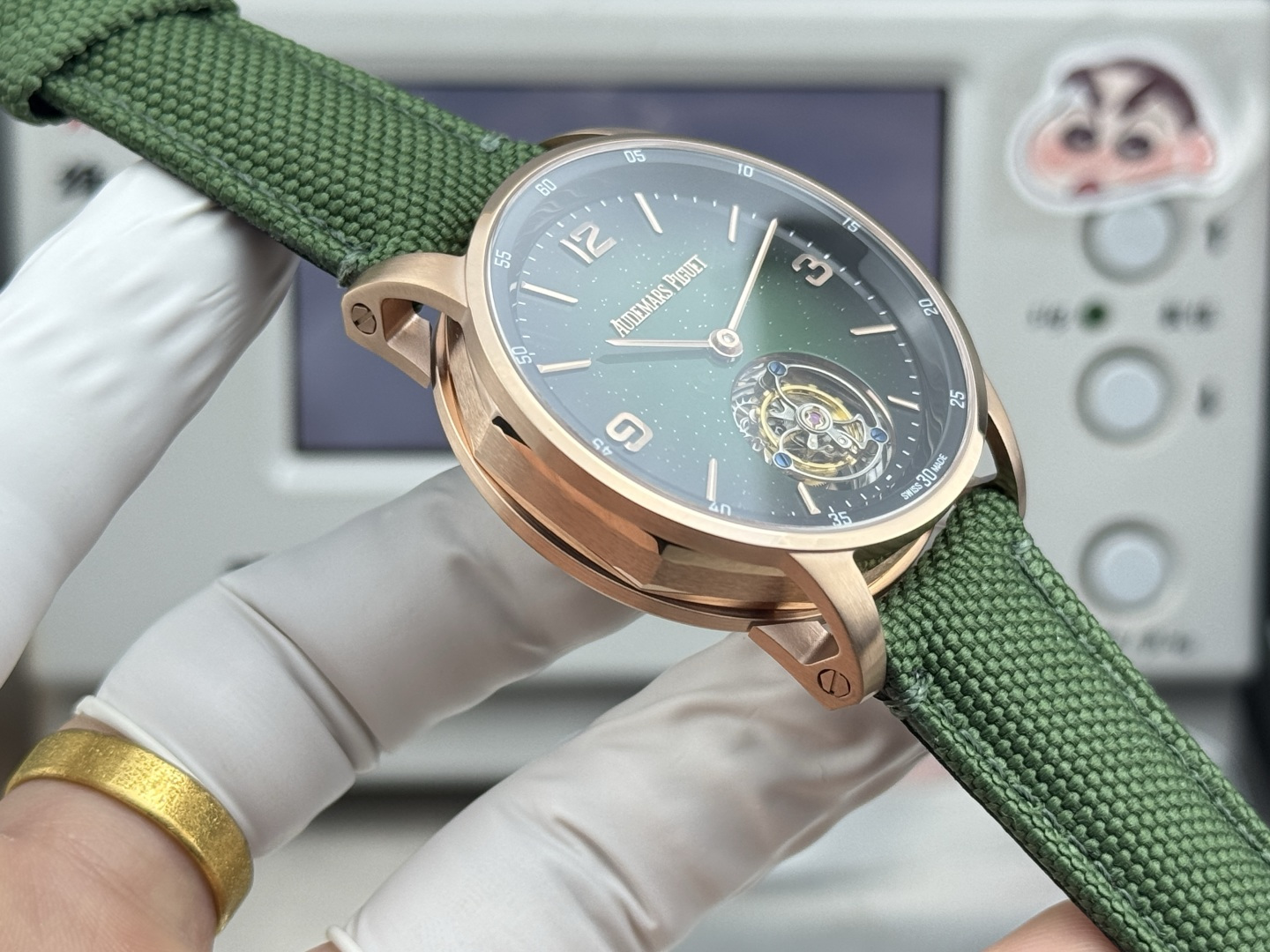
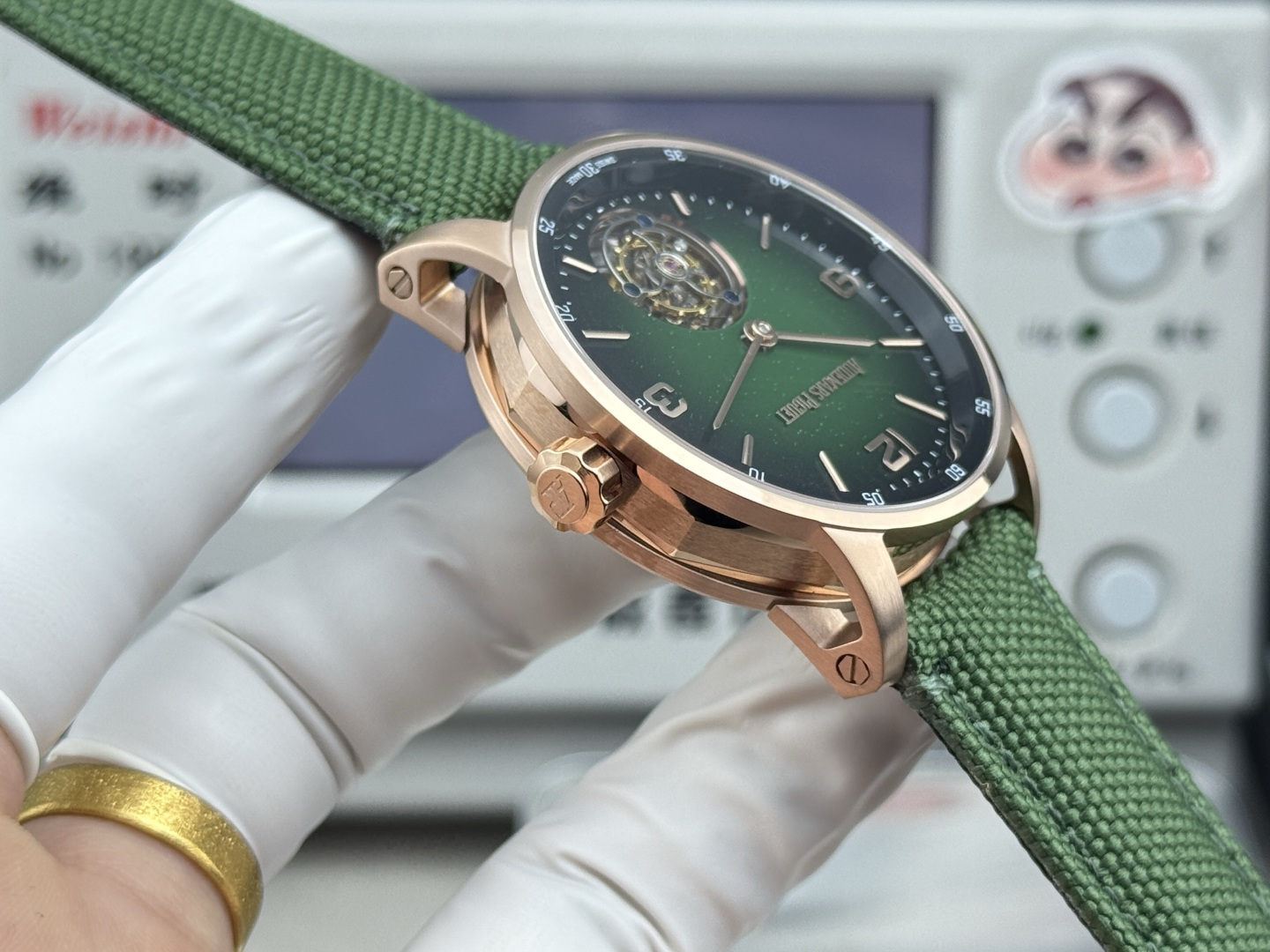
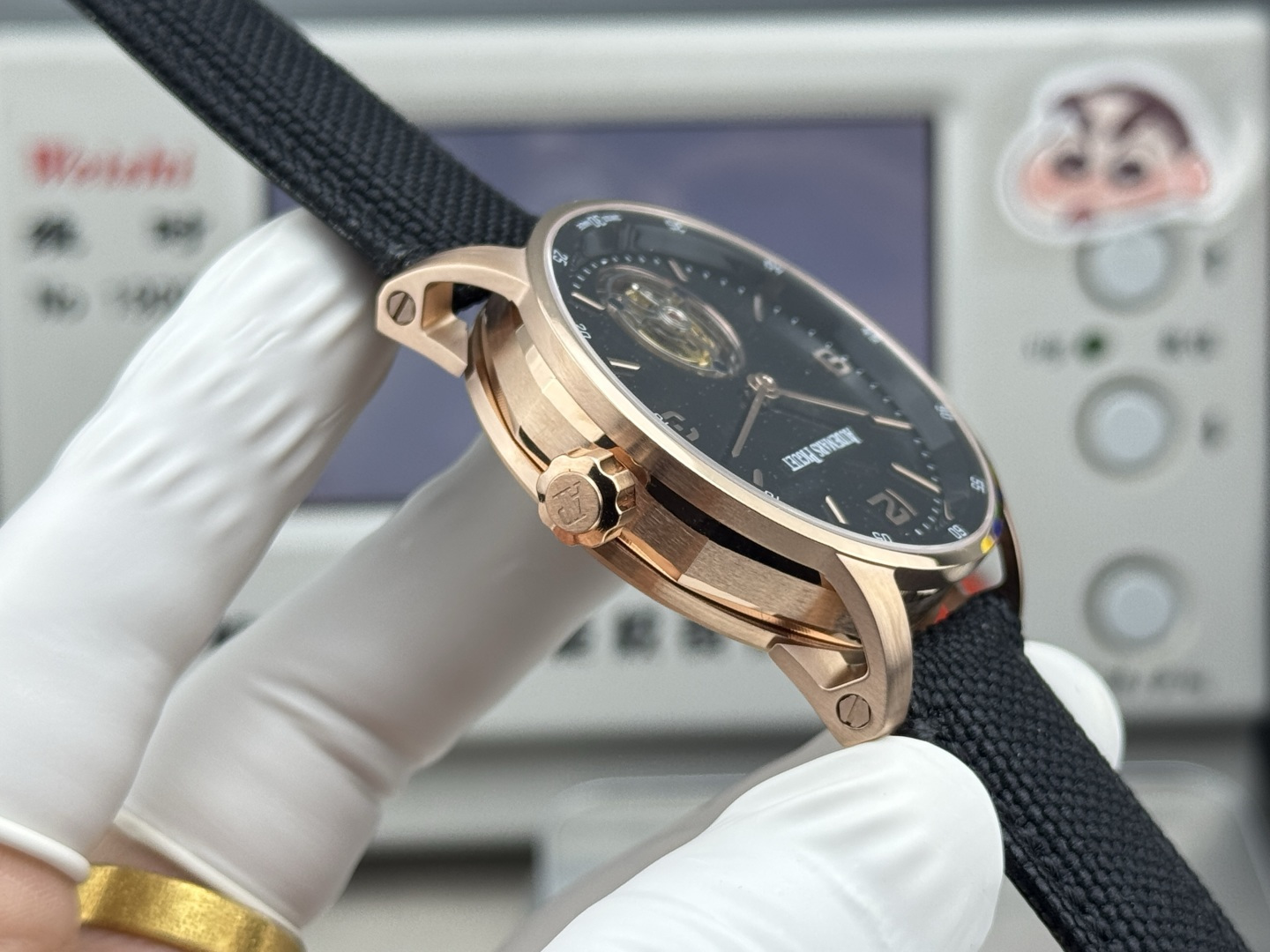
The bezel is where things get interesting and where the CNC work either earns its keep or exposes the factory’s limitations. On the genuine CODE 11.59, the bezel is a polished, faceted architectural element that creates a visual separation between the case flanks and the dial plane. Here, the anglage — the chamfering along the bezel’s edges — is present, but it lacks the knife-edge sharpness you’d find after hand-finishing. Under a 10x loupe, the transitions between the satin-brushed surfaces and the polished bevels show minor inconsistencies. Not catastrophic. Not invisible either. The brushing direction on the lugs is correct, running longitudinally as it should, and the alternating finishing between lugs and case flanks has been thought about, which is more than you can say for the average clone from three years ago.
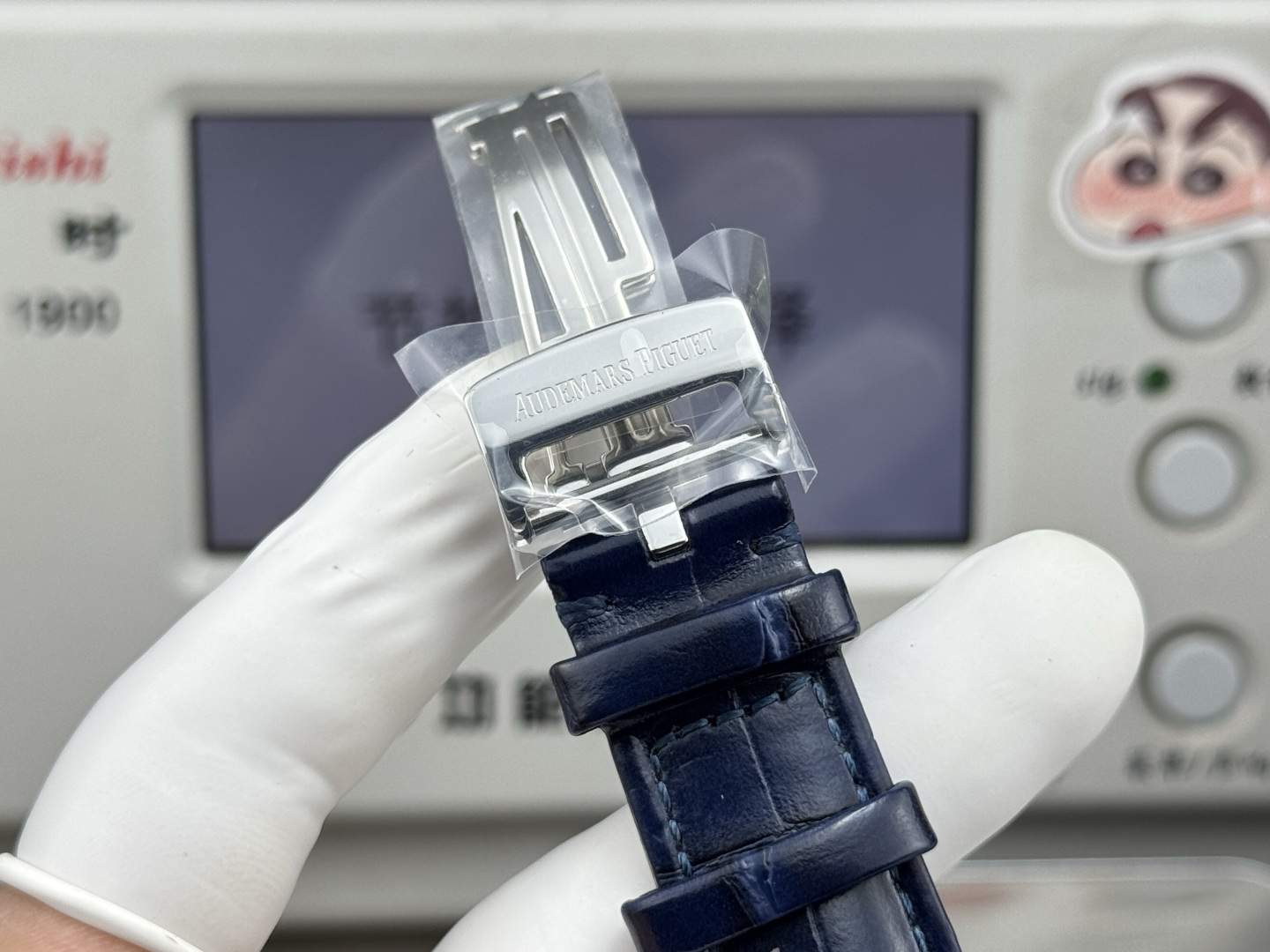
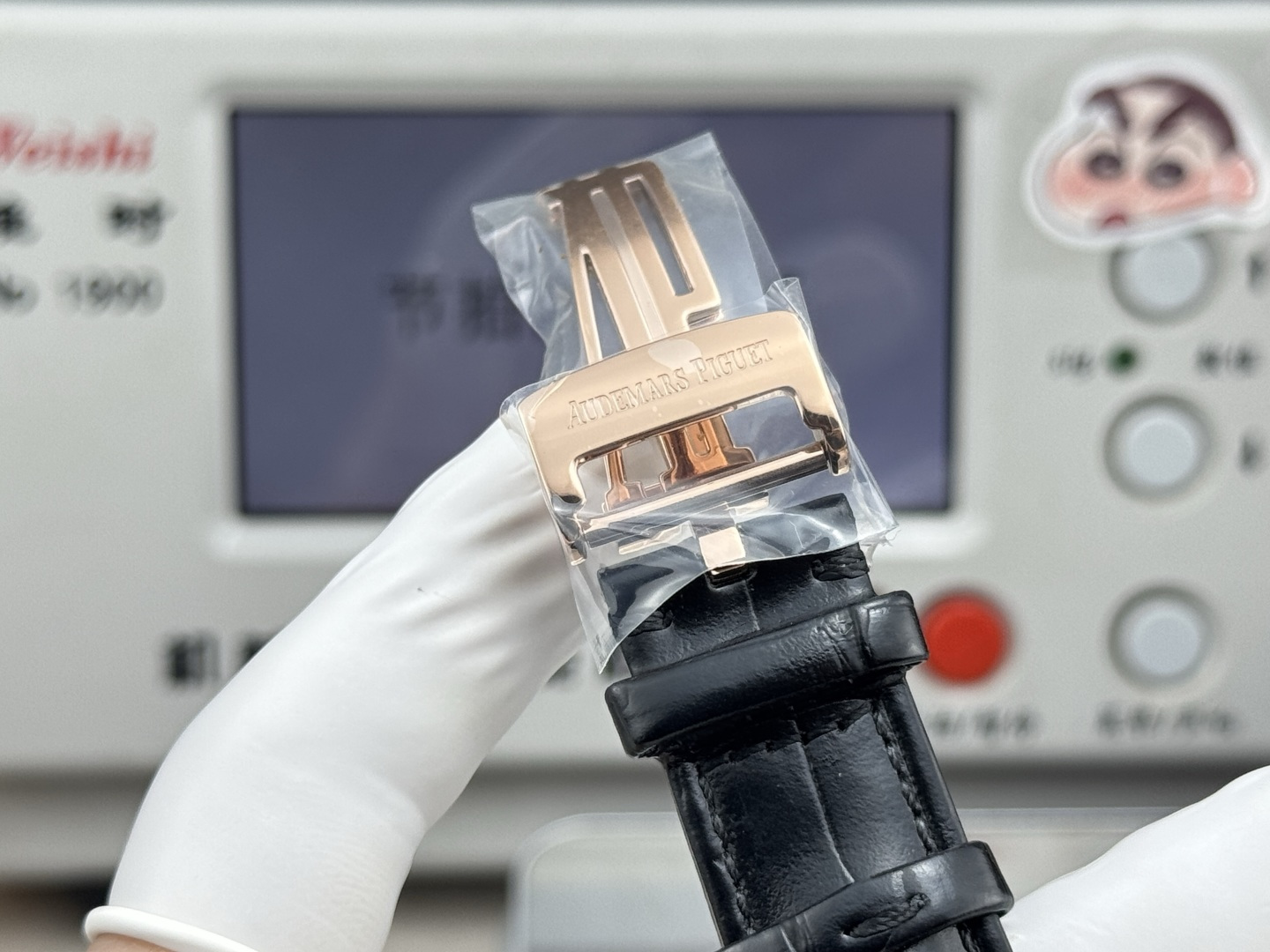
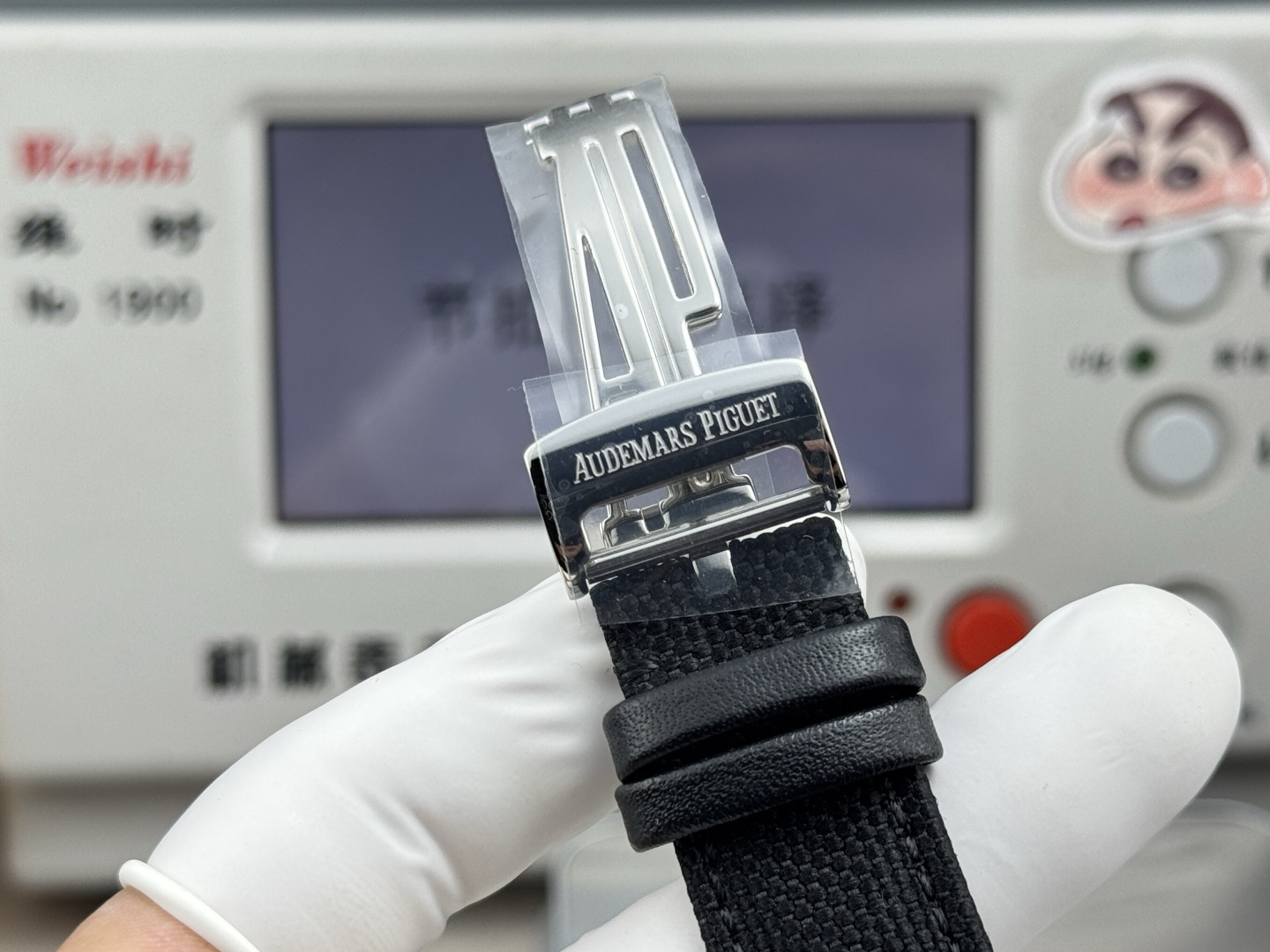
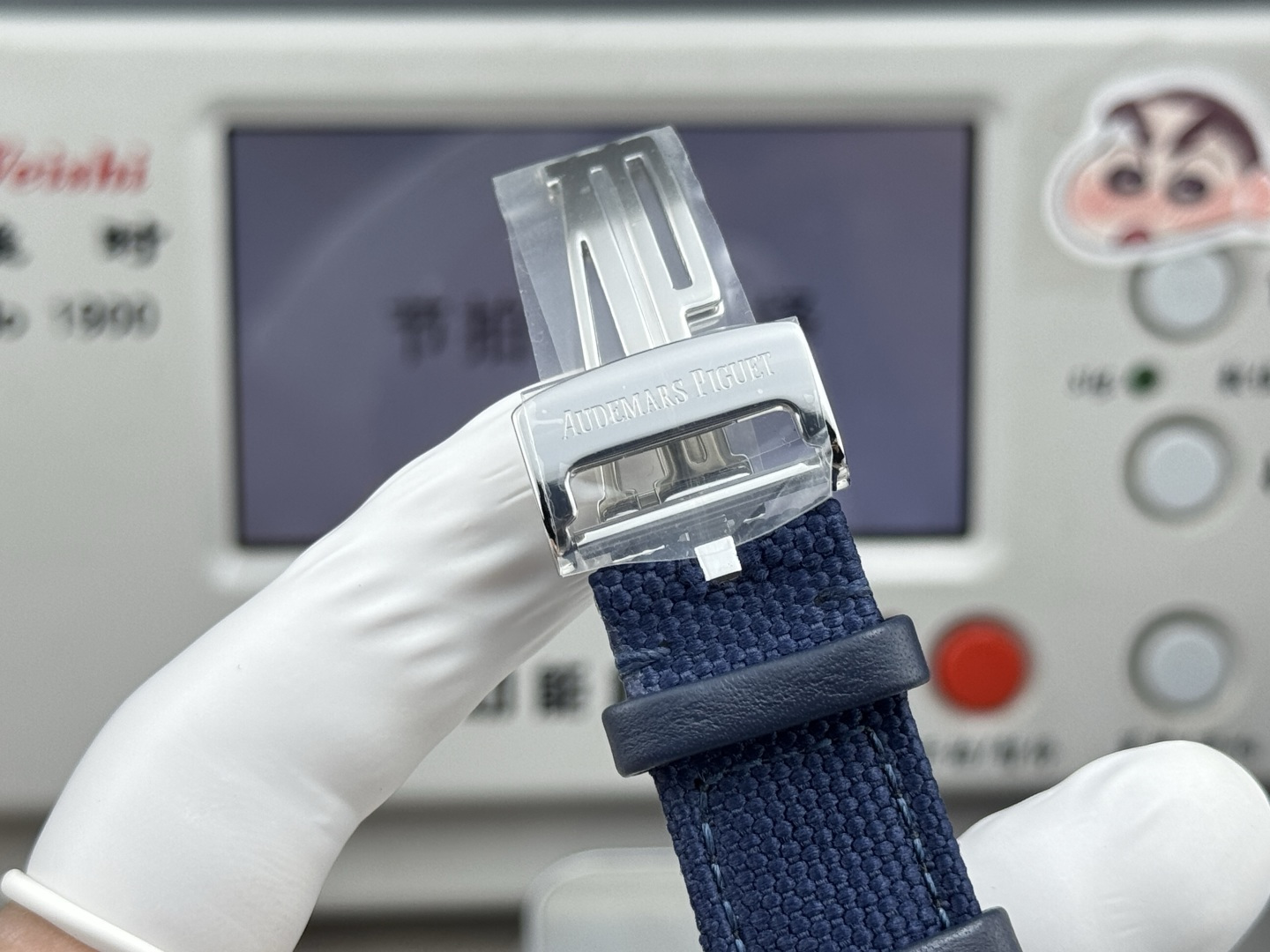
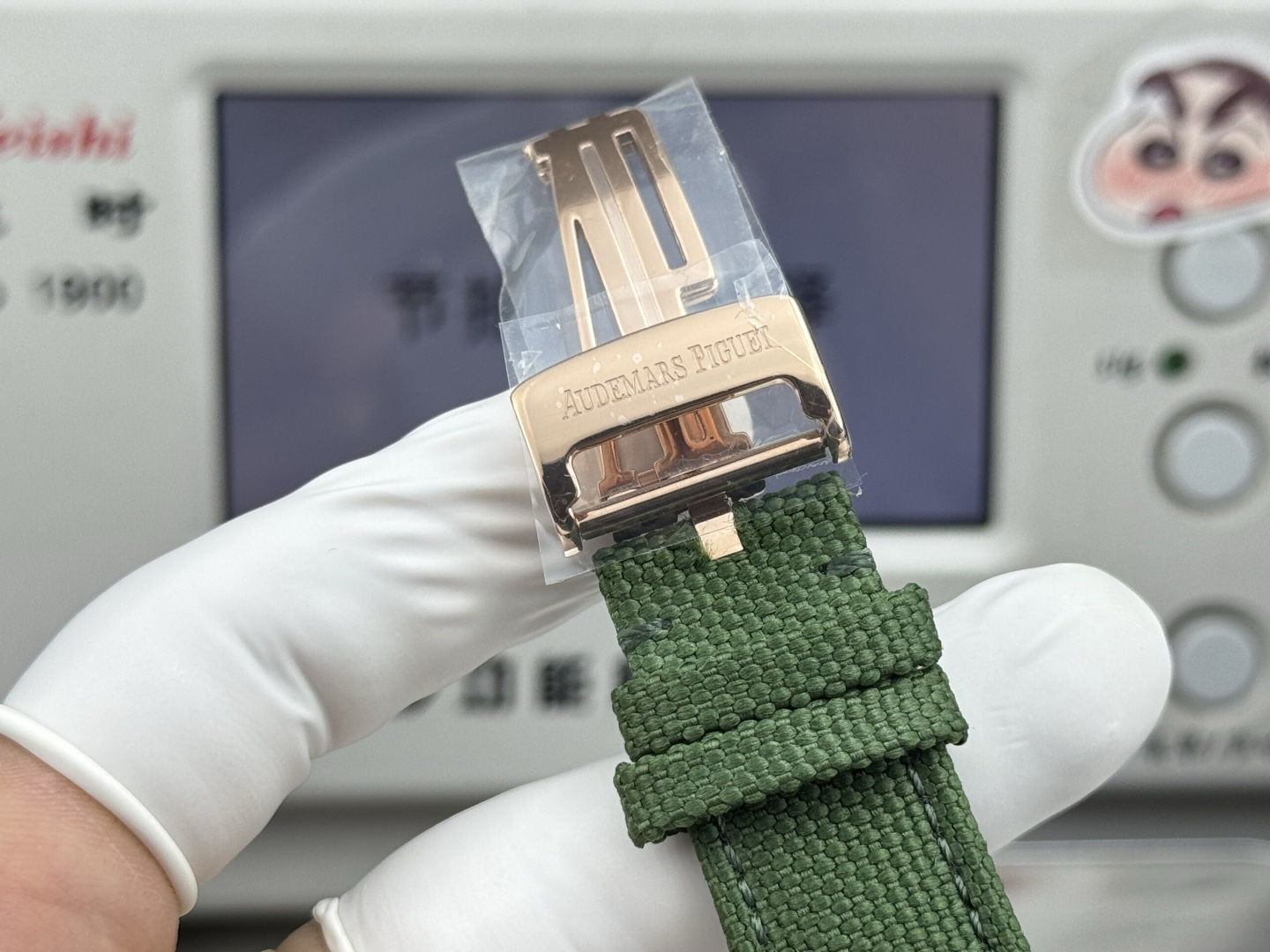
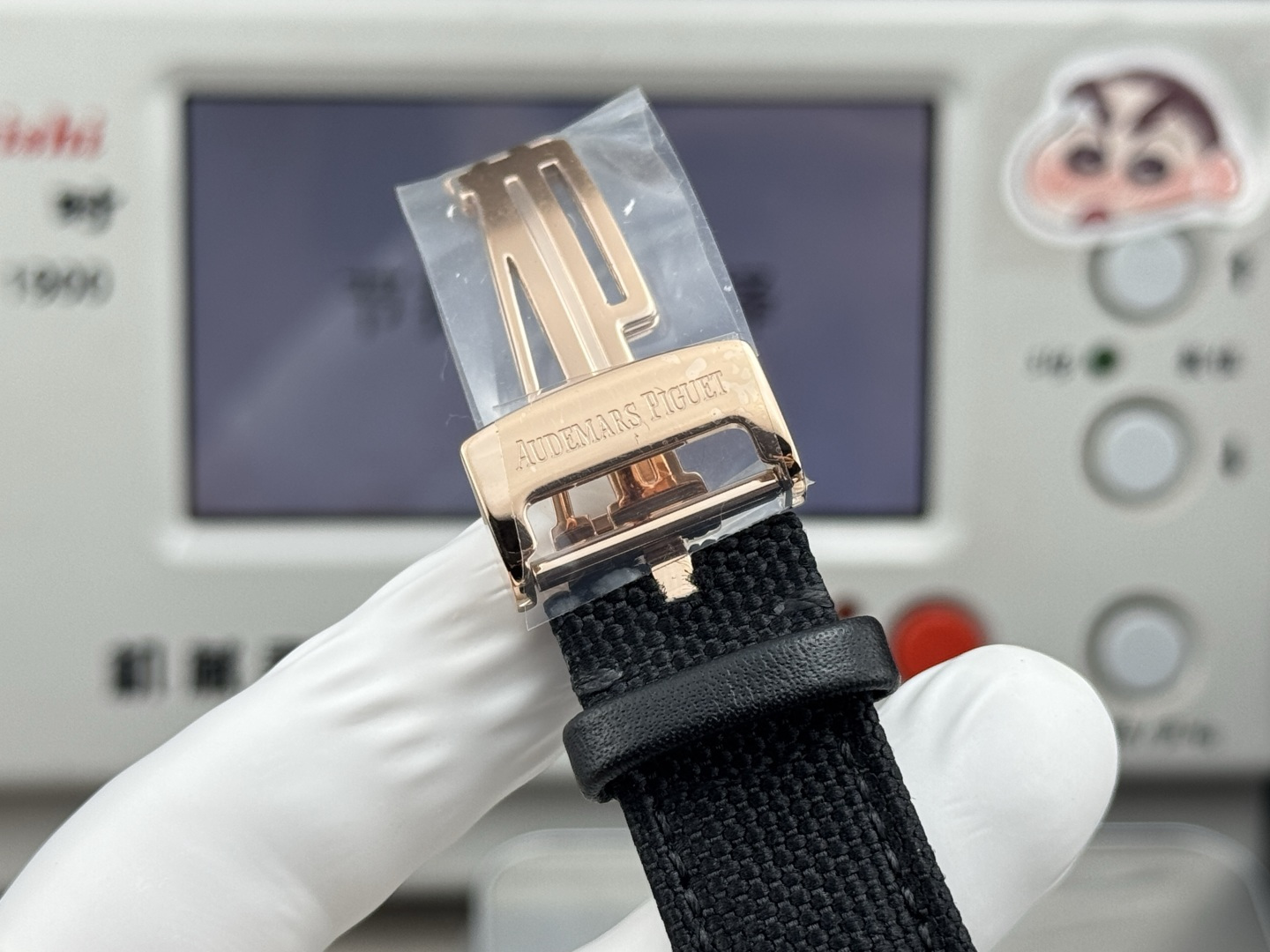
The crown is correctly positioned at 3 o’clock, sized proportionally, and screws down with reasonable resistance. The rehaut — that inner ring between crystal and dial — is cleanly executed with no visible tool marks. The SEL articulation on the bracelet, if you opt for that configuration over the leather, is functional without being exceptional. Deployant clasp action is smooth enough that you won’t embarrass yourself at dinner. The exhibition caseback reveals the movement, and we’ll get there shortly.
One genuine concern: the AR coating bloom on the sapphire crystal. The genuine AP uses a multi-layer anti-reflective coating that produces a very specific blue-green bloom when held at oblique angles. This replica’s coating reads slightly more green-dominant and is less uniform toward the crystal edges. Under direct light it’s a non-issue. Under the loupe at 45 degrees, it’s a tell for anyone who knows what they’re looking at.
The Macro Dial Examination
Here’s where I’ll spend the most time, because the dial is the entire argument for or against this piece.
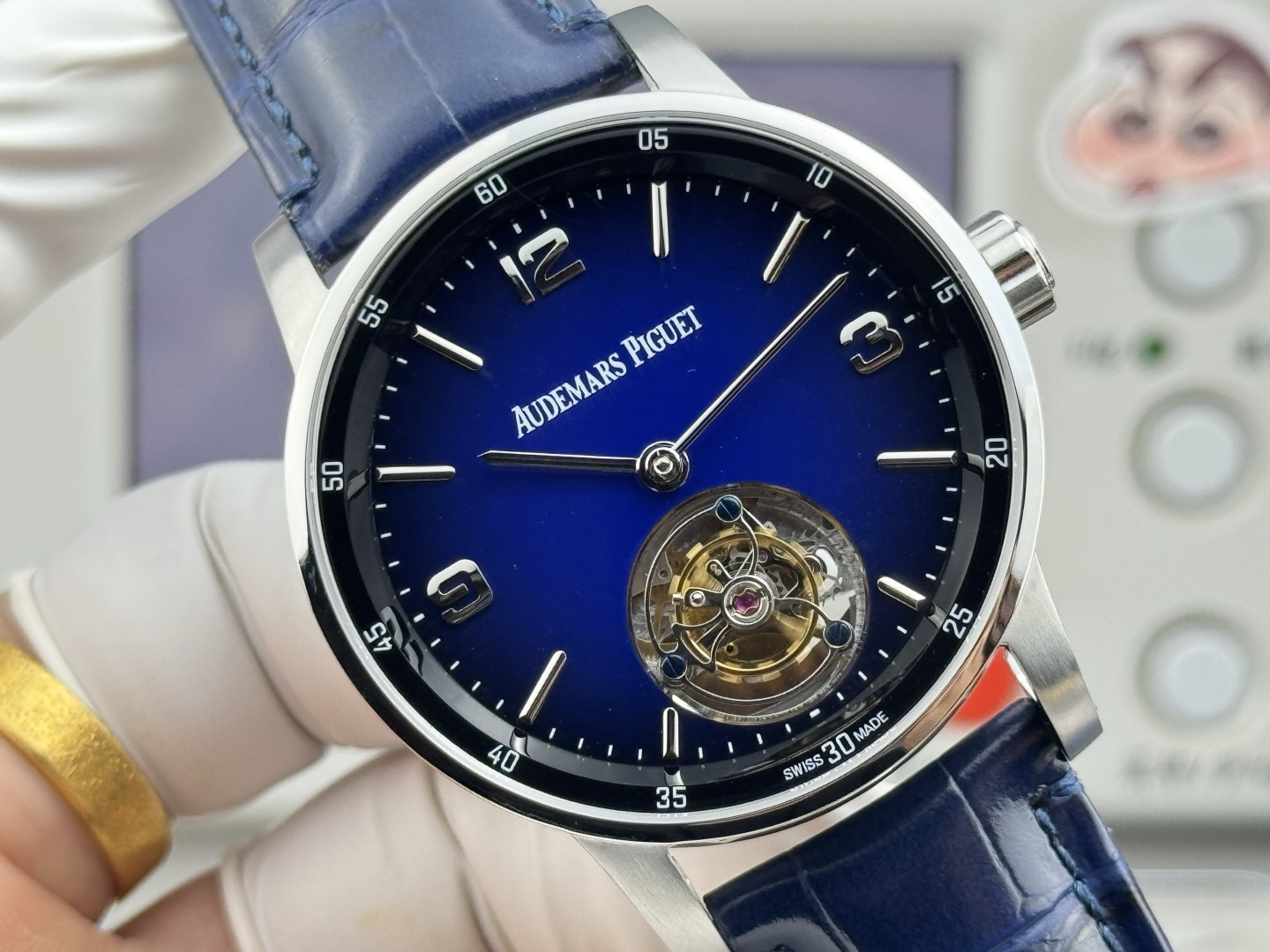
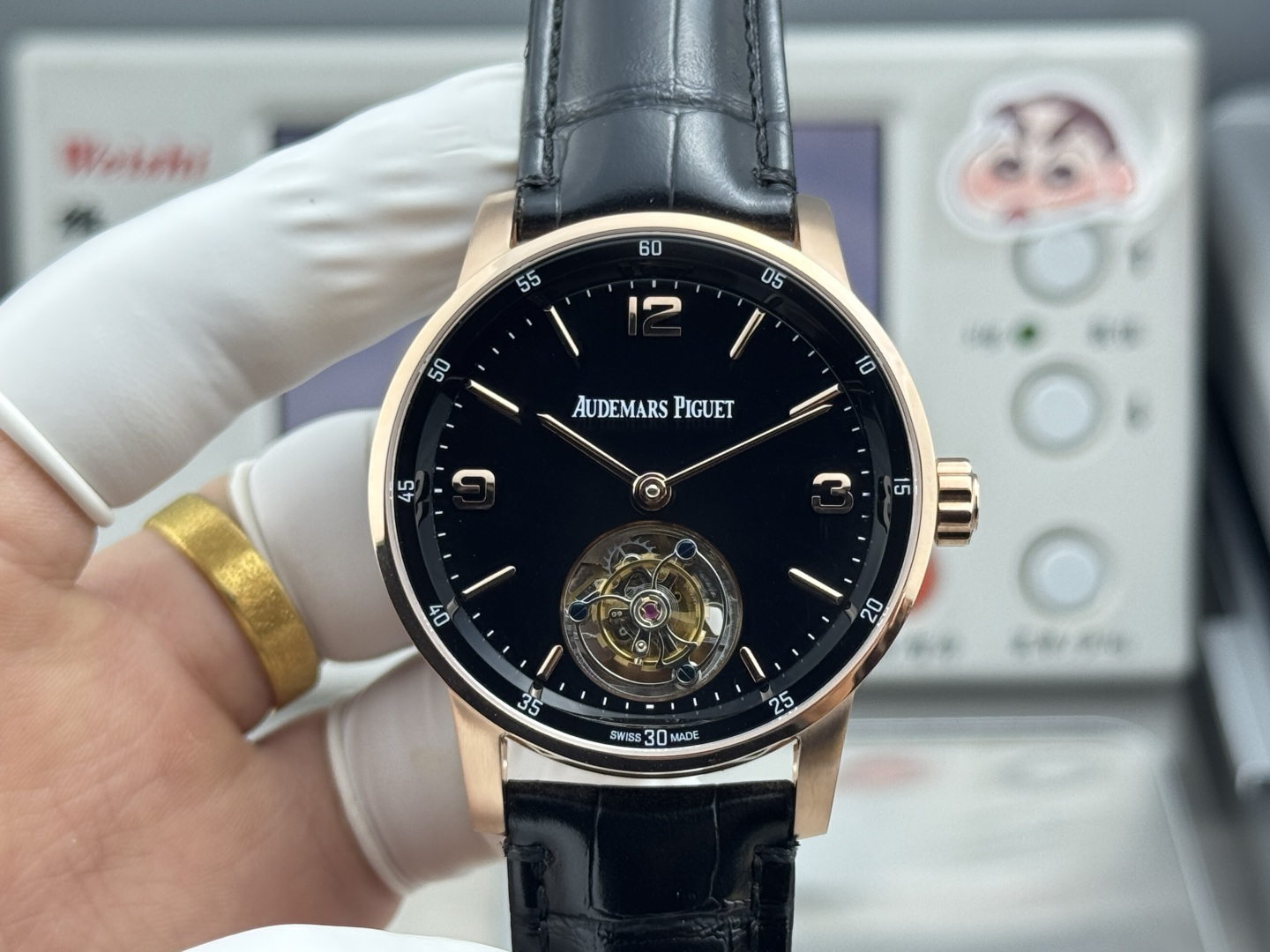
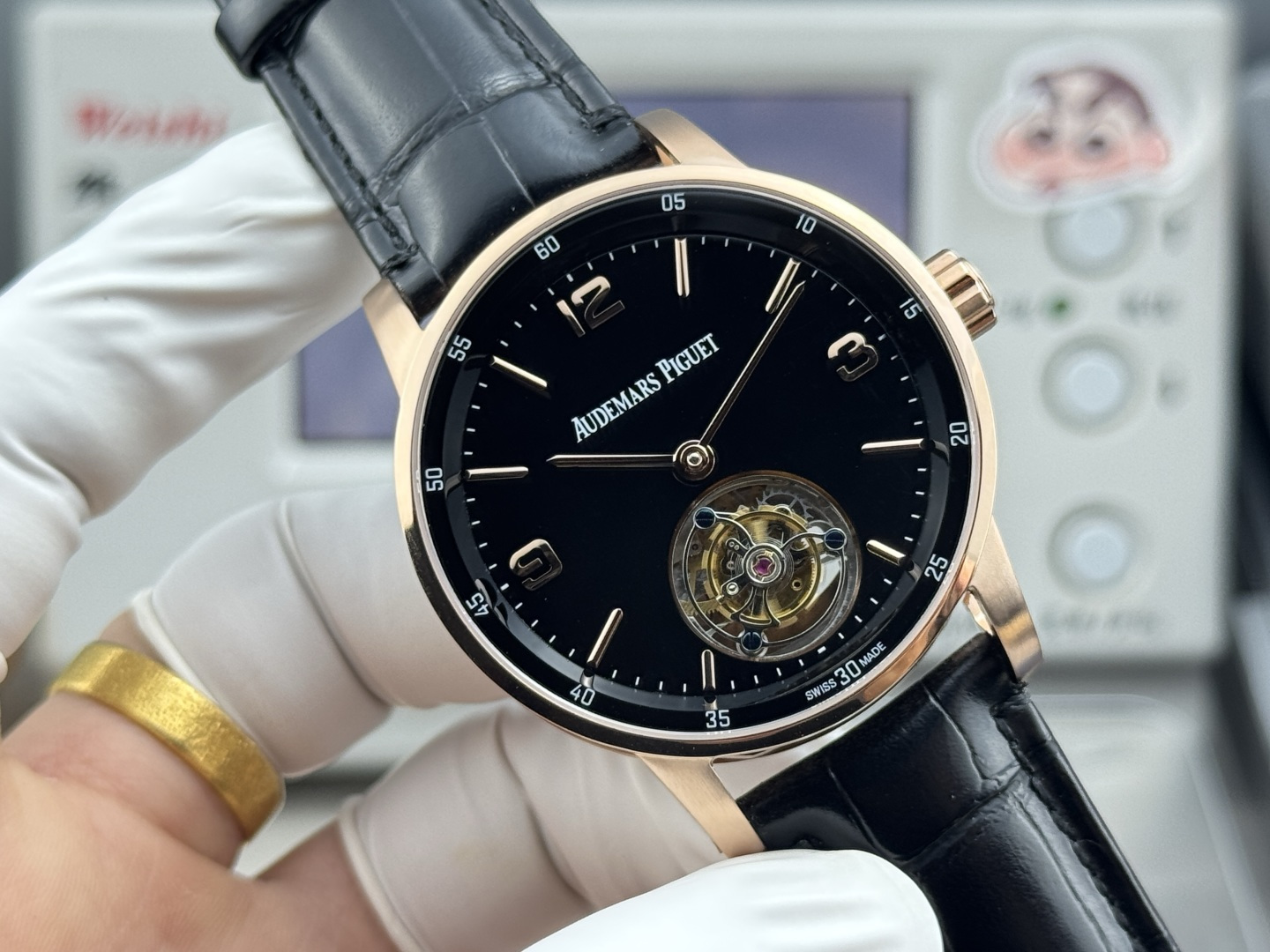
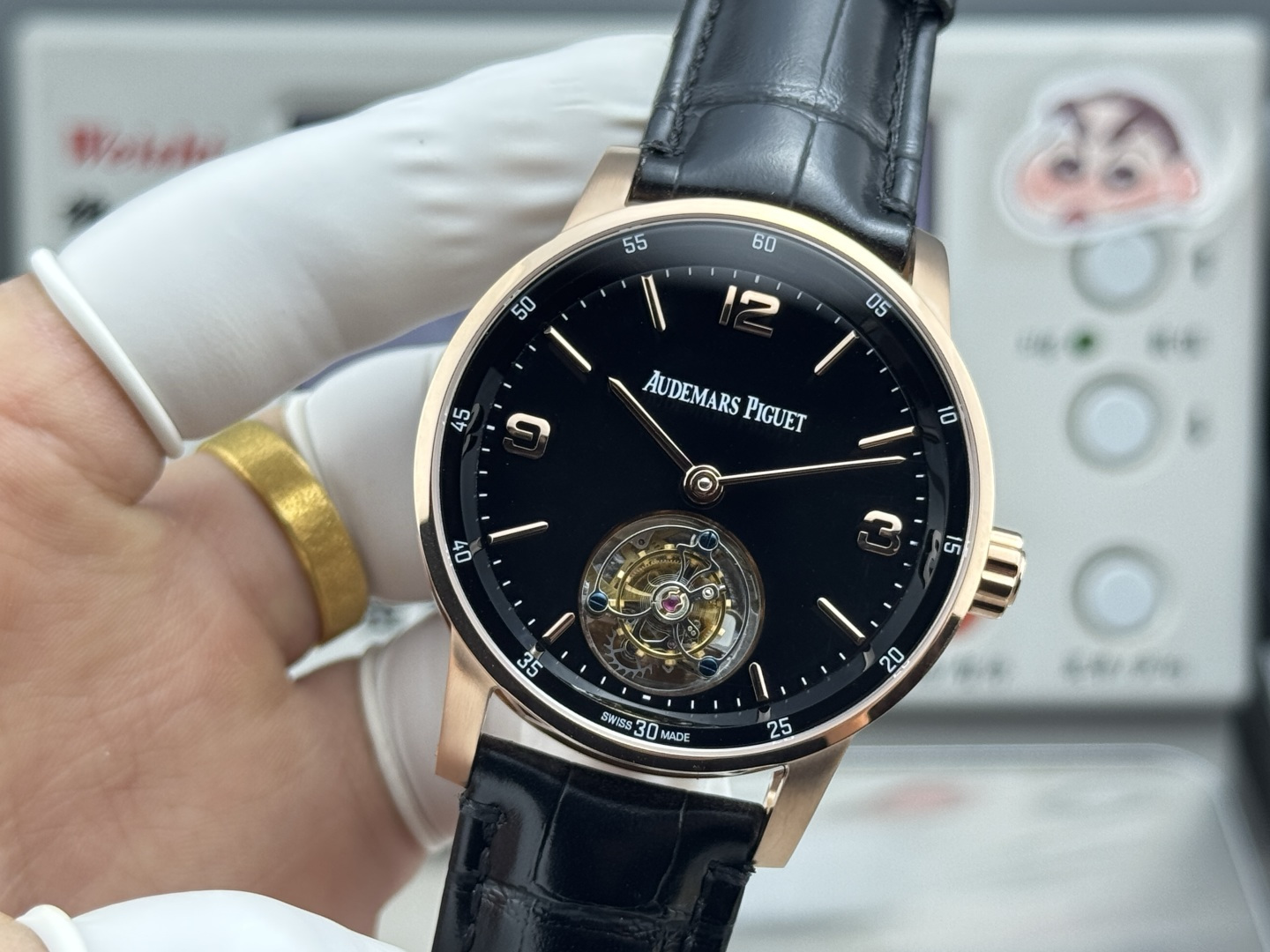
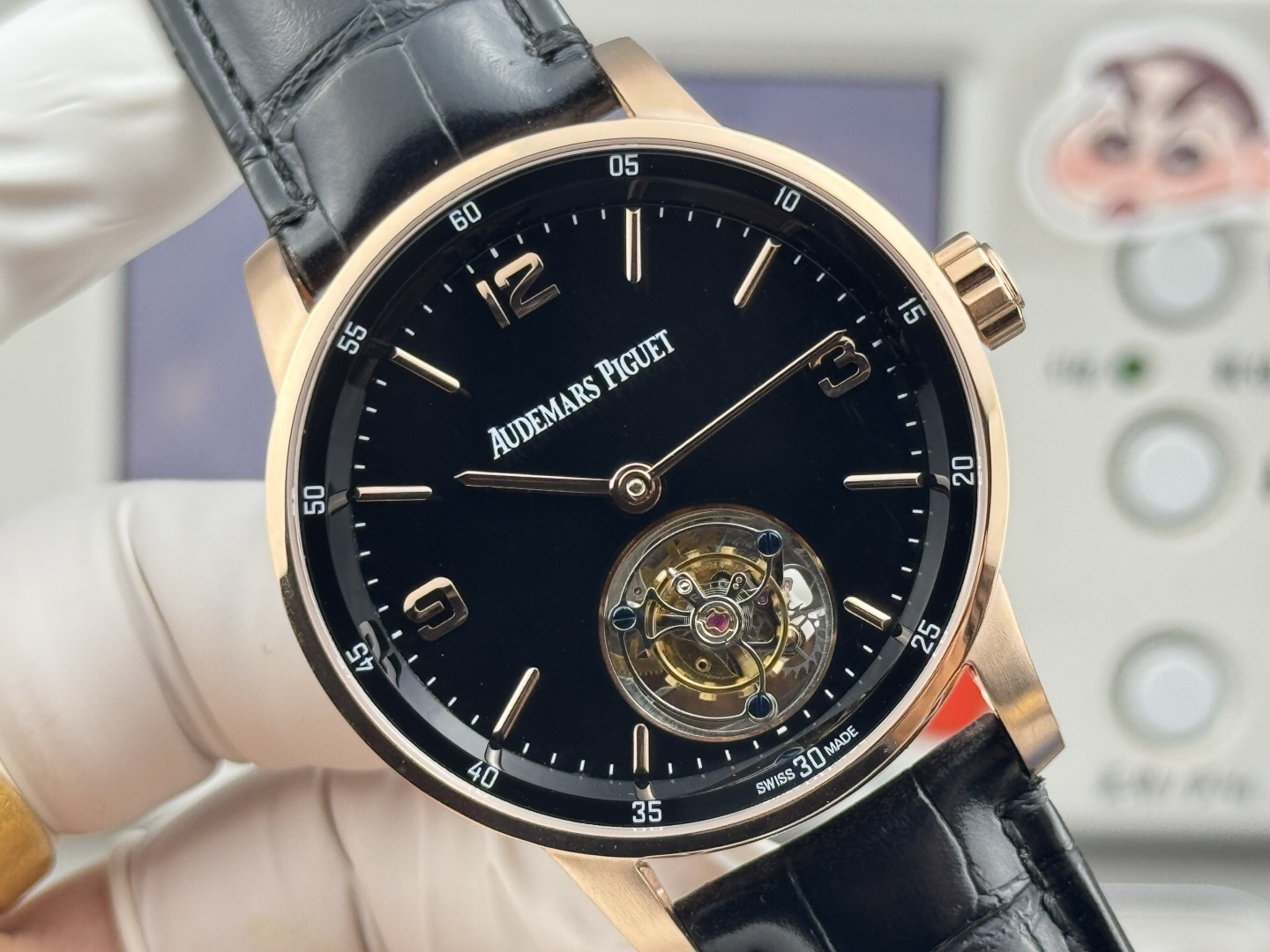
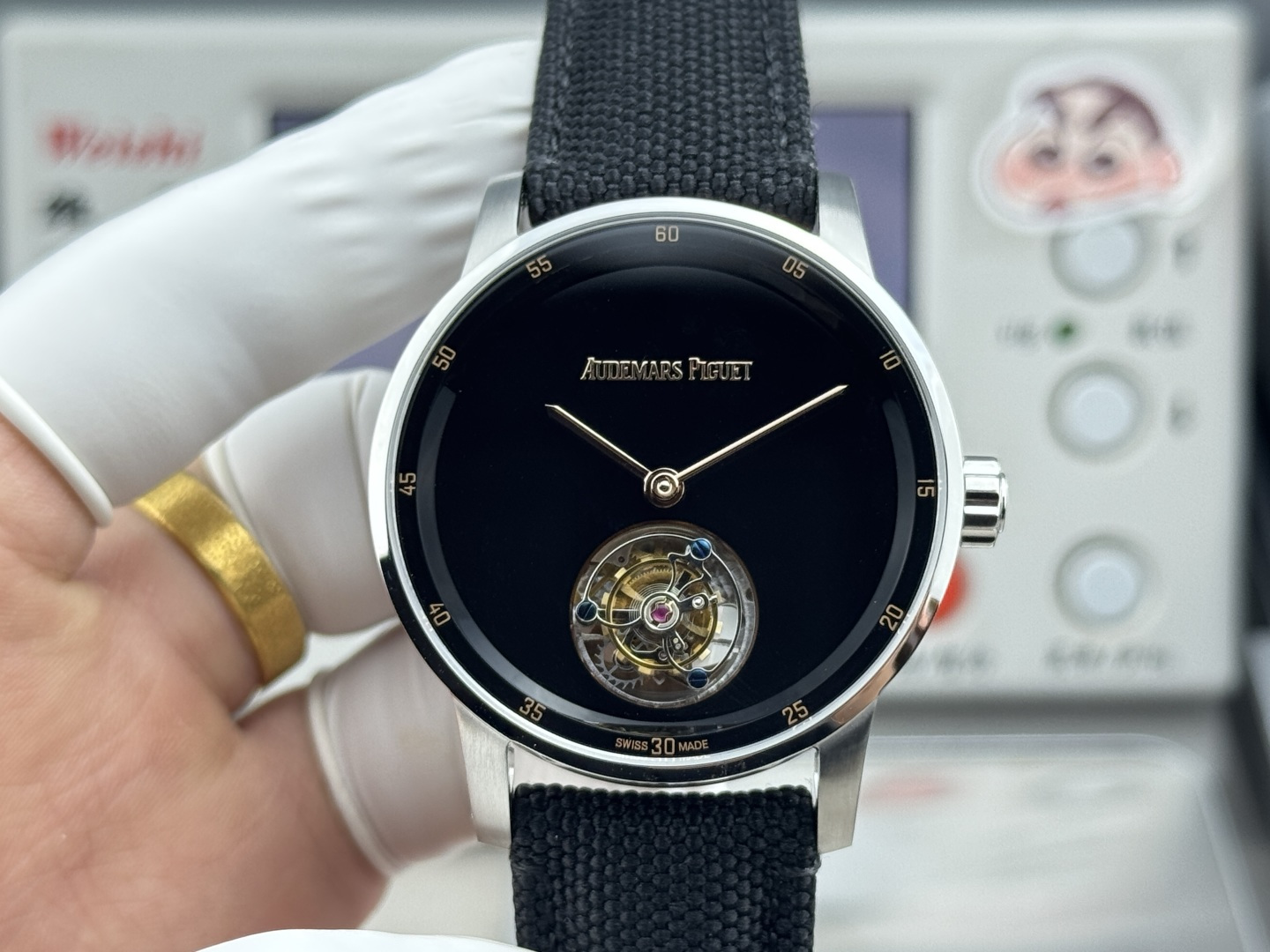
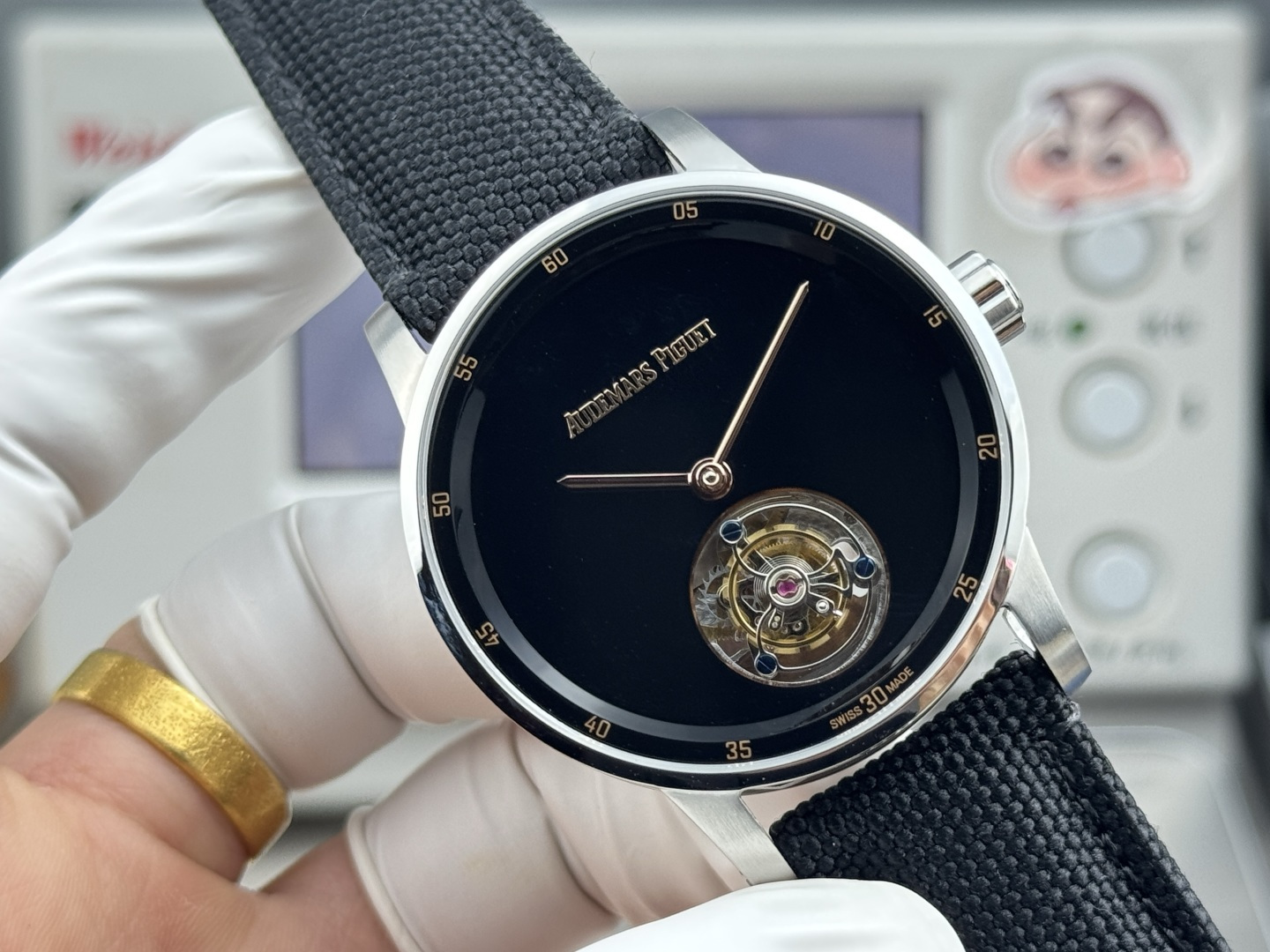
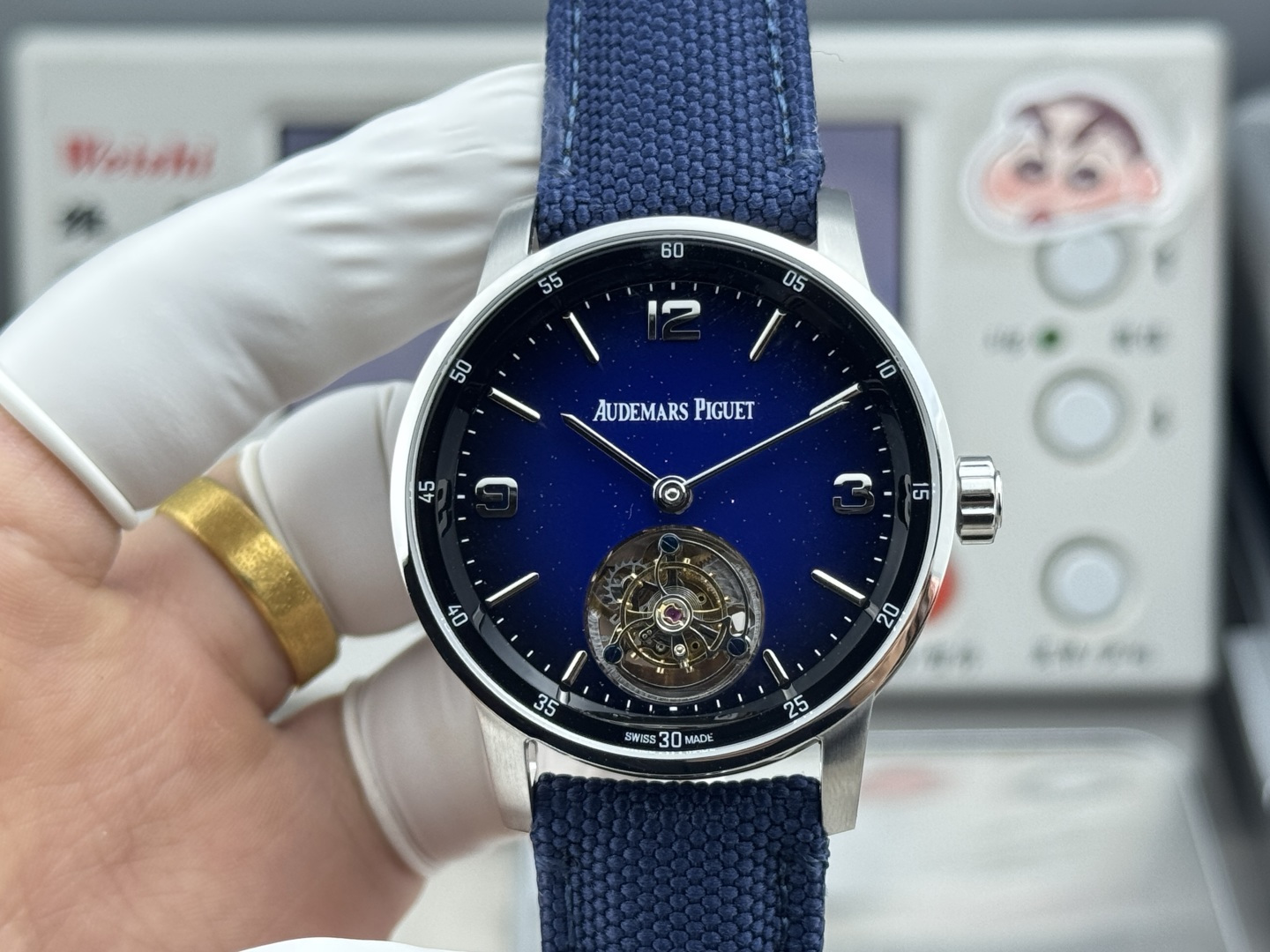
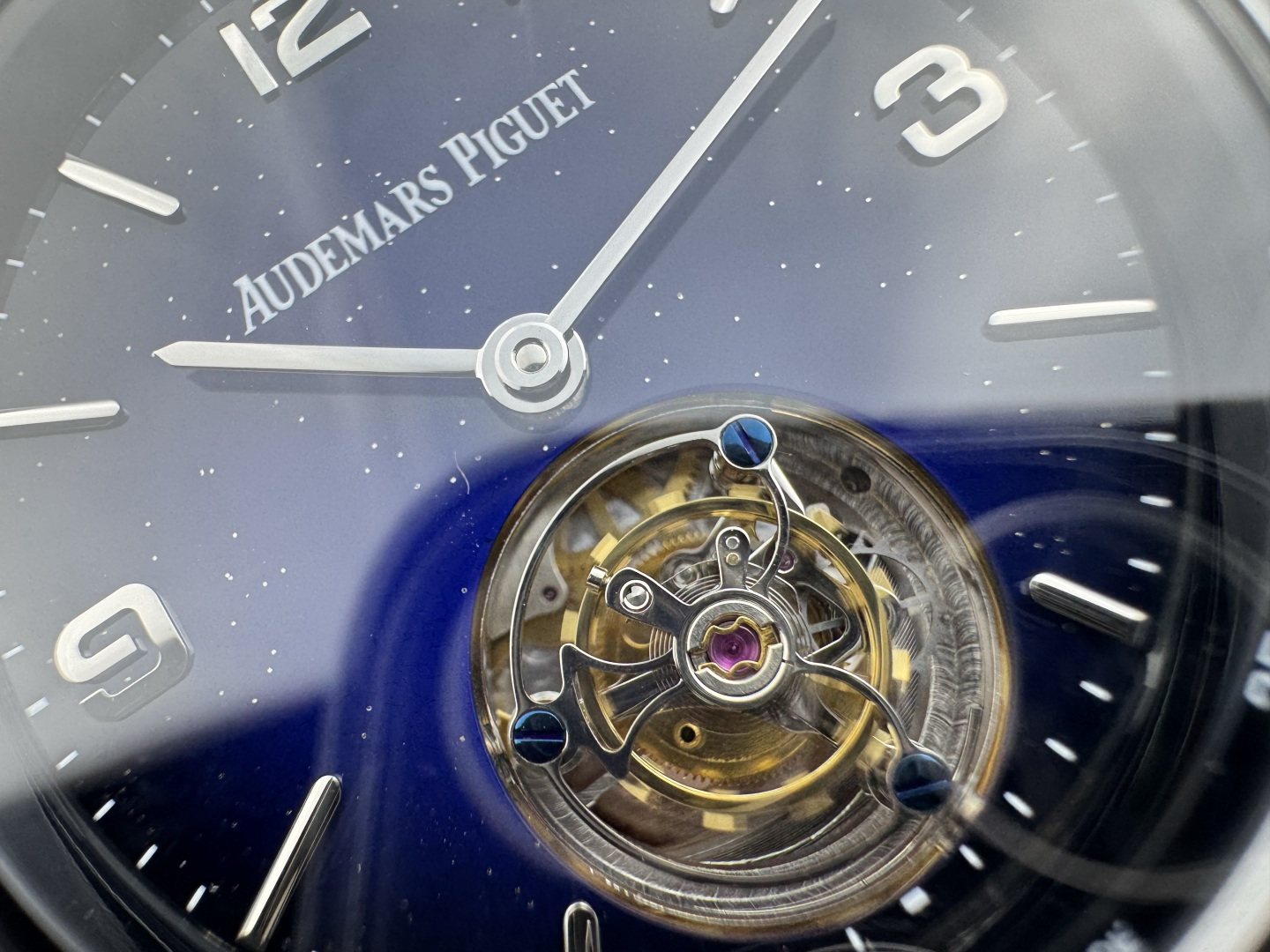
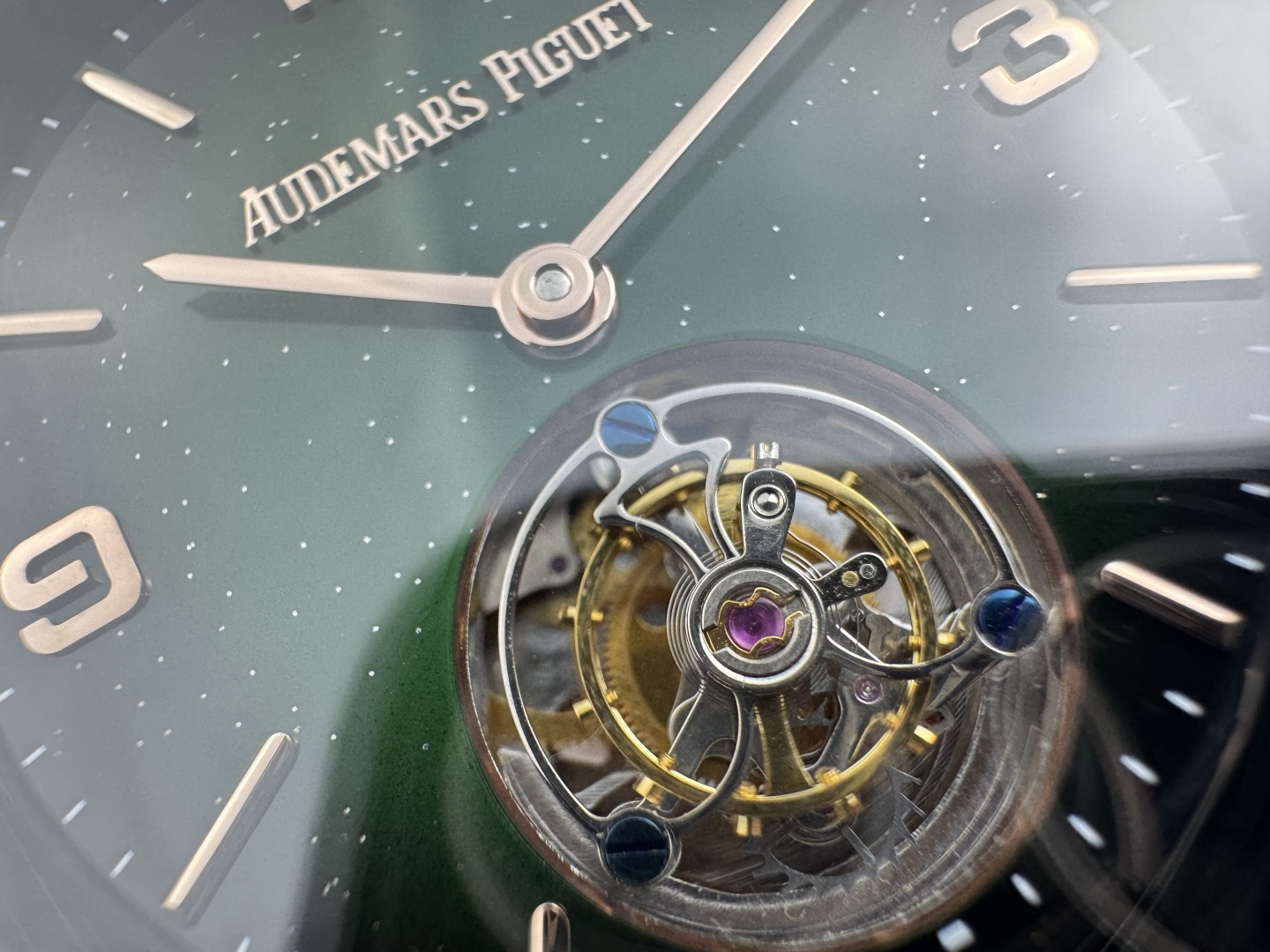
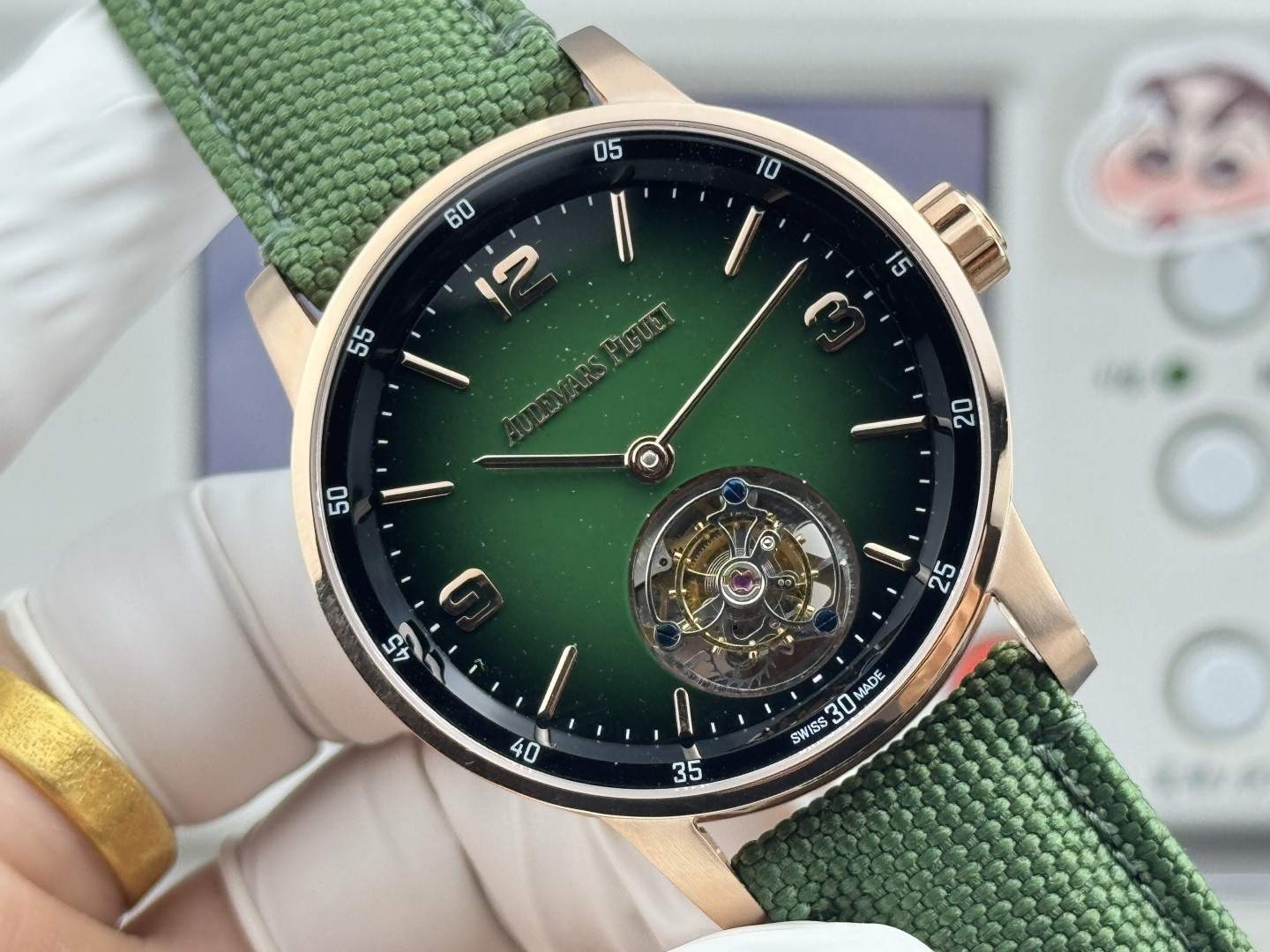
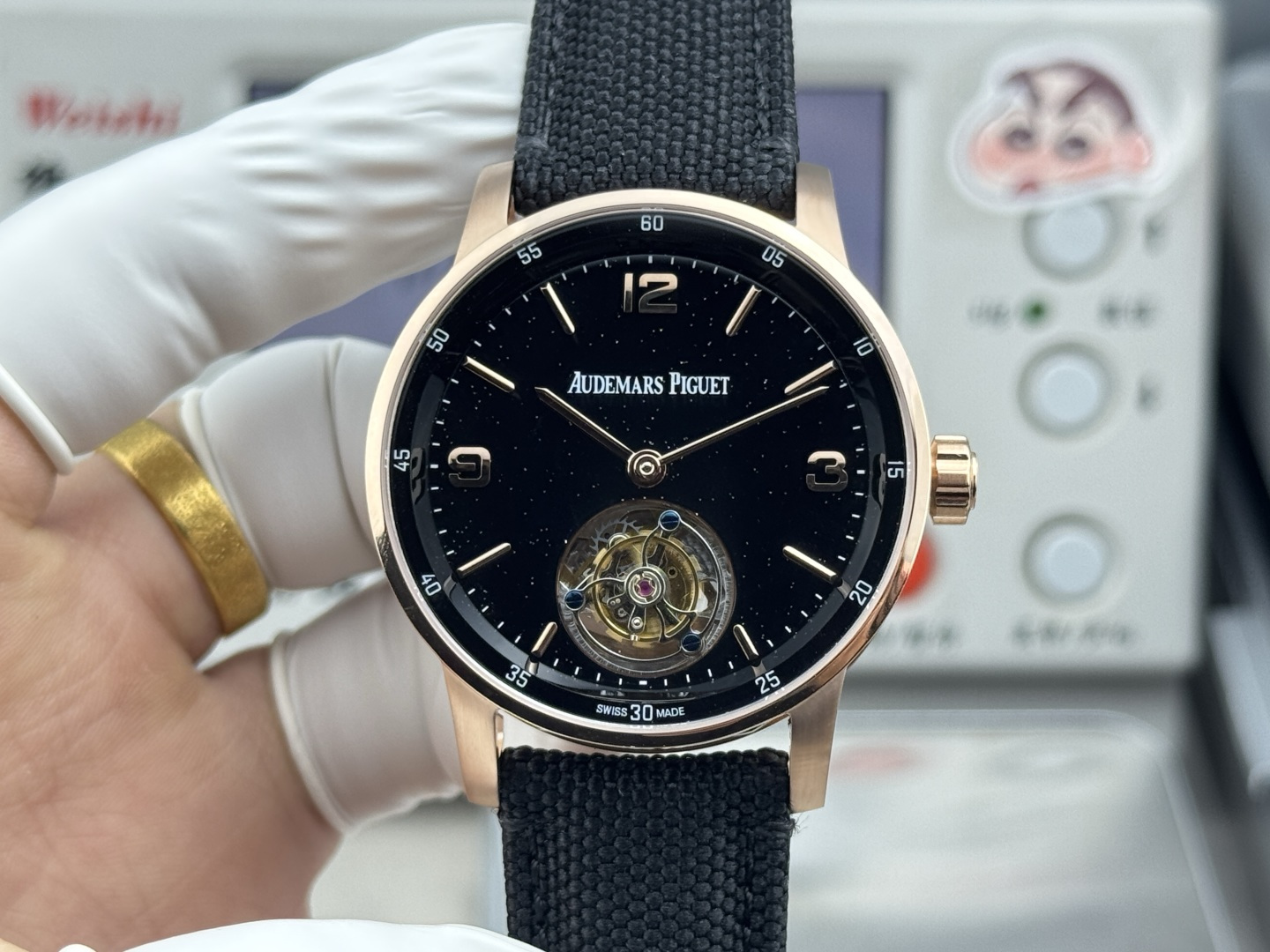
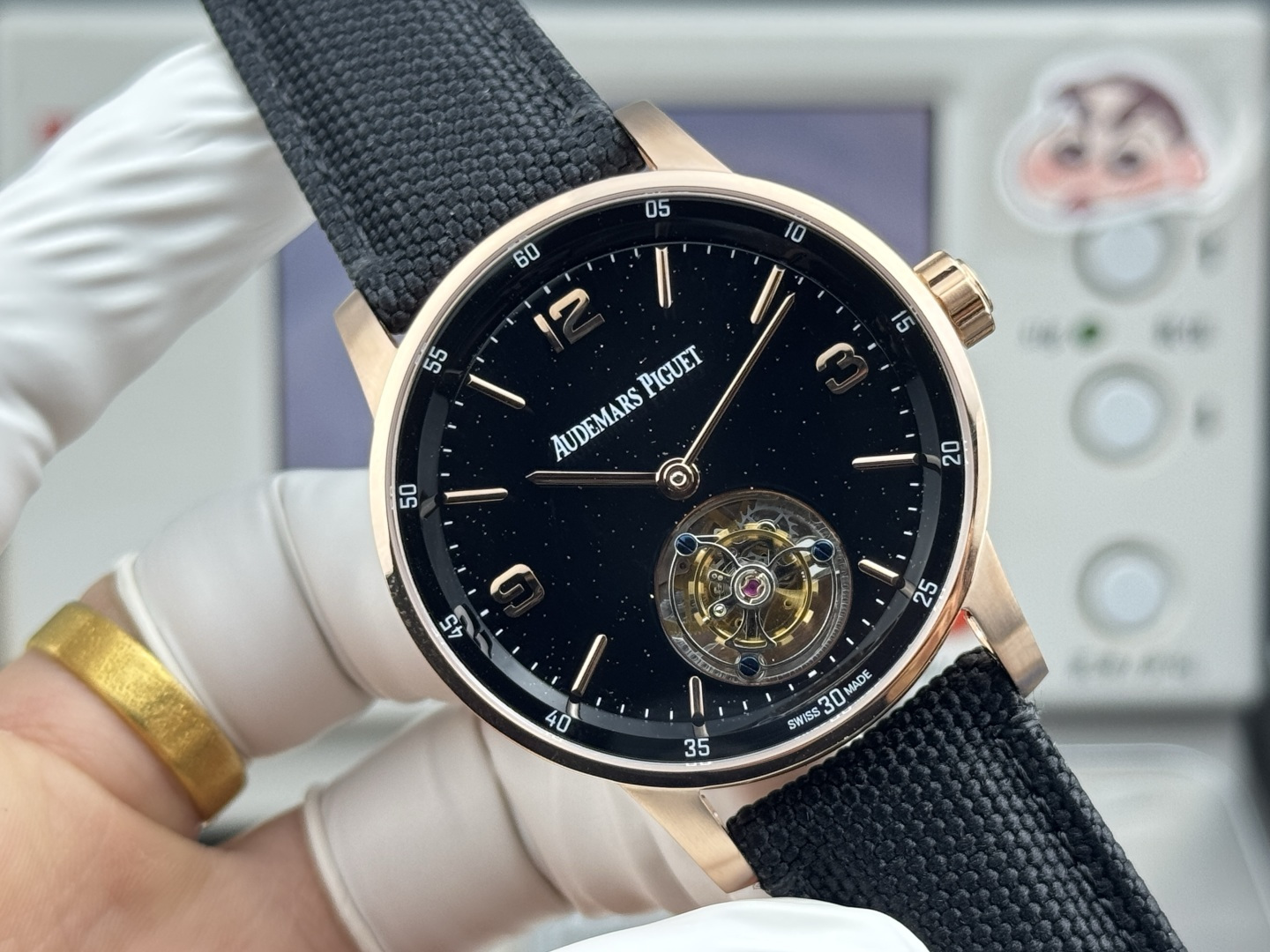
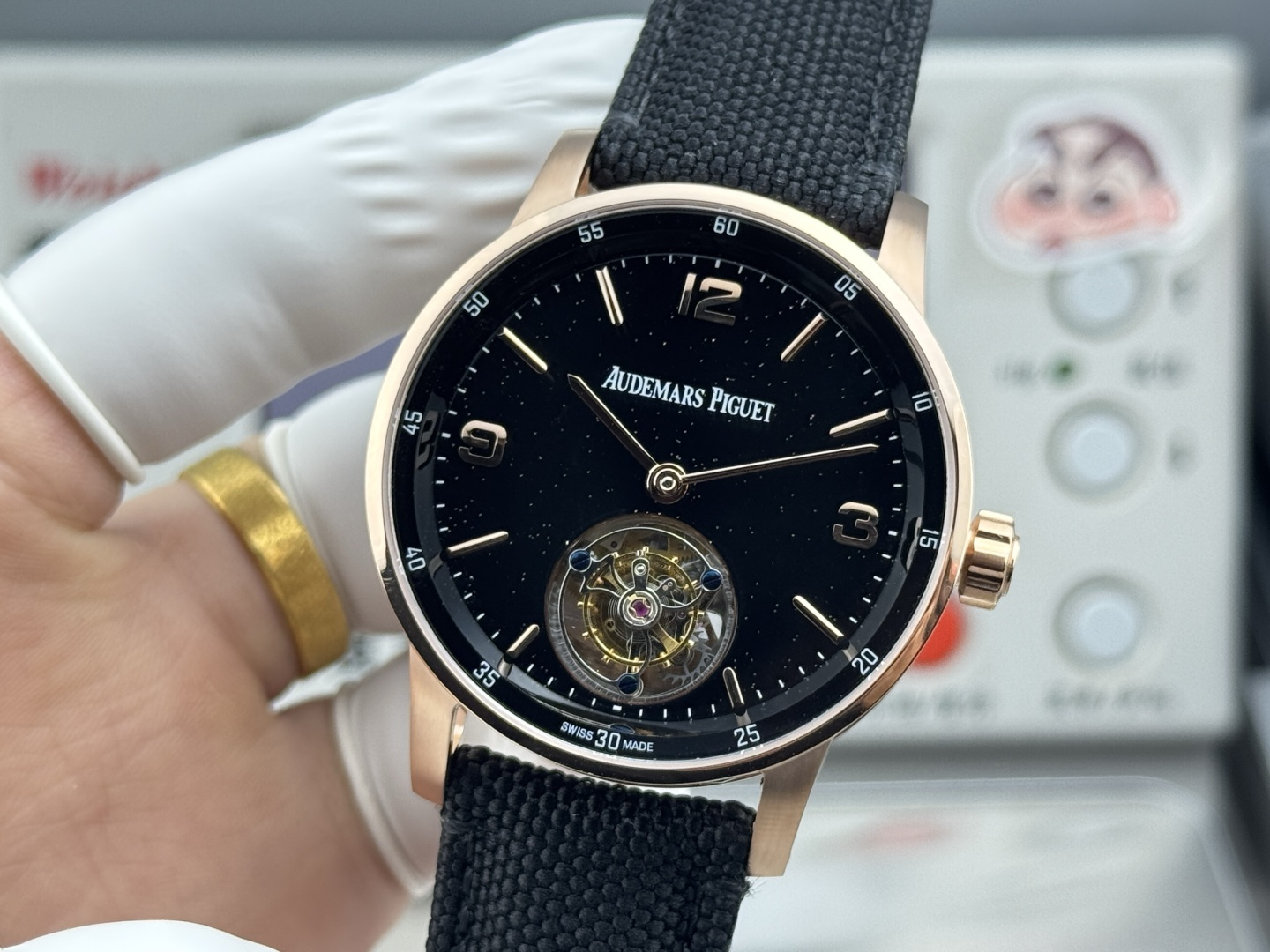
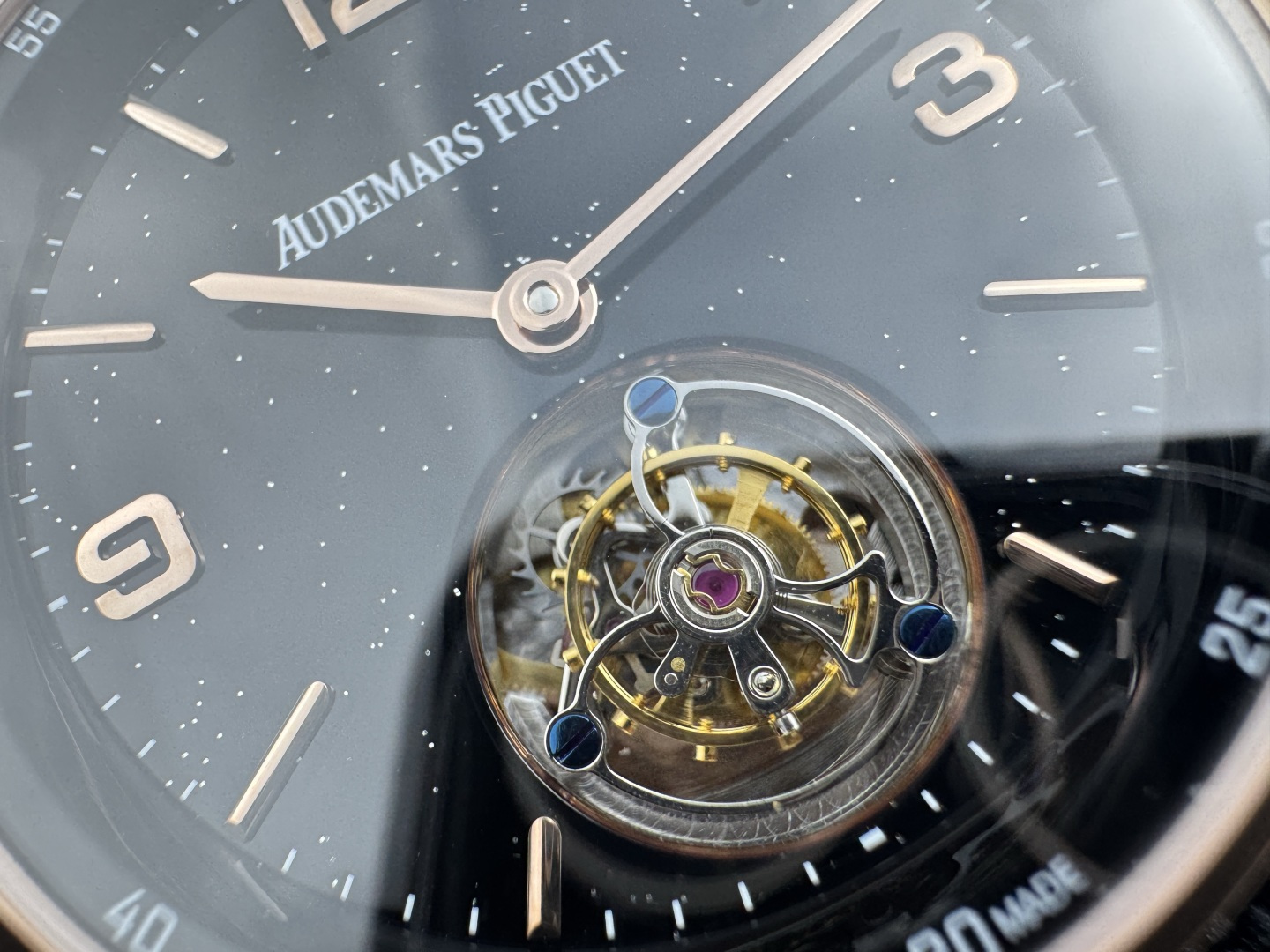
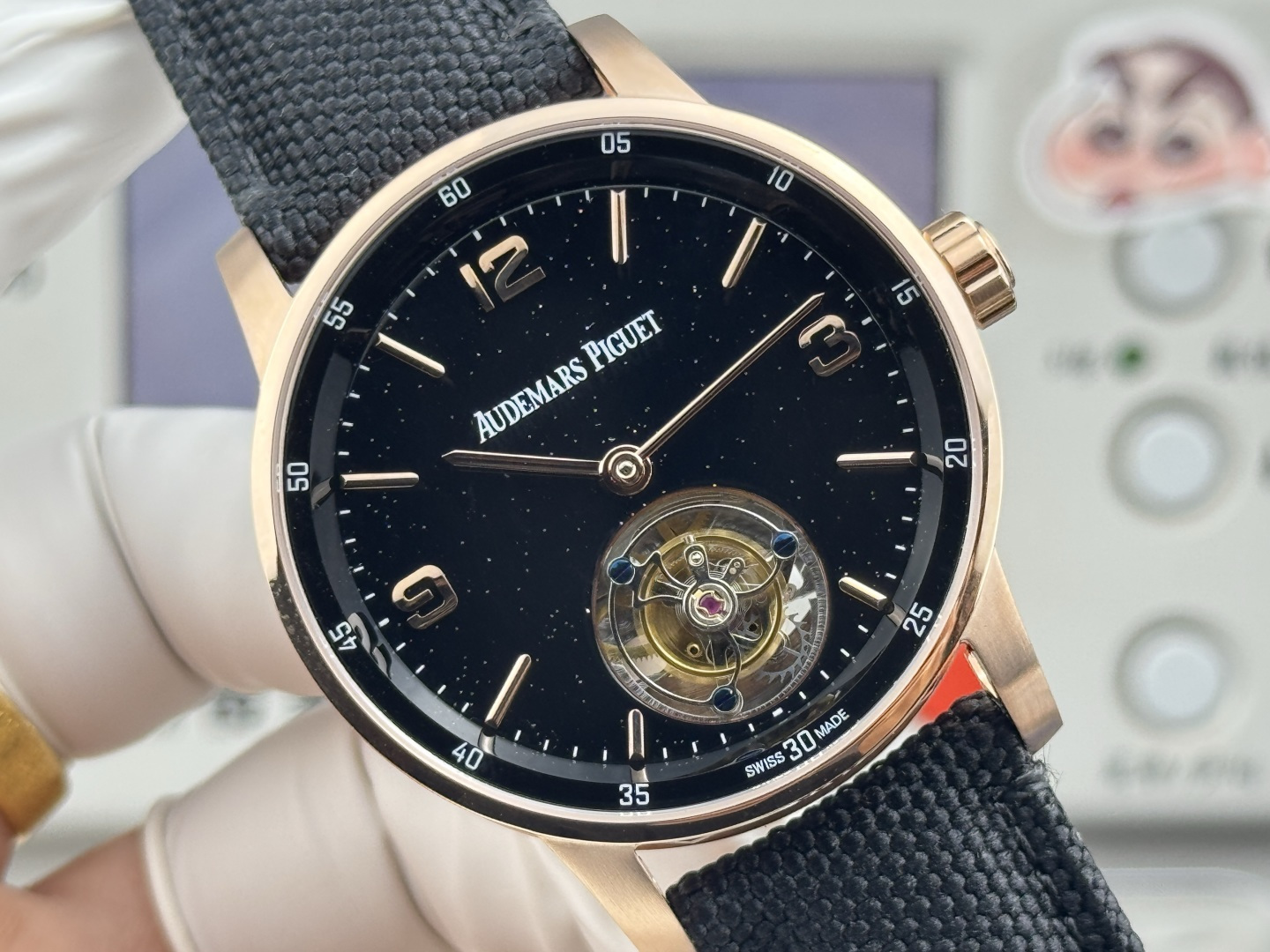
The aventurine effect. Let’s start there. The spec sheet claims enamel, and I’m going to be direct: this is not Grand Feu enamel in any meaningful sense. What it is, however, is a very competent aventurine glass simulation — likely a lacquered or resin-coated aventurine substrate rather than fired enamel — that photographs extraordinarily well and reads convincingly at arm’s length. The suspended copper-gold particles catch light with genuine sparkle. The depth of the field — that sense of looking into something rather than at something — is present, if shallower than the genuine article. Under the loupe, you lose the illusion somewhat. The surface texture lacks the micro-undulation characteristic of true fired enamel; it’s too flat, too consistent, in a way that paradoxically reveals its artificiality. Real Grand Feu enamel has almost imperceptible organic variation. This has none.
That said, for a piece at this price tier, the effect is genuinely striking. In low light, it holds its own in a way that a printed dial never could.
Now, the typography and indices. The applied gold-tone indices on the genuine 26396 are thick, architecturally bold, and finished with a level of three-dimensional precision that makes them look almost structural. The replica’s indices are applied — not printed, which is correct — but they sit slightly lower on the dial plane than they should, reducing the shadow drama that the genuine piece creates under raking light. The typography on the dial text — the AUDEMARS PIGUET signature, the TOURBILLON designation, the AUTOMATIC text — is where kerning issues appear. The letter spacing on TOURBILLON in particular is slightly compressed compared to the genuine reference. It’s not the kind of thing that reads across a table. It absolutely reads under a loupe.
Pad-printing quality on grey-market pieces has improved dramatically over the past five years. But kerning — the precise spatial relationship between individual letterforms — remains the last frontier. It requires not just good printing equipment but someone who actually cares about typography making decisions upstream. That person is rarely in the loop at a replica factory.
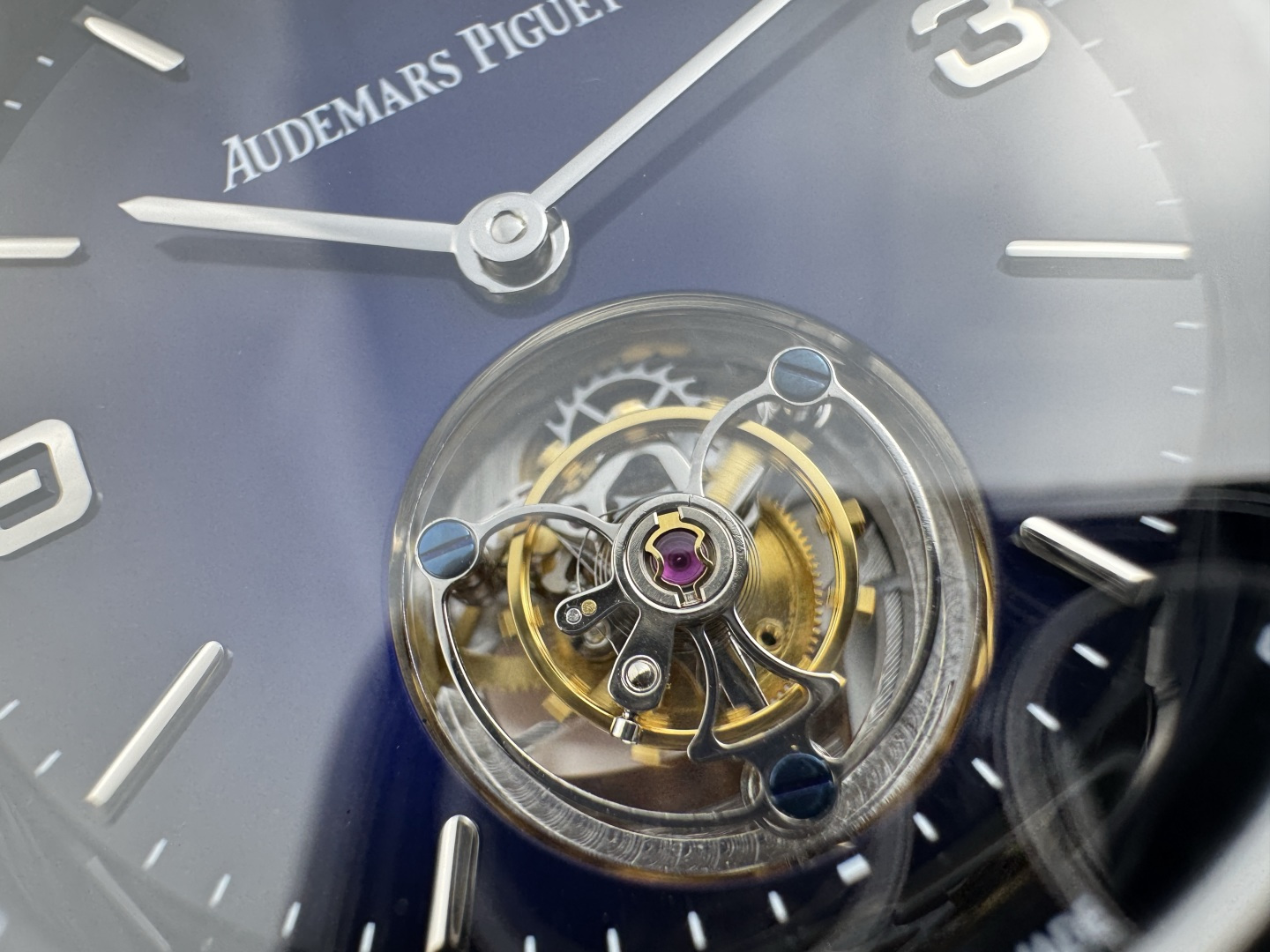
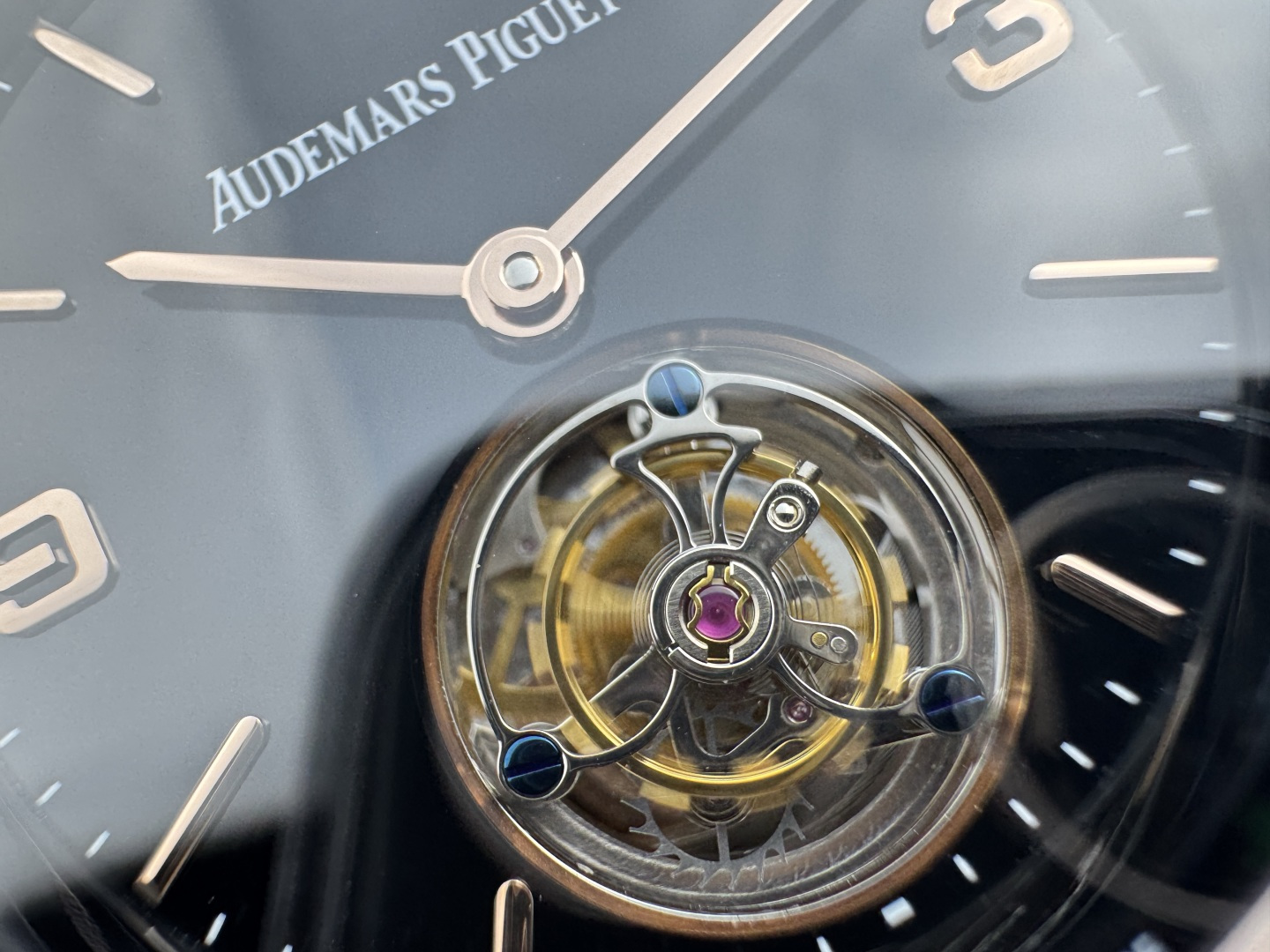
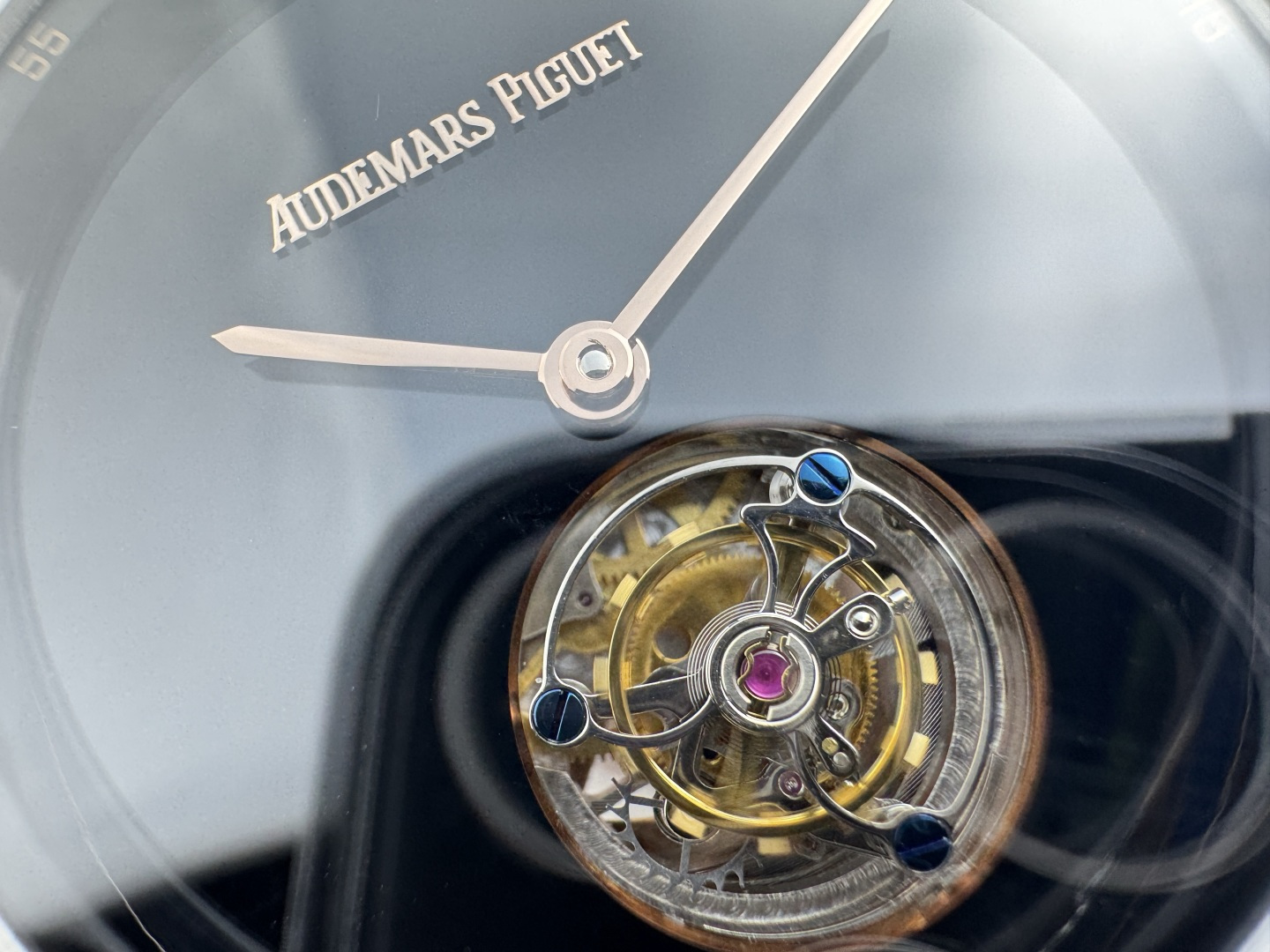
The hand-stack clearance on the tourbillon variant is managed adequately. The tourbillon bridge — that architecturally significant element at 6 o’clock — is present and correctly proportioned. The hand-stack itself shows no dragging or contact at any position tested.
Movement Analysis & The Tell
The Cal. 2950 designation used here is the clone factory’s internal nomenclature, not a direct reference to AP’s actual caliber family. What’s inside is almost certainly a Chinese-manufactured automatic tourbillon ebauche — likely from one of the Guangdong or Zhejiang movement suppliers who have gotten remarkably competent at producing functional tourbillon mechanisms at scale.
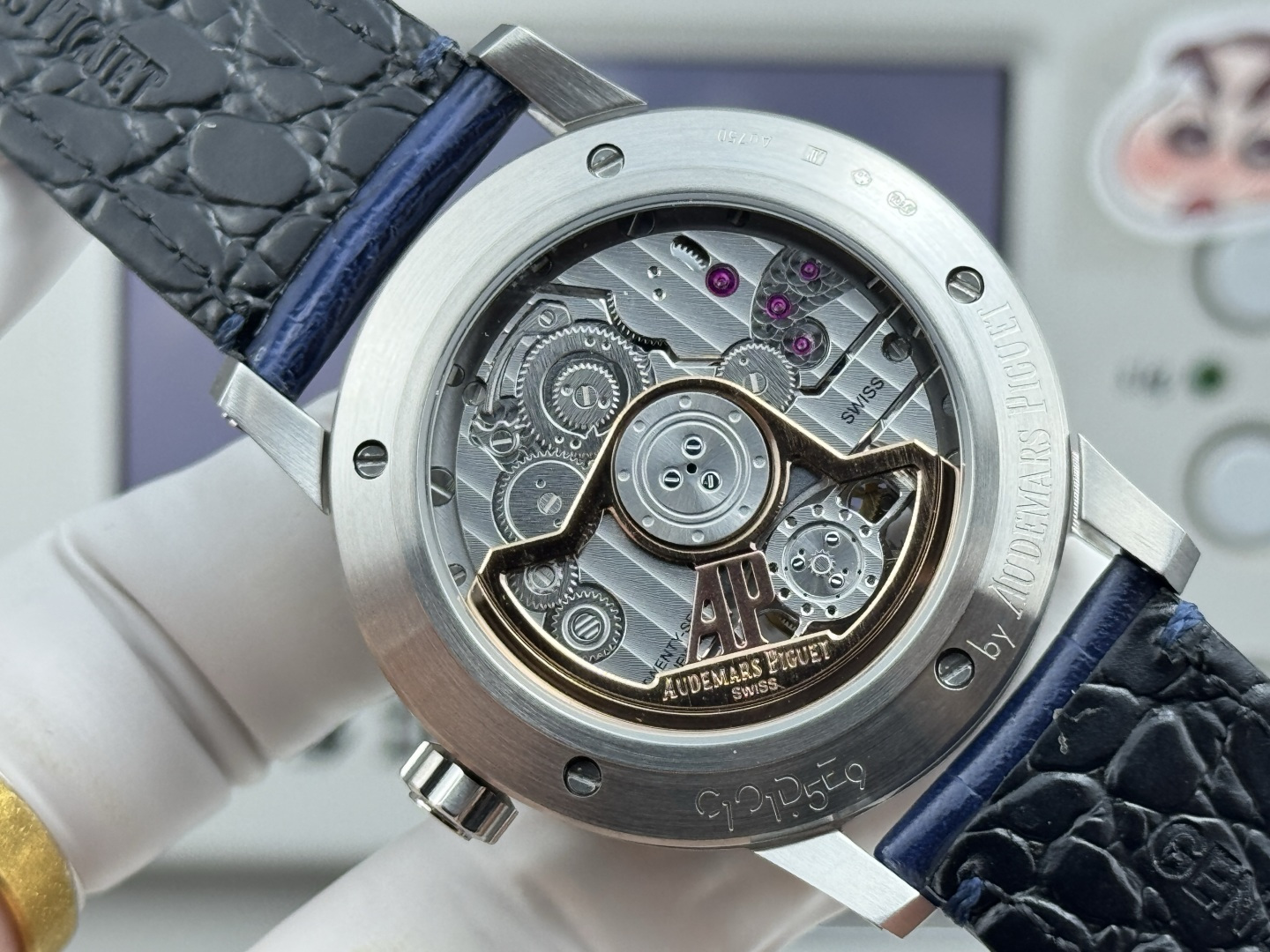
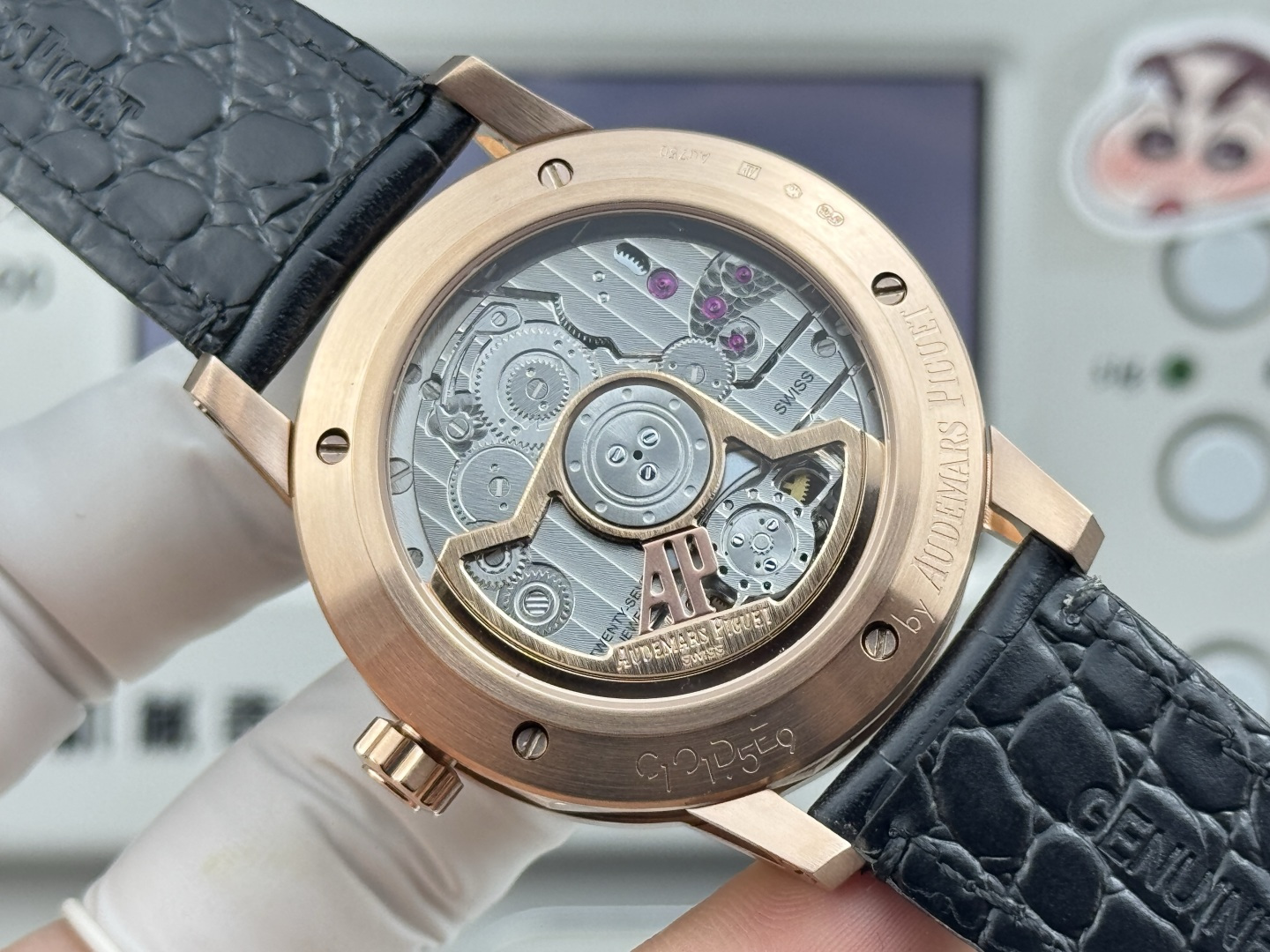
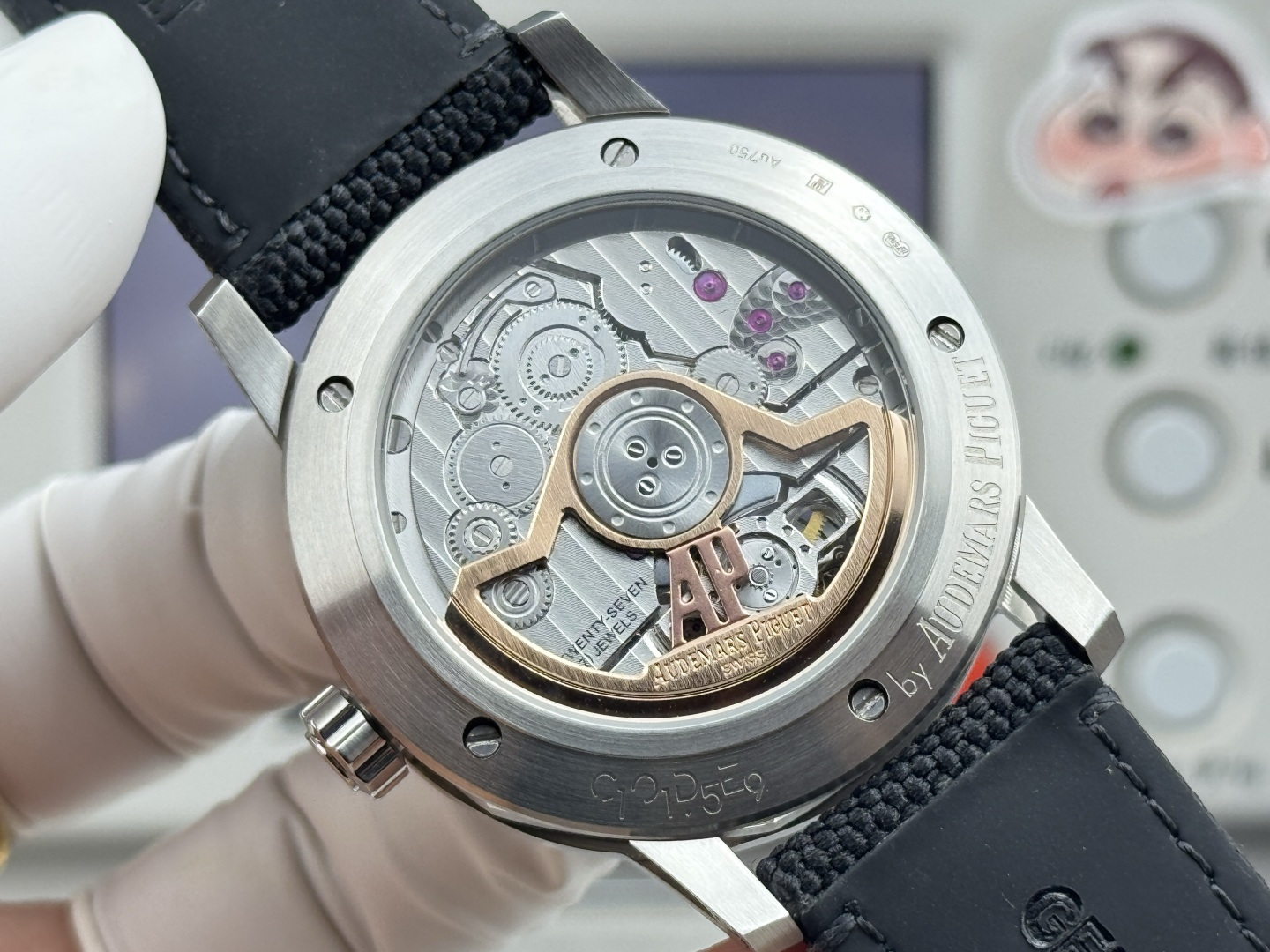
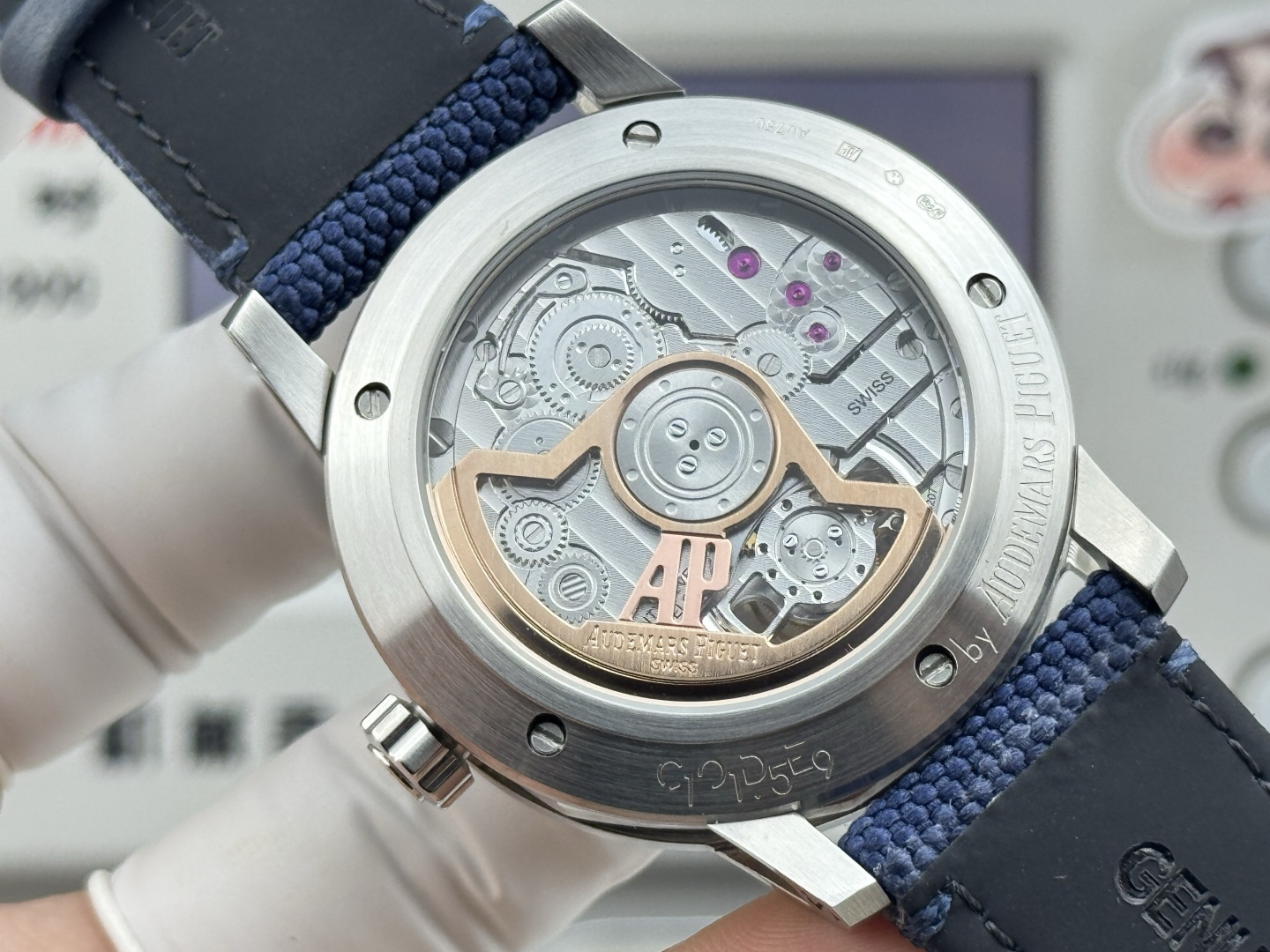
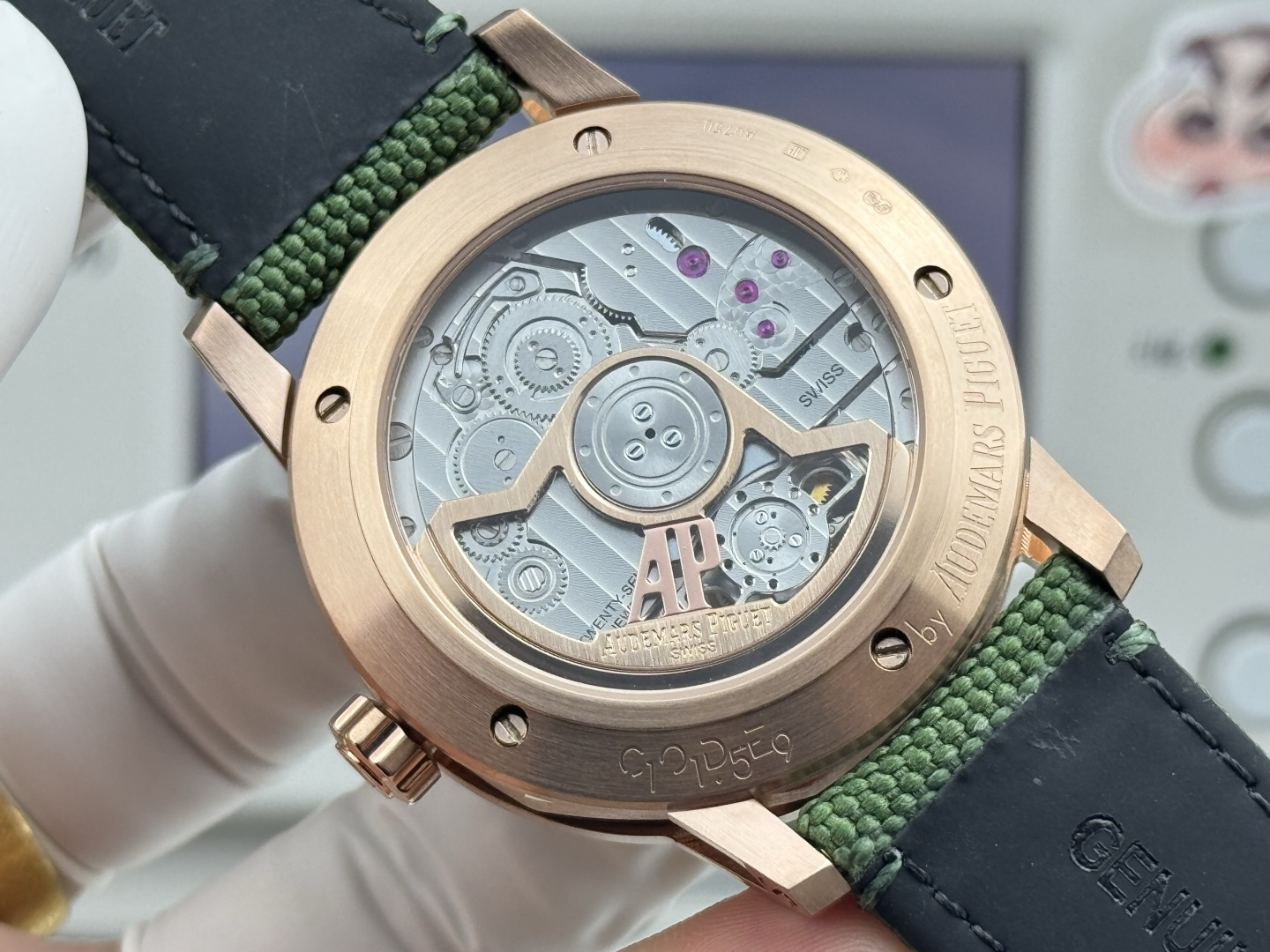
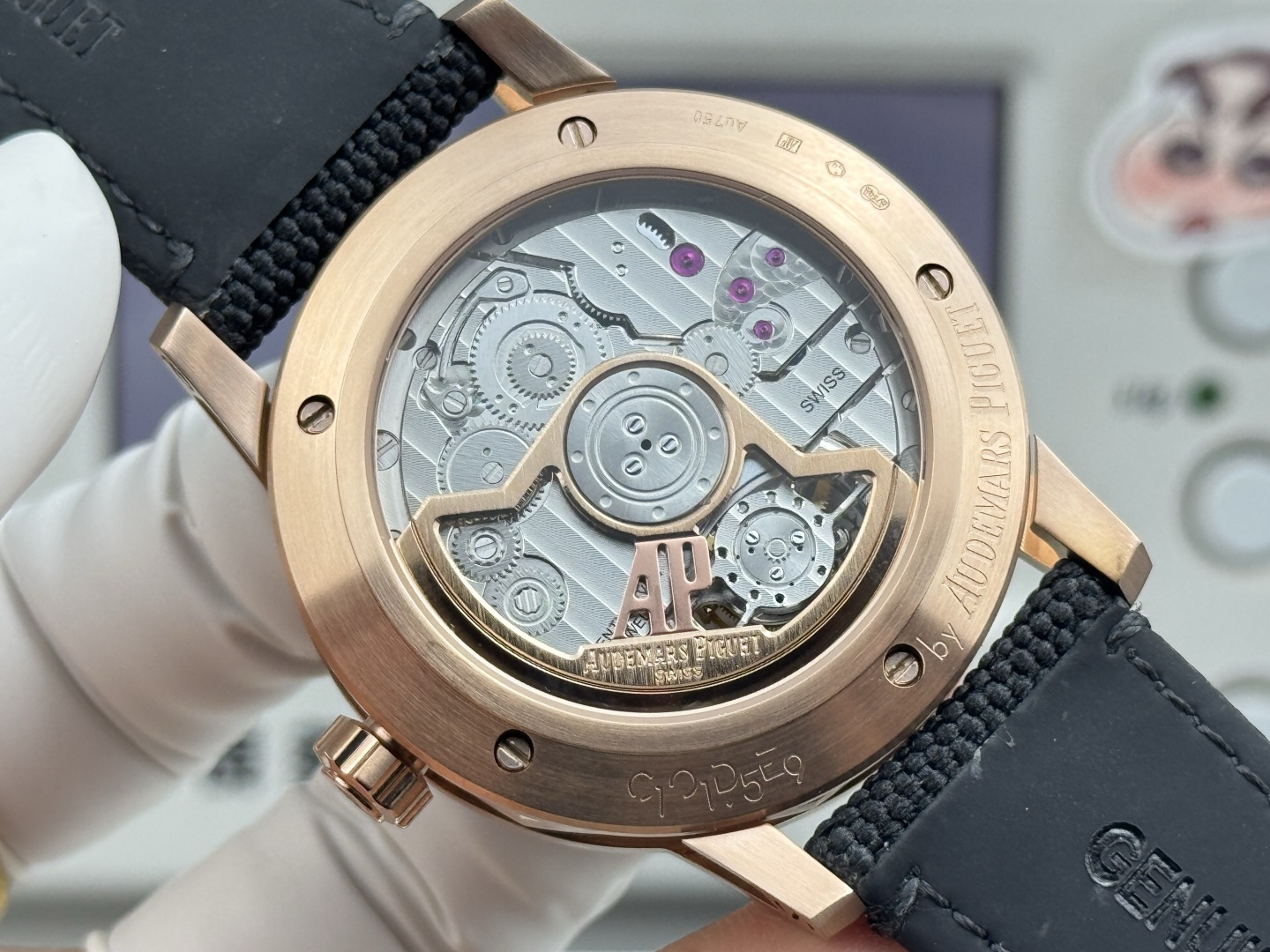
Through the exhibition caseback, the rotor finishing shows radial brushing that’s clean but not particularly refined. The Côtes de Genève on the visible bridges are present — parallel stripes correctly oriented — but the depth and contrast of the stripes is shallower than Geneva manufacture standards. Perlage on the mainplate, visible at the edges, is uniform and correctly applied. The balance wheel runs at what feels like a standard 28,800 vph beat rate, though the 21,600 vph of the genuine AP caliber would be more appropriate for this complication. That faster beat rate — you can hear it in the tick cadence — is a tell for anyone who’s spent time around the real movement.
The tourbillon cage itself rotates on what appears to be a 60-second cycle, which is correct. The cage construction is visually convincing from outside the caseback. What you cannot assess without disassembly is the quality of the escapement geometry, the pinion capping precision, or the amplitude under power reserve depletion. The claimed 60-hour power reserve is plausible for this class of Chinese tourbillon ebauche and roughly consistent with what I’ve measured on similar movements. Accuracy over 24 hours ran approximately +8 seconds, which for a tourbillon at any price point is acceptable — tourbillons are theater, not chronometric instruments, and never have been.
The single most damning tell, the one that would end this watch’s credibility in front of a knowledgeable audience: the tourbillon bridge finishing. On the genuine AP, that bridge is hand-chamfered with bevels so sharp and black-polished so deeply that they create mirror edges visible from across a room. On this replica, the chamfering exists but the poli spéculaire — the black polishing — is absent. The bevels are brushed where they should be mirror-finished. It’s the difference between a craftsman’s signature and a factory’s approximation.
Overall Verdict
This CODE 11.59 tourbillon replica is a genuinely ambitious piece of grey-market manufacturing. The aventurine dial effect, while not true enamel, is more convincing than anything in this category had any right to be two years ago. The case geometry captures the essential visual DNA of the 26396 without embarrassing itself. The movement functions, the tourbillon rotates, the power reserve is honest.
What it is not — and cannot be at this price point — is a replacement for the experience of the genuine article. The missing black-polished chamfering on the tourbillon bridge, the compressed kerning on the dial text, the slightly off AR coating bloom, the faster-than-correct beat rate: these are the accumulated tells that separate a very good fake from the real thing. Each one individually is survivable. Together, they form a profile that any serious collector would clock within thirty seconds under decent lighting.
For a grey-market buyer who wants the visual drama of an aventurine tourbillon on the wrist without the mortgage payment, this piece delivers more than it has any logical right to. For anyone who will ever be in a room with people who actually know watches, the tourbillon bridge will give you away before you finish your first drink.