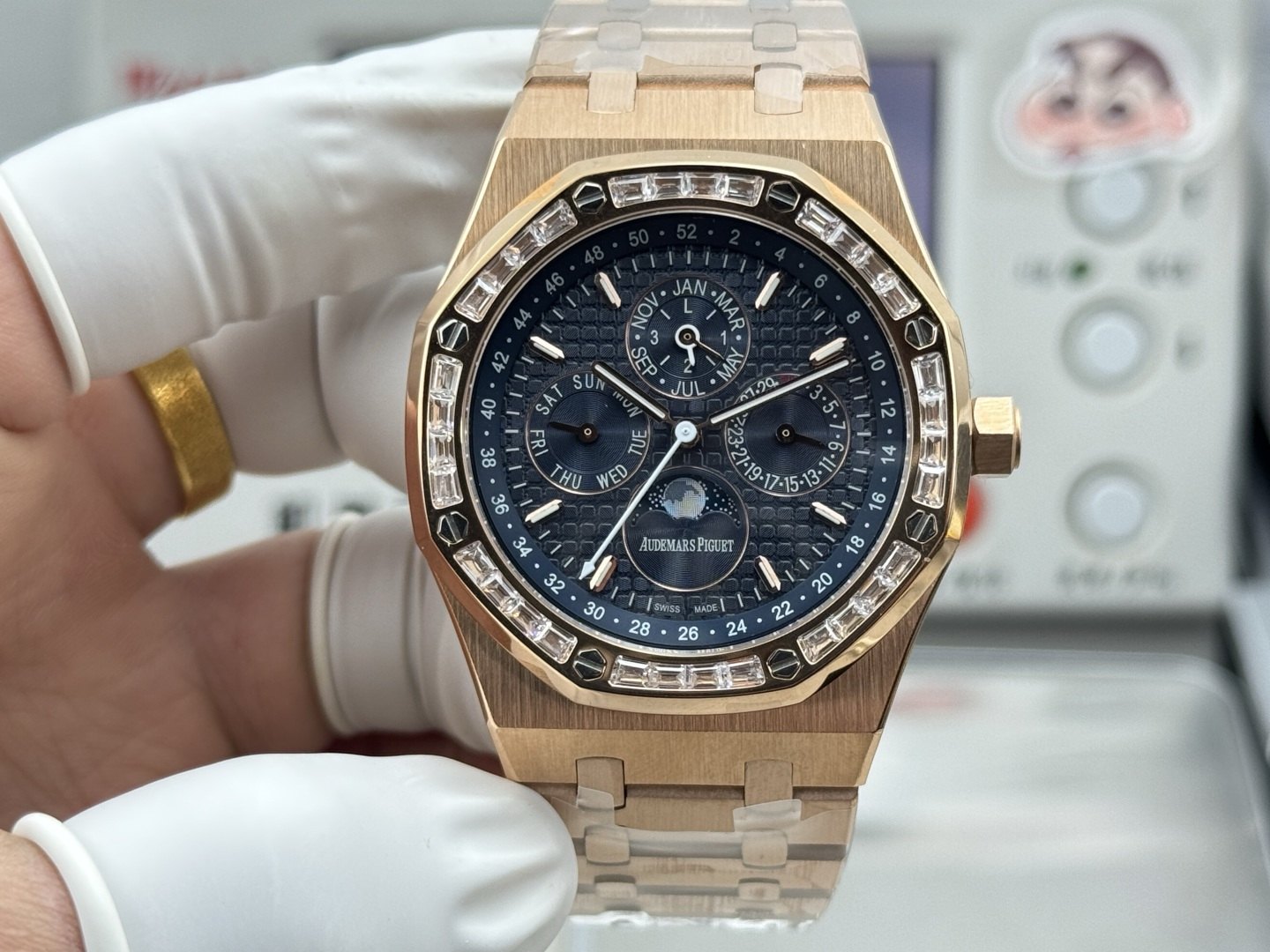
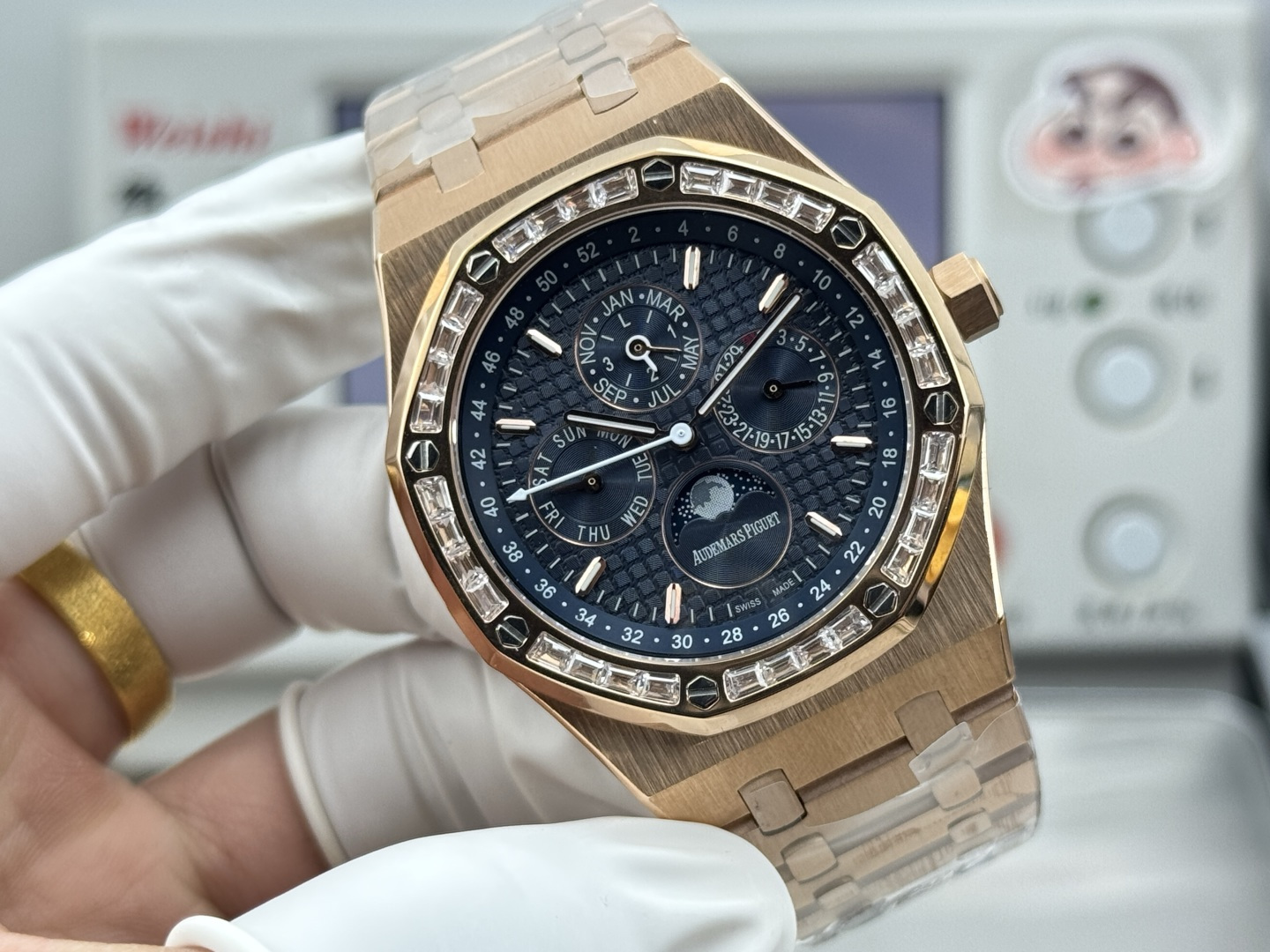
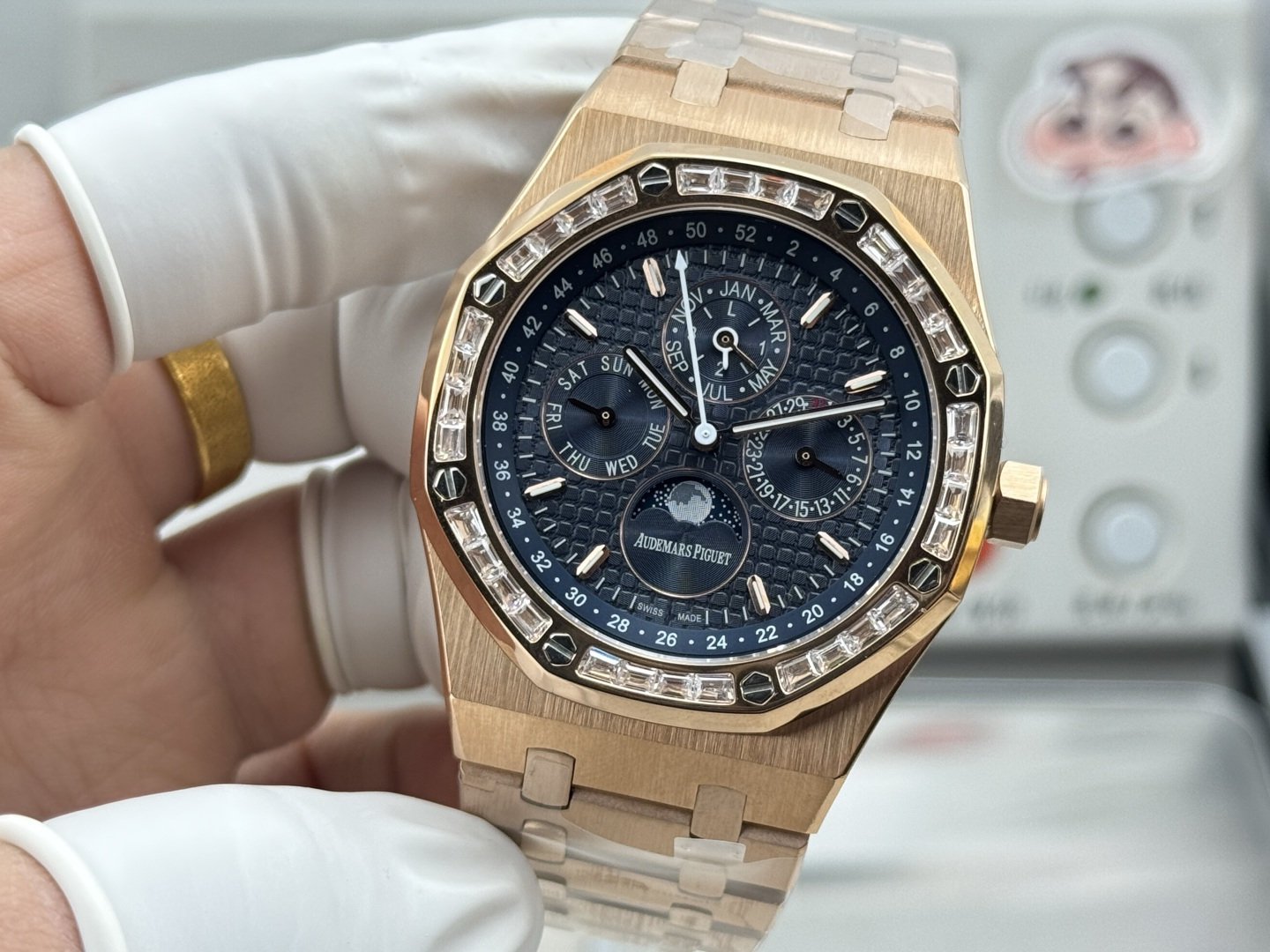
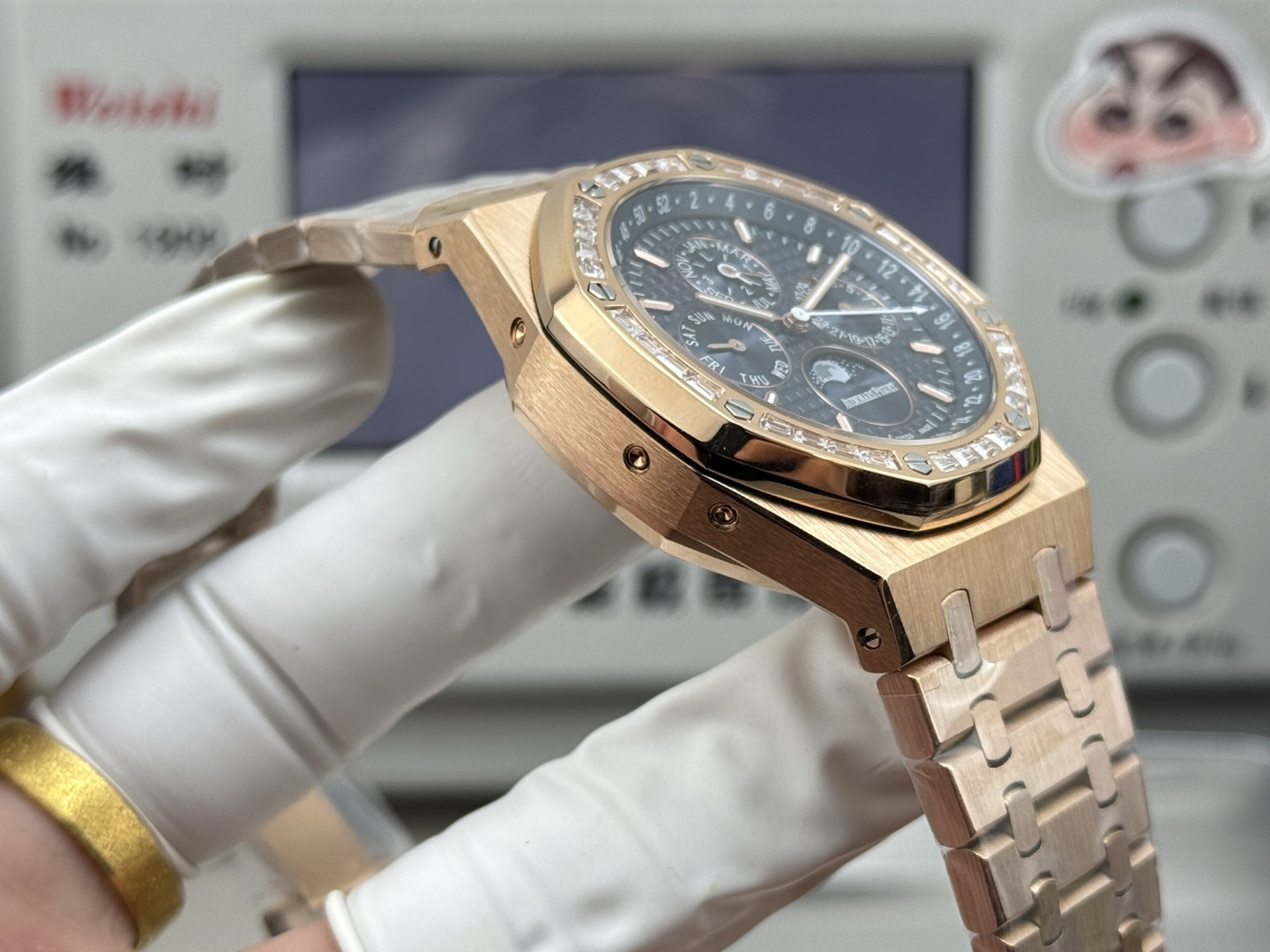
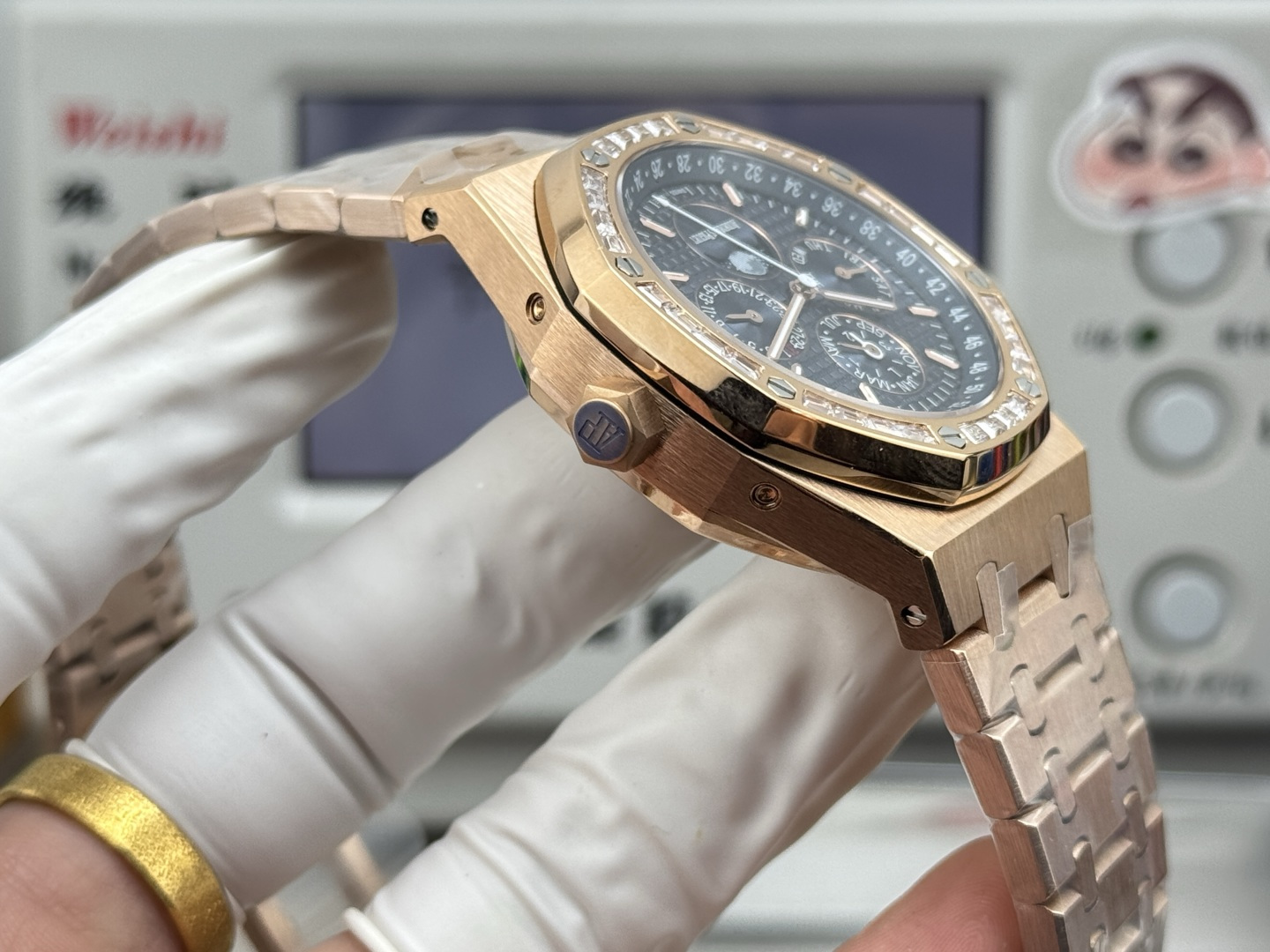
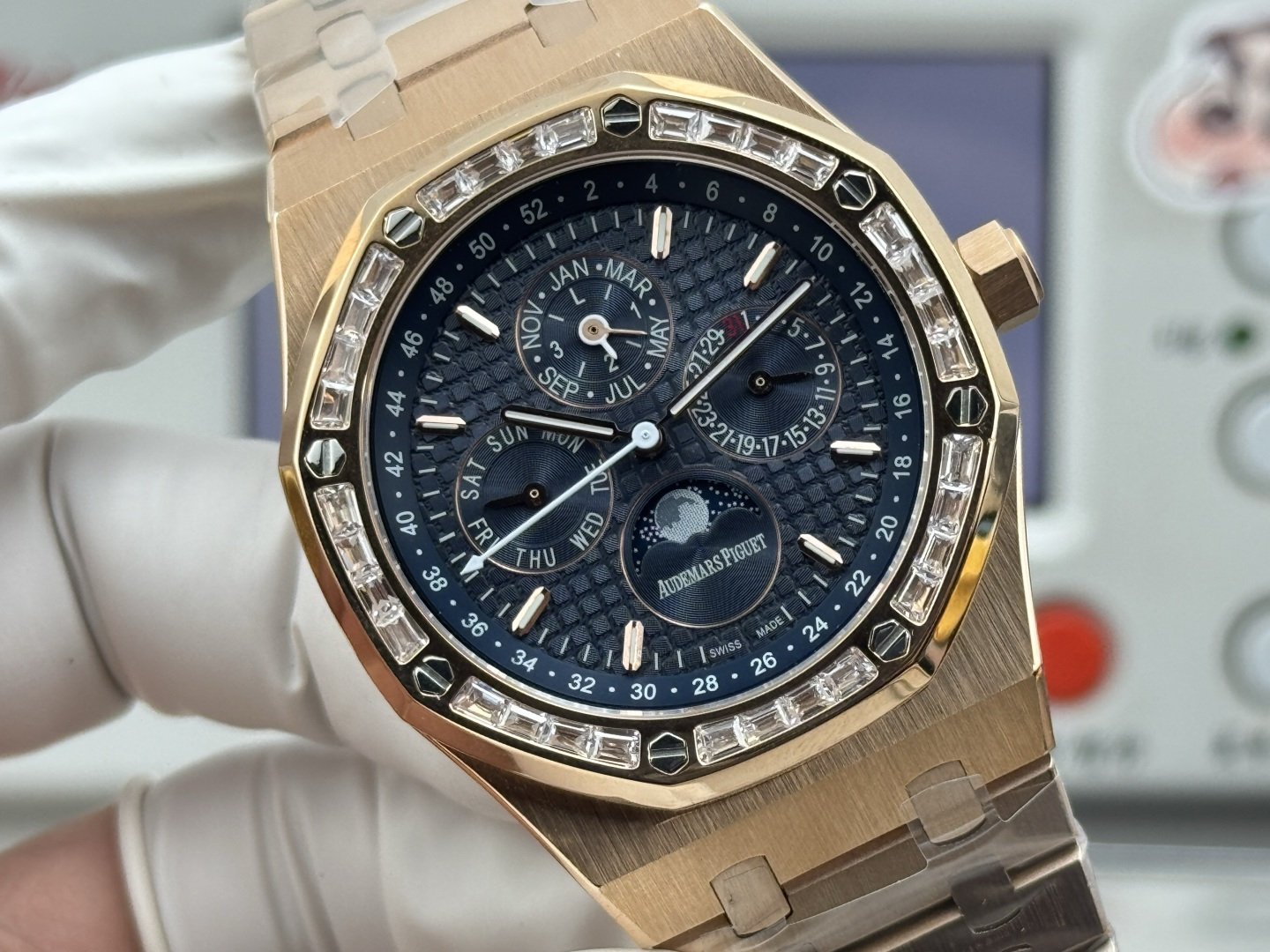
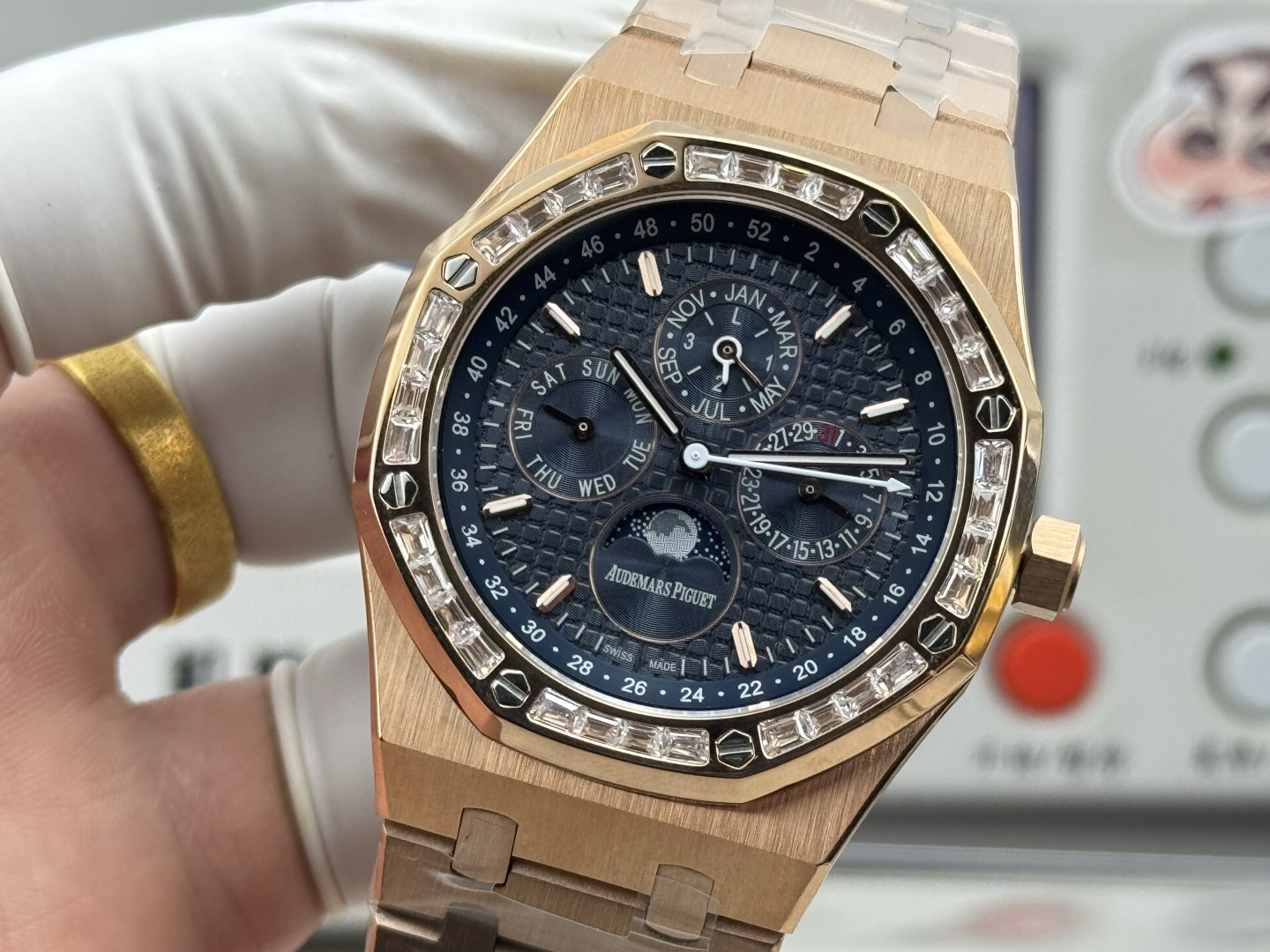
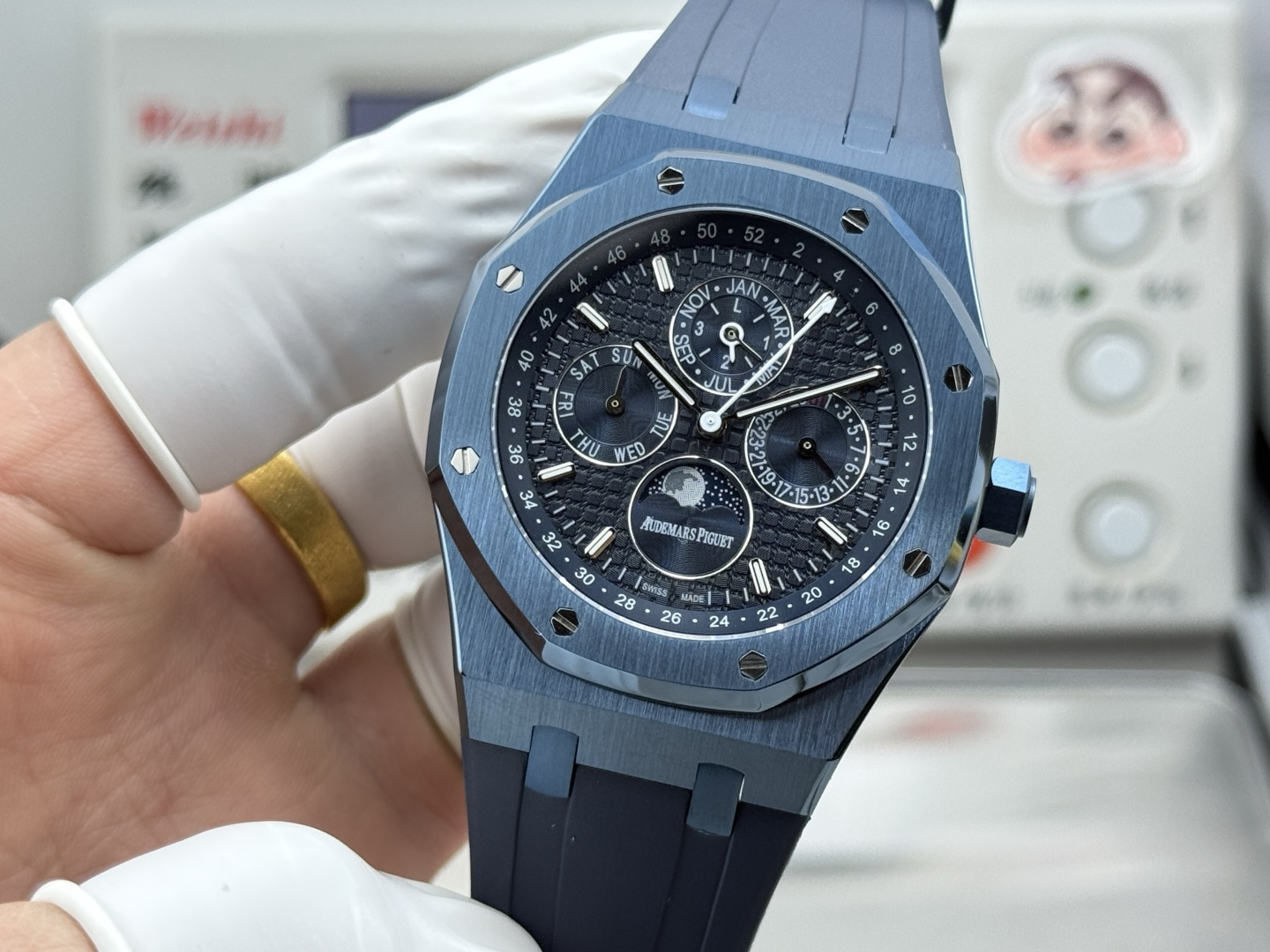
Let’s be honest about something. The Audemars Piguet Royal Oak Perpetual Calendar ref. 26574ST retails somewhere north of $130,000 USD. If you walk into an AP House without a purchase history that reads like a small nation’s GDP, you are not buying one. You will be offered a coffee, smiled at warmly, and shown the door with the quiet efficiency of a Swiss train schedule. The waitlist isn’t a queue — it’s a velvet rope attached to a wall that doesn’t exist. AP’s allocation strategy for the Grande Complication pieces has become so theatrical that the watch itself has almost become secondary to the performance of obtaining it. Which brings us here, to a grey-market table covered in bubble wrap, a 10x loupe, and a replica that the vendor’s WeChat listing describes, with magnificent confidence, as achieving “品质与美的融合” — a fusion of quality and beauty. Let’s find out.
The Retail Absurdity (And Why It Matters to This Review)
The 26574ST is AP’s 41mm stainless steel perpetual calendar with a moon phase complication — a piece that, in the genuine configuration, houses the caliber 5134, a self-winding movement with a 40-hour power reserve, running at 19,800 vph, decorated to the standards you’d expect from Le Brassus. The genuine article’s movement alone represents decades of accumulated manufacture expertise in perpetual calendar construction. The column-wheel mechanism governing the calendar’s logic, the lever-and-cam system for the moon phase display, the hand-stack clearance required to layer day, date, month, and moon phase sub-dials without visual chaos — these are not trivial engineering problems.
But here’s the uncomfortable truth that nobody in the legitimate press wants to say plainly: the exterior of that $130,000 watch — the brushed and polished 316L steel case, the integrated bracelet, the characteristic octagonal bezel with its eight hexagonal screws — is reproducible. Not perfectly. But reproducibly enough that it has created an entire cottage industry. The vendor’s listing specifies a 41mm case in 316L stainless steel, CNC-machined, with a “custom cal. 5134” movement. That phrase — custom — is doing a tremendous amount of heavy lifting, and we’ll come back to it.
First Impressions and The Weight of Steel
Out of the box, the first thing you reach for isn’t the loupe. It’s your palm. Weight and wrist presence are the first honest signals a replica sends. This piece lands at approximately 155 grams on the bracelet, which is not far off from the genuine’s heft. The 316L steel specification is consistent with what you’d find in the mid-tier replica market — it’s not surgical-grade, but it’s not pot metal either. Tapping the case back produces a solid, non-hollow resonance. Good sign.
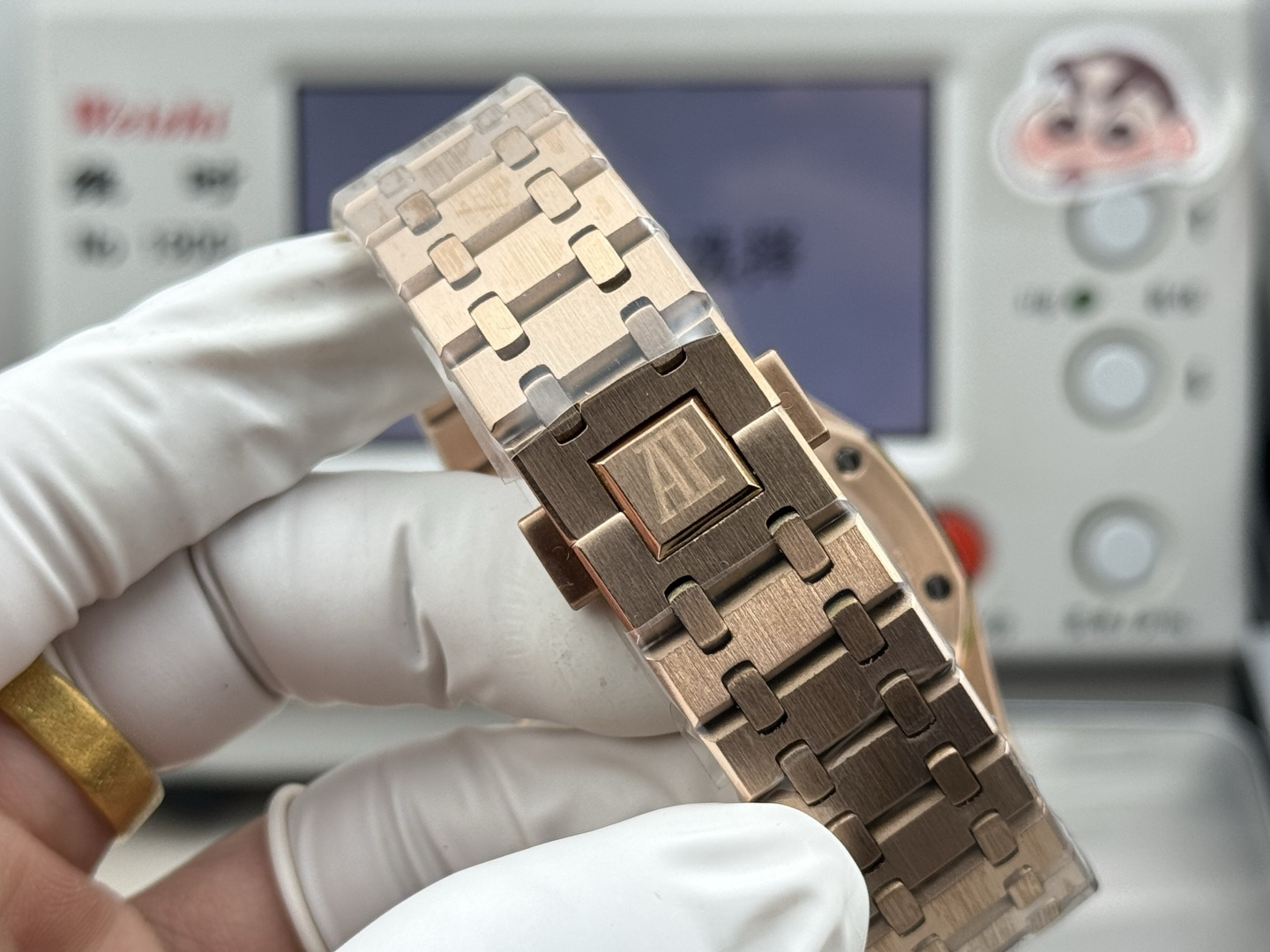
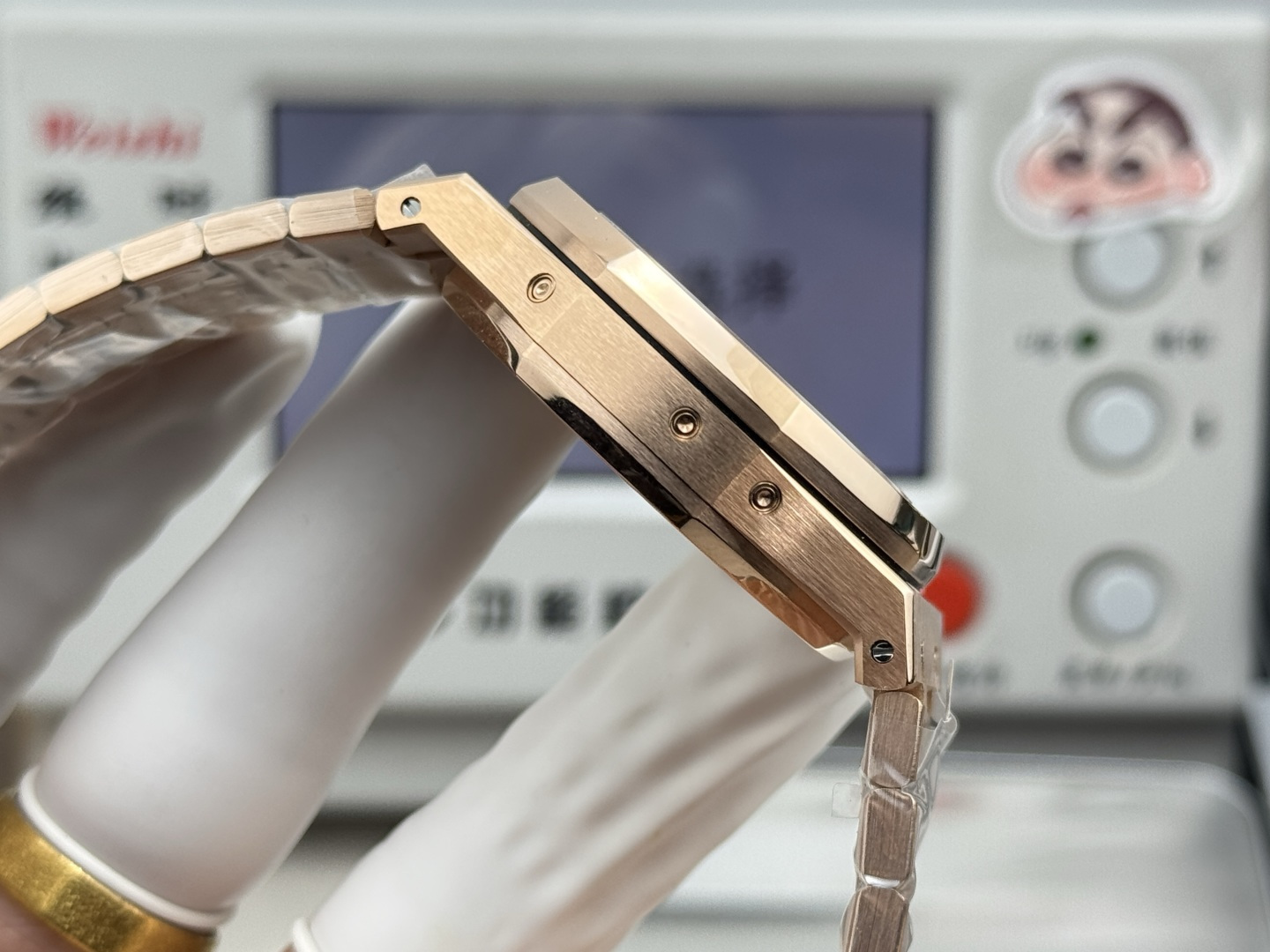
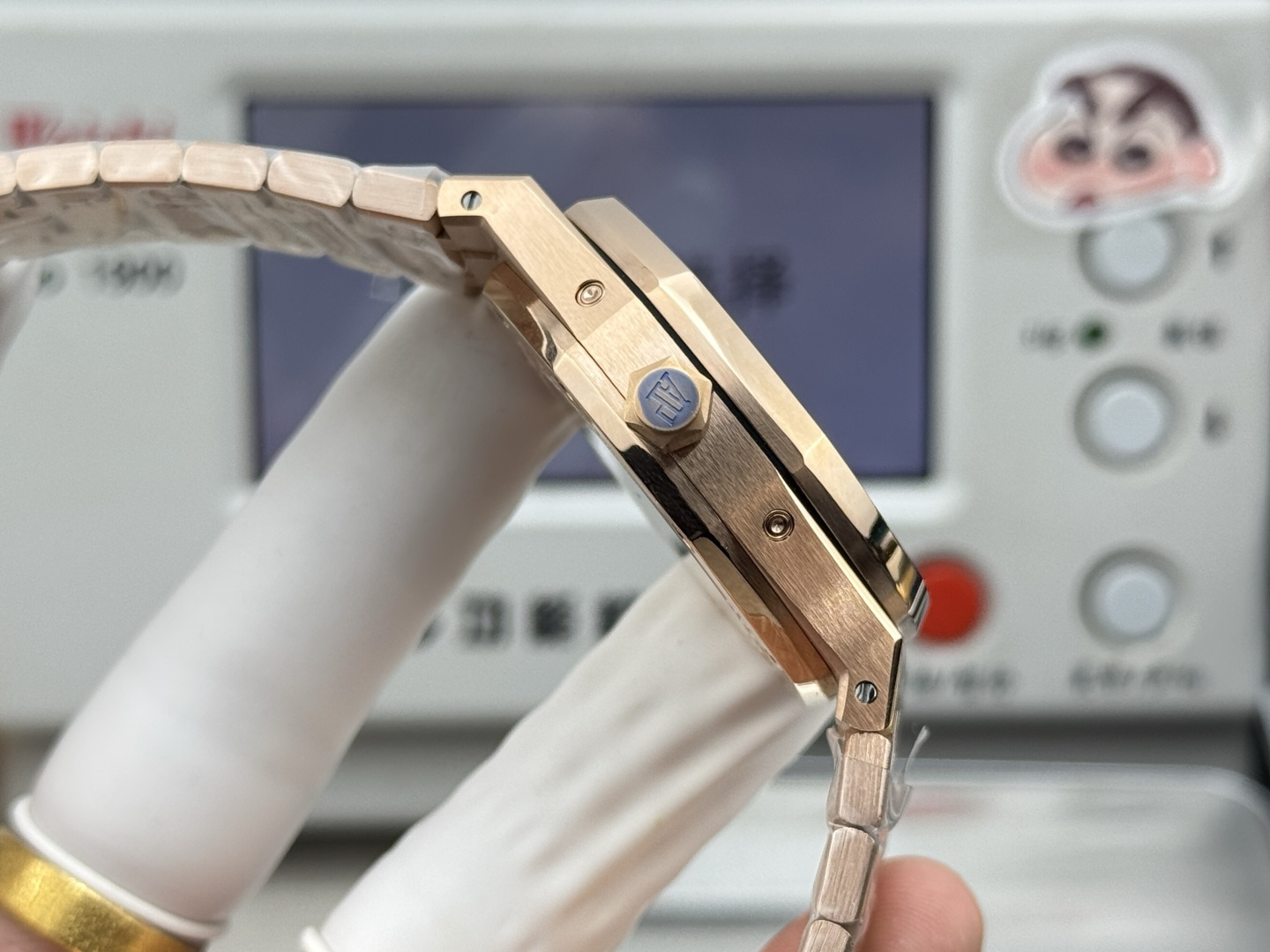
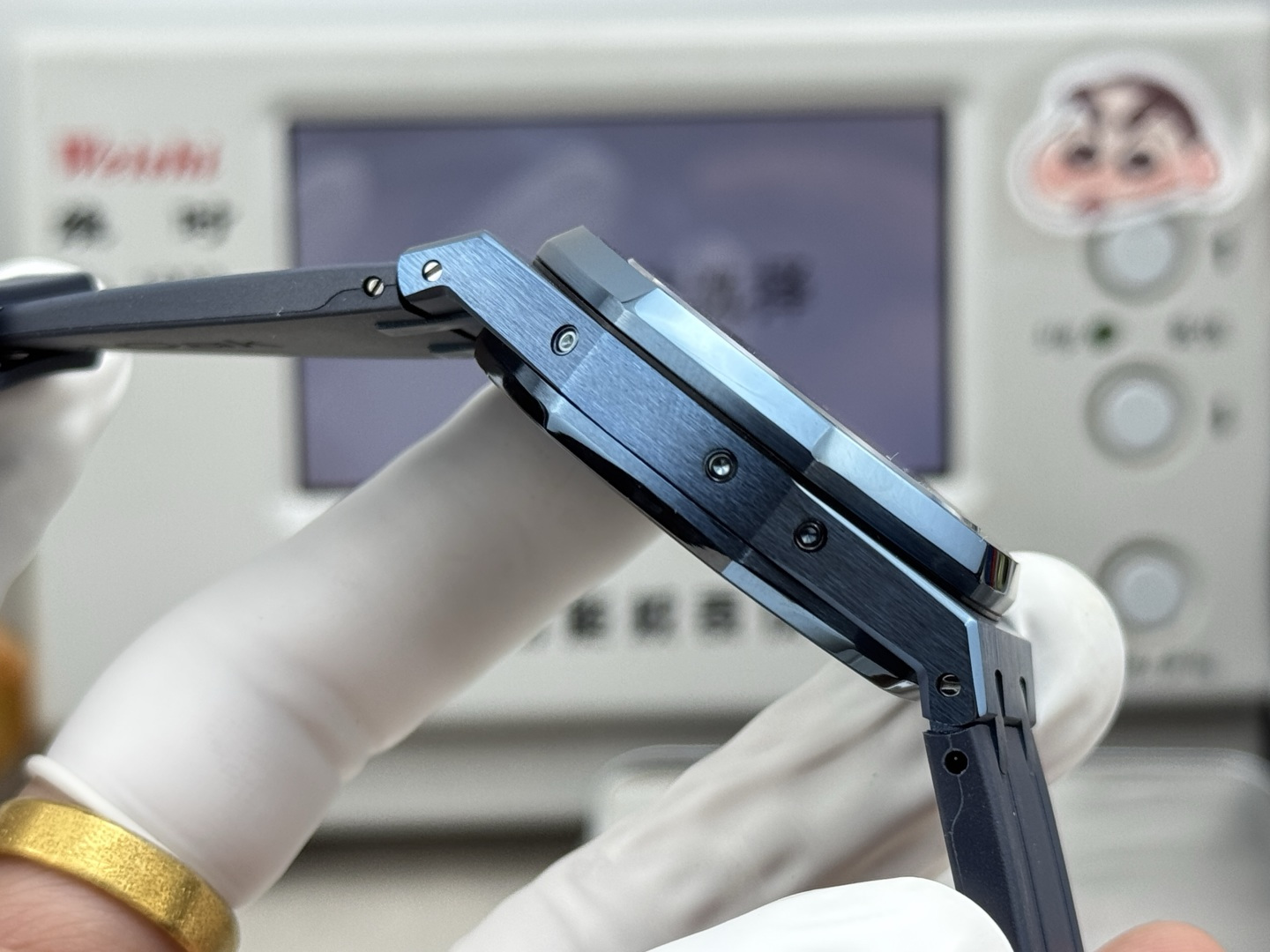
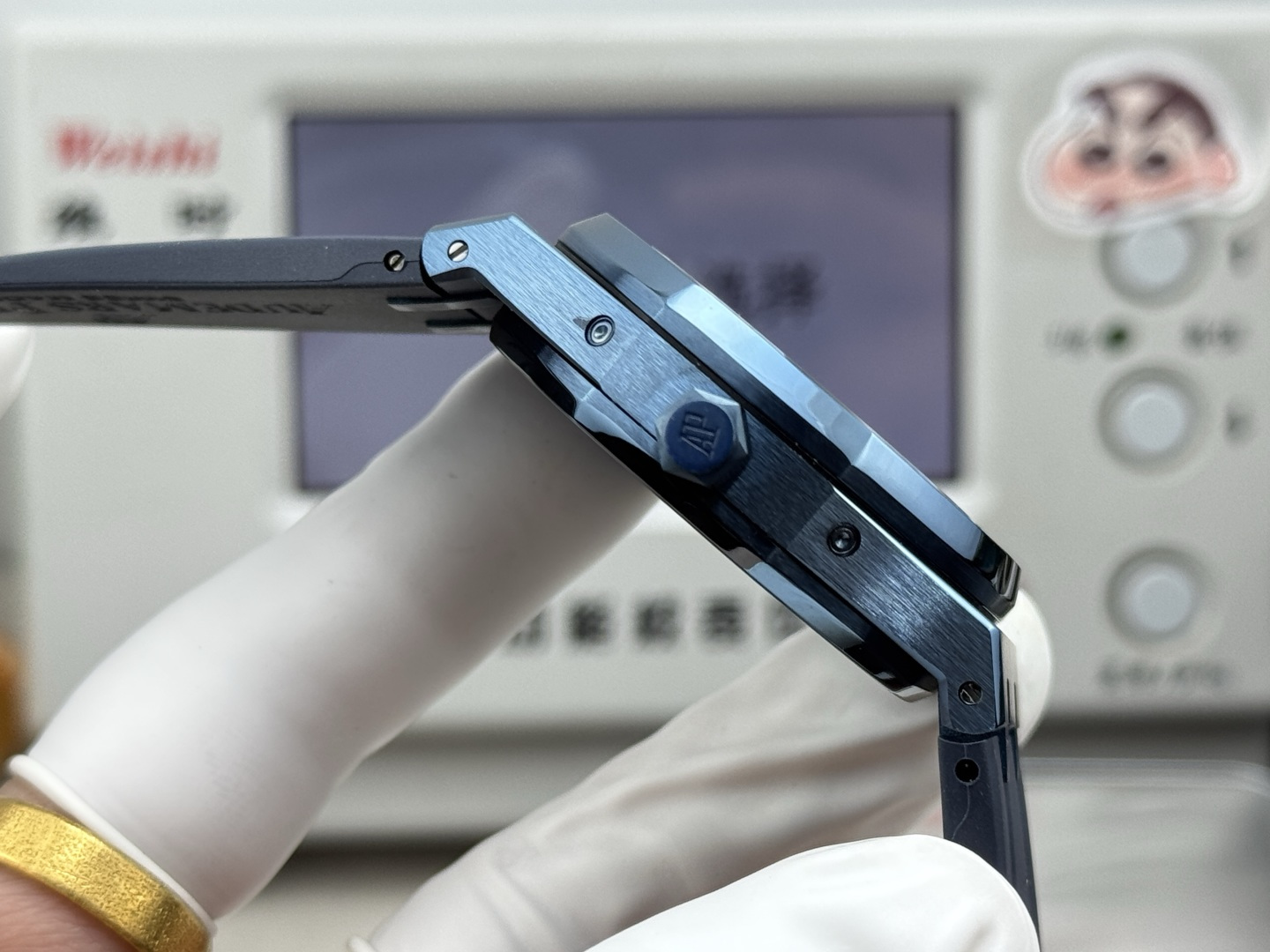
The lug-to-lug measurement on the genuine 26574ST runs approximately 50mm, and this clone tracks that closely. On the wrist, the ergonomics are surprisingly competent. The integrated bracelet — AP’s signature design element since 1972, the feature that made the Royal Oak’s identity inseparable from its bracelet — sits with reasonable conformity to the wrist curve. The SEL articulation, meaning the solid end links where the bracelet meets the case, is the first place I reach for the loupe, because this junction is where most replicas expose themselves immediately.
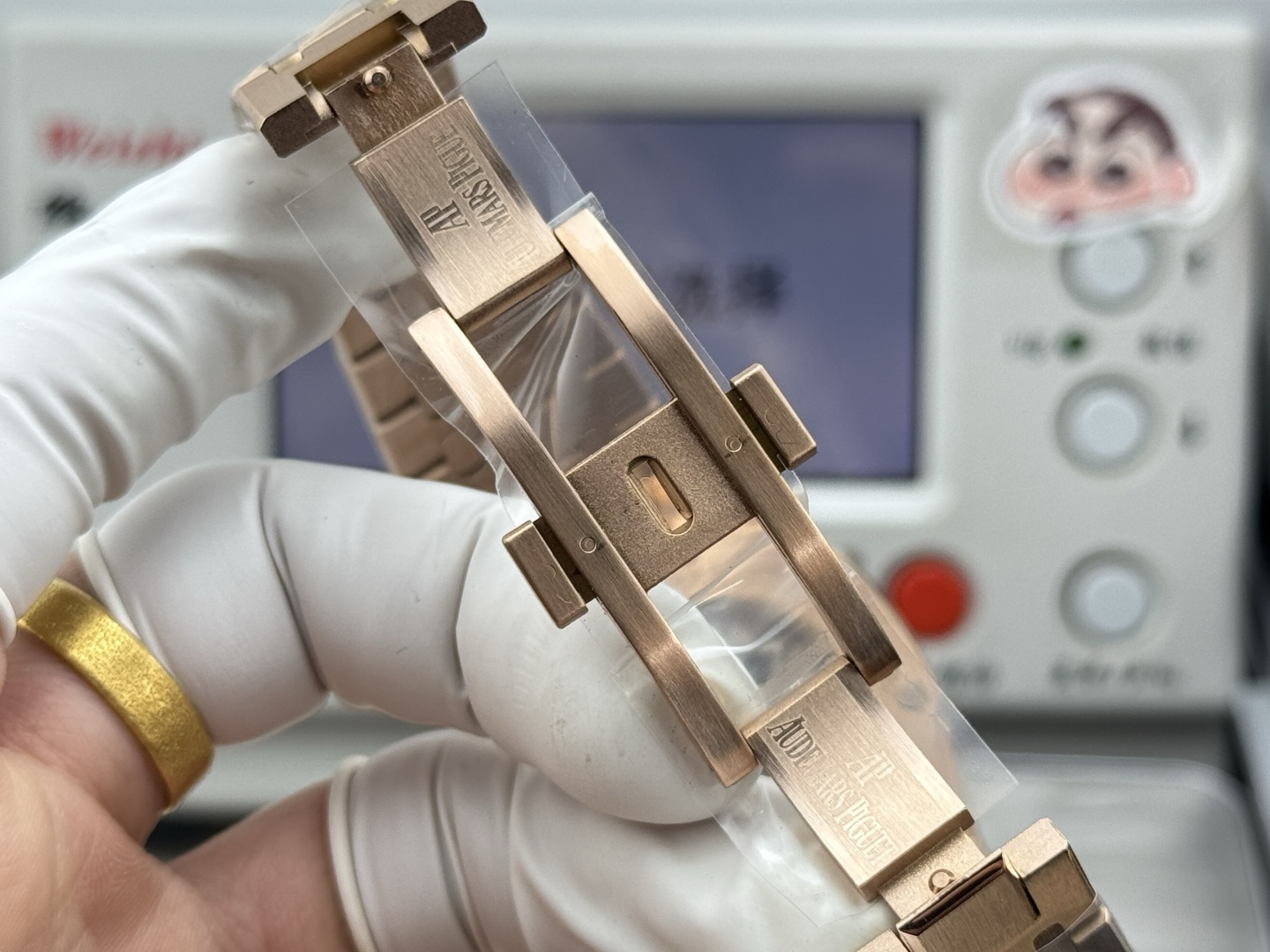
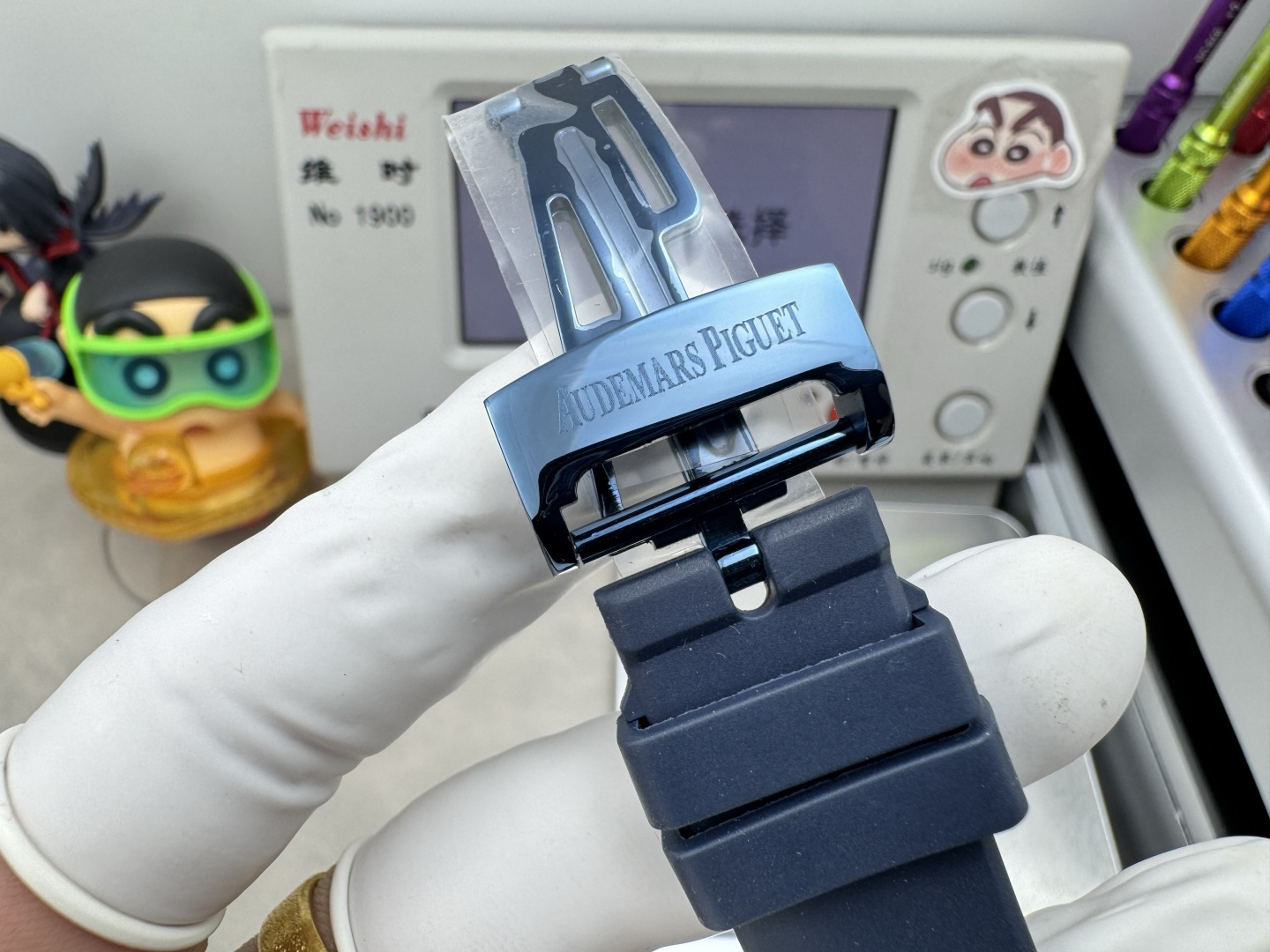
Under magnification, the SEL fitting is tight. There’s no perceptible gap, no misalignment of the brushed surfaces. The deployant clasp operates cleanly, with a positive snap. Is the finishing on the clasp inner surfaces black-polished to poli spéculaire standards? Absolutely not. But from the outside, at any social distance, this bracelet reads correctly.
“The integrated bracelet on any Royal Oak replica is the single most technically demanding element to replicate correctly. Get the SEL wrong and the whole piece unravels. This one, surprisingly, doesn’t unravel.”
Optical Illusions: The Dial Under the Loupe
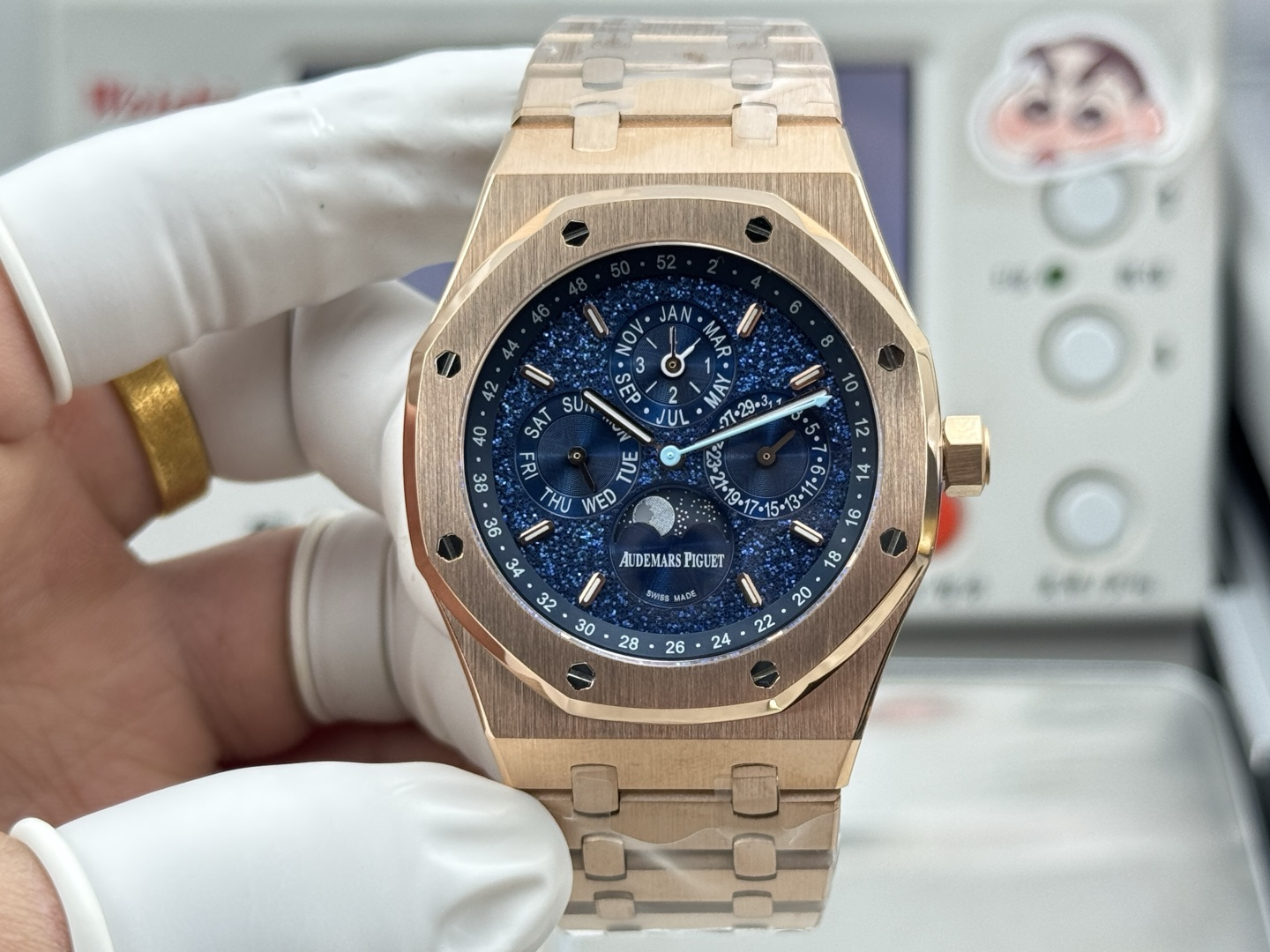
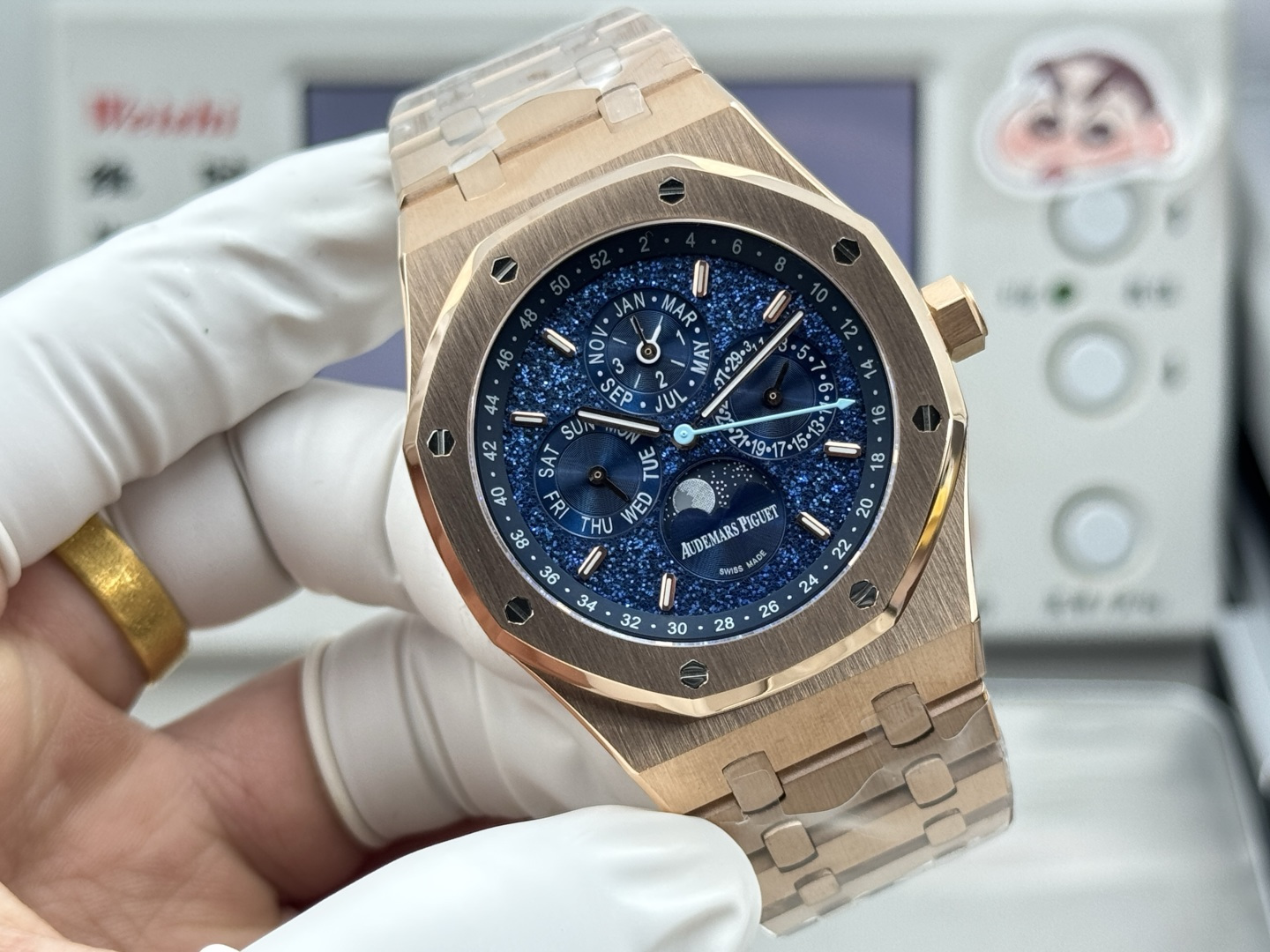
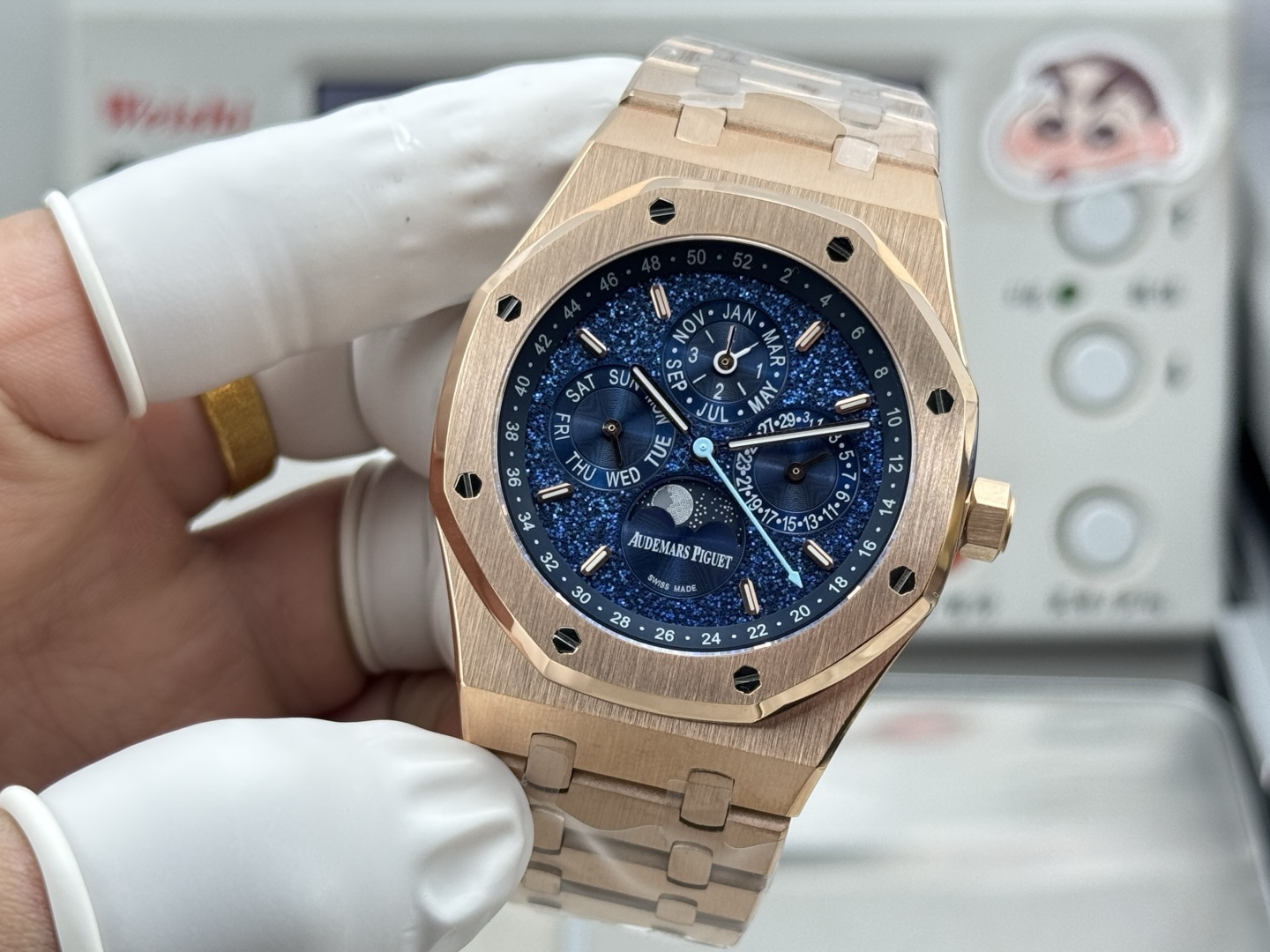
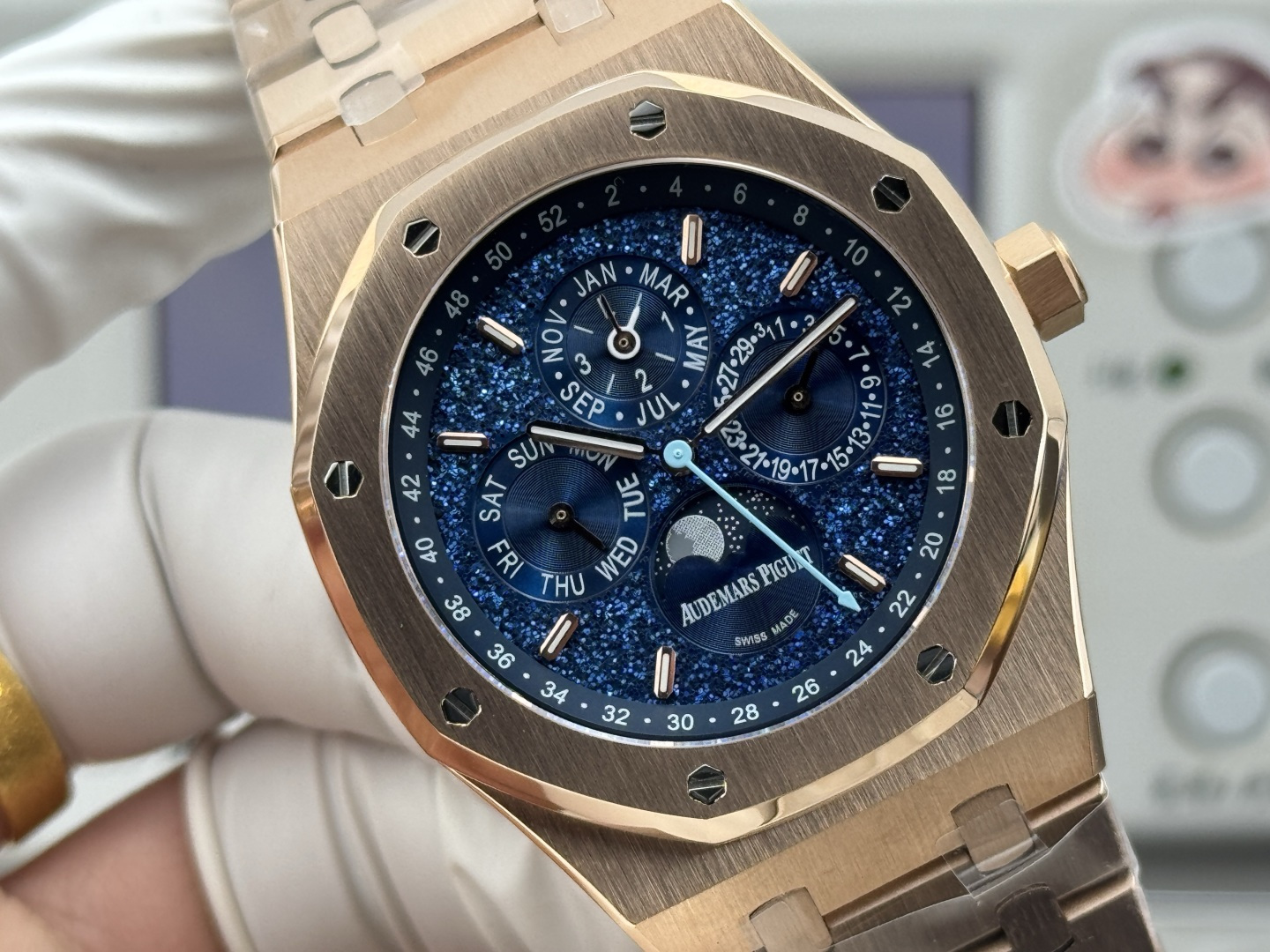
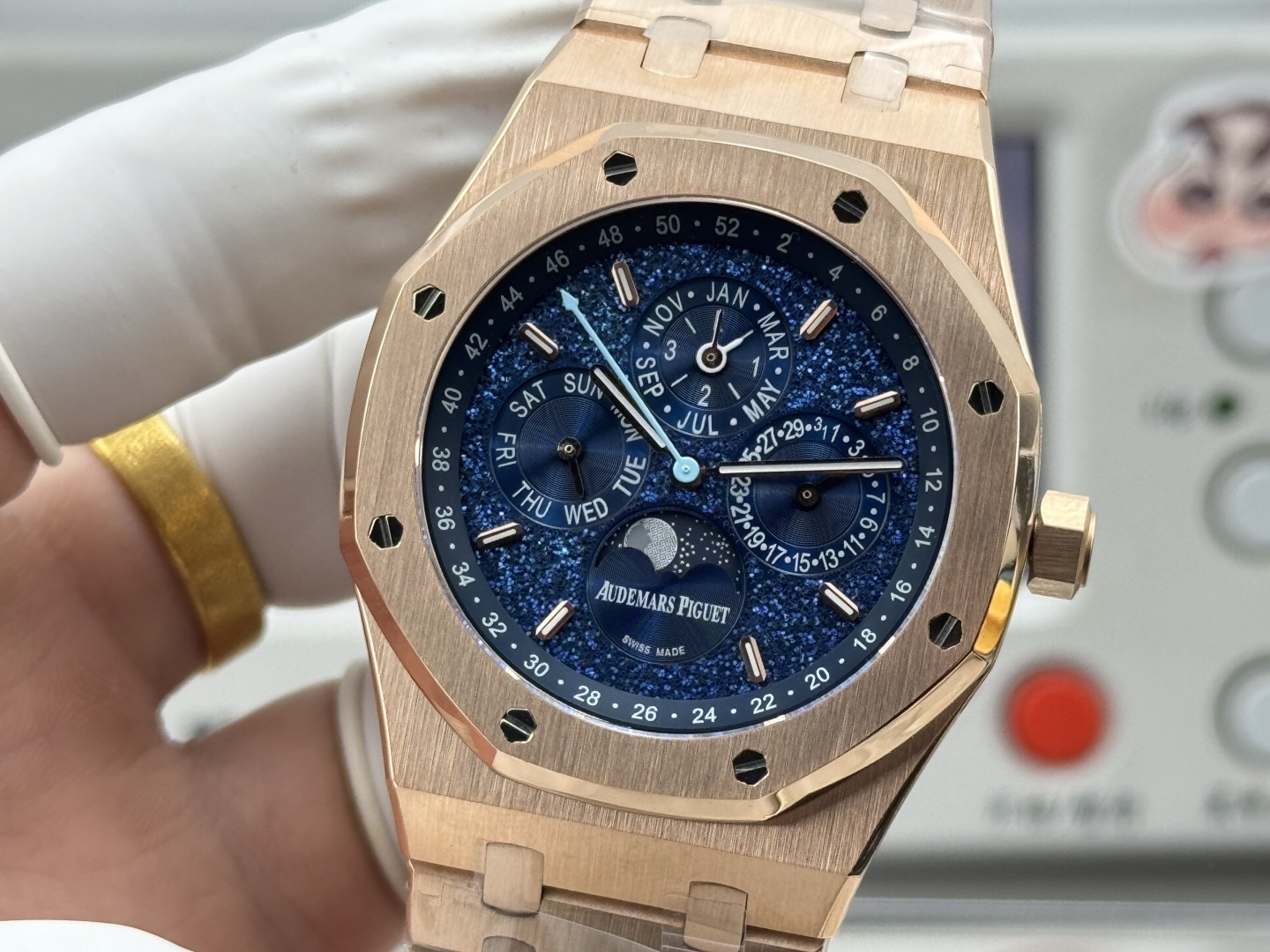
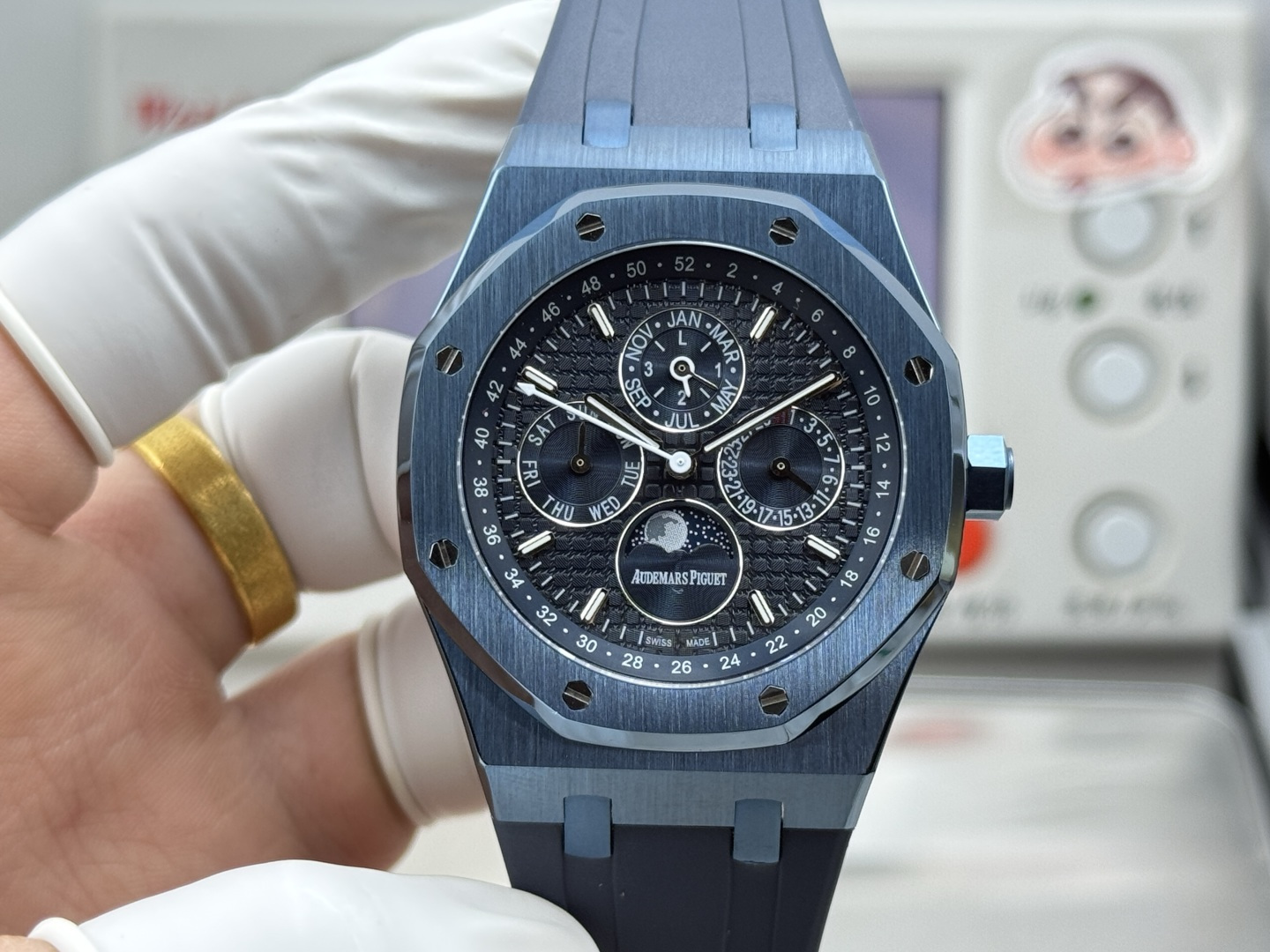
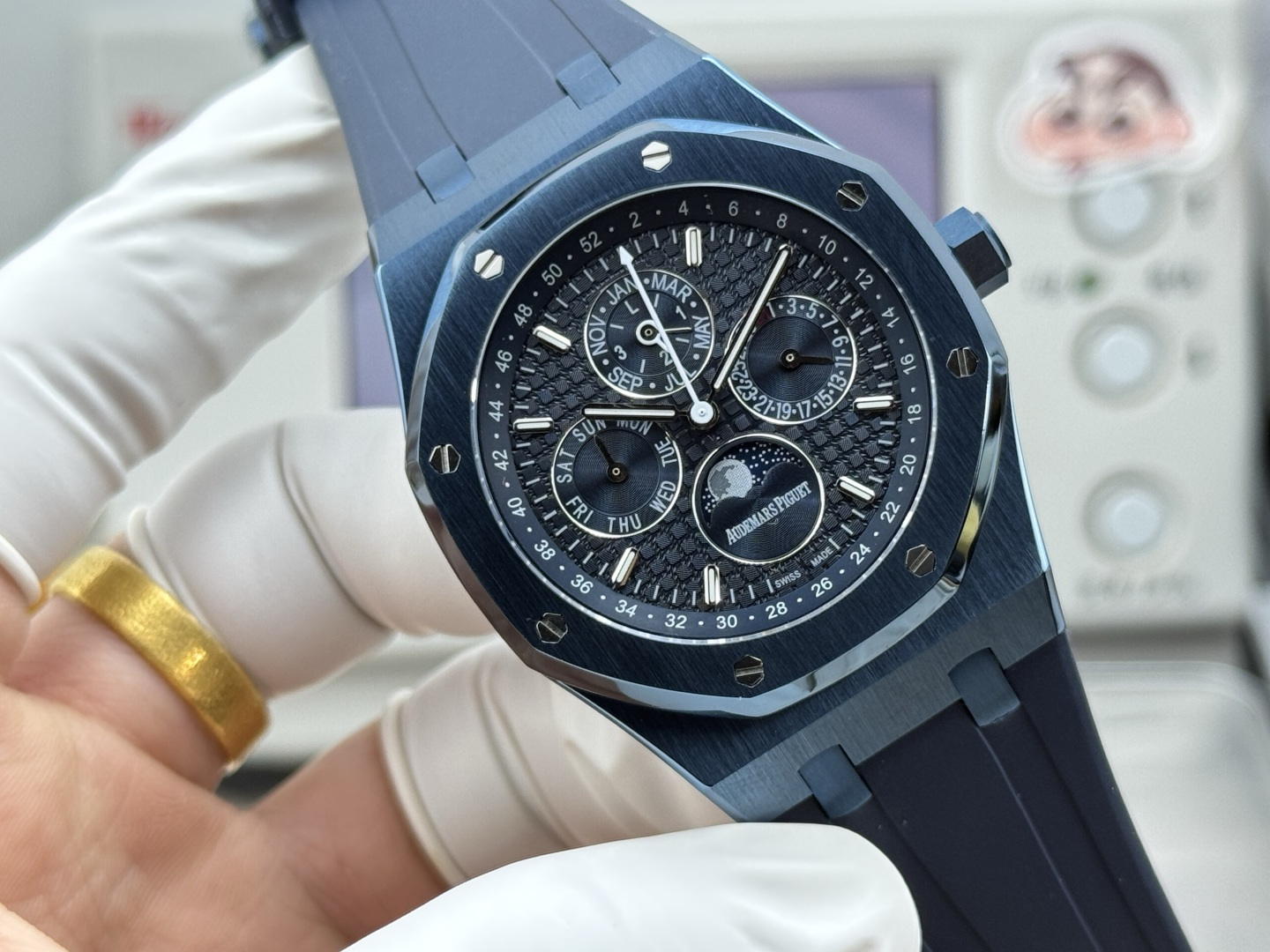
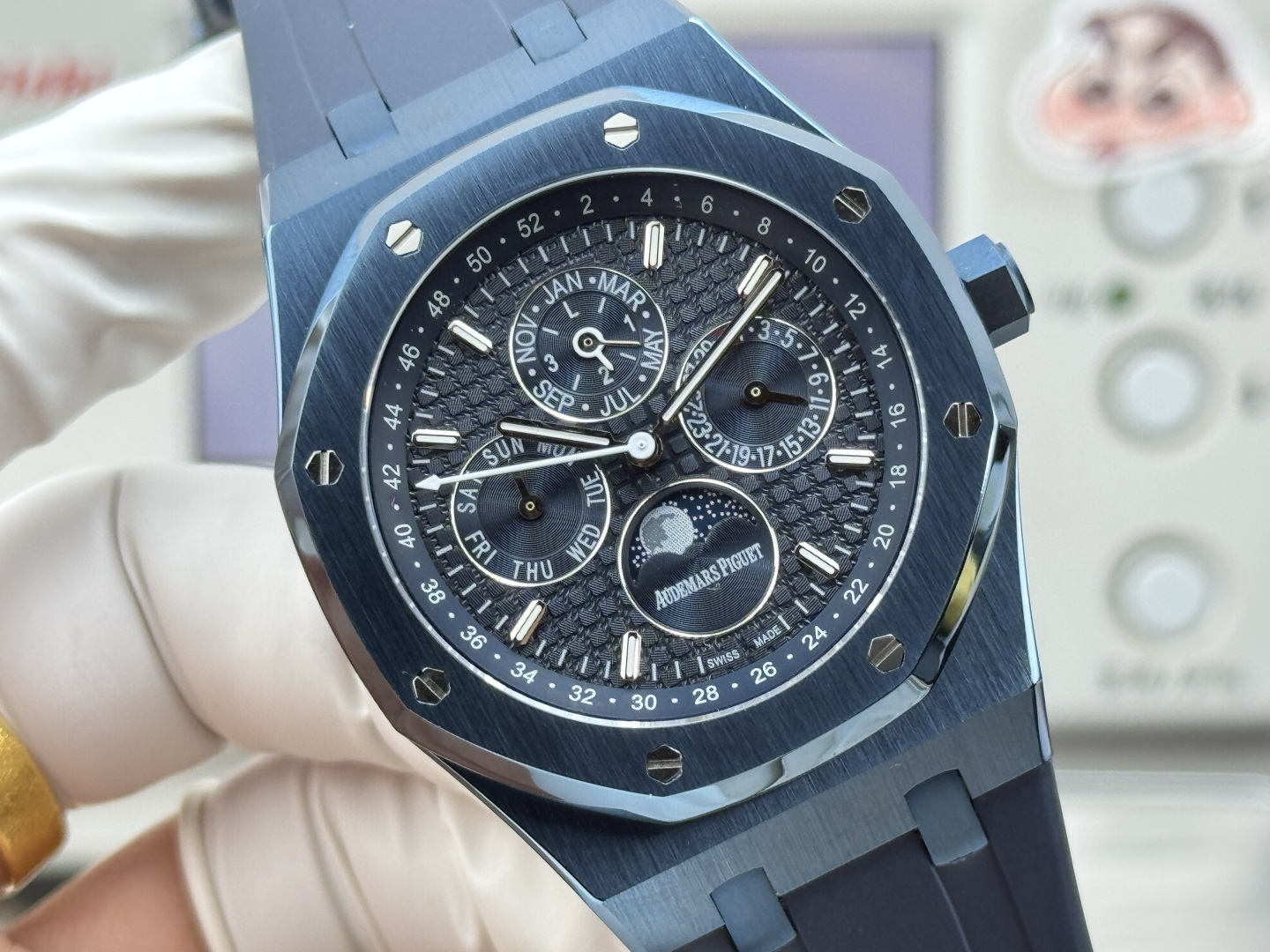
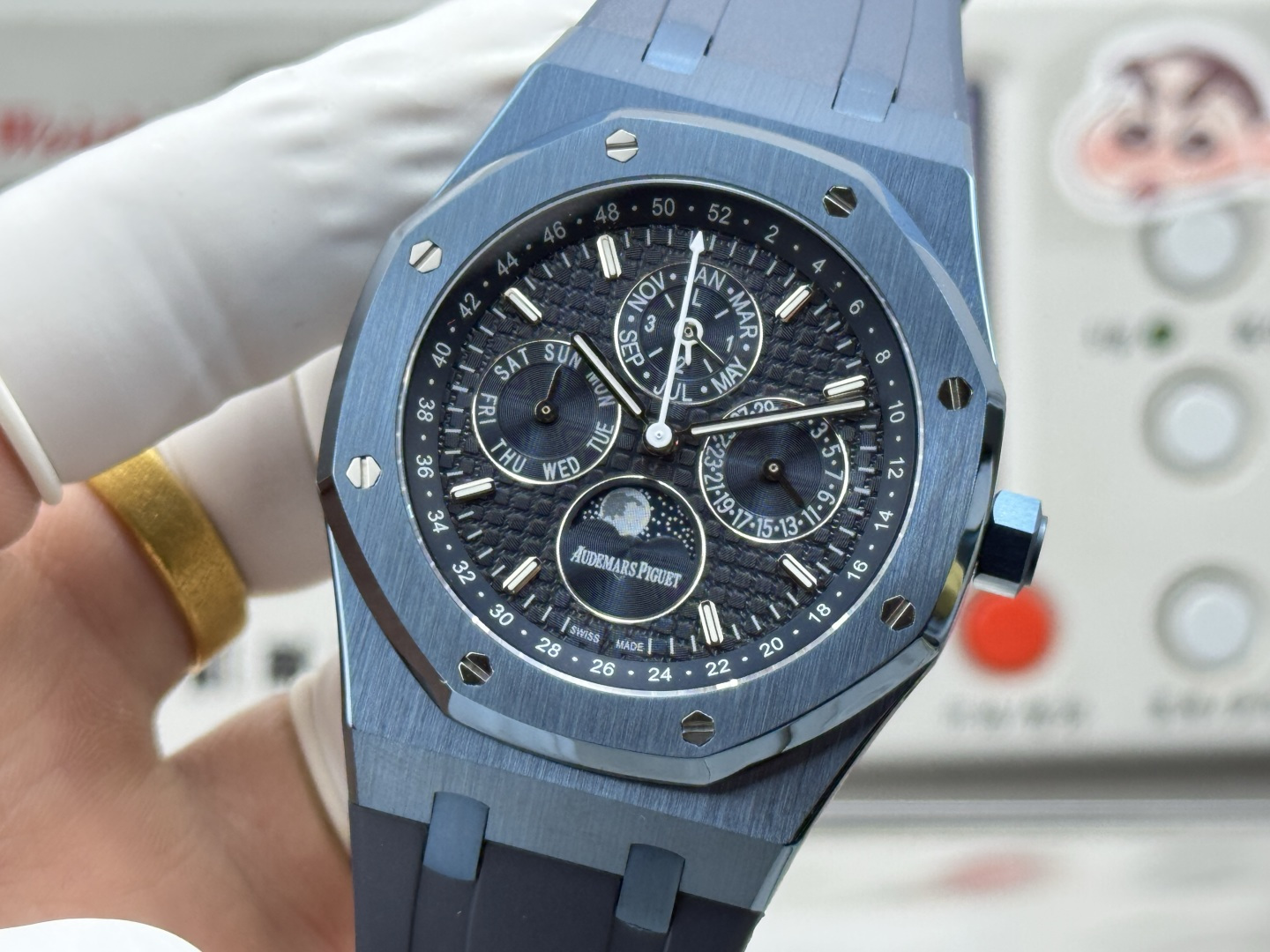
This is where I spend the most time, and where the replica market reveals its ambitions and its failures simultaneously. The 26574ST dial is a masterclass in organized complexity. You have the characteristic “Grande Tapisserie” guilloché pattern as the dial background — AP’s proprietary small-square hobnail texture that catches light in a way that is almost impossible to replicate through pad-printing alone. The genuine dial is stamped, not printed. The three-dimensionality of the texture is tactile, not optical.
Under the loupe, this replica’s guilloché is immediately identifiable as a printed approximation. The squares lack depth. The light reflection is uniform in a way that genuine stamped guilloché never is — real guilloché creates micro-shadows that shift as you tilt the dial, a phenomenon called scintillation in the trade. This printed version has a flat shimmer. It’s convincing at arm’s length. It is not convincing at 10x.
The sub-dials — day, date, month, and moon phase — are the dial’s most complex geography. On the genuine piece, the typography kerning on the day and month tracks is exacting. AP uses a proprietary typeface, and the spacing between characters is optically corrected rather than mathematically equidistant. On this replica, the kerning on the month track is slightly mechanical — the character spacing feels computed rather than designed. “SEPTEMBER” in particular looks marginally compressed. Nobody at a dinner table will notice. A watchmaker will notice immediately.
The moon phase aperture is, however, a genuine visual success. The deep blue disc with the gold-tone moon rendering is well-executed. The star punching on the disc is clean, and the aperture mask is properly beveled. The lume application on the hands and indices is consistent — no pooling, no voids — and the blue-tinted hands carry a reasonable approximation of AP’s characteristic sword-hand profile.
Now, the AR coating. The listing makes no specific claim about anti-reflective coating, which is itself informative. The genuine AP crystal uses a sapphire with multi-layer AR coating that produces a characteristic blue-green bloom when light hits it at oblique angles. This replica’s crystal produces a flat, slightly greenish reflection without the layered bloom. It’s almost certainly a mineral crystal with a single-layer AR dip, not a sapphire with vacuum-deposited multi-coating. In direct overhead light, the difference is invisible. Under a directional desk lamp, the crystal announces itself immediately.
“The crystal is always the tell on a first-generation clone. Not the movement, not even the finishing — the crystal. A genuine sapphire AR coating blooms like a soap bubble. A mineral crystal just reflects.”
Under the Caseback: Exposing ‘The Tell’
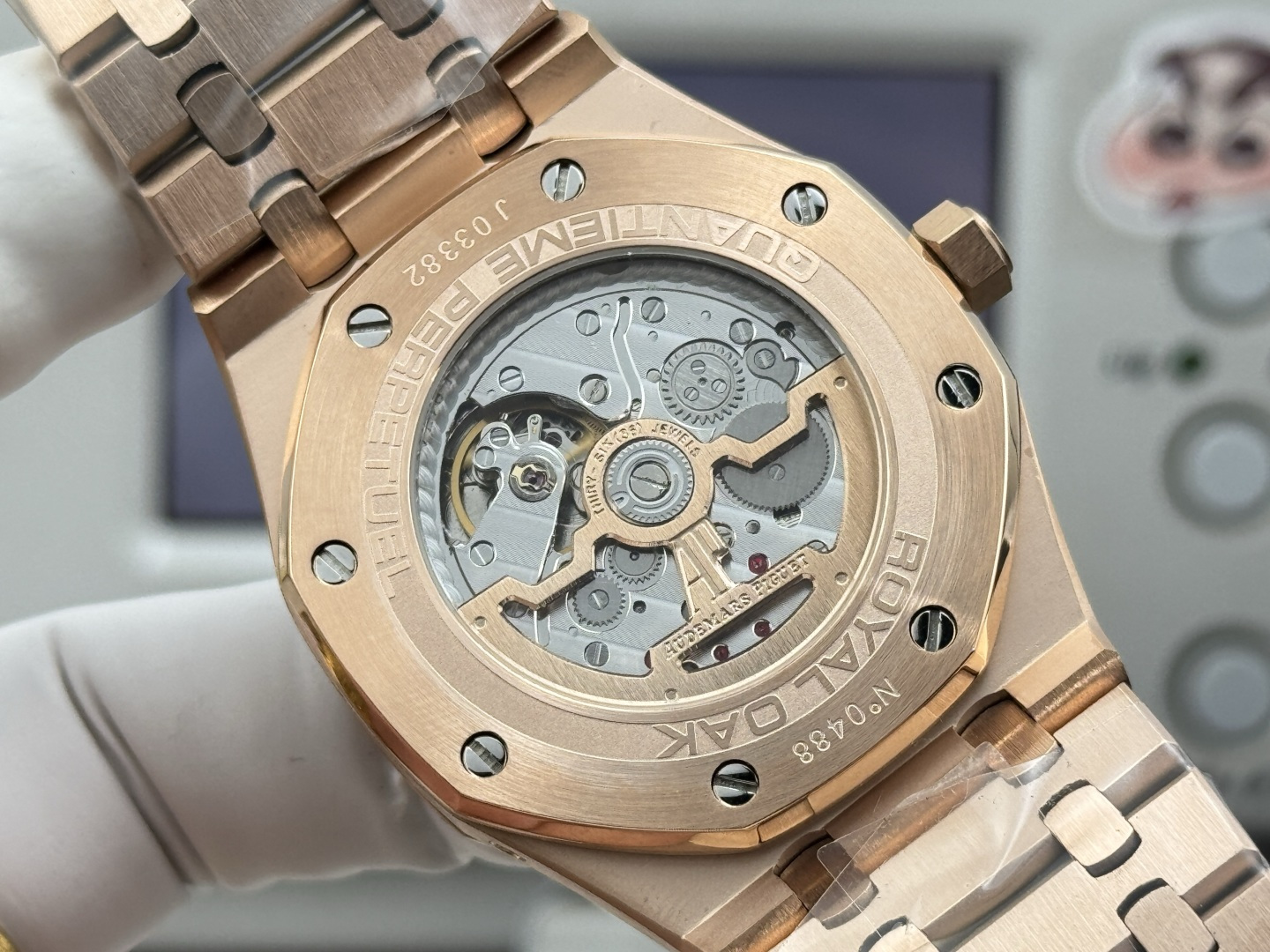
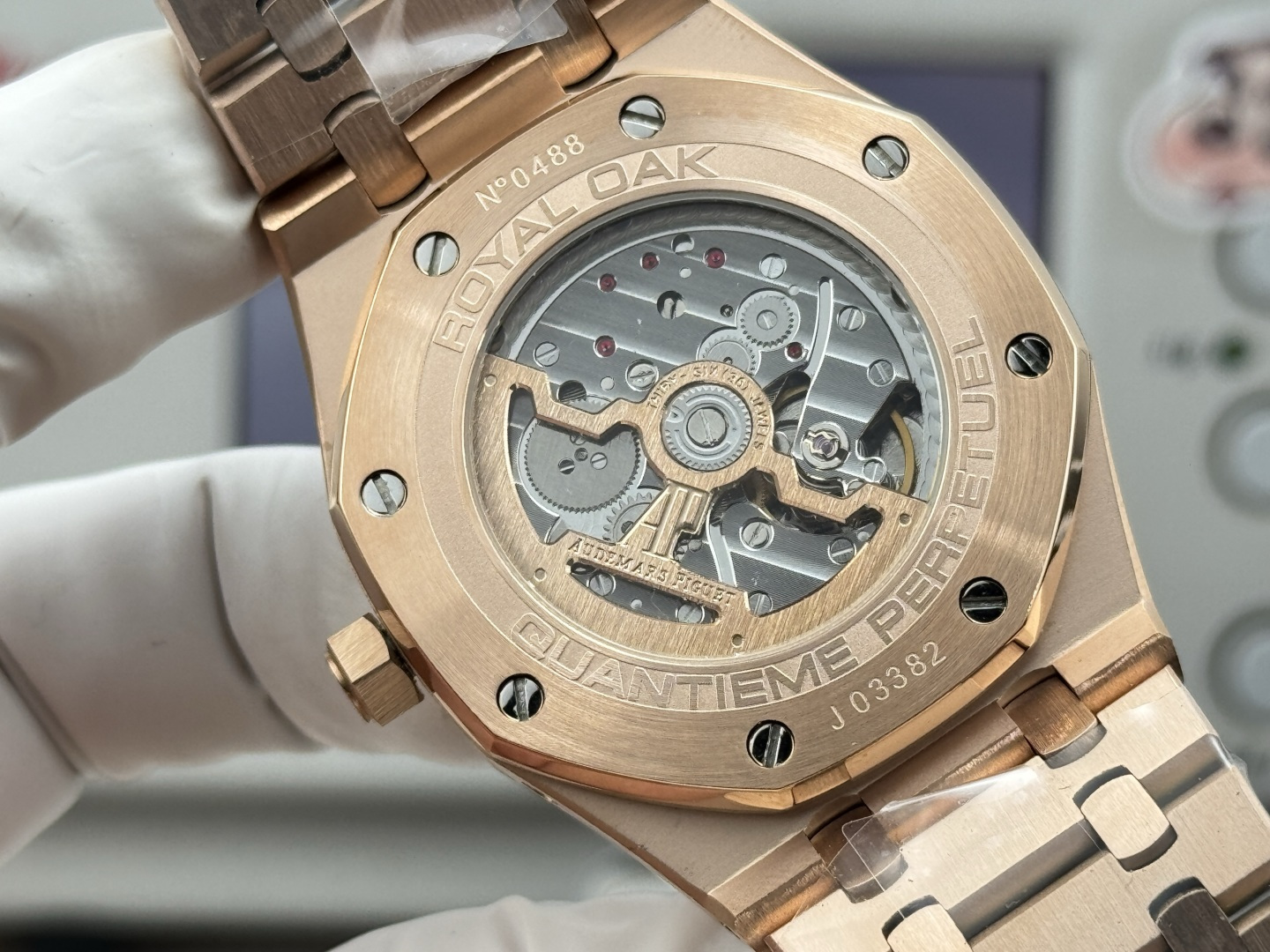
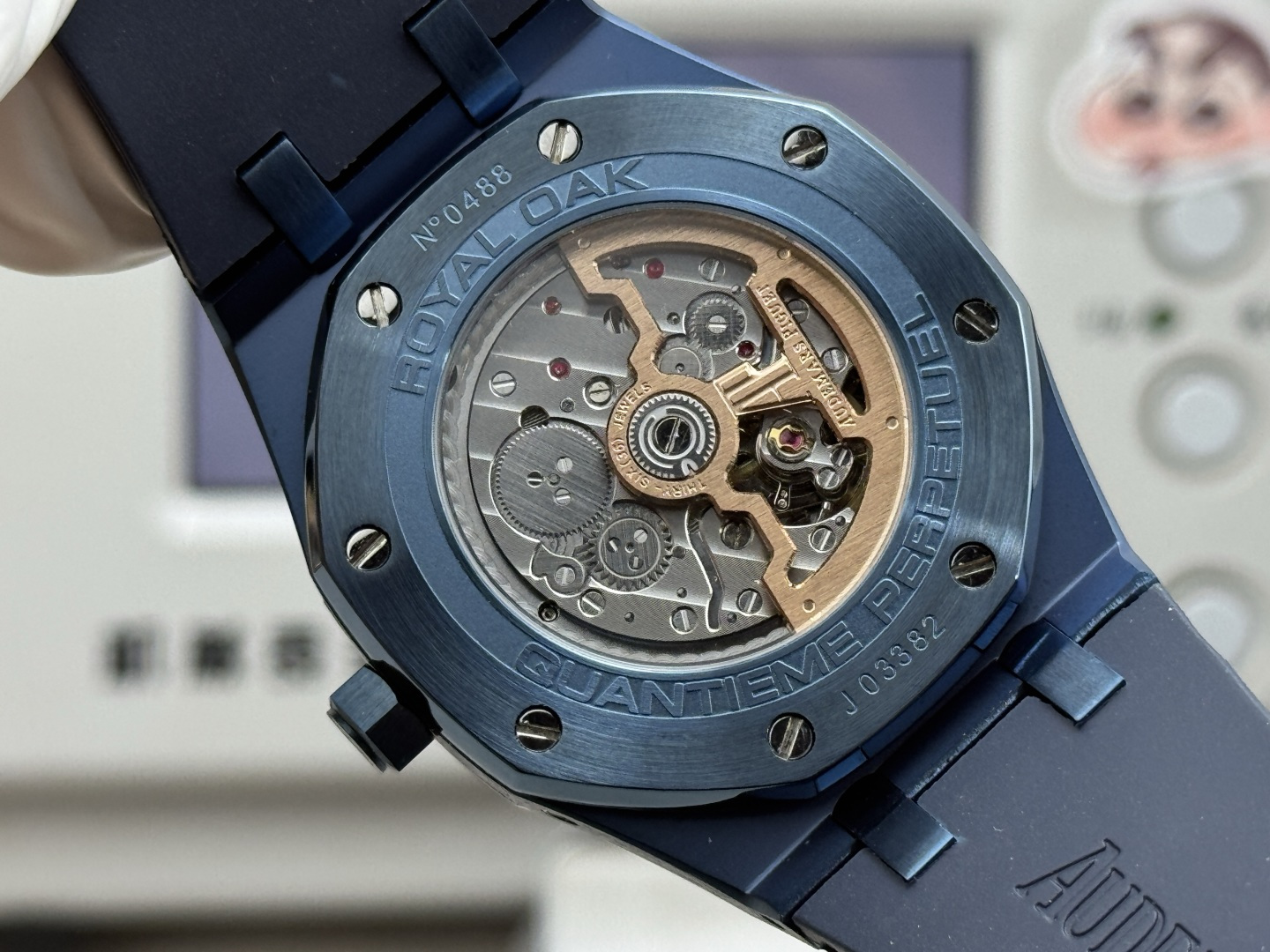
The listing specifies a “custom cal. 5134” movement. I want to be precise about what this means in practice, because the language is cleverly ambiguous. The genuine AP caliber 5134 is a manufacture movement, developed in-house, with a 22-karat gold rotor and finishing that includes Côtes de Genève striping on the bridges, Perlage on the mainplate, and hand-chamfered, black-polished anglage on every steel component. It is a movement you display. It earns its exhibition caseback.
What arrives in this replica is almost certainly a Chinese-manufactured ETA 2892 clone or a Seagull-based perpetual calendar module stacked on a base movement. The rotor is gold-toned, not gold. The Côtes de Genève striping exists, but under the loupe, the stripe width is inconsistent — a machine that needs calibration produced these lines, not a craftsman with a grinding stone. The perlage on the mainplate is present but shallow; the individual pearls lack the crisp circular definition of genuine perlage. The anglage on the bridges — that critical hand-chamfering that catches light at precisely 45 degrees — is present as a shape but absent as a finish. It’s chamfered, not polished. The difference between chamfered anglage and true black-polished anglage is the difference between a line drawn and a mirror cut.
The beat rate appears to run at approximately 21,600 vph based on a timing app, rather than the genuine’s 19,800 vph. This is a common tell on clone movements — the base caliber running under the perpetual calendar module often operates at a different frequency than the genuine. It affects nothing functionally for a daily wearer. It tells you everything about what you’re actually looking at.
The perpetual calendar functions — day, date, month, moon phase — do operate correctly. Advancing through the calendar using the crown and correctors produces the expected logical jumps. The month corrector advances the month track without disrupting the date. The moon phase advances on schedule. For a complication of this mechanical complexity at this price tier, this is genuinely impressive. Whoever engineered this module understood the complication’s logic, even if the finishing doesn’t survive scrutiny.
The Question Nobody Wants to Answer
Here’s what I keep returning to after a week on the wrist with this piece: at what point does the replica’s exterior become indistinguishable from the genuine for 99% of the social situations in which a watch is actually worn? Not under a loupe at a watchmaker’s bench. Not at a collector’s meetup where someone will immediately ask to see the movement. But at a business dinner, at a wedding, at any of the hundreds of contexts in which a watch functions as a social signal rather than a horological artifact?
This clone passes that test more comfortably than I expected. The guilloché reads correctly from conversational distance. The bracelet sits correctly. The complication functions correctly. The movement finishing is a fraud that only reveals itself to someone actively looking for it.
And that’s the genuinely uncomfortable question the replica market forces into the open: if the signal is what matters, and the signal is transmitted successfully, what exactly are you paying $129,700 extra for? The answer — the finishing, the manufacture heritage, the material honesty, the decades of accumulated craft — is real and significant. But it’s an answer that requires you to already care about those things to receive it.
Most people wearing a $130,000 watch don’t care about perlage depth. The replica industry is built entirely on that fact.