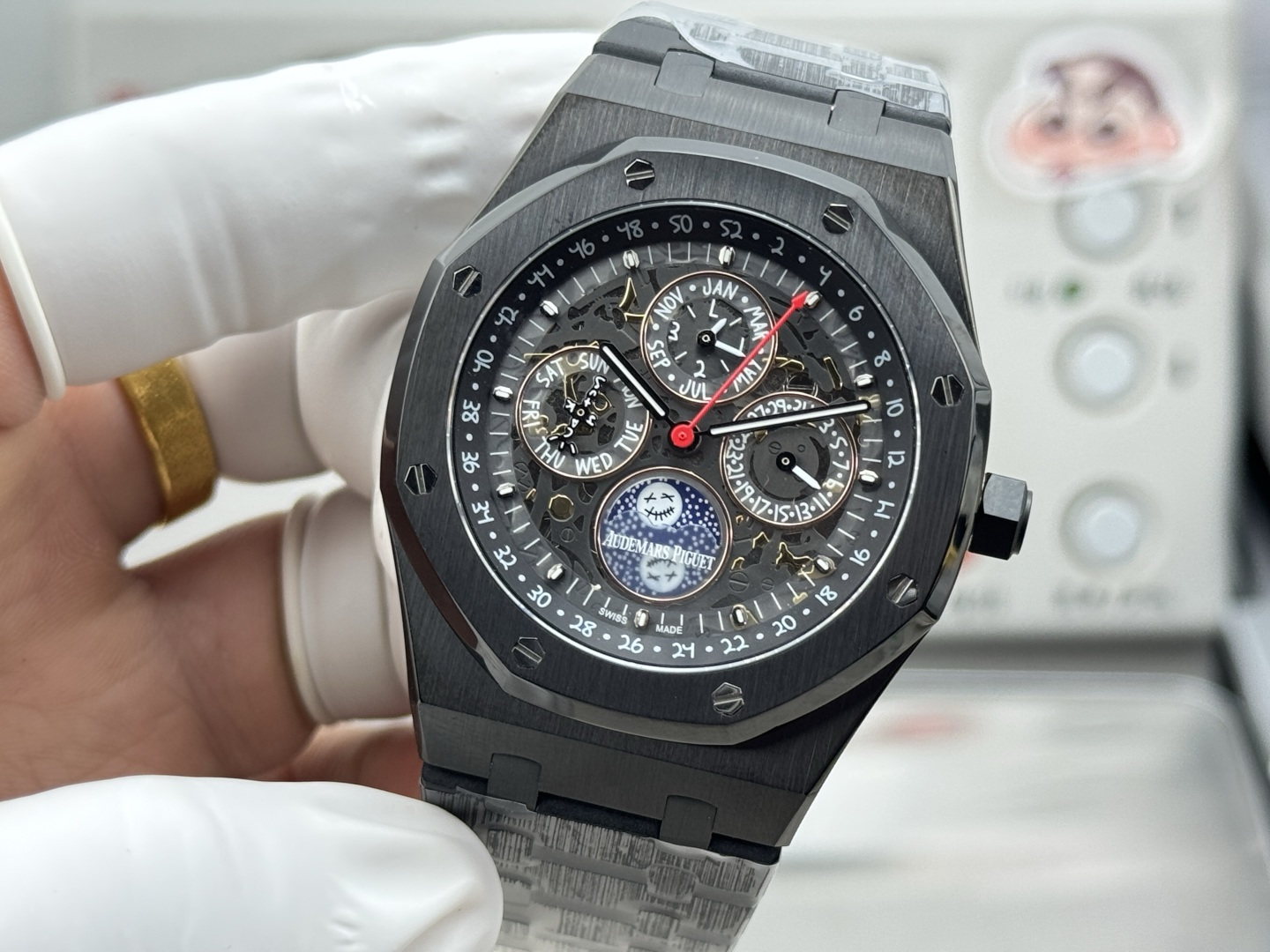
Let me set the scene. A well-dressed gentleman walks into an authorised Audemars Piguet boutique in Geneva, Hong Kong, or Beverly Hills. He has a relationship with the brand. He has bought before. He is told, politely but firmly, that the Royal Oak Perpetual Calendar — reference 26574ST — is unavailable. Perhaps in eighteen months. Perhaps never, if his purchase history isn’t robust enough. He is, in the language of modern luxury retail, being managed. The watch he wants retails north of $75,000 USD, and he still cannot simply buy it. This is the theatre of contemporary haute horlogerie, and frankly, it has become exhausting to defend.
So when a 1:1 clone of the 26574ST lands on my desk — a 41mm stainless steel perpetual calendar with a functioning moon phase, day, date, and month display, built around a custom caliber designated the Cal. 5134 equivalent — the first question isn’t moral. The first question is: how close did they actually get?
The Retail Absurdity
The genuine 26574ST is built around Audemars Piguet’s in-house Cal. 5134, a perpetual calendar movement of genuine sophistication. It features a Gregorian calendar mechanism that accounts for months of varying lengths and theoretically won’t need manual date correction until the year 2100. The dial architecture — that iconic integrated octagonal bezel, tapisserie guilloché surface, and the layered sub-dial arrangement — is one of the most recognisable faces in watchmaking. AP knows this. They price accordingly. They restrict supply accordingly.
The grey market for the genuine article runs between $85,000 and $110,000 depending on condition and provenance. The clone sitting in front of me cost a fraction of that. I’m not here to moralize. I’m here to evaluate what you actually get for that fraction, measured against what AP’s engineers actually produced.
The luxury watch industry created the grey market replica ecosystem through its own artificial scarcity. When a brand refuses to sell a $75,000 watch to a willing buyer with cash in hand, it doesn’t eliminate demand — it redirects it. That redirection built an entire parallel industry. AP, Patek, and Rolex are the architects of their own counterfeit problem.
First Impressions & The Weight of Steel
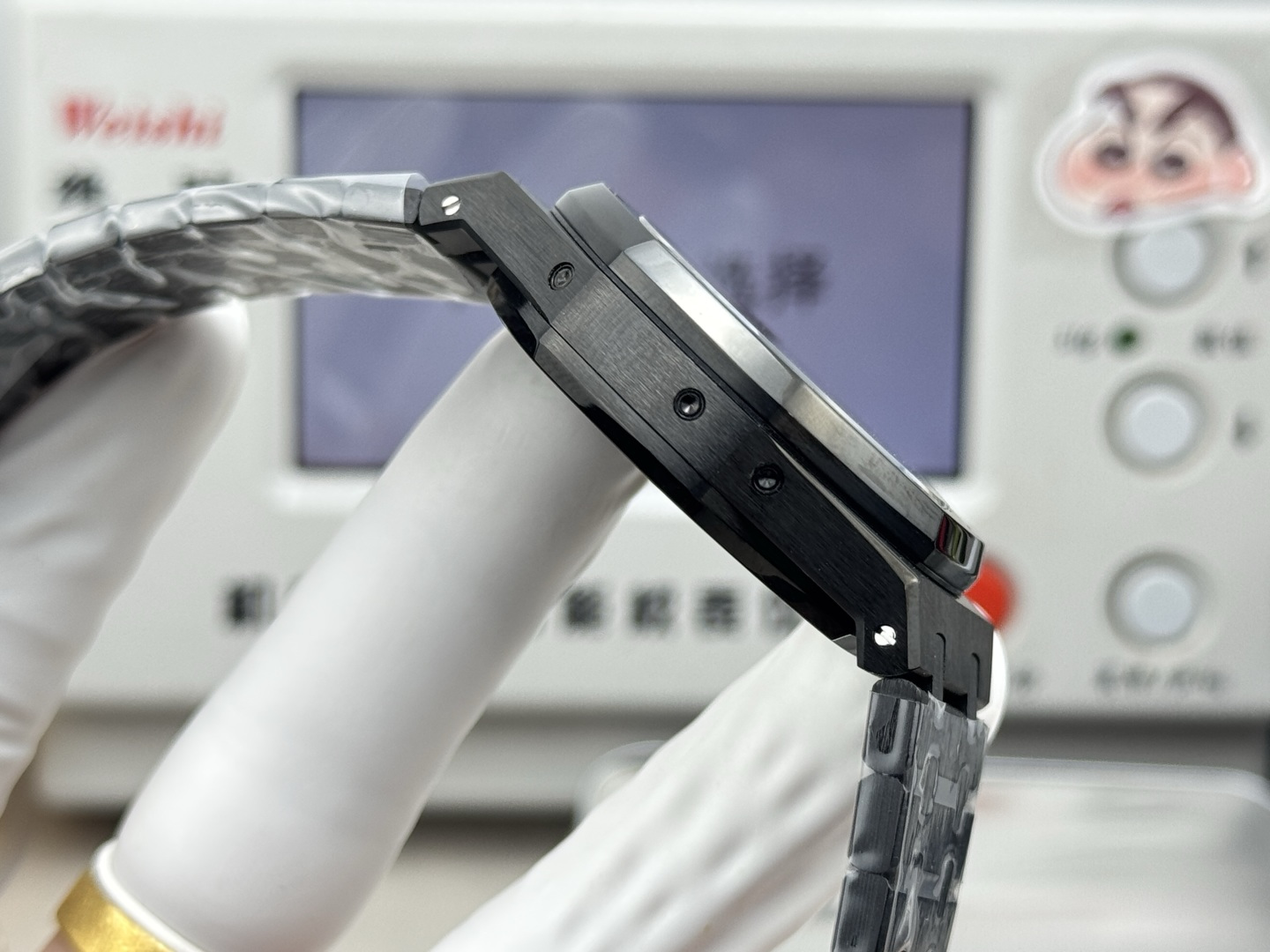
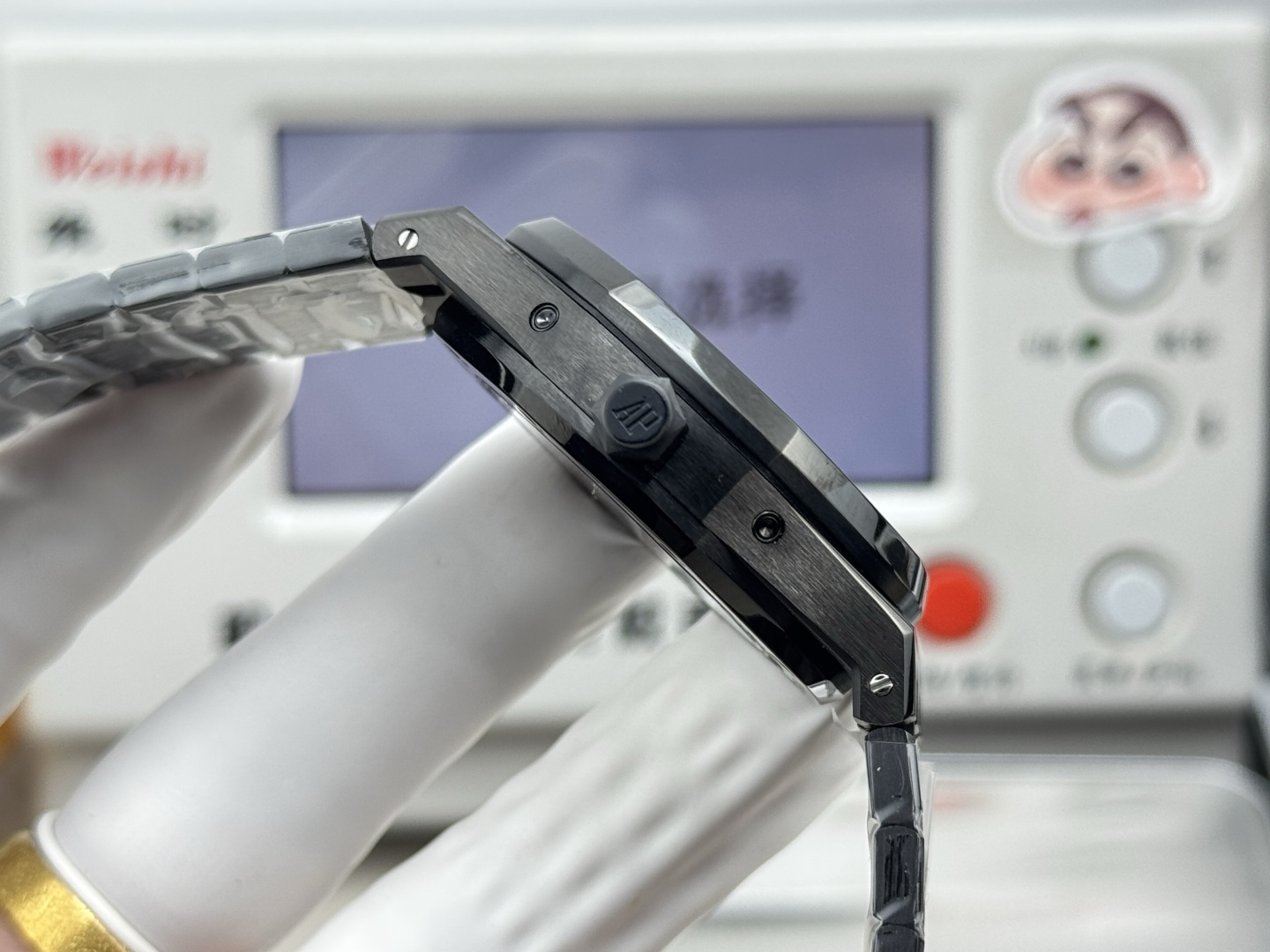
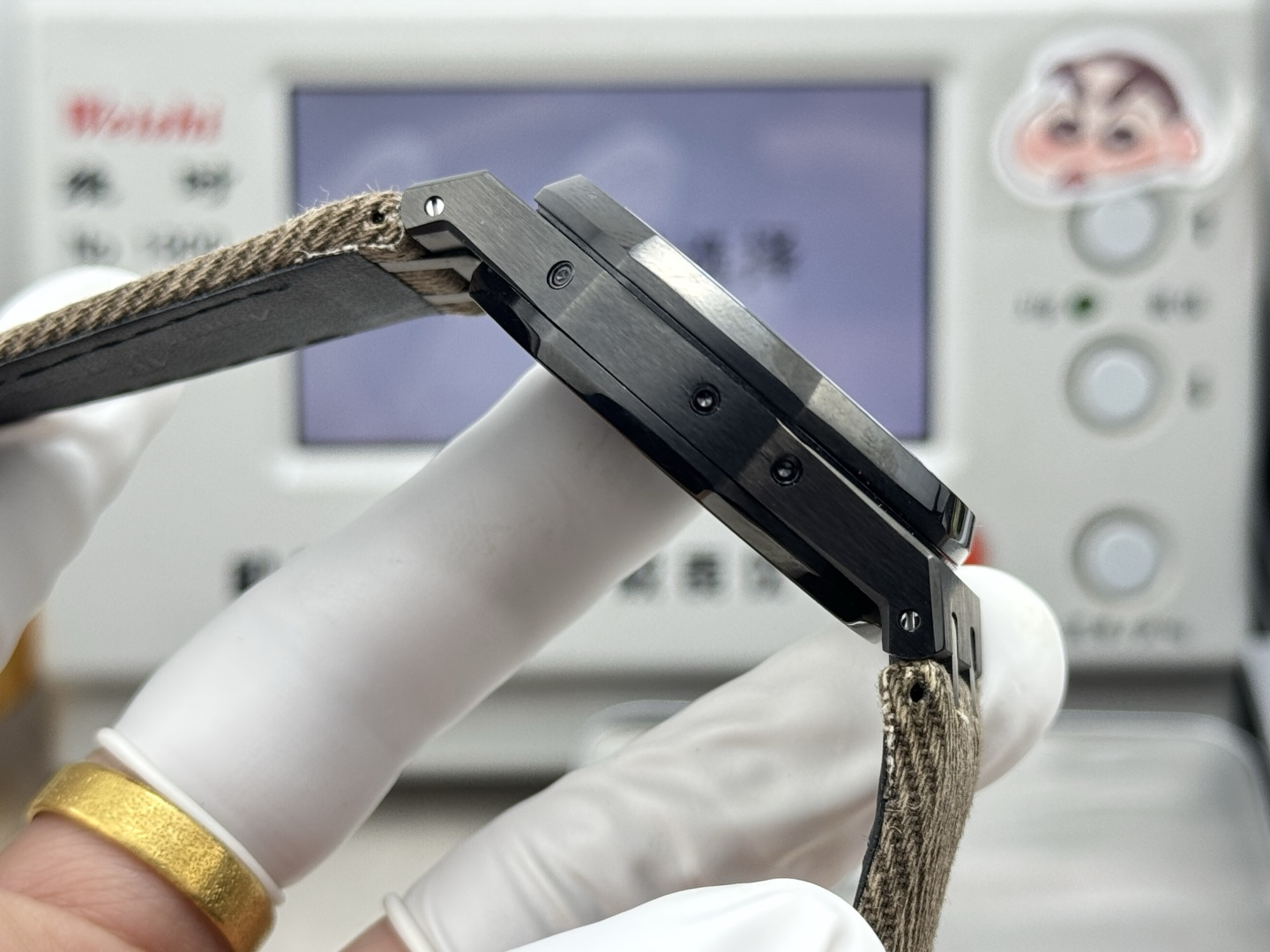
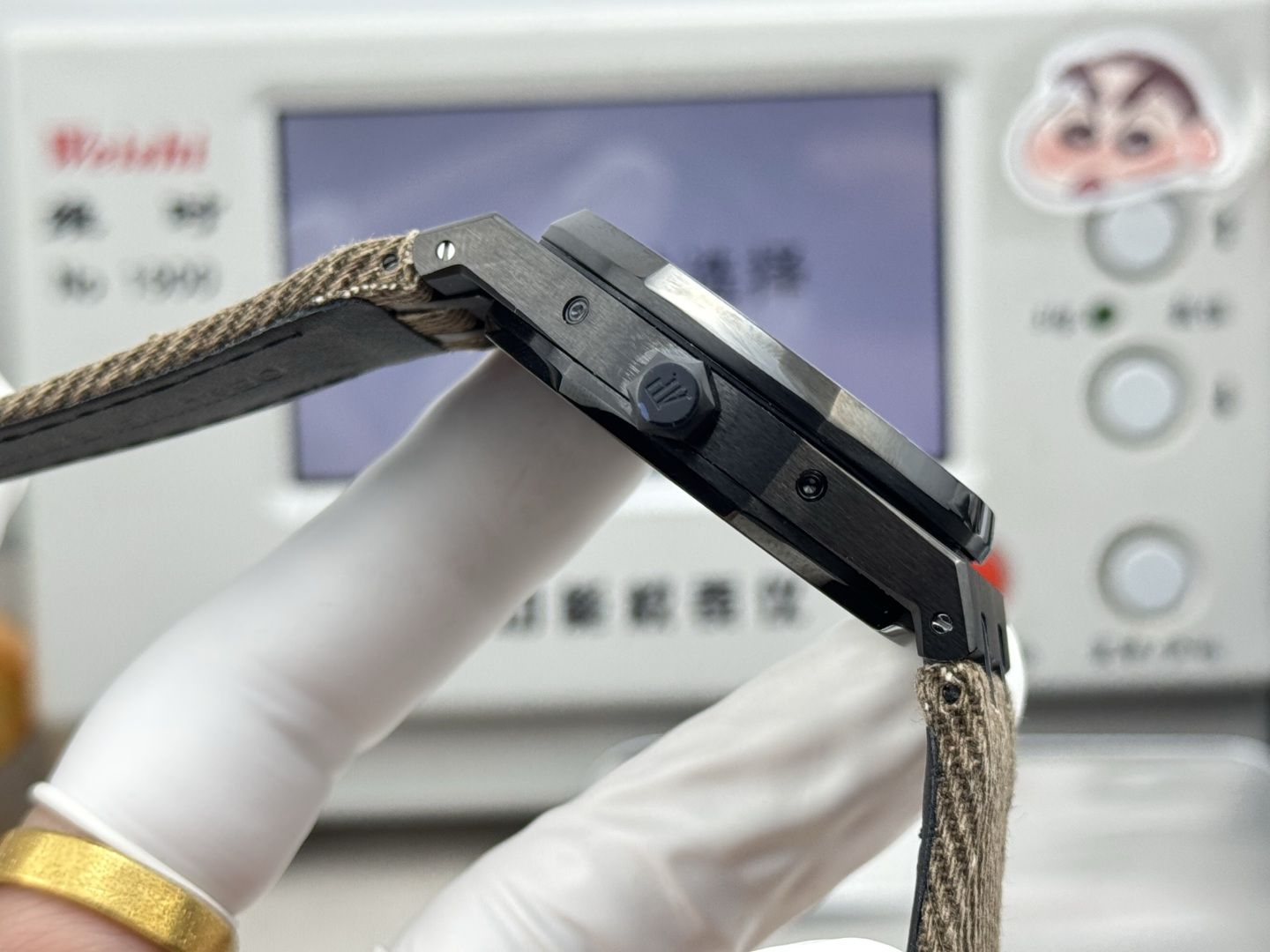
The case arrives in 316L stainless steel, CNC-machined to a claimed density matching the genuine article. At 41mm in diameter, it sits exactly where the spec sheet says it should. The lug-to-lug measurement is consistent with the reference dimensions, and the ergonomics on the wrist are — and I want to be precise here — surprisingly convincing. This is not a hollow, rattling shell. There is real mass here. The genuine 26574ST has a characteristic heft that comes from the density of its case construction and the weight of the movement, and this clone approximates that feeling well enough that a casual wearer won’t notice the difference on the wrist.
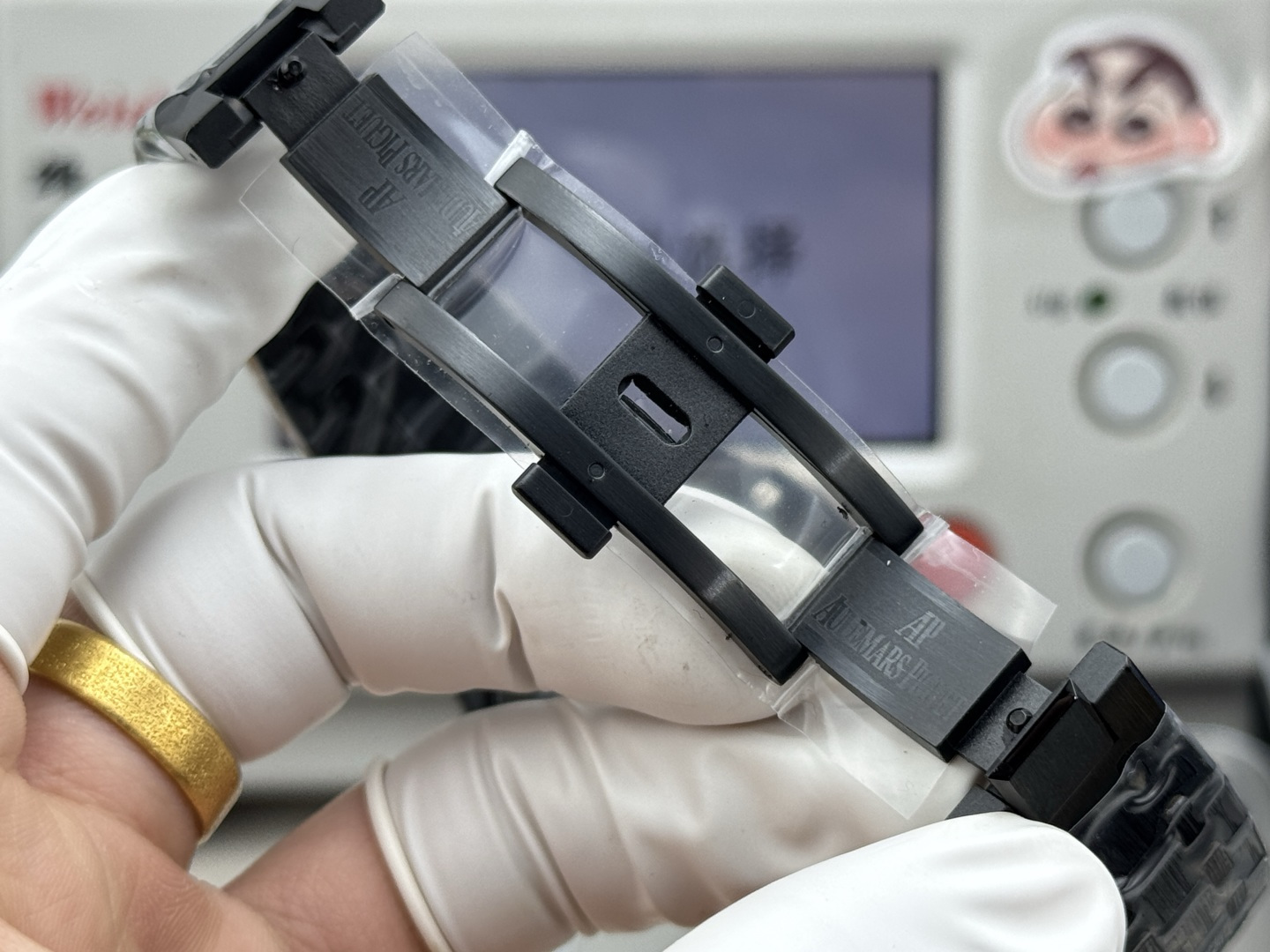
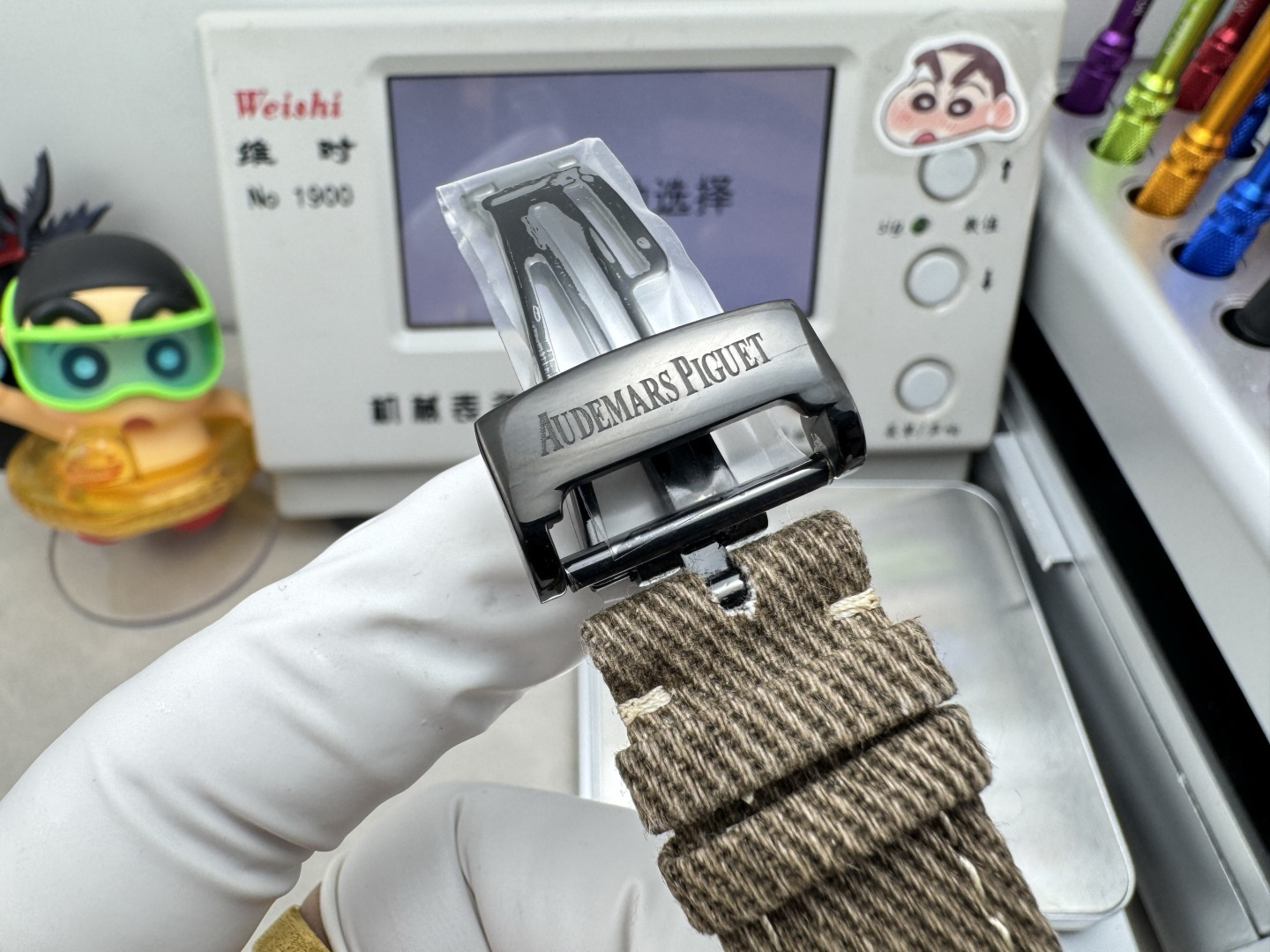
The integrated bracelet — available in steel, rubber, or leather according to the spec sheet — is where I focused considerable attention. The SEL articulation on the steel variant is the first place budget constraints typically reveal themselves on Royal Oak clones. Cheap versions have stiff, gappy solid end links that clunk against the case with the subtlety of a dropped spanner. This example is better. The SEL integration is tighter than I expected. The brushed finishing on the bracelet links is directionally correct — satin-brushed on the flat surfaces, with polished bevels on the outer edges — though under a 10x loupe, the chamfering on the inner link edges lacks the crisp, consistent anglage you’d find on the genuine bracelet. On AP’s actual bracelet, those chamfers are hand-finished to a near-poli spéculaire standard. Here, they’re machine-finished and slightly inconsistent in width. Not visible to the naked eye. Absolutely visible under magnification.
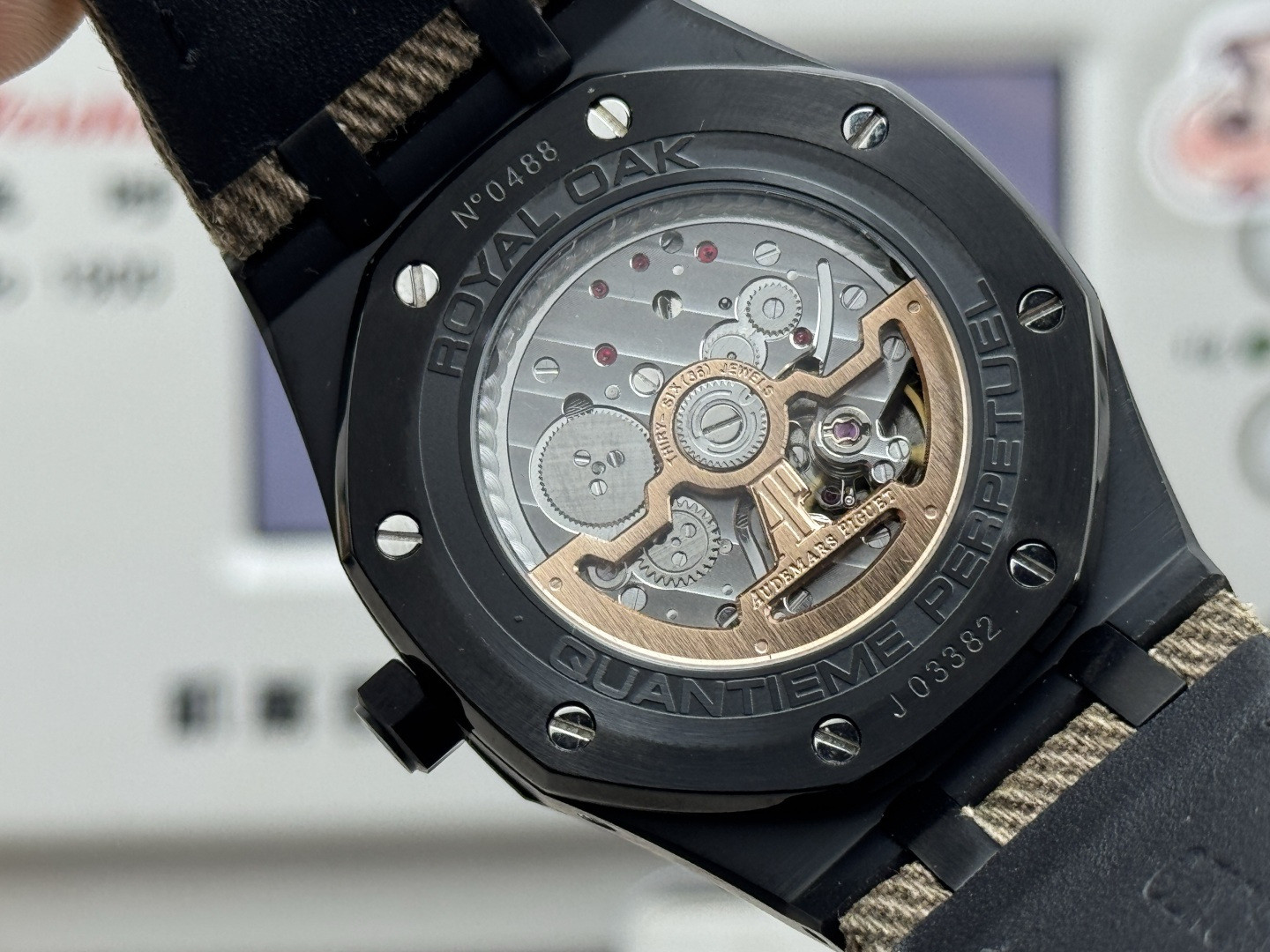
The crown is properly recessed into the case flank, correctly sized, and has adequate grip texture. The pushers for the calendar functions have a satisfying mechanical resistance. The caseback is a solid three-piece construction — bezel ring, case middle, and caseback — which the spec sheet correctly identifies as a three-component assembly. No exhibition caseback on this reference, which is appropriate; the genuine 26574ST also wears a solid caseback.
Optical Illusions: The Dial and AR Coating
This is where I want to spend real time, because the dial of the 26574ST is one of the most complex surfaces in AP’s catalogue, and getting it right — or failing to get it right — tells you everything about the ambition level of the manufacturer.
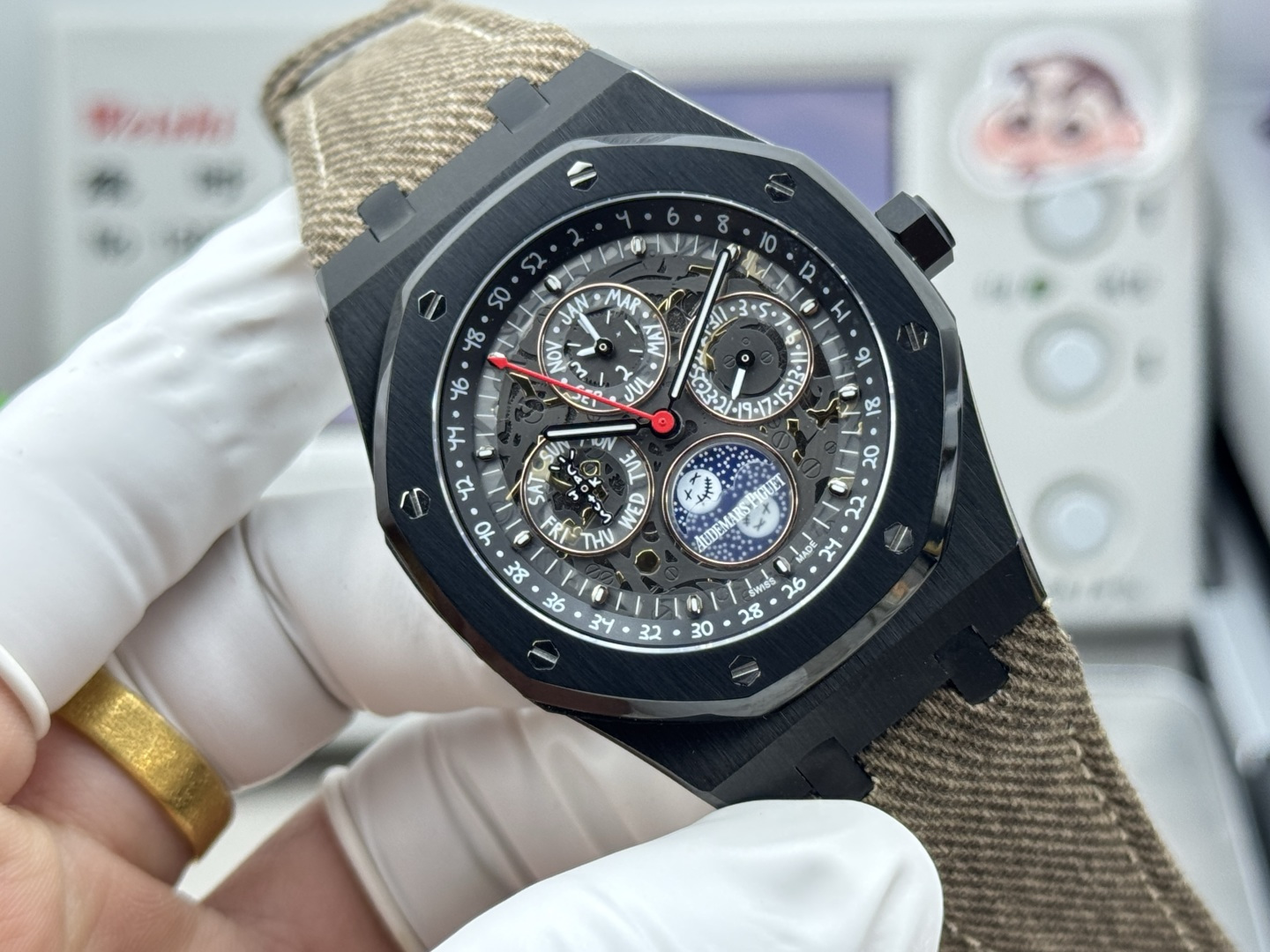
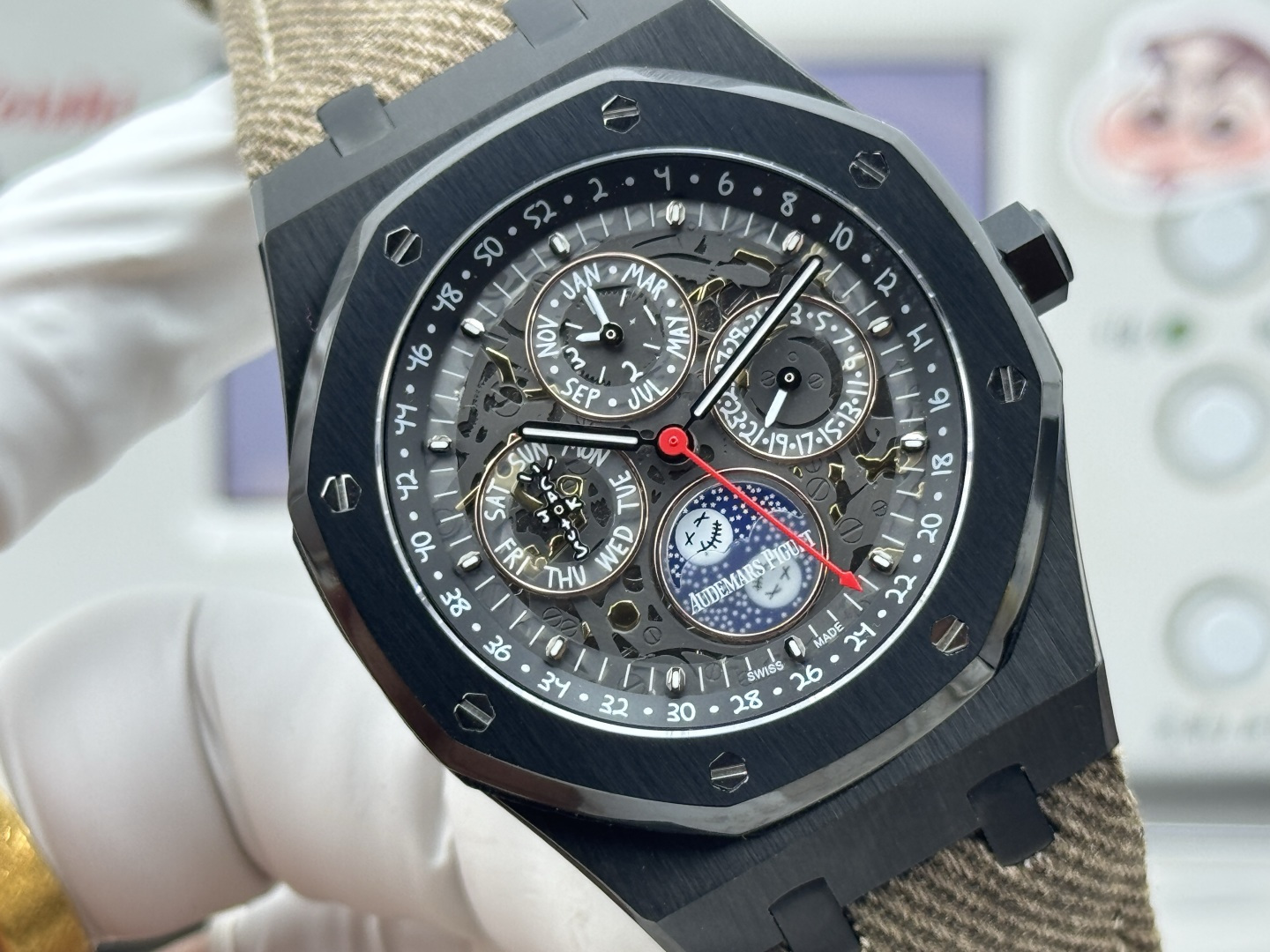
The genuine 26574ST dial features a tapisserie guilloché pattern executed with extraordinary precision. The small squares of the guilloché are uniform in size, depth, and spacing across the entire dial surface, interrupted cleanly and sharply by the sub-dial apertures for the perpetual calendar displays. The colour — typically a rich blue or a silvered grey depending on the variant — has a depth that comes from the combination of the guilloché texture catching light at different angles and a lacquer or galvanic treatment applied over it. The indices are applied, polished to a black-polish standard on their vertical flanks, with lume plots that sit flush and level.
The clone’s dial is pad-printed in its guilloché simulation. Let me be direct about what that means: the texture you see is an optical illusion created by ink, not a physically three-dimensional surface. Under a loupe, the difference is immediate and unambiguous. The genuine guilloché has actual depth — you can see the pyramidal peaks and valleys of the pattern casting micro-shadows as the light angle changes. The pad-printed version is flat. The pattern is accurate in geometry and spacing when viewed at arm’s length, and the colour rendering is genuinely good — whoever sourced this dial got the blue tone close enough that side-by-side comparison requires direct lighting — but the moment you tilt it under raking light, the illusion collapses.
The applied indices are present and accounted for, and they’re better than average for this market segment. The lume application is even. Typography kerning on the ‘AUDEMARS PIGUET’ and ‘ROYAL OAK’ text is acceptably close to the genuine article, though the font weight on ‘PERPETUAL CALENDAR’ reads very slightly heavier than on the authentic dial — a subtle difference that most people will never catch, but it’s there.
The AR coating on the sapphire crystal deserves mention. The genuine 26574ST uses a multi-layer AR treatment that produces a characteristic blue-green bloom under certain lighting conditions. This clone’s coating produces a similar bloom, which suggests the manufacturer is using a double-sided AR coating rather than the single-sided treatments found on lower-tier replicas. It’s not identical — the genuine AP crystal has a more neutral, slightly cooler bloom — but the effort is visible and appreciated.
A pad-printed guilloché is to an actual guilloché what a photograph of a steak is to a steak. It looks right from a distance. It communicates the idea. But it has no substance, no texture, no physical reality. Anyone who has handled the genuine article will know within thirty seconds. Anyone who hasn’t may never know at all.
Under the Caseback & Exposing ‘The Tell’
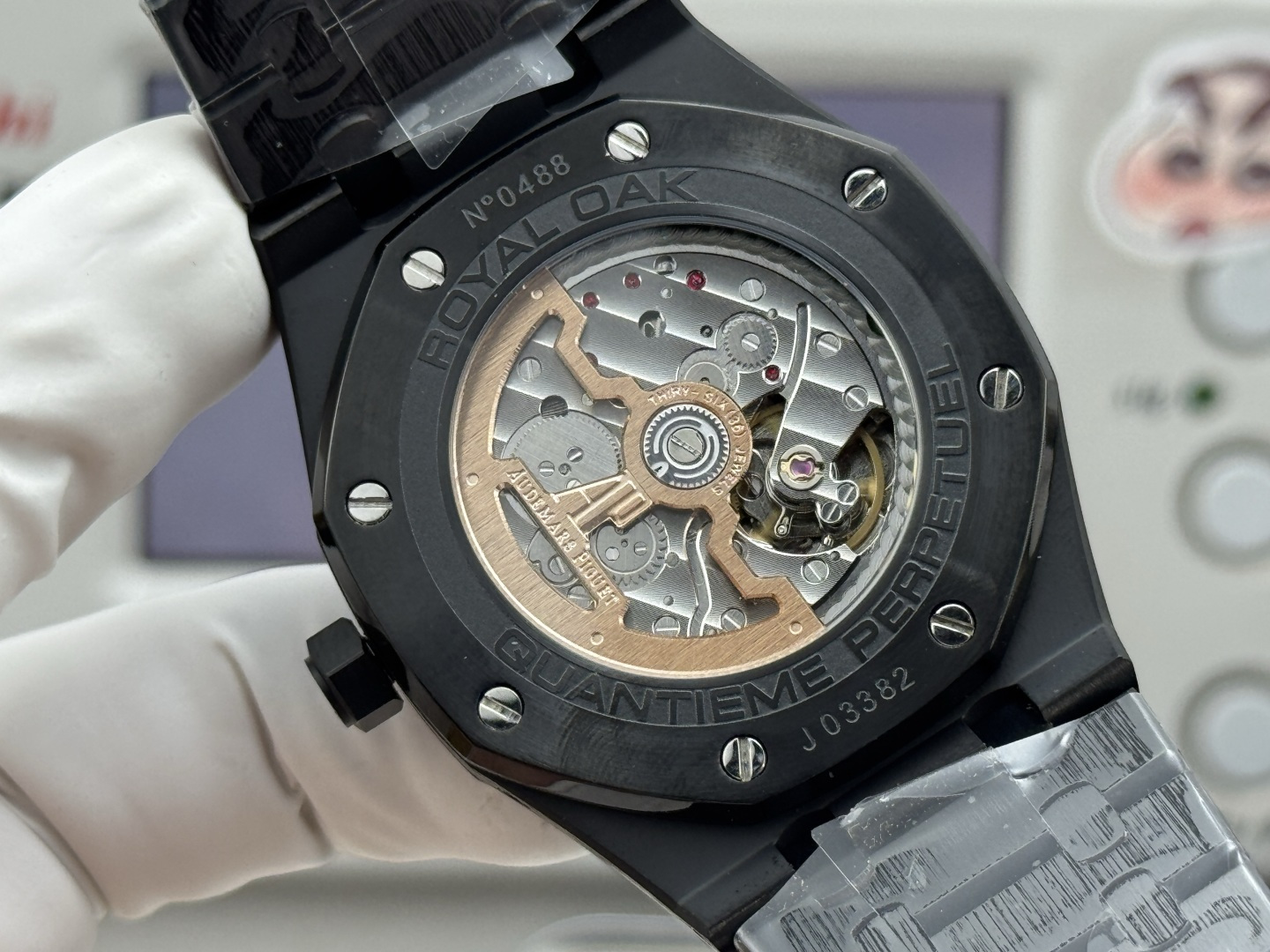
The movement is where the real conversation happens. The spec sheet describes a ‘custom Cal. 5134’ — language that means, in practical terms, a Chinese-manufactured ebauche modified to replicate the functional layout of AP’s genuine Cal. 5134. The genuine movement is a thing of considerable engineering: a perpetual calendar mechanism with a retrograde date display, instantaneous jumping calendar, and a moon phase accurate to one day in 122 years. It is finished with Côtes de Genève striping on the bridges, bevelled and hand-polished anglage on every edge, and a rotor decorated with perlage on its underside.
The clone movement runs. The perpetual calendar functions work — day, date, month, and moon phase all advance correctly. This is not nothing. A functional perpetual calendar mechanism at this price point requires genuine engineering investment, and whoever produces this caliber has done the mechanical homework. Beat rate and amplitude are within acceptable daily wear parameters.
But open the caseback — wait, you can’t, it’s solid, which is the manufacturer’s first smart decision — and if you could, here is what you’d find: Côtes de Genève striping that is machine-applied and slightly uneven in spacing. Rotor finishing that is brushed rather than properly snailed. Perlage on the baseplate that exists but lacks the precise, overlapping circular pattern of genuine Geneva perlage. The anglage on the bridges is present but softly defined, lacking the razor-sharp geometric precision of hand-chamfering. The balance wheel runs, the escapement engages, the column wheel advances the calendar — but the finishing is factory-grade, not atelier-grade.
The tell, if you ever need one, is the rotor. On the genuine Cal. 5134, the oscillating weight is a work of art — brushed sectors alternating with polished sectors, with a chamfered perimeter that catches light with surgical precision. On this clone, the rotor is uniformly brushed, the chamfer is soft, and it wobbles very slightly on its bearing. Not enough to affect timekeeping. Enough to be ‘the tell’ for anyone who knows what to look for.
A Lingering Observation
Here is what I keep returning to as I set this watch down: the gap between what this clone achieves and what the genuine 26574ST delivers is real, measurable, and meaningful to anyone trained to see it. The dial is flat where it should have depth. The movement finishing is adequate where it should be exceptional. The bracelet chamfering is machine-consistent where it should be hand-irregular in the best possible way.
And yet — this watch tells the time. It advances a perpetual calendar correctly. It sits on the wrist with conviction. It reads, from any social distance a human being would actually observe it at, as a Royal Oak Perpetual Calendar.
The question that lingers isn’t whether the clone is ‘good enough.’ The question is: good enough for whom, and good enough for what? That answer is different for every person who asks it, and I’m not sure the answer is as obvious as the Swiss watch industry would prefer you to believe.