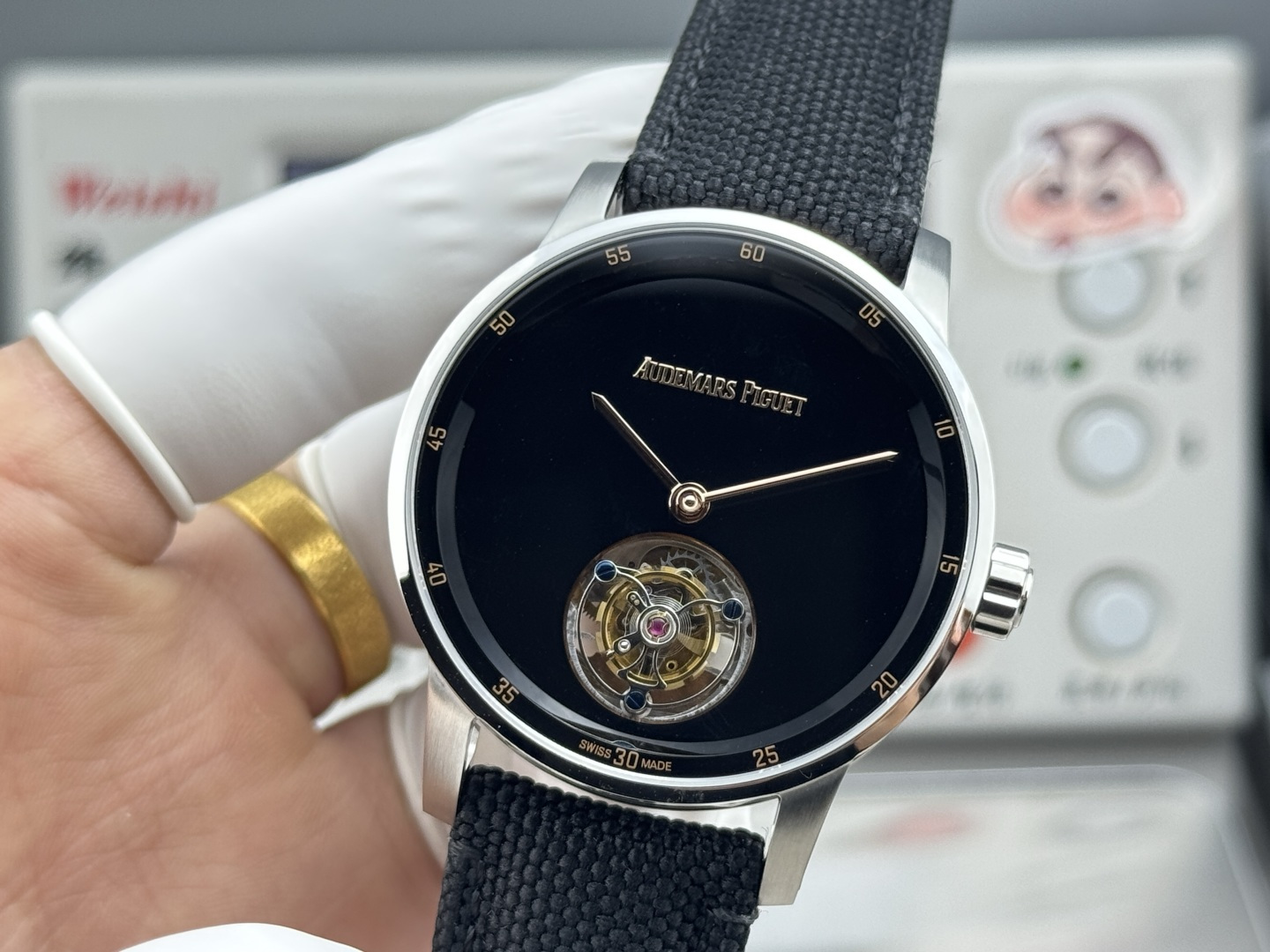
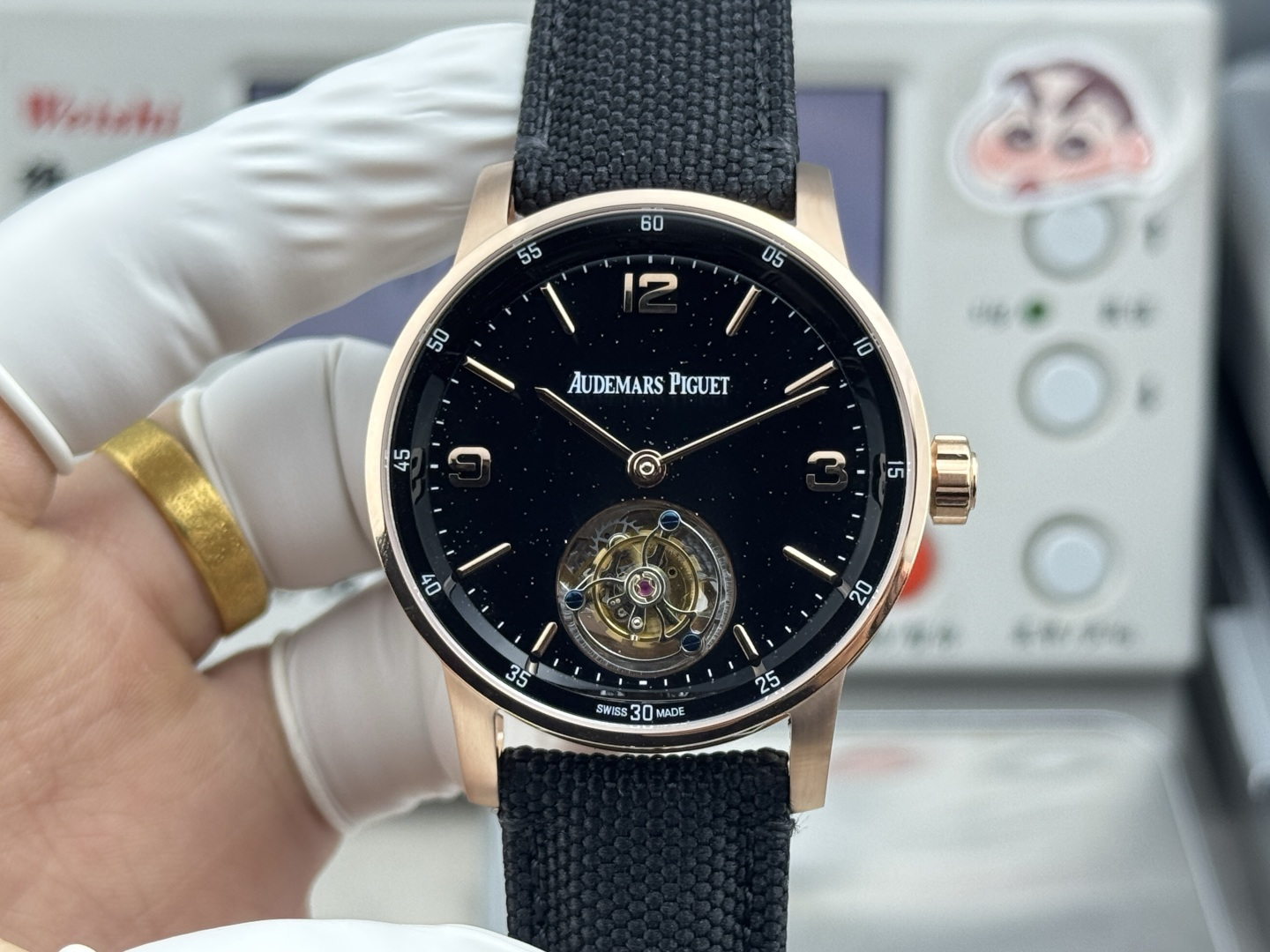
Let’s be honest about something the watch press rarely wants to say out loud: Audemars Piguet has spent the better part of a decade turning the act of buying a watch into a humiliation ritual. You want a CODE 11.59 Tourbillon? Fantastic. First, you’ll need to have spent enough on AP’s less desirable references to prove your loyalty. Then you’ll wait. Then you’ll get a call — maybe. Then you’ll pay somewhere north of $150,000 USD for the privilege of owning a watch that a significant portion of the internet still debates aesthetically. The double-curved sapphire case, the inner bezel ring, the octagonal mid-section — it’s a divisive piece, and the brand knows it. The waitlist isn’t just gatekeeping; it’s manufacturing desire through artificial scarcity. The grey market immediately corrected the price upward. The whole ecosystem is, frankly, absurd.
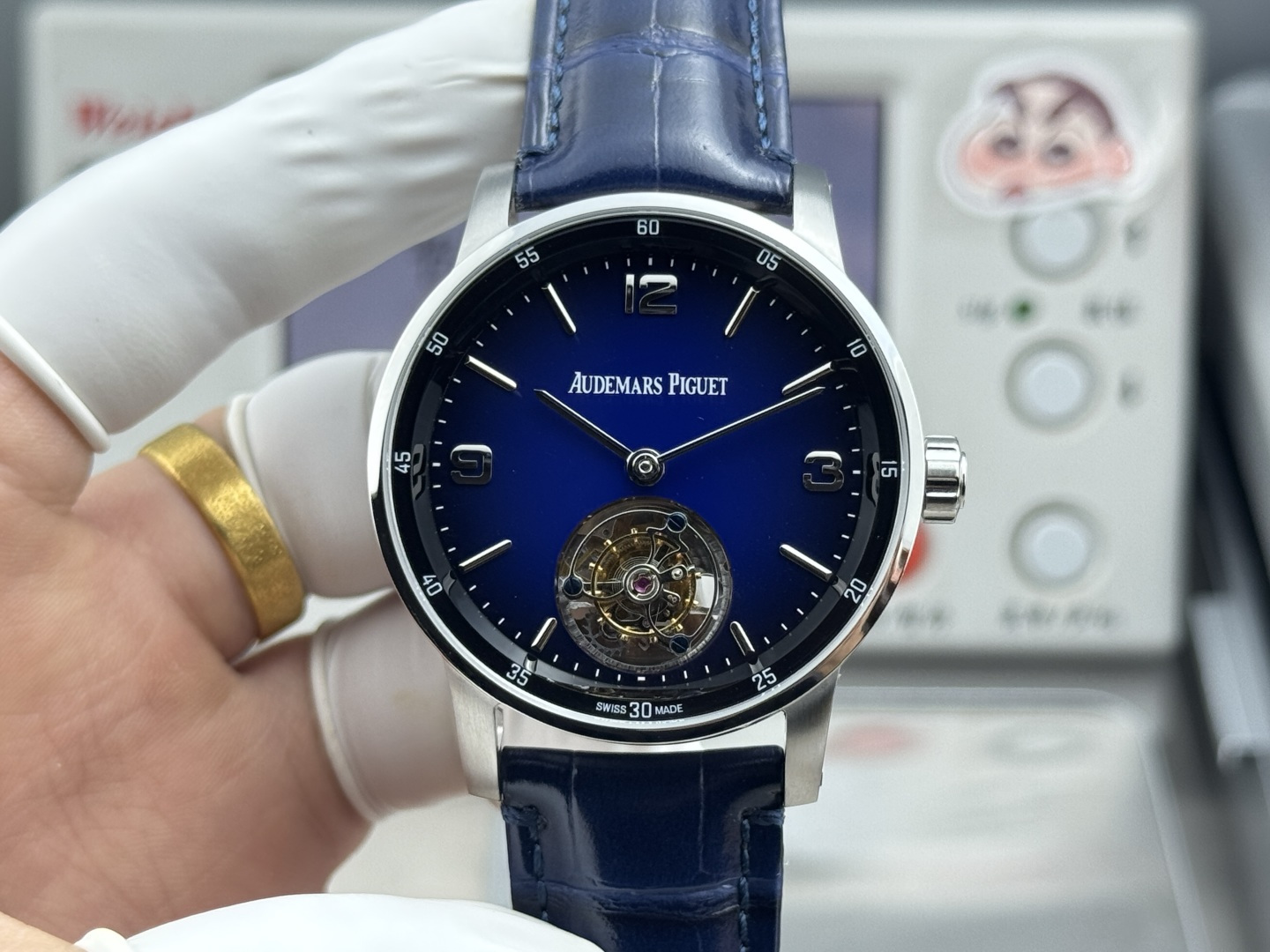
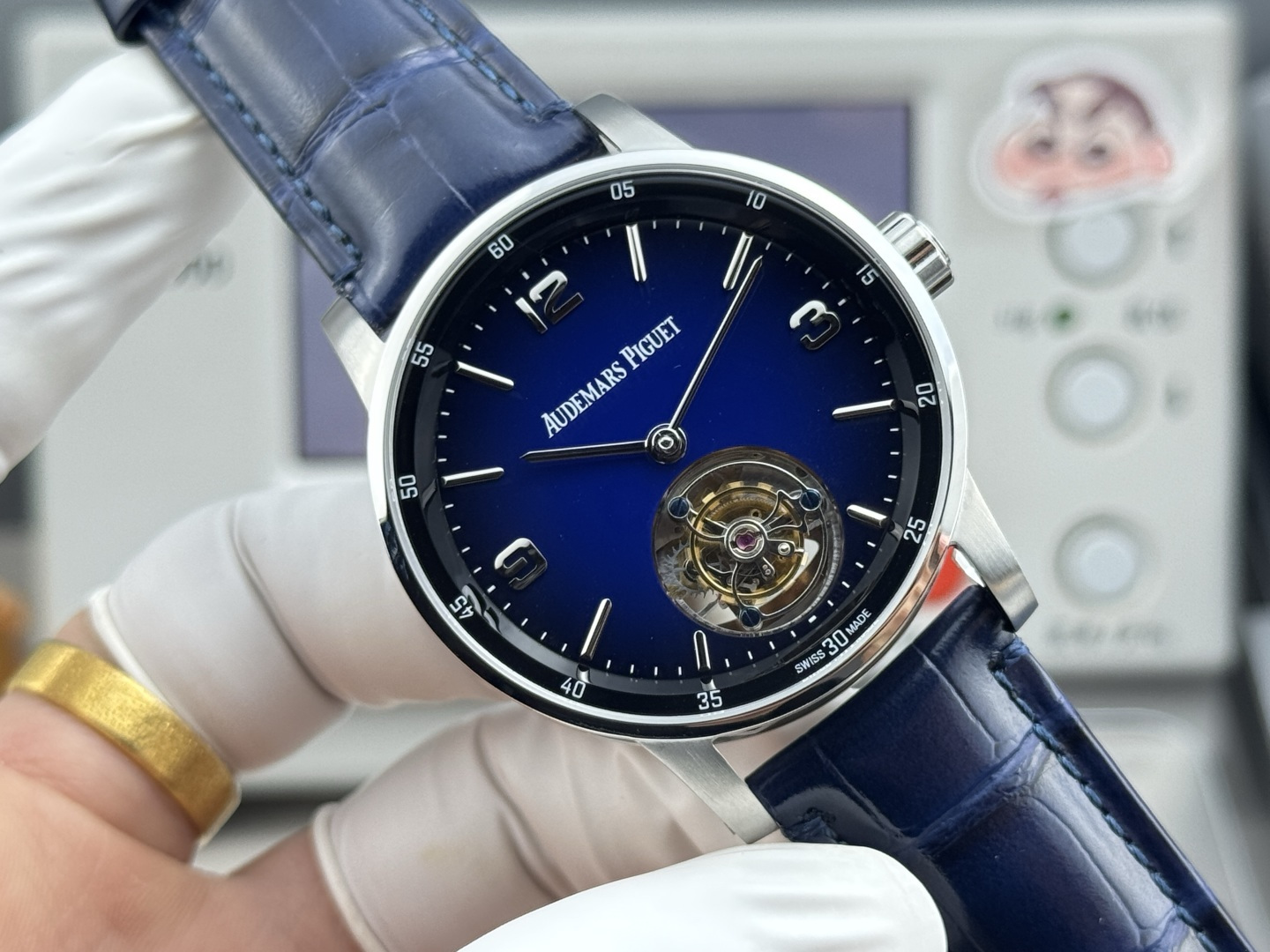
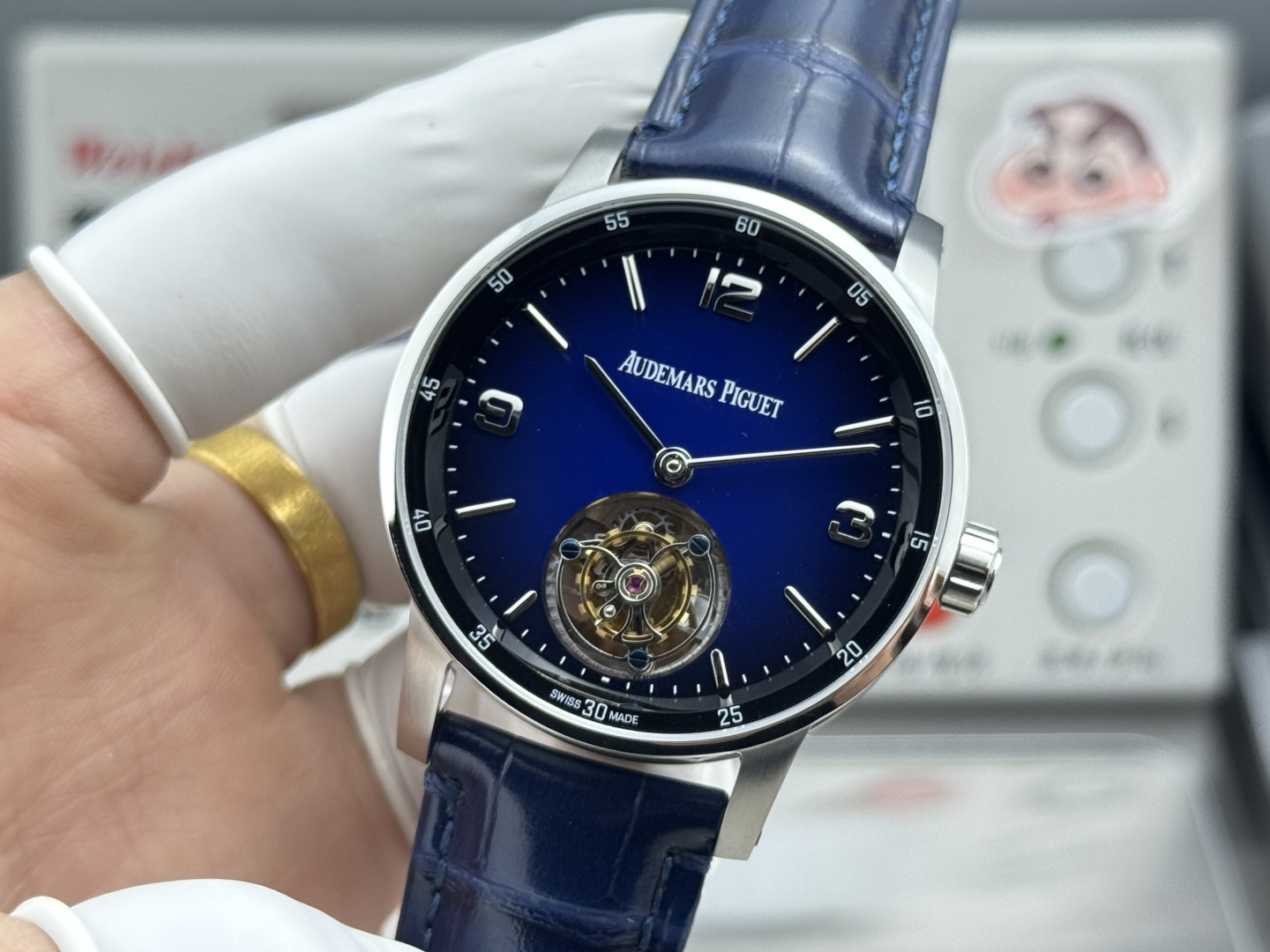
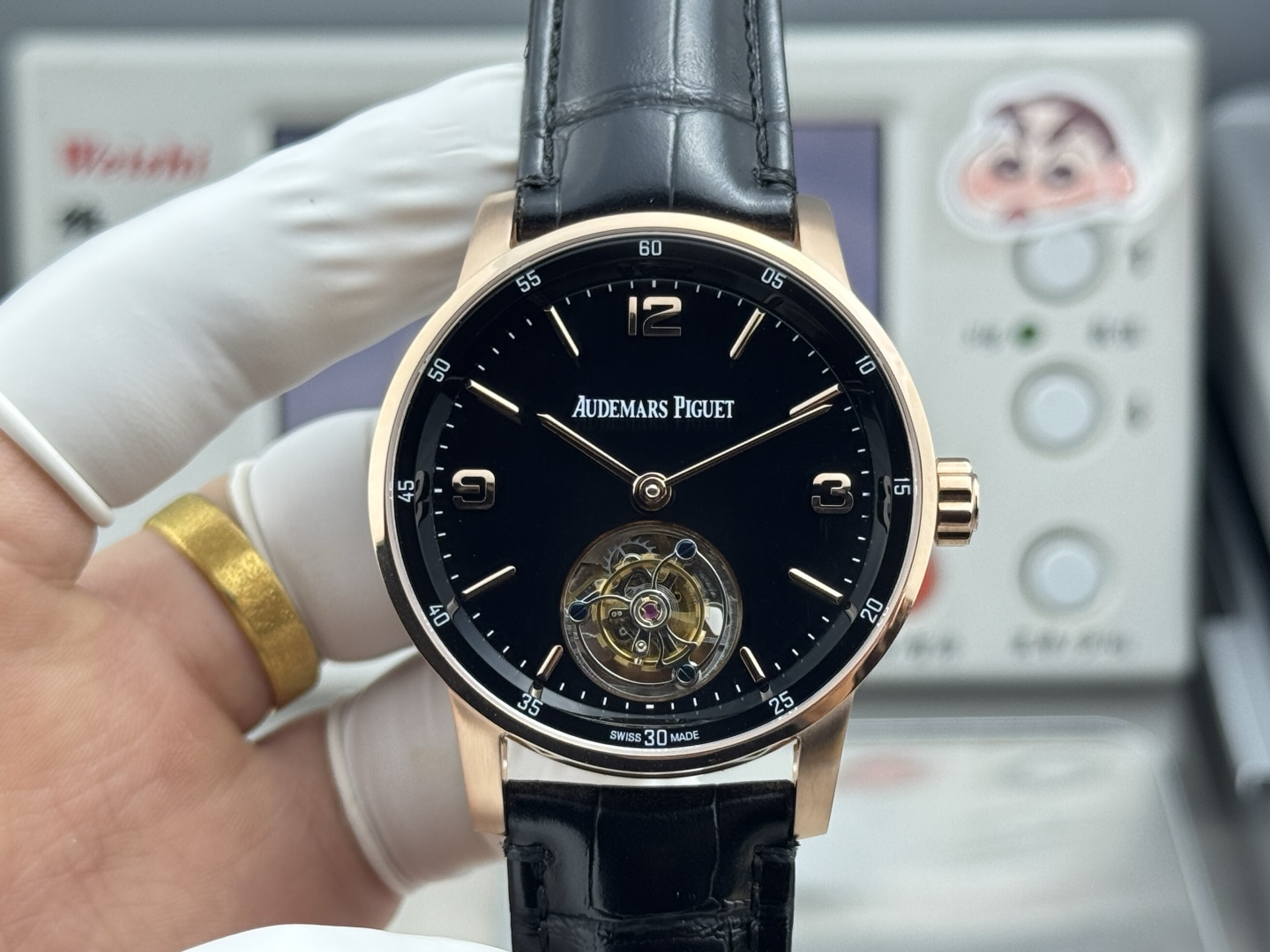
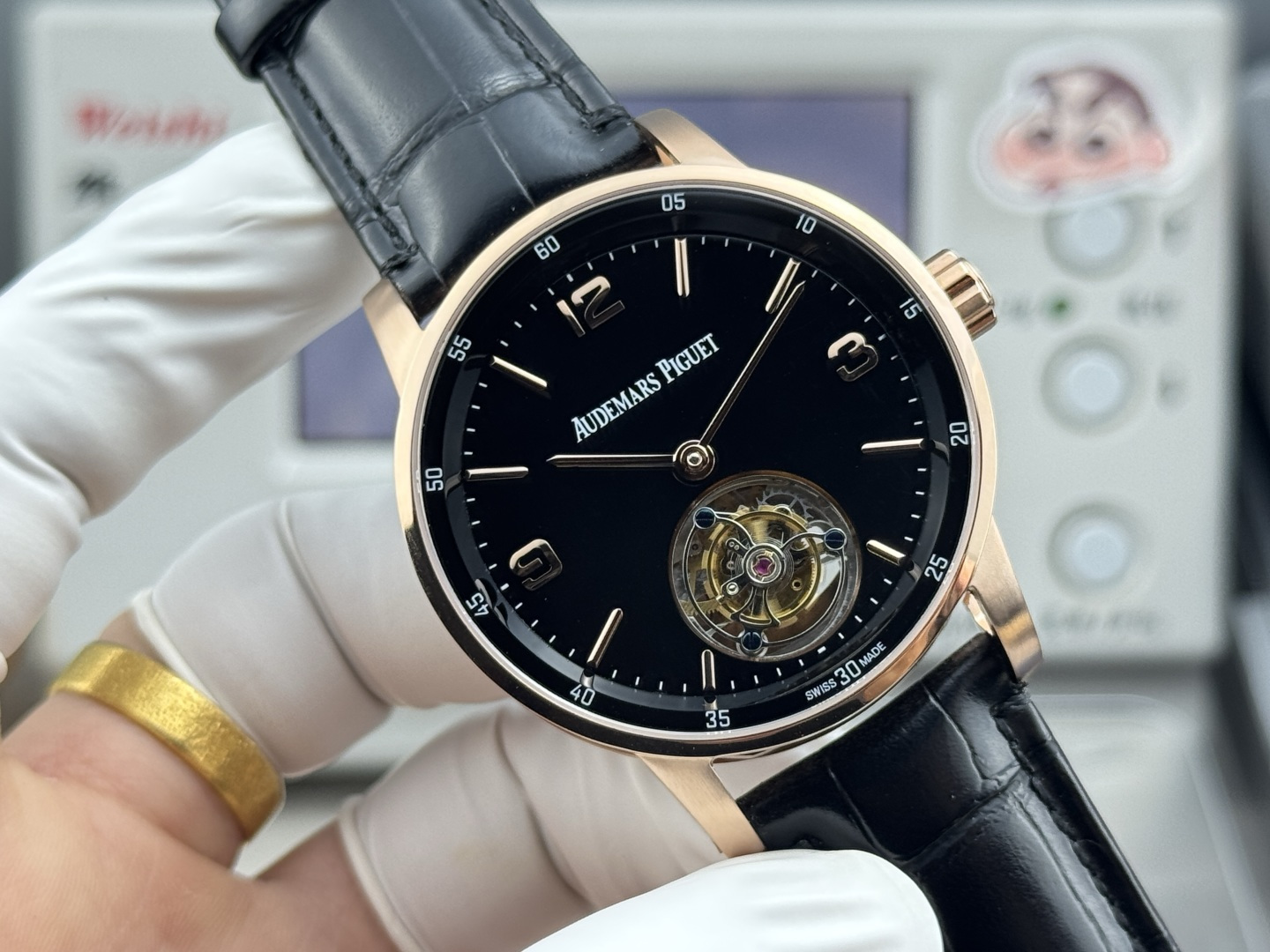
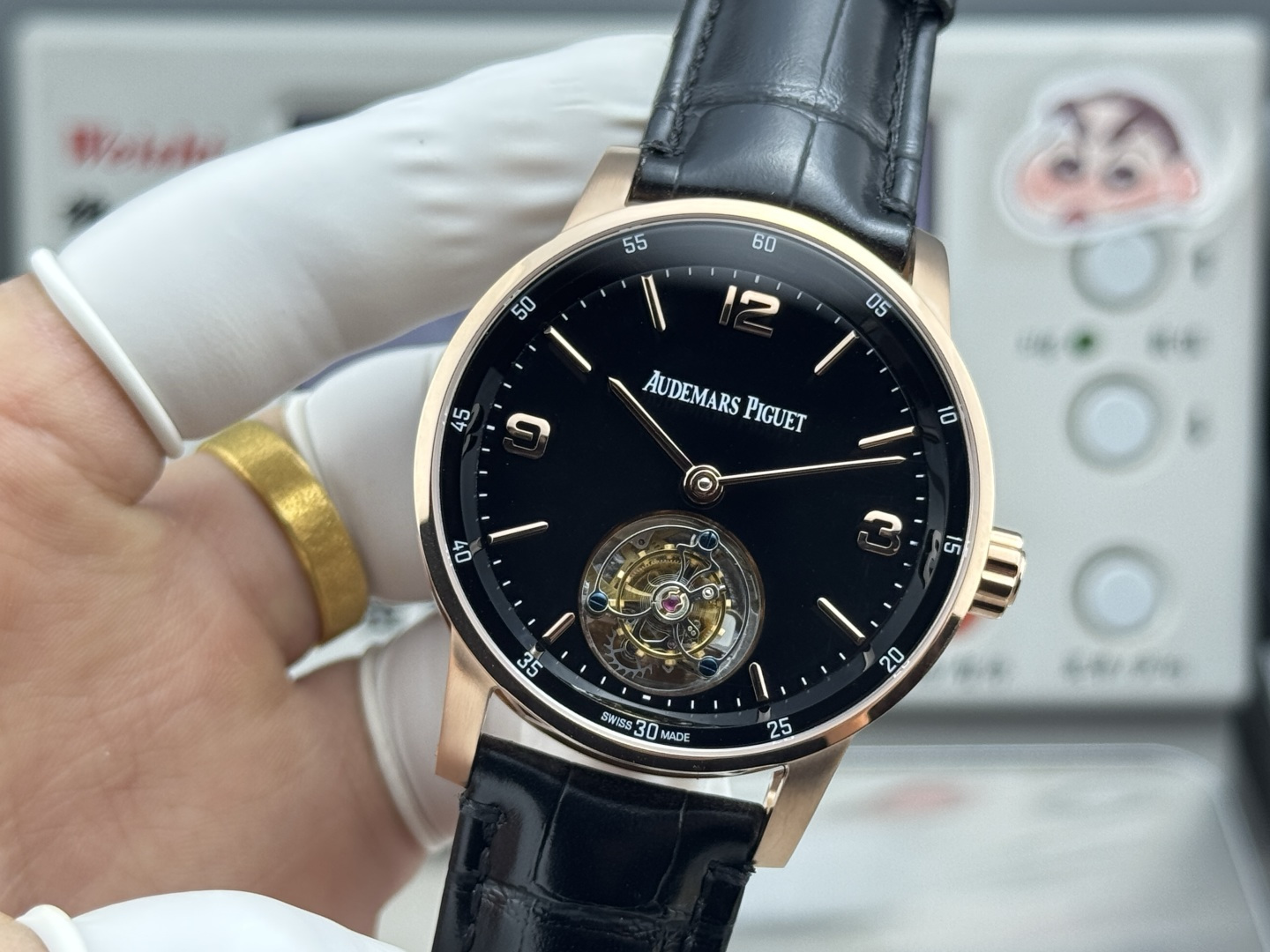
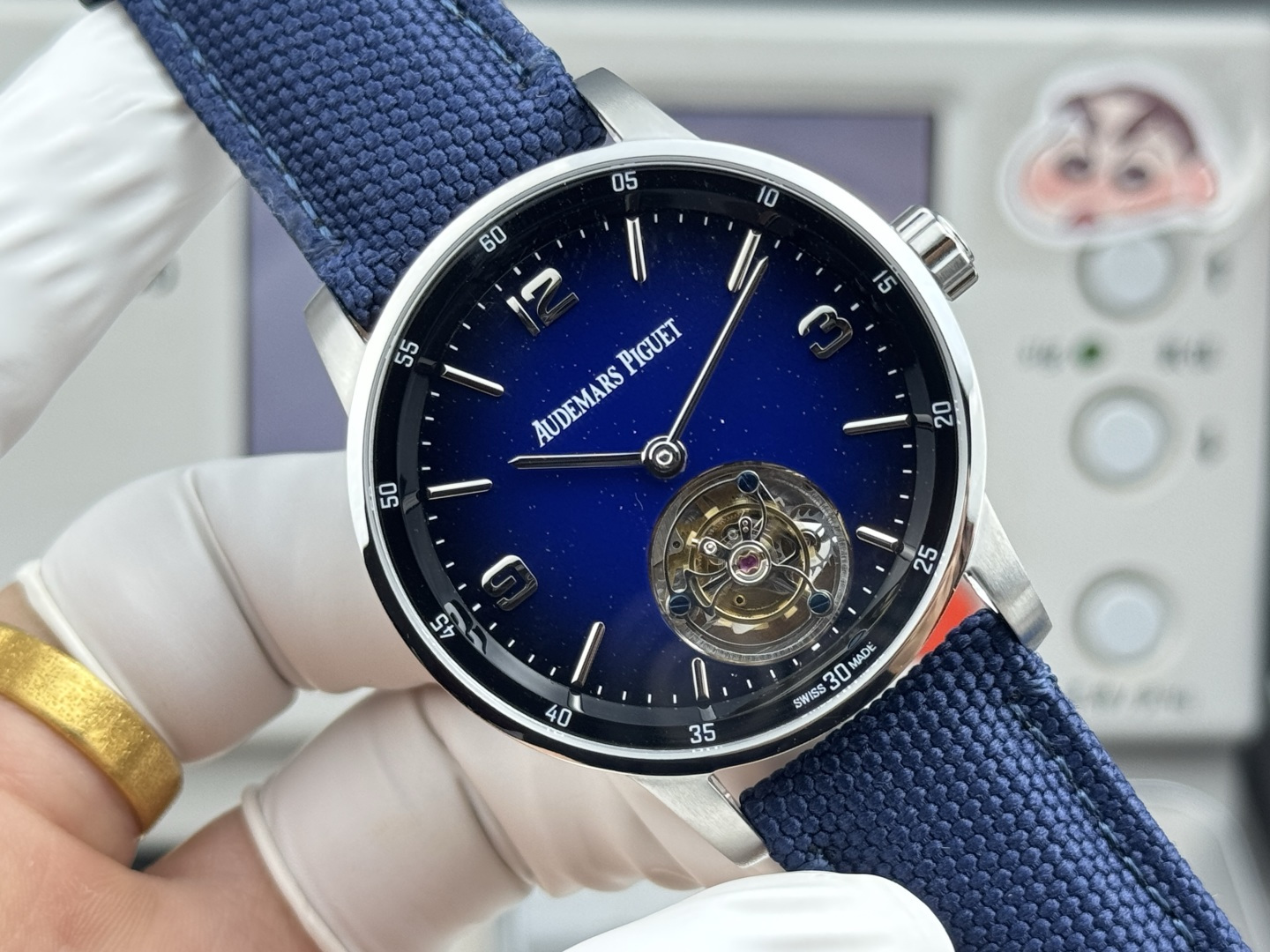
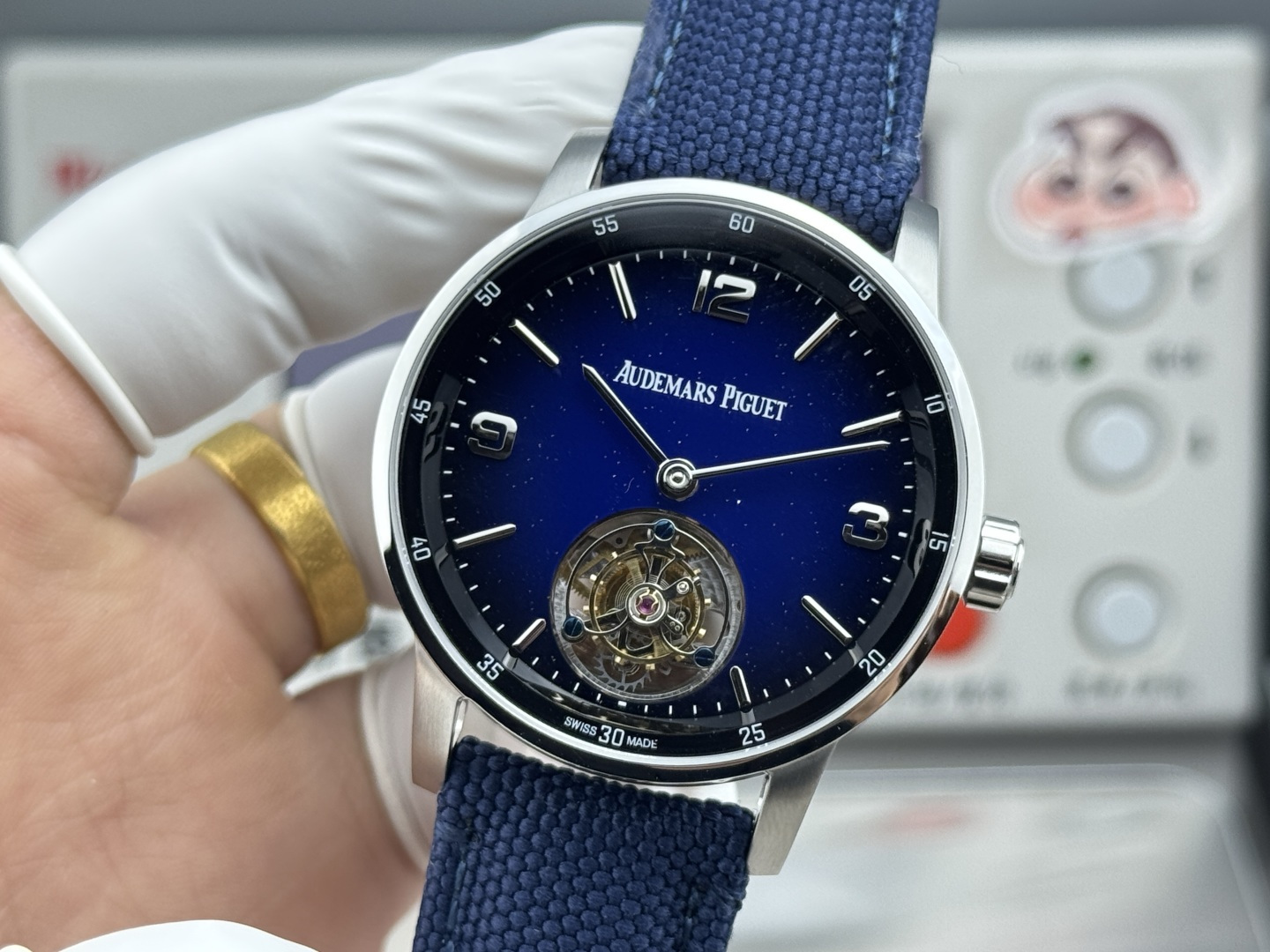
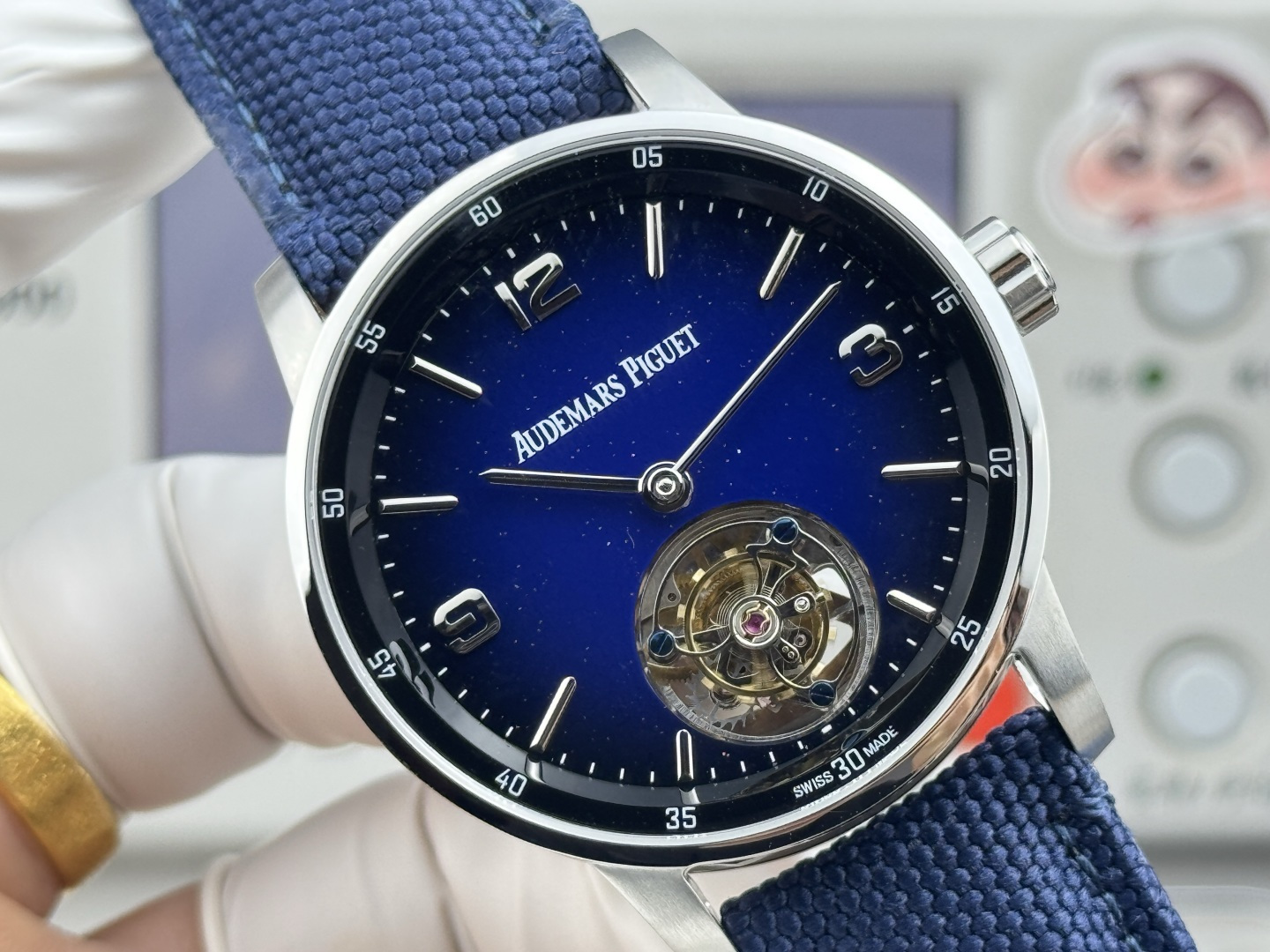
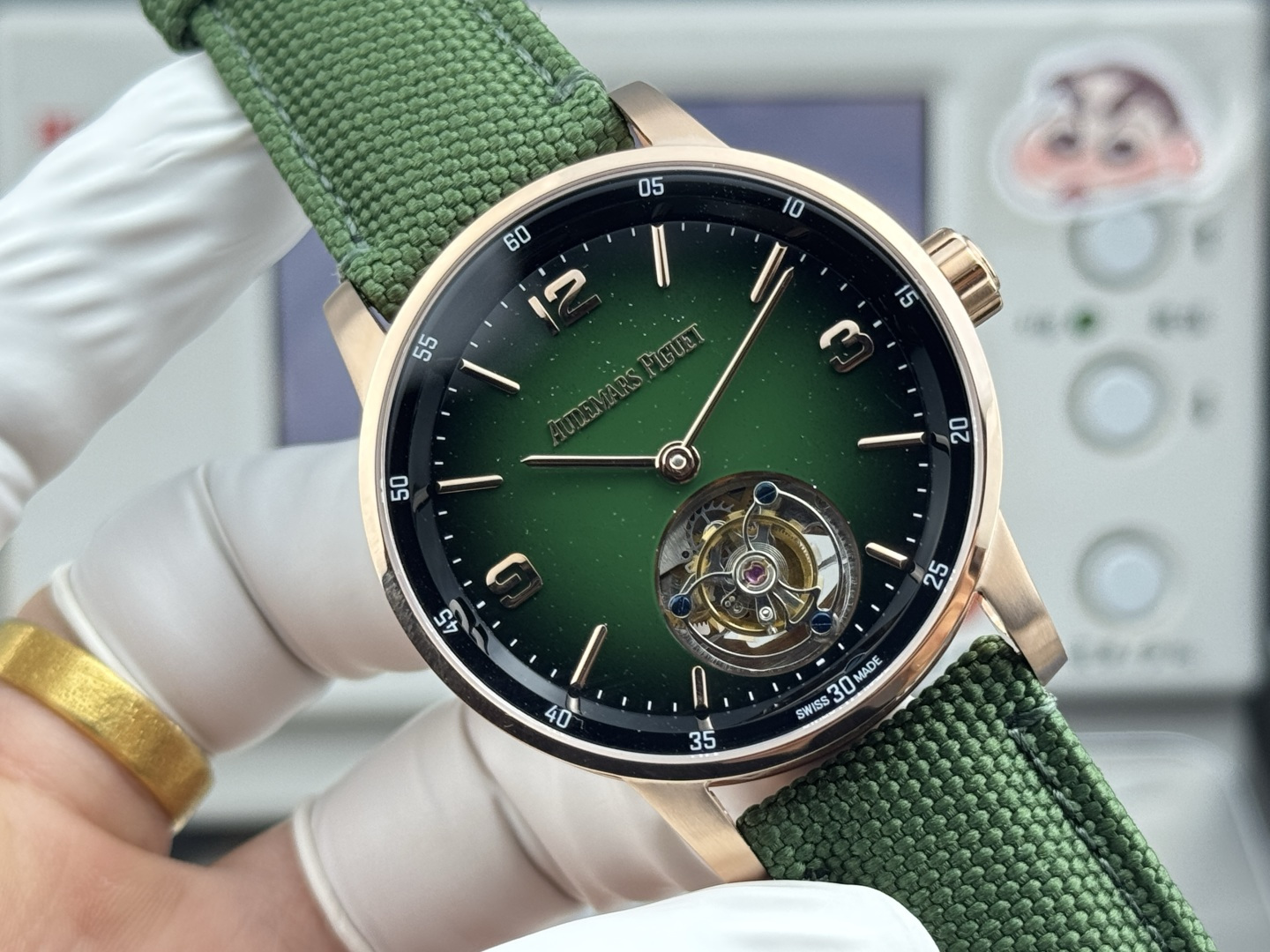
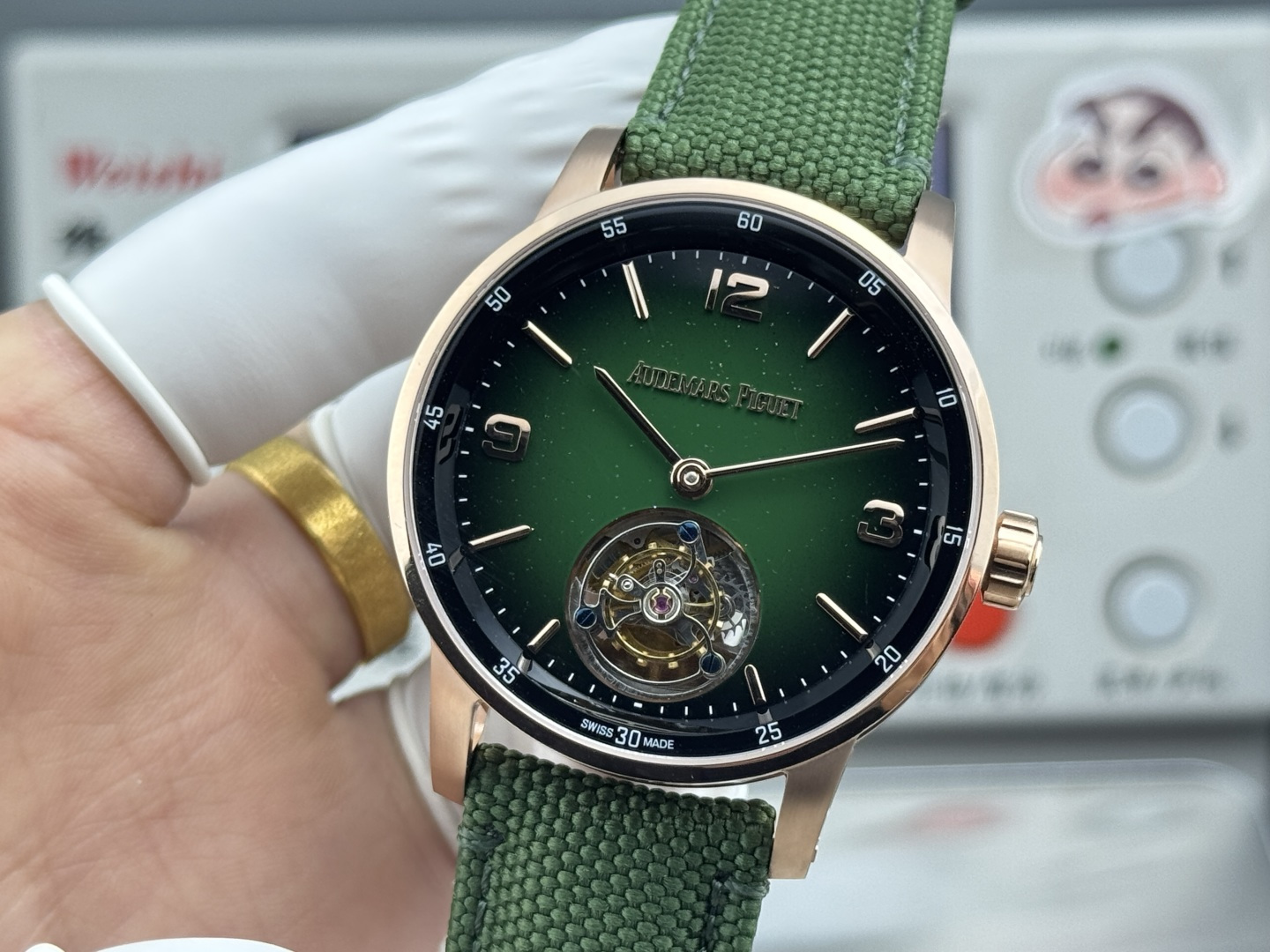
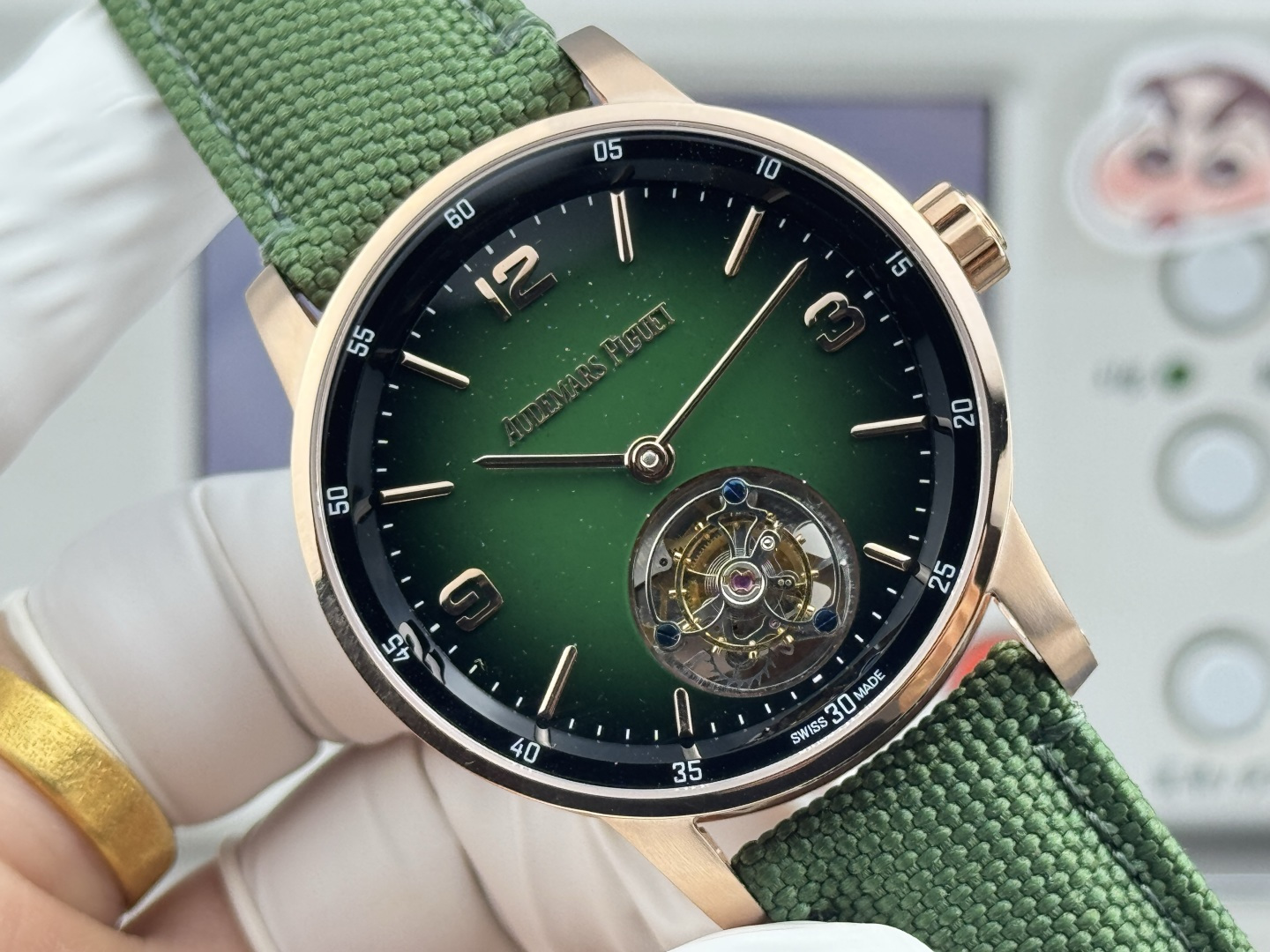
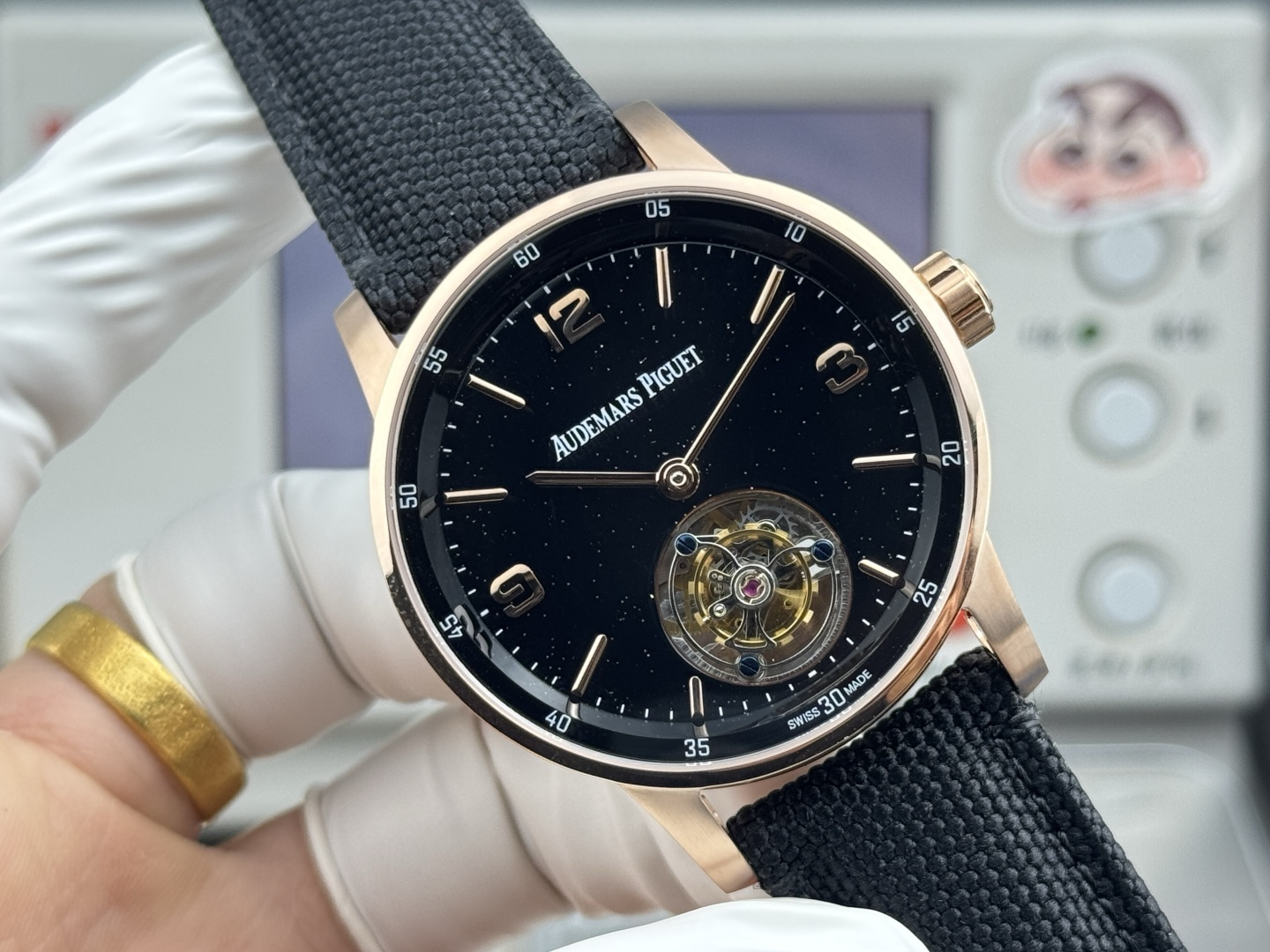
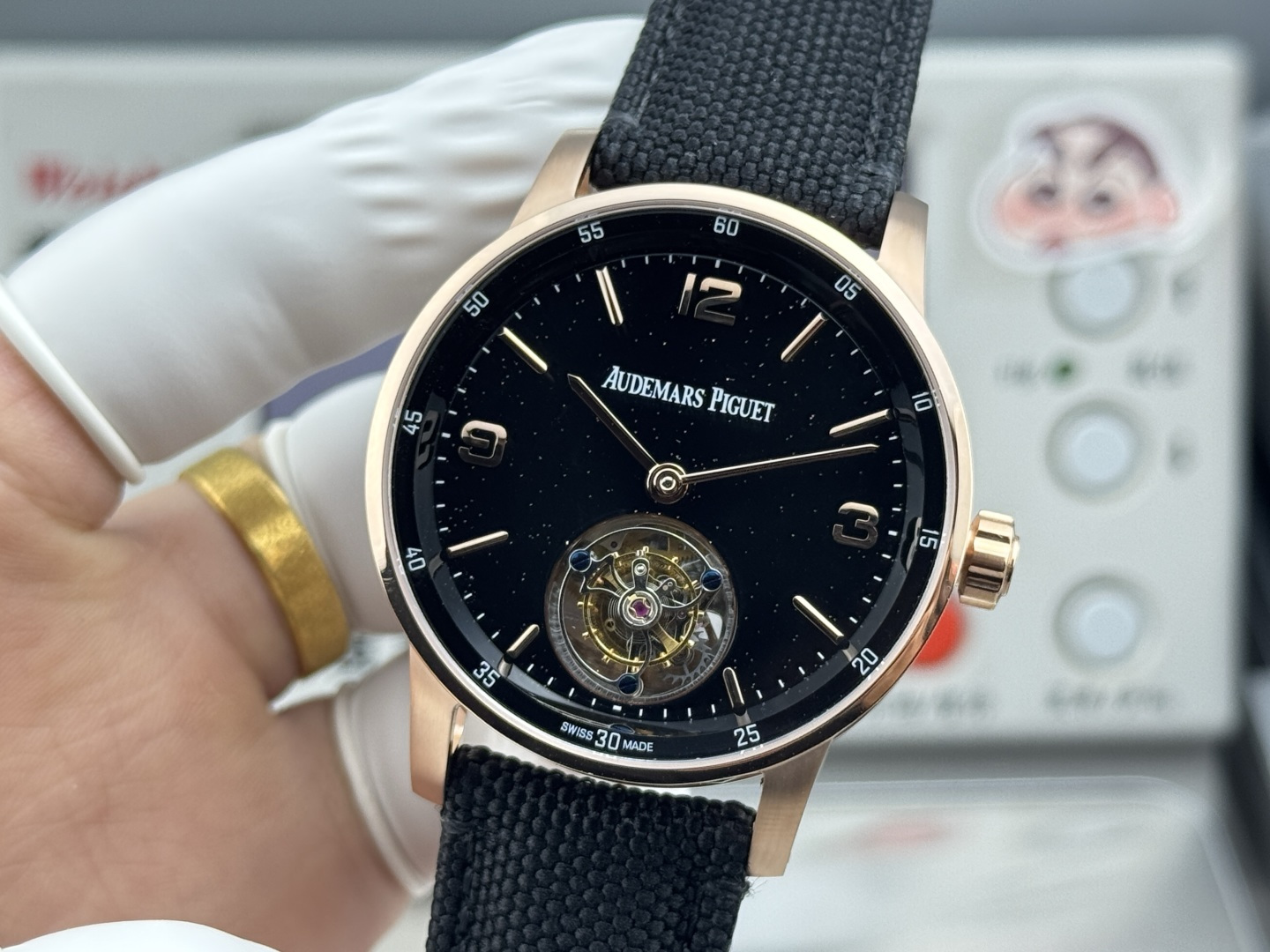
Which brings us here. A 1:1 clone of the reference 26396, the full-dress Tourbillon variant with an aventurine enamel dial, sitting on my desk right now. I’ve spent three days with it under a 10x loupe, on the wrist, under different light sources, and next to reference photography. Here is my unfiltered assessment.
First Impressions & The Weight of Steel
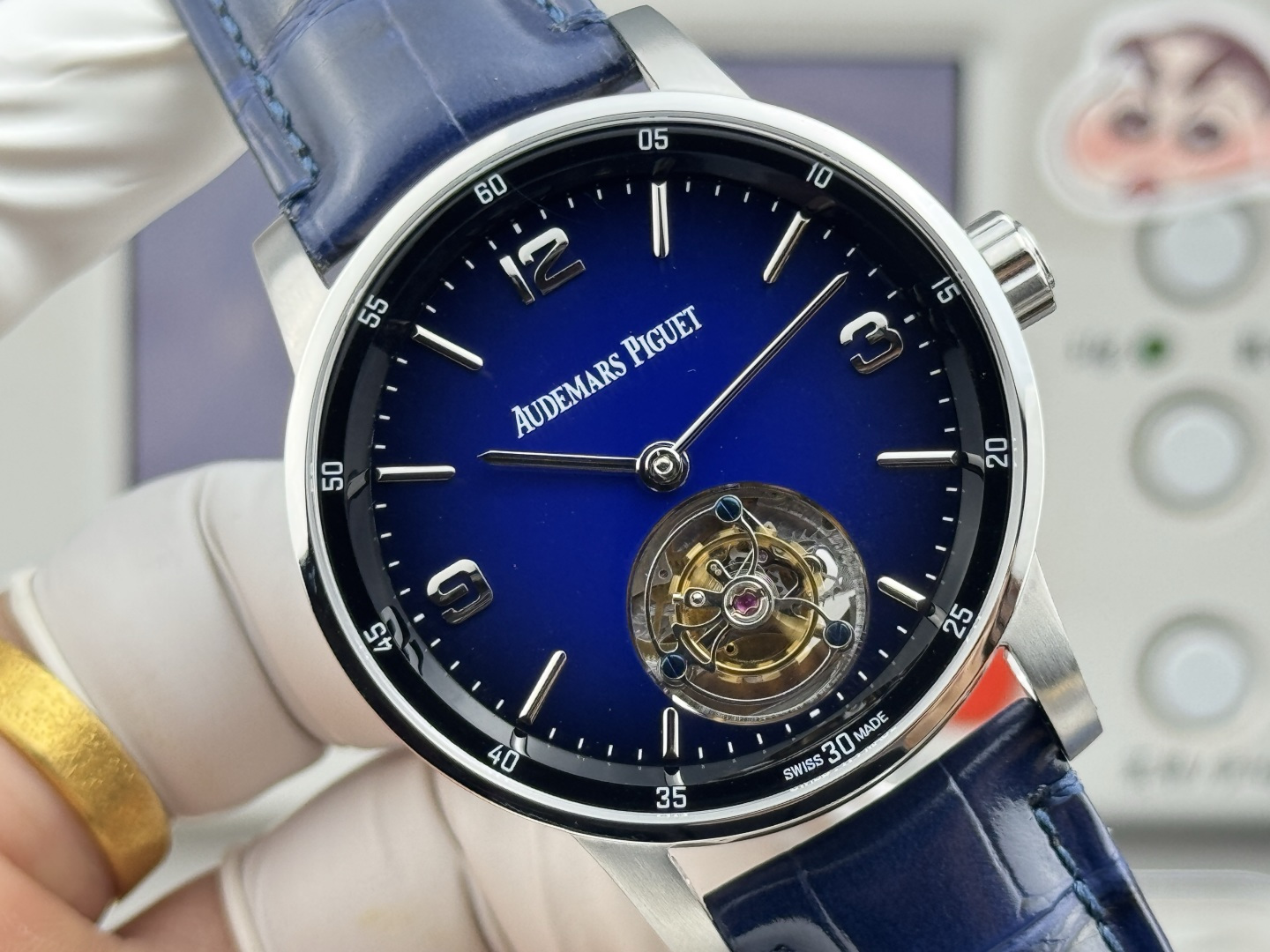
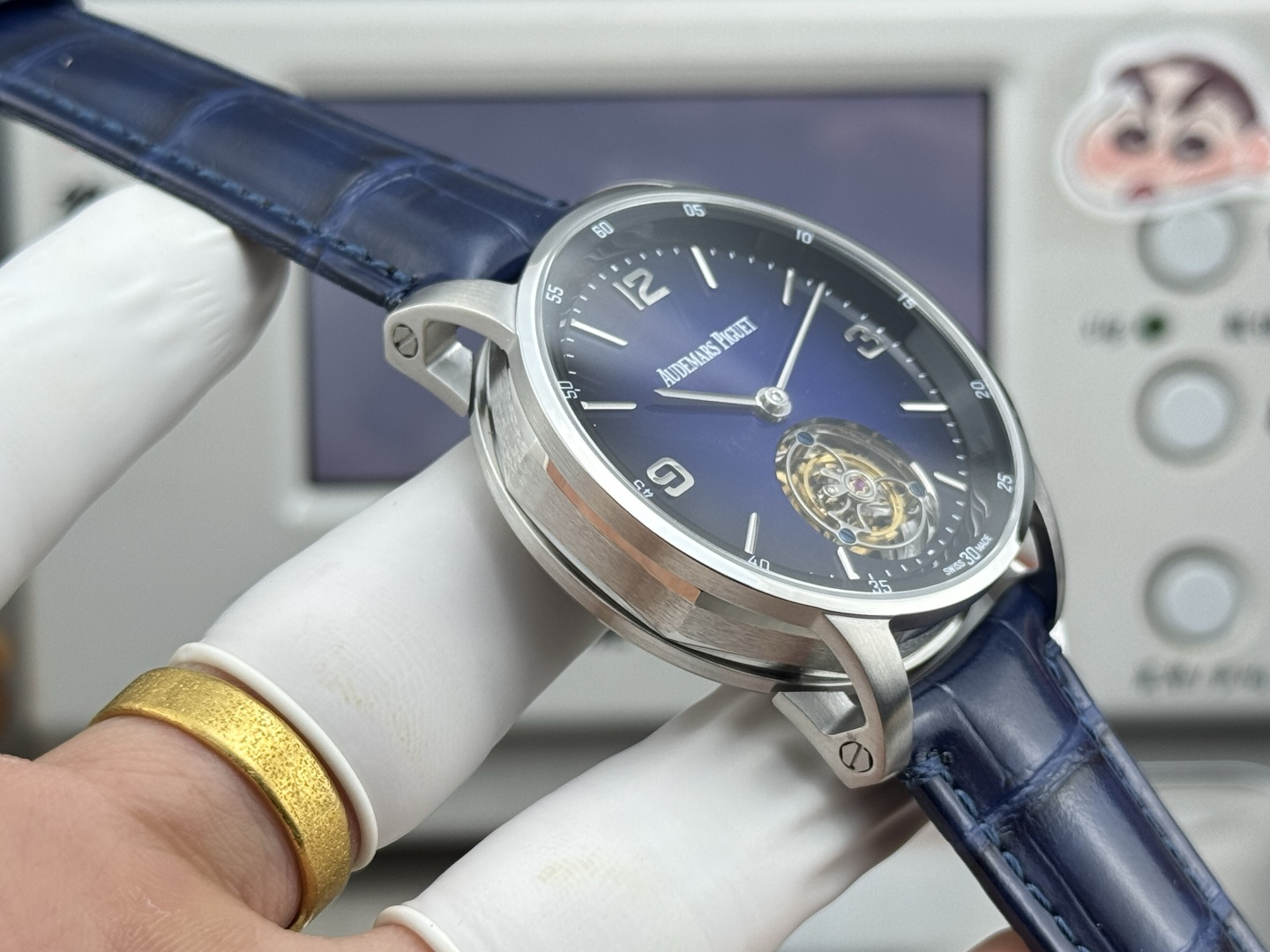
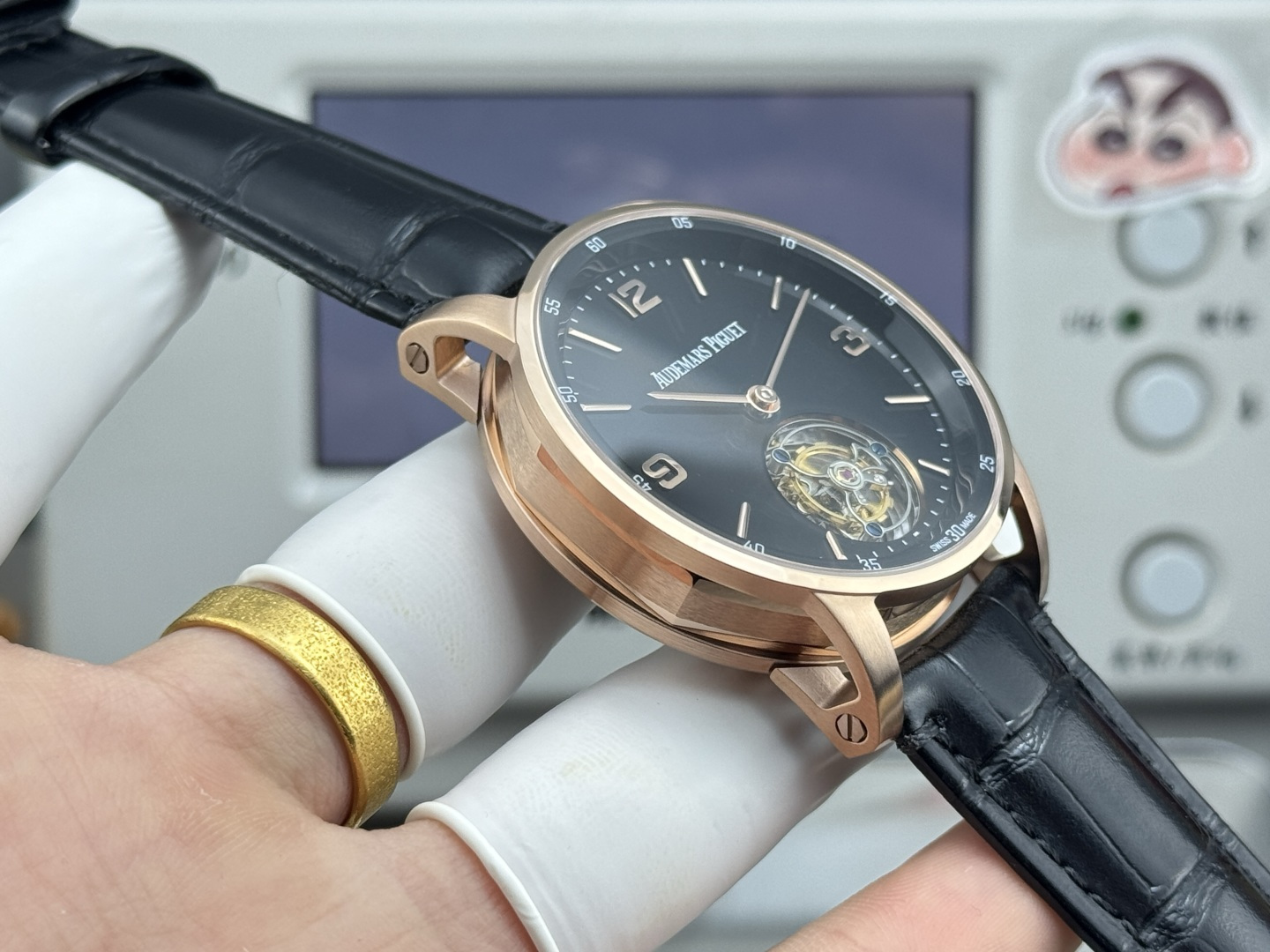
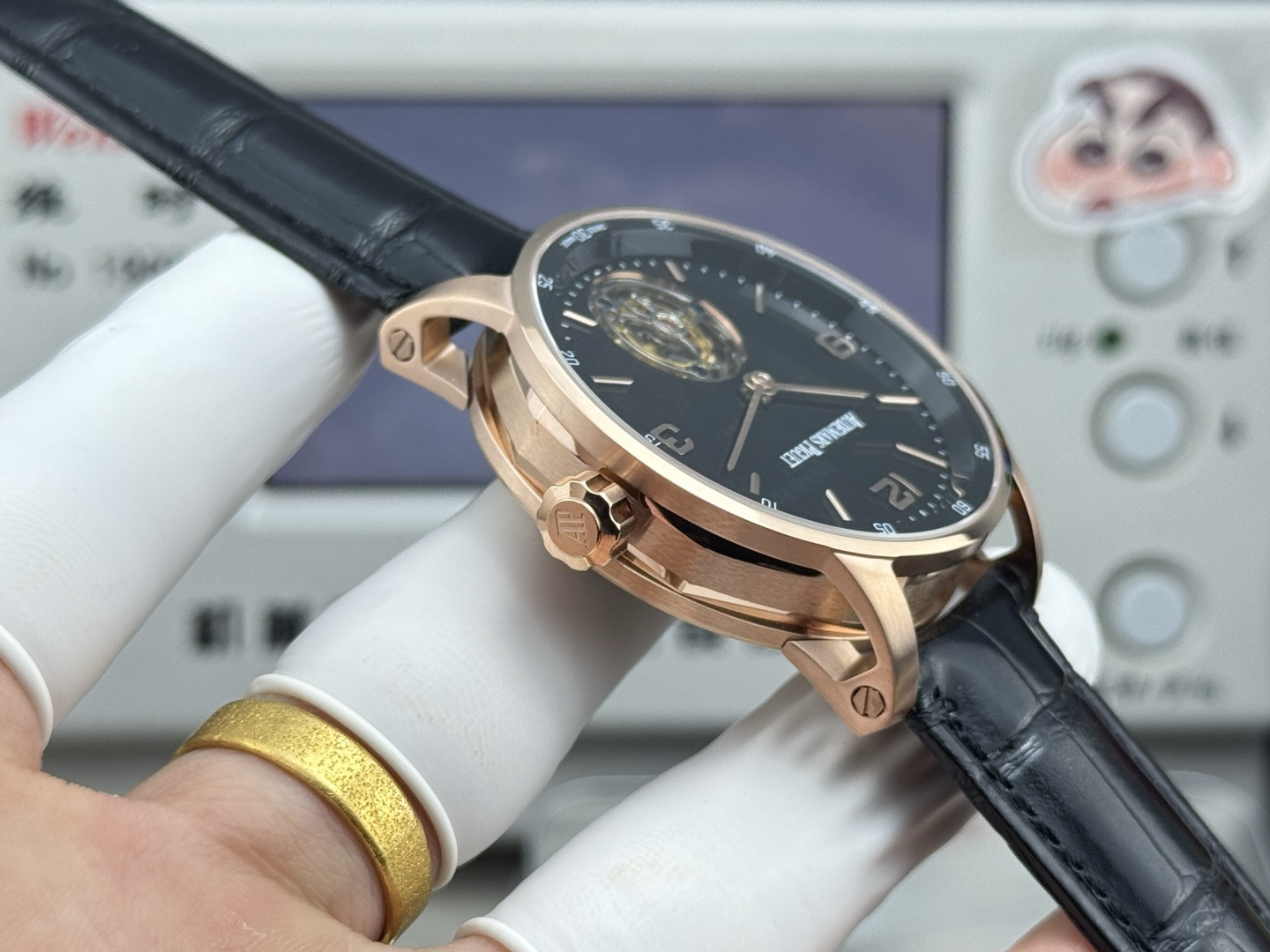
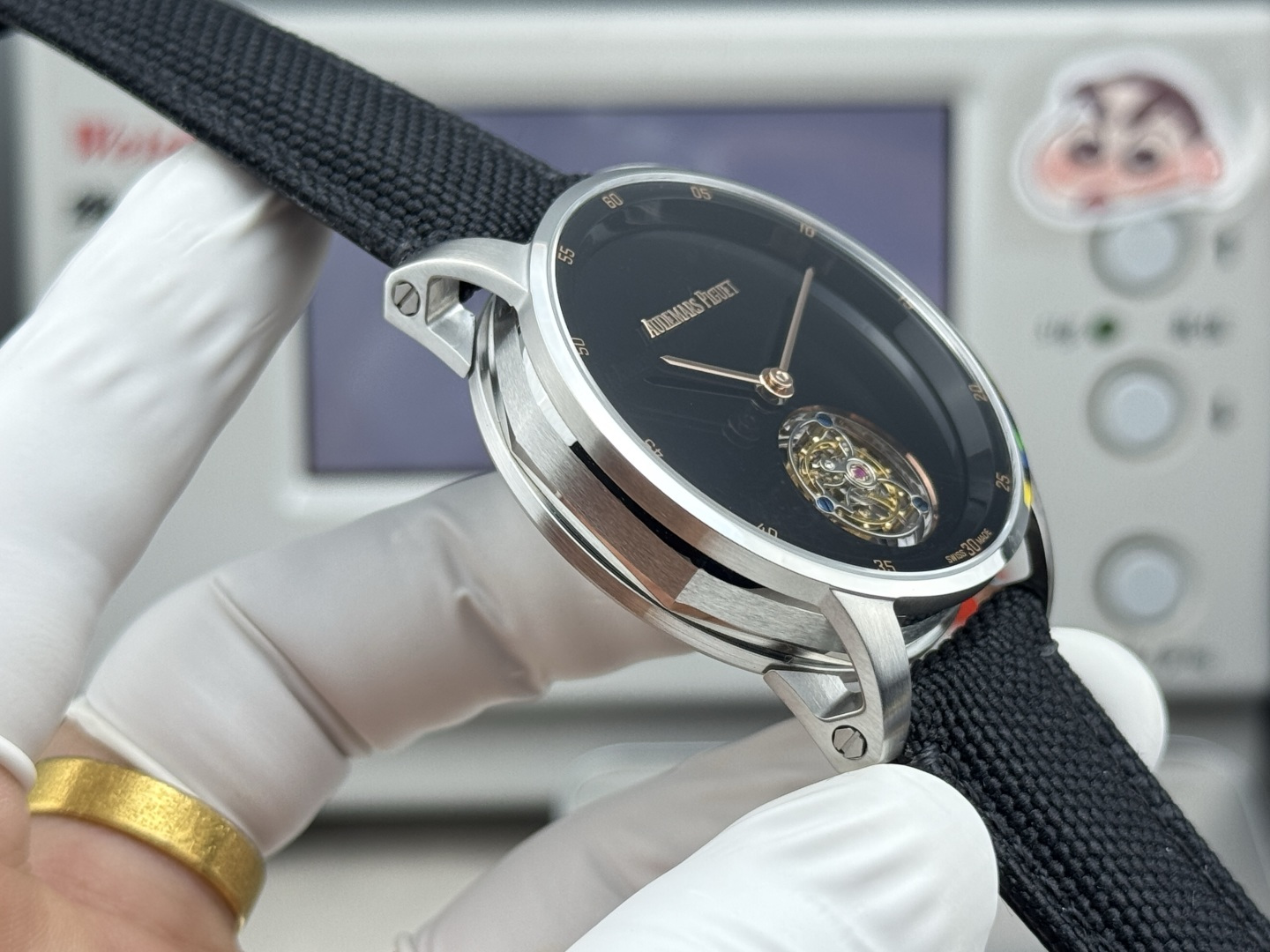
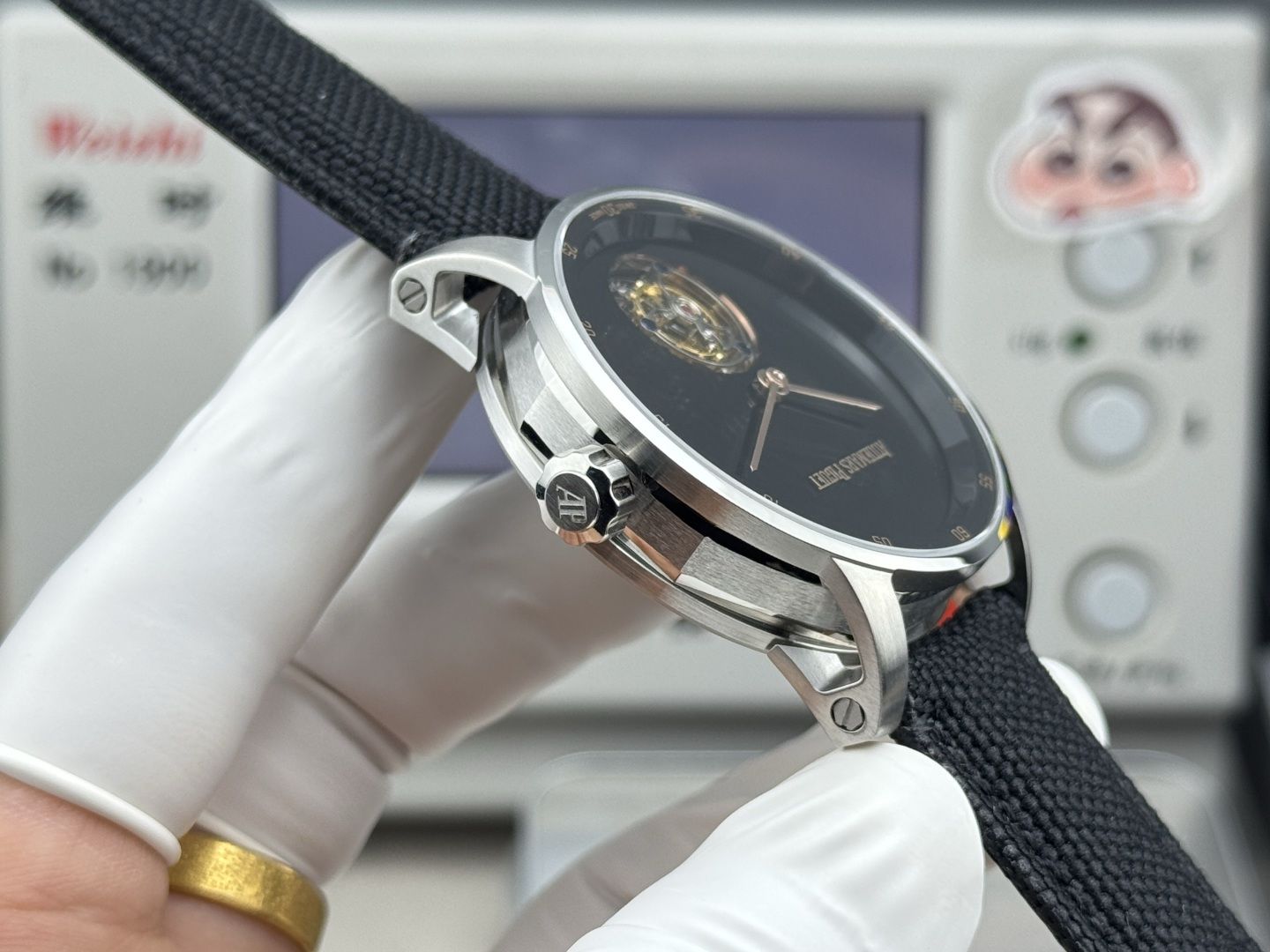
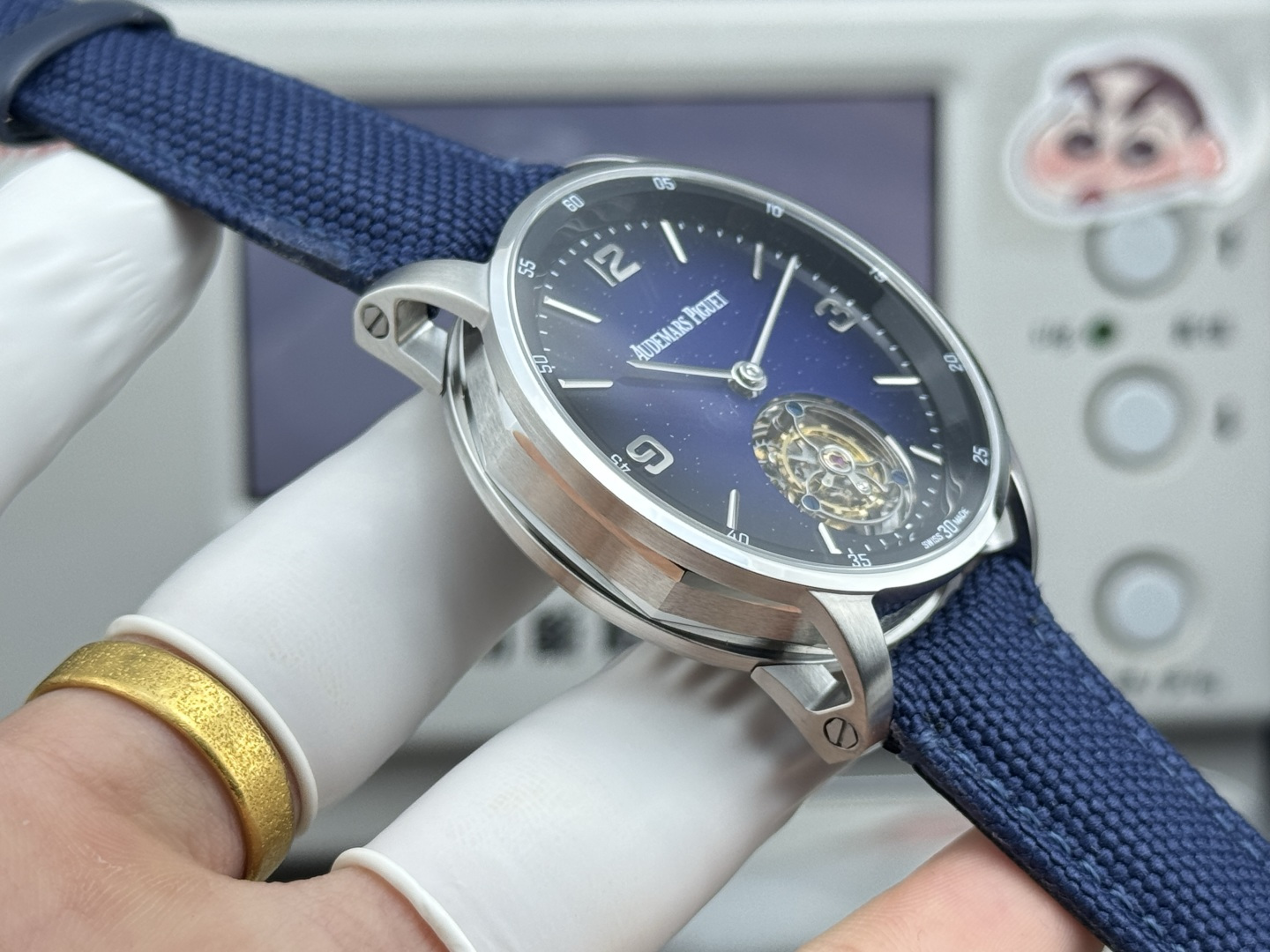
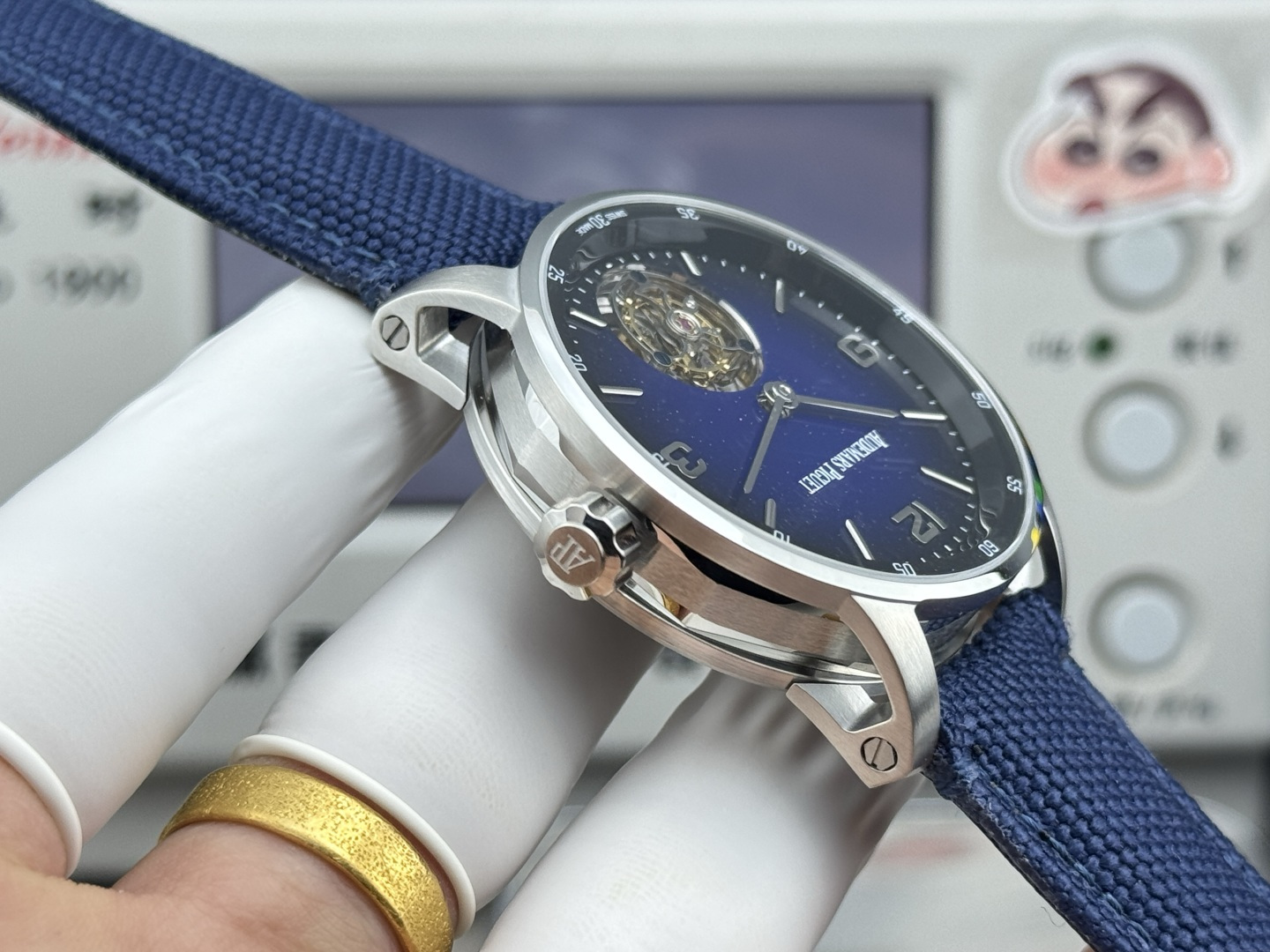
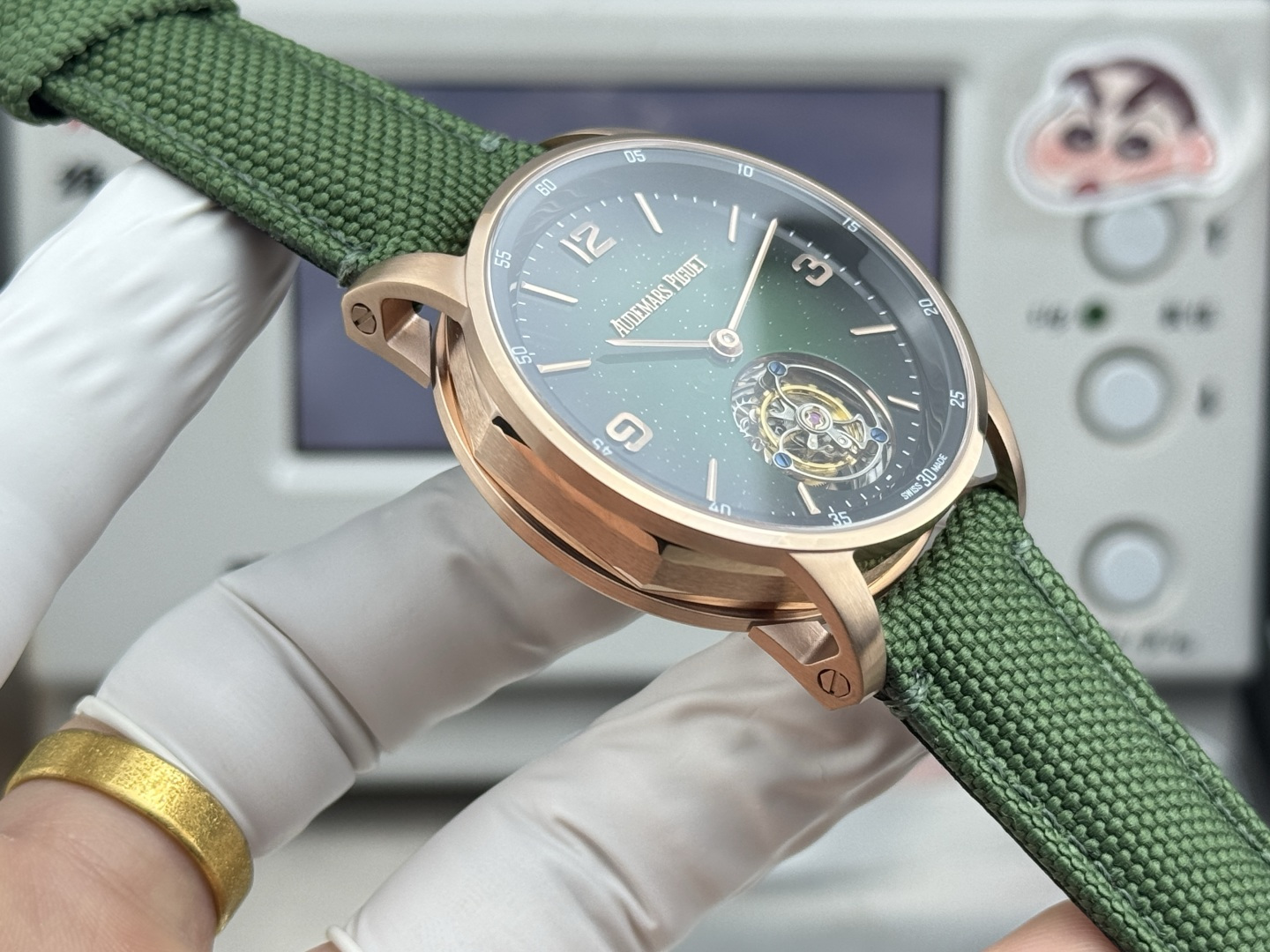
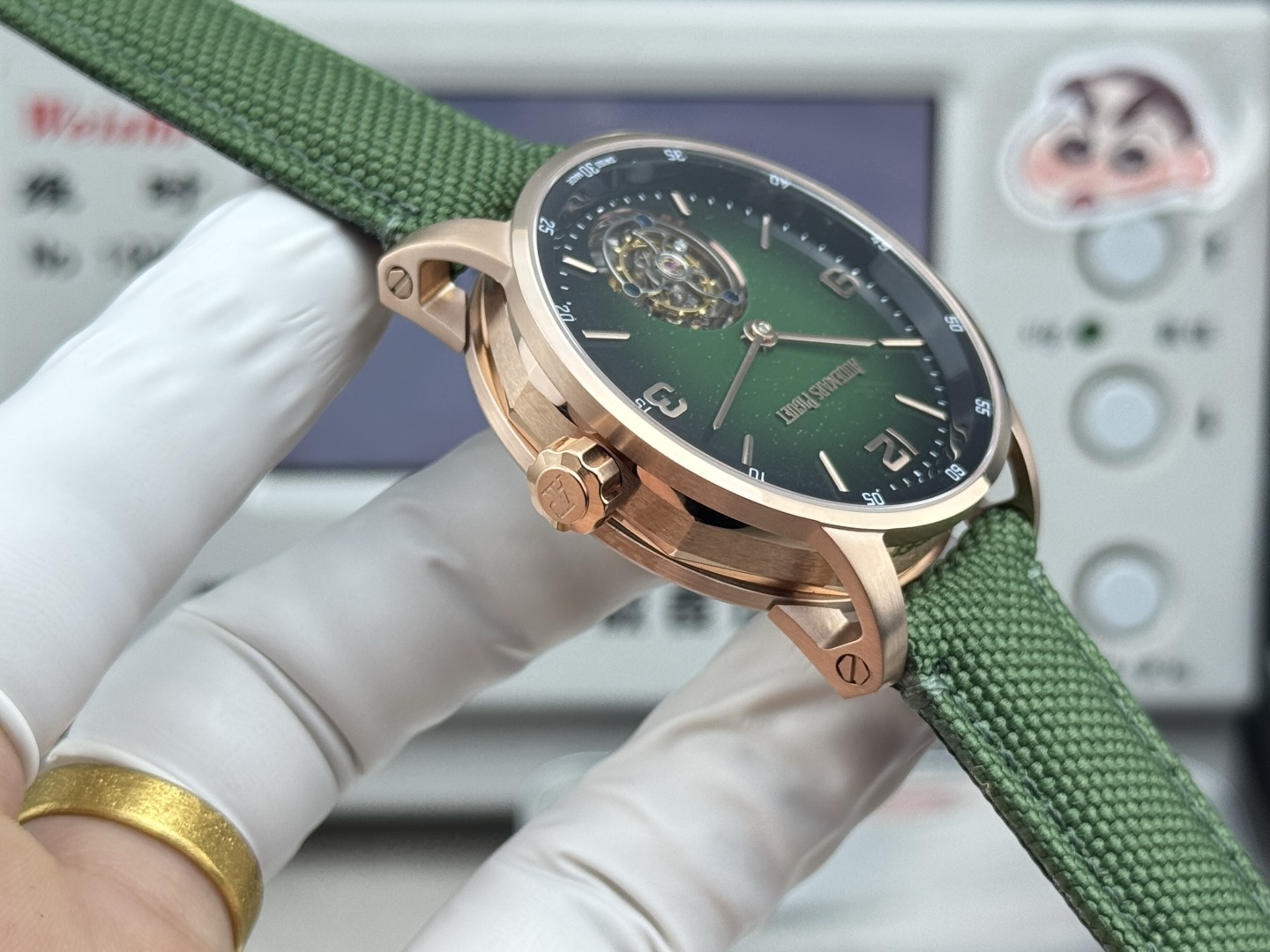
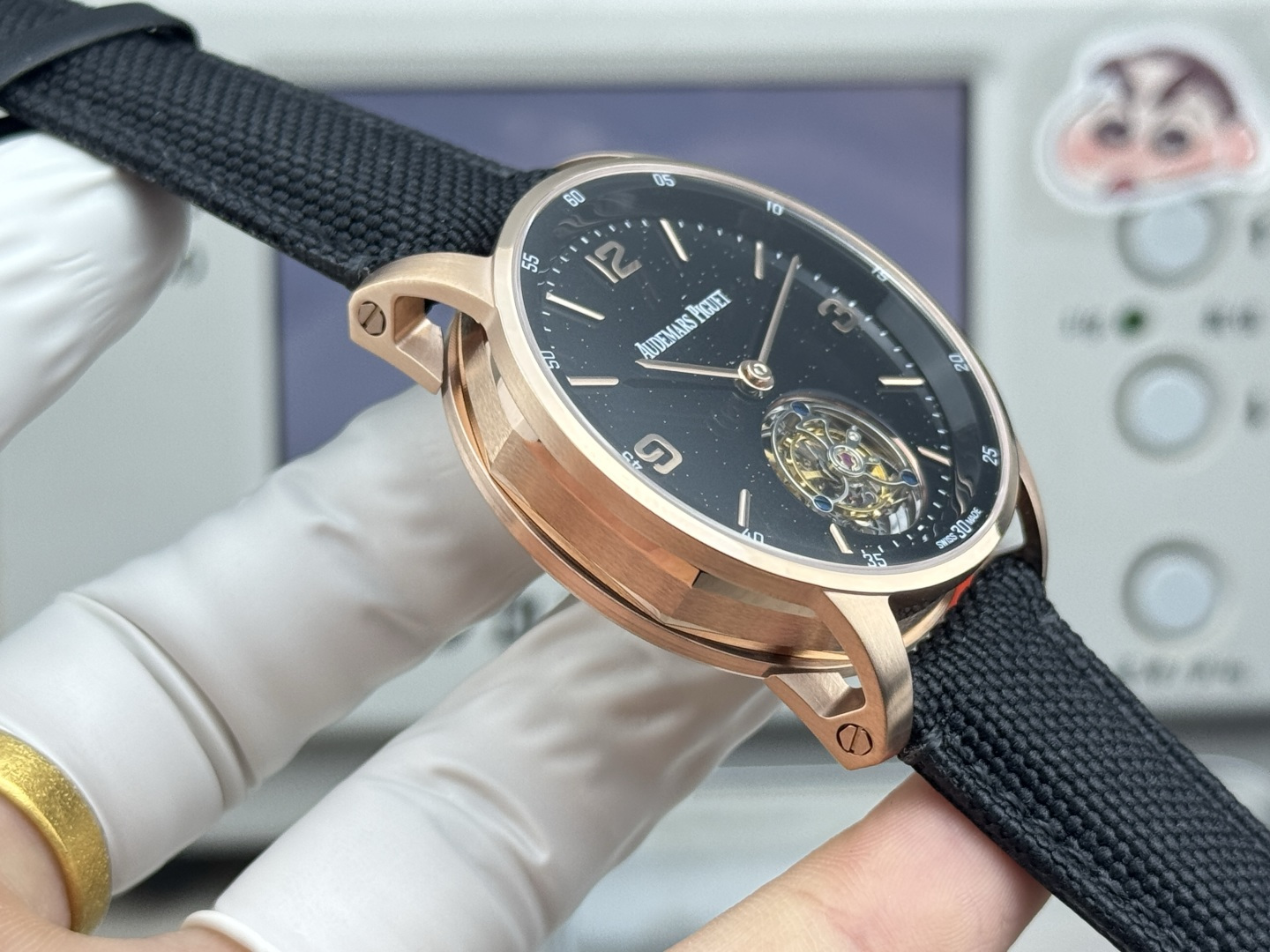
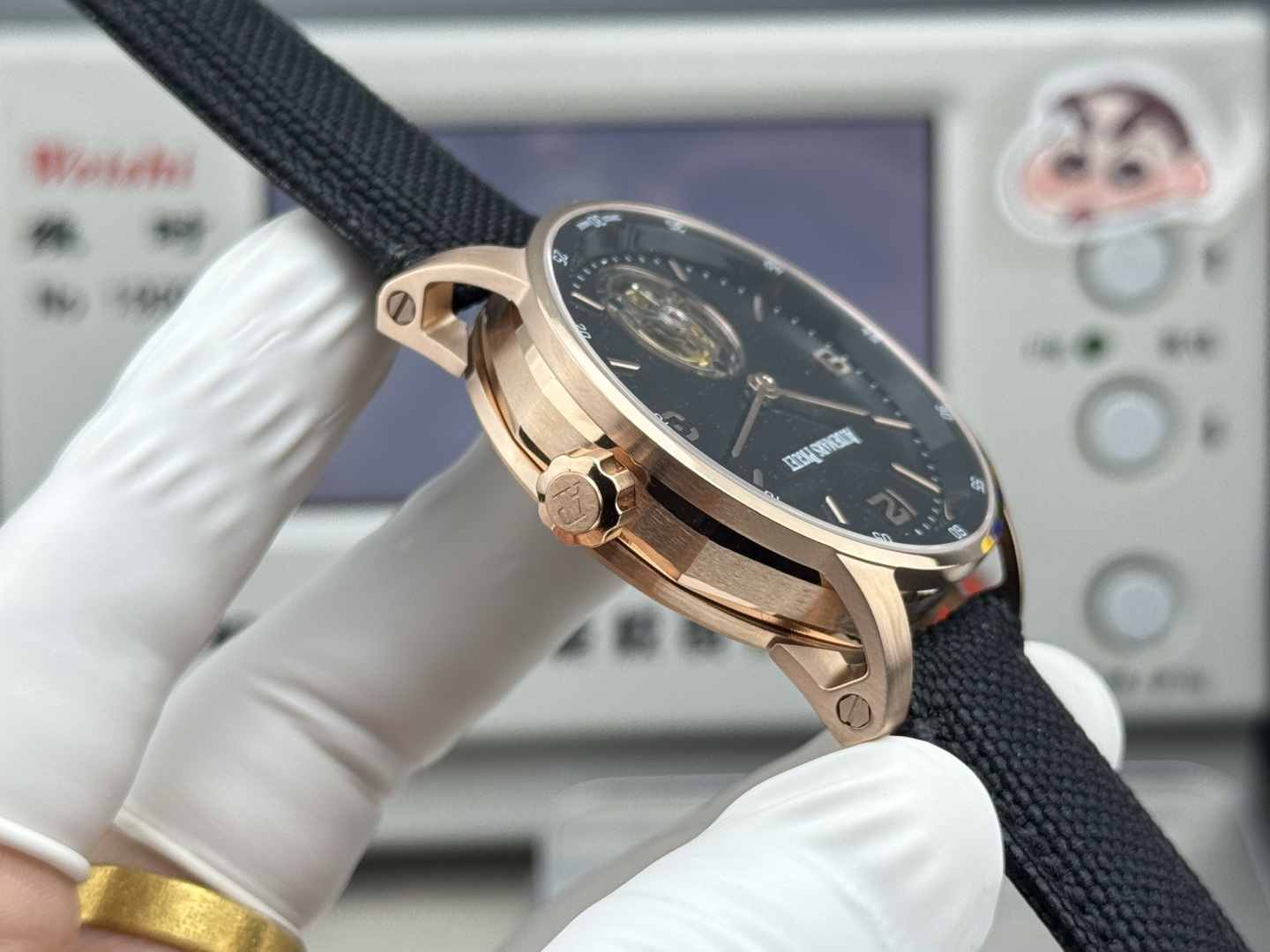
The case is 316L stainless steel, 42mm in diameter, and the first thing you notice when you pick it up is that it has genuine heft. The spec sheet claims CNC high-precision machining with density matched to the original, and I’ll say this: they’re not lying about the machining. The lug geometry is correct. The transition between the brushed and polished surfaces on the case flanks is sharp — not as razor-edged as what you’d get from AP’s own finishing department, but sharper than 90% of what the grey-market replica trade has produced historically.
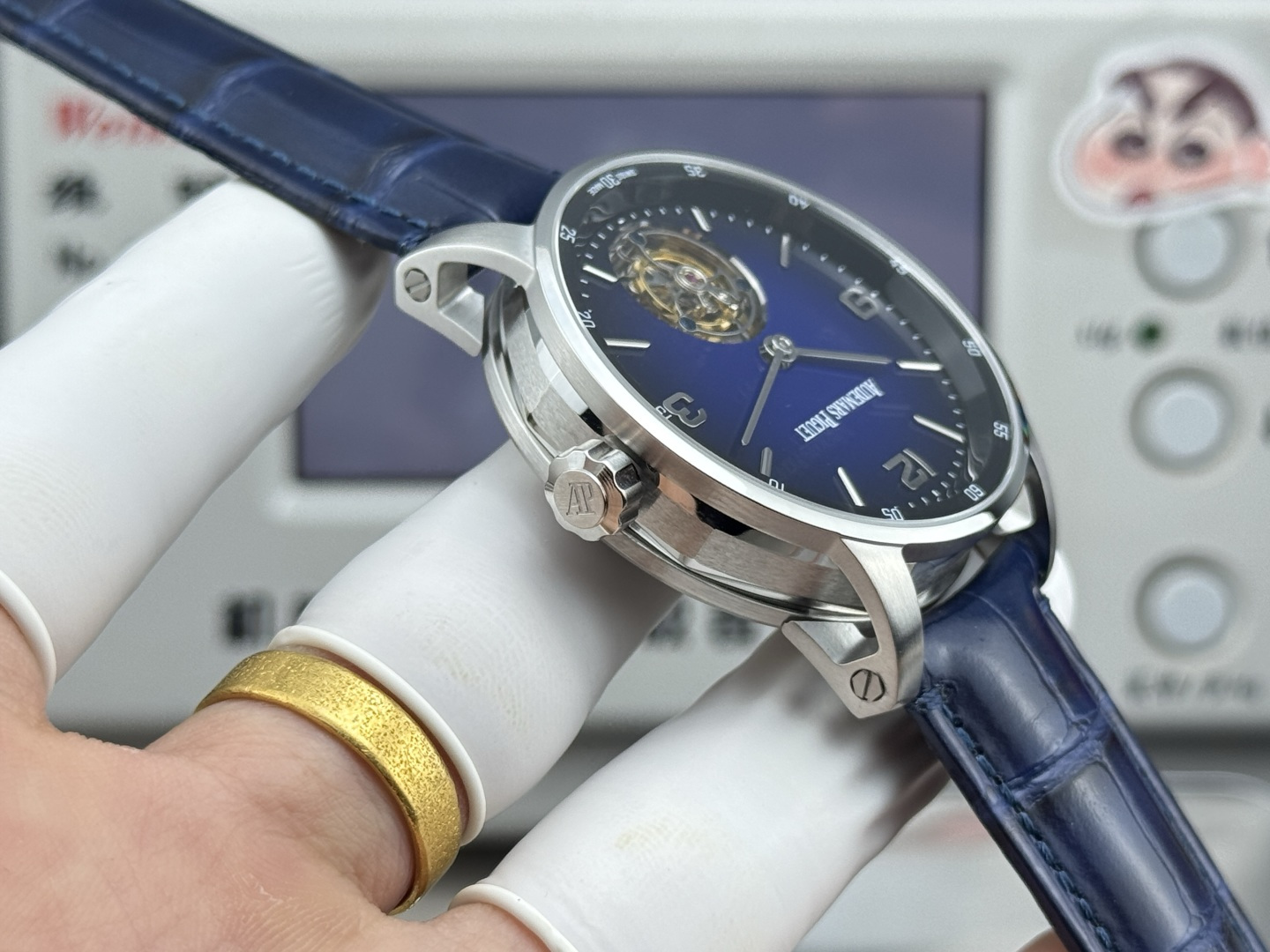
The lug-to-lug measurement sits right where it should, and the ergonomics on the wrist are surprisingly good for a 42mm case. The CODE 11.59 case architecture — that inner octagonal bezel ring sitting proud of the outer round bezel — is notoriously difficult to replicate. The angles have to be precise or the whole visual logic of the design collapses. Here, the inner bezel sits at the correct depth. The chamfering on the octagonal ring’s edges shows genuine anglage work, not just a rounded-off approximation. Under the loupe, the transitions aren’t perfectly crisp — there’s a very slight inconsistency at the four o’clock position where the polished chamfer widens by maybe half a millimeter — but you will never see this on the wrist. You’ll barely see it with the loupe unless you’re specifically hunting for it.
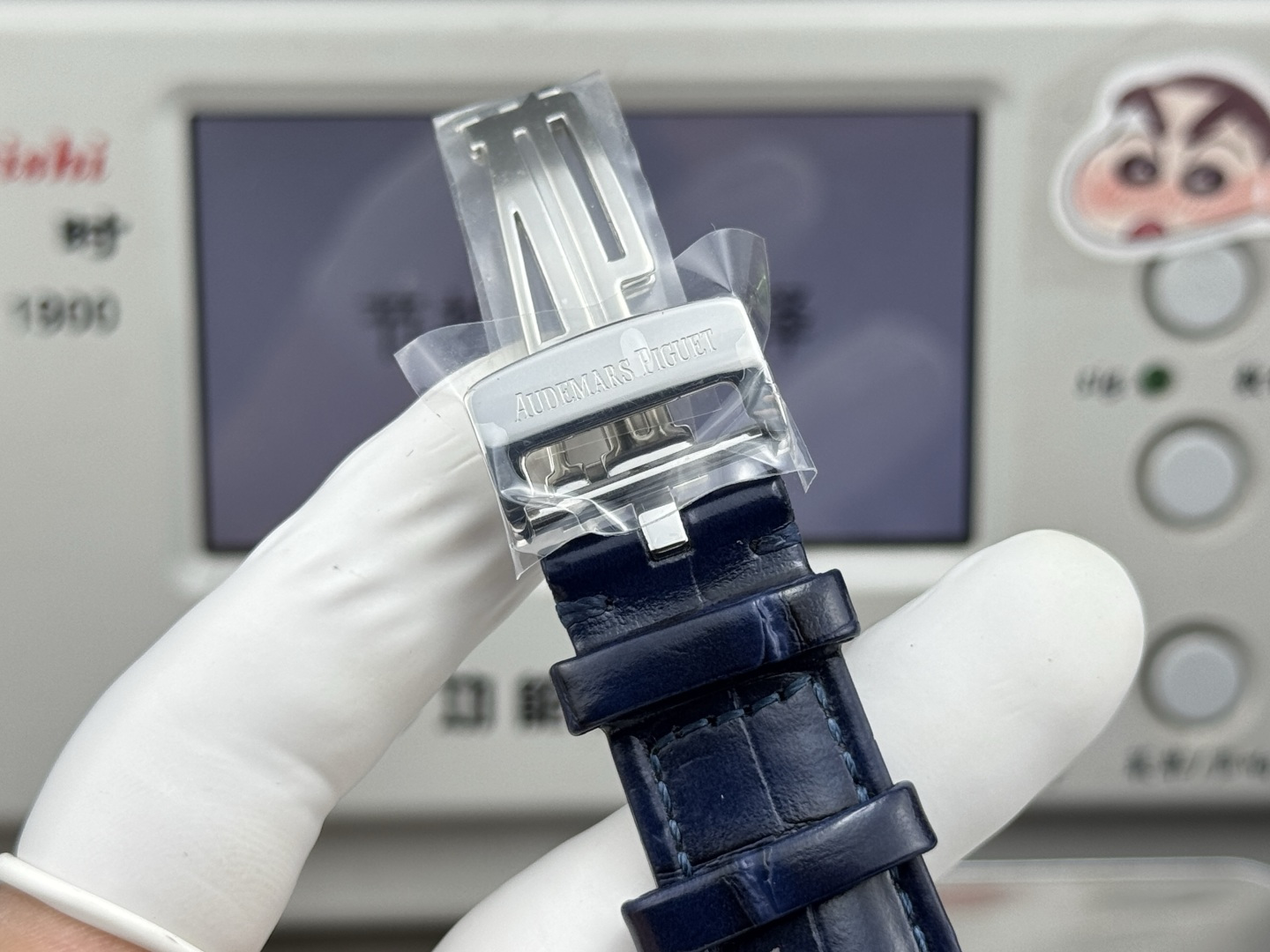
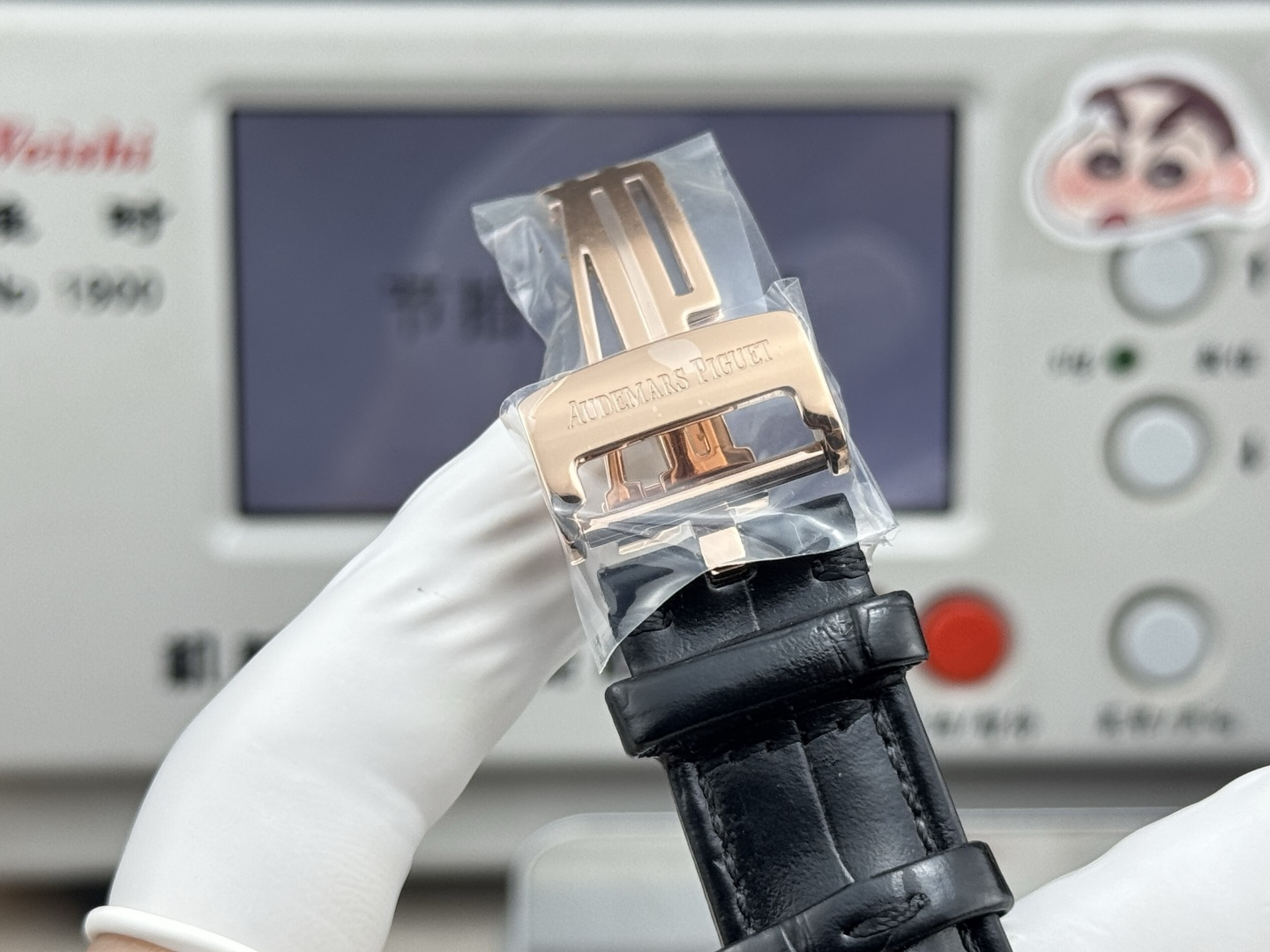
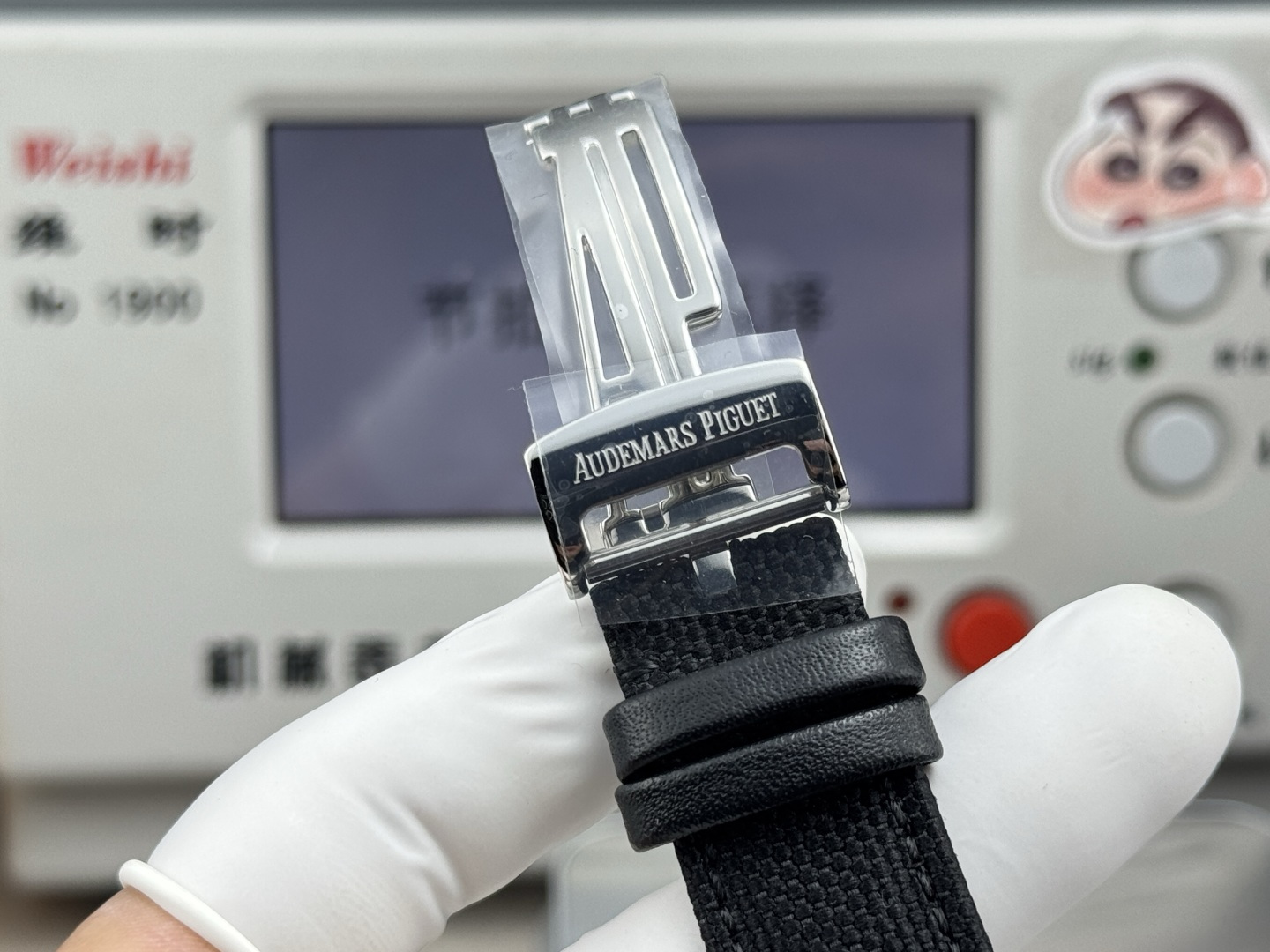
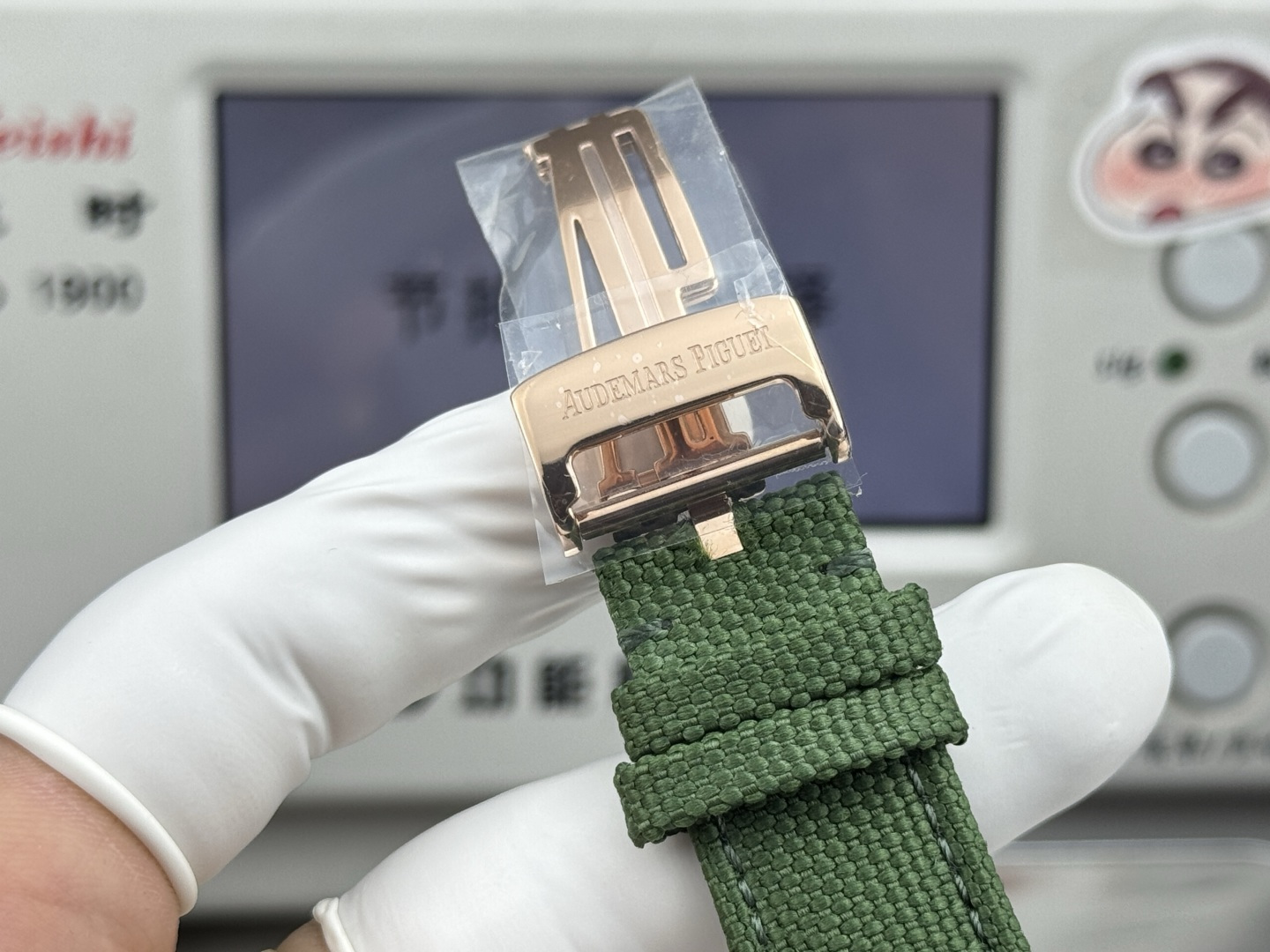
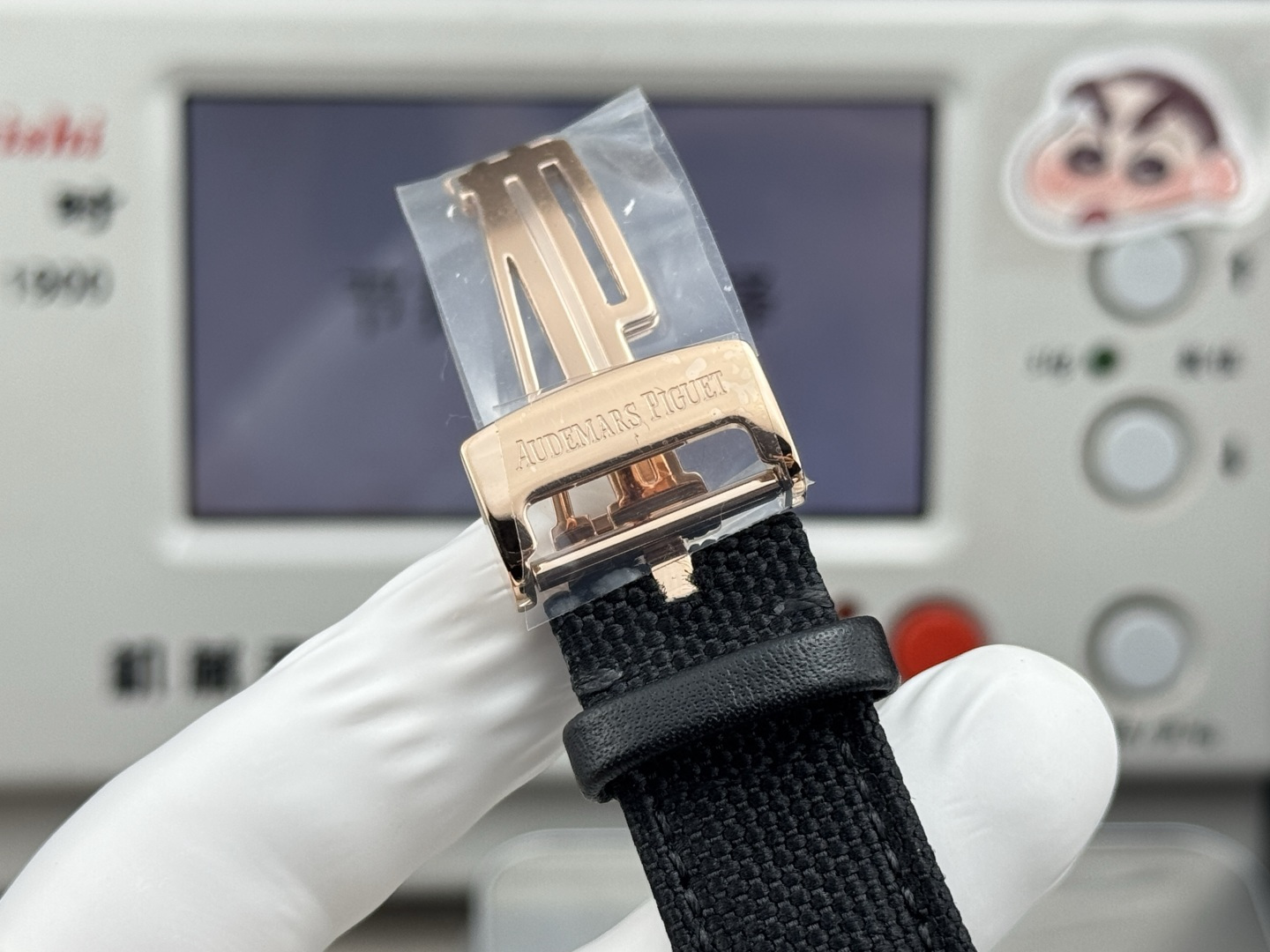
The crown is properly proportioned, with the AP monogram engraved cleanly. The pushers for the tourbillon display sit flush when not engaged. The SEL articulation on the bracelet — this piece comes with an Italian calf leather strap and a canvas option — isn’t applicable here, but the deployant clasp on the leather strap has a satisfying, positive click. No rattle, no lateral play.
Optical Illusions: The Aventurine Dial & AR Coating
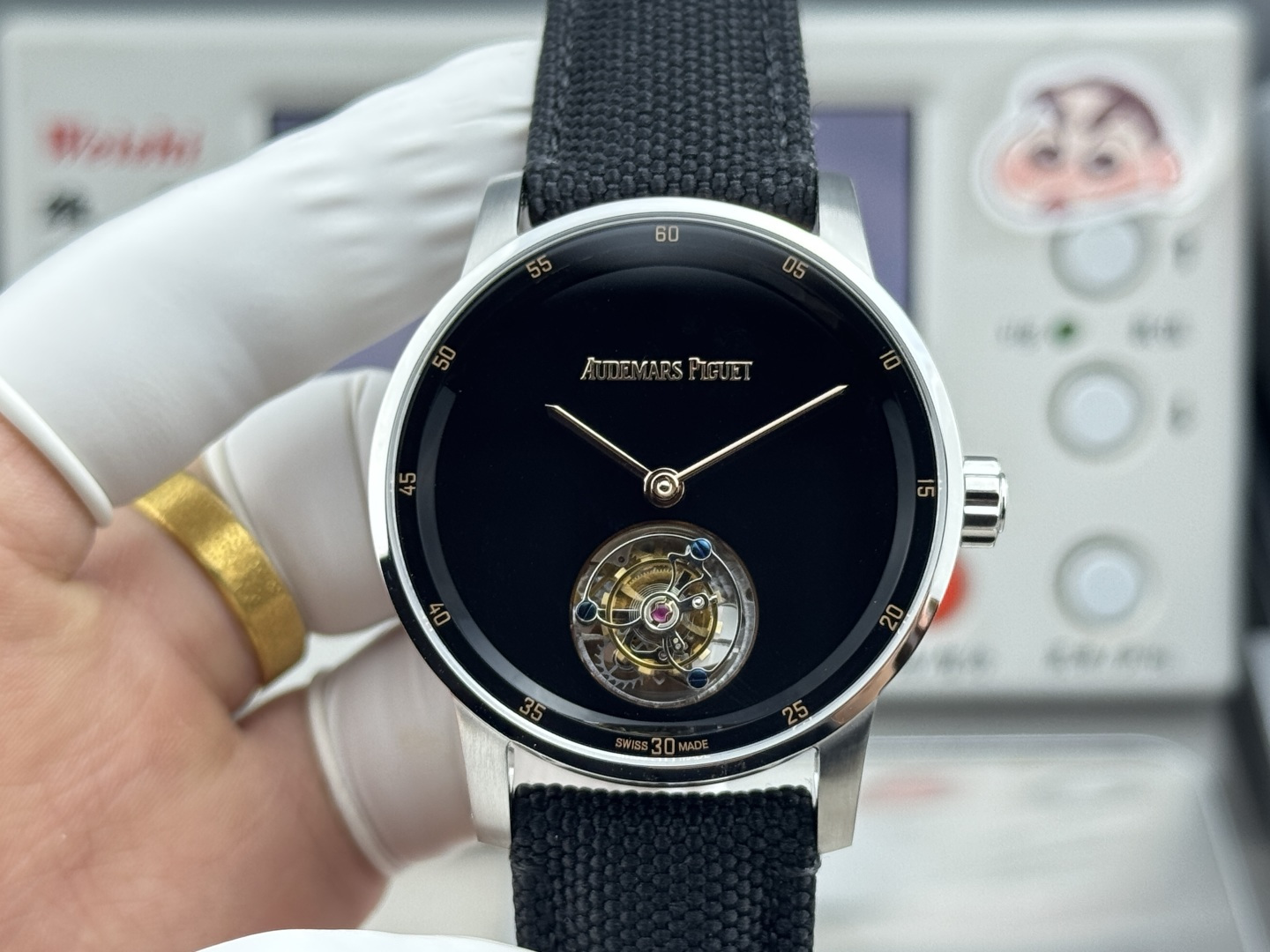
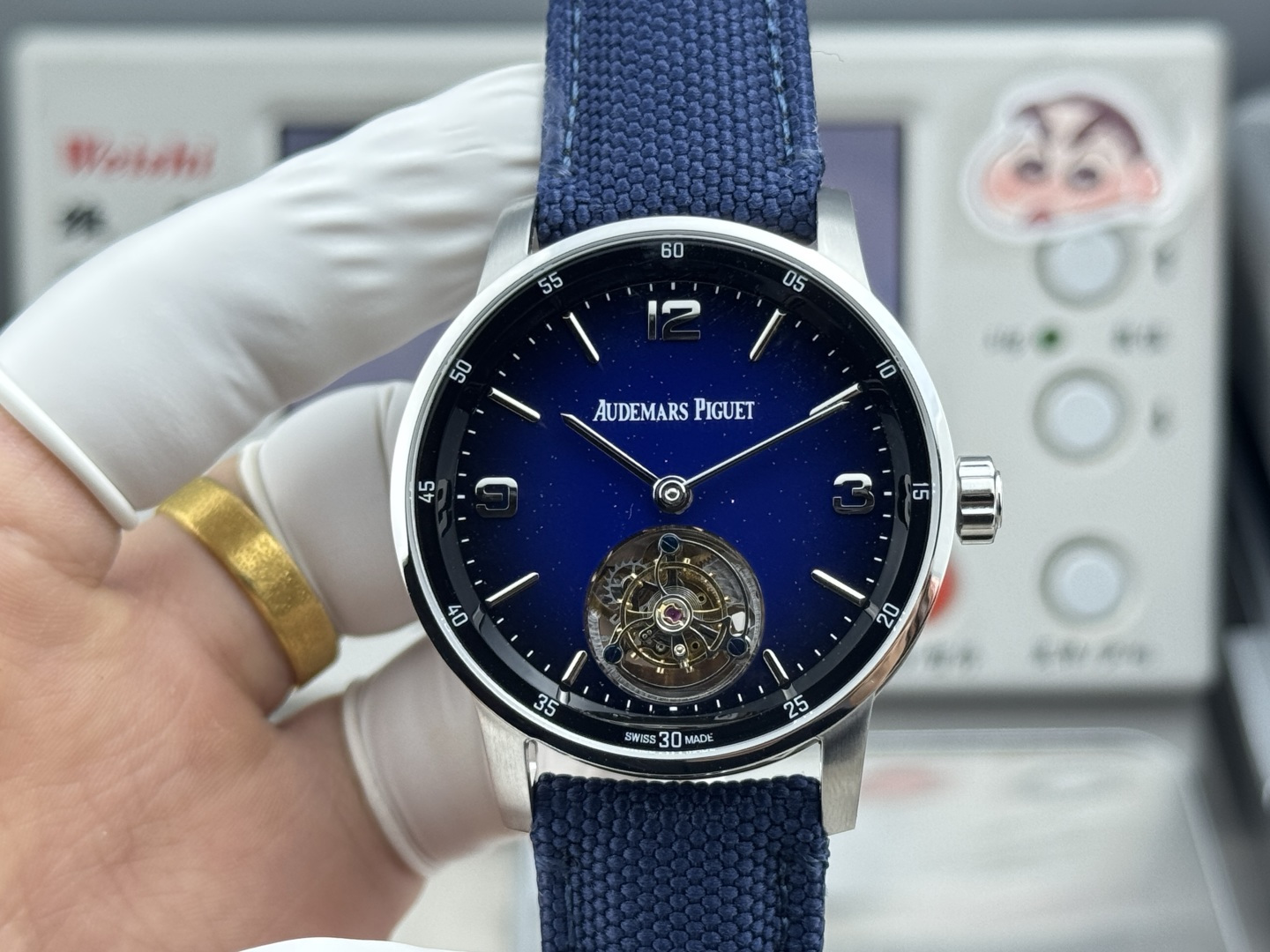
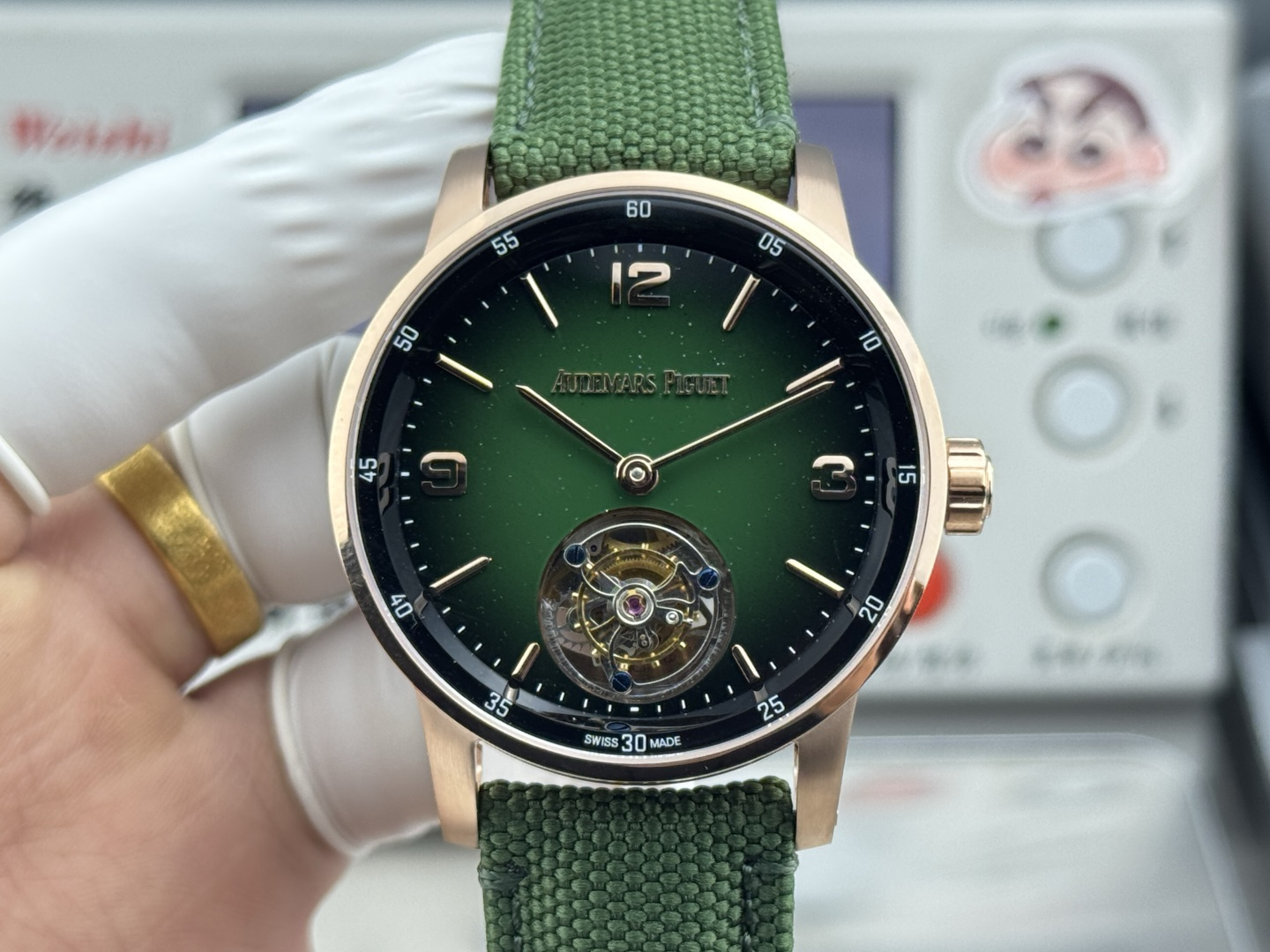
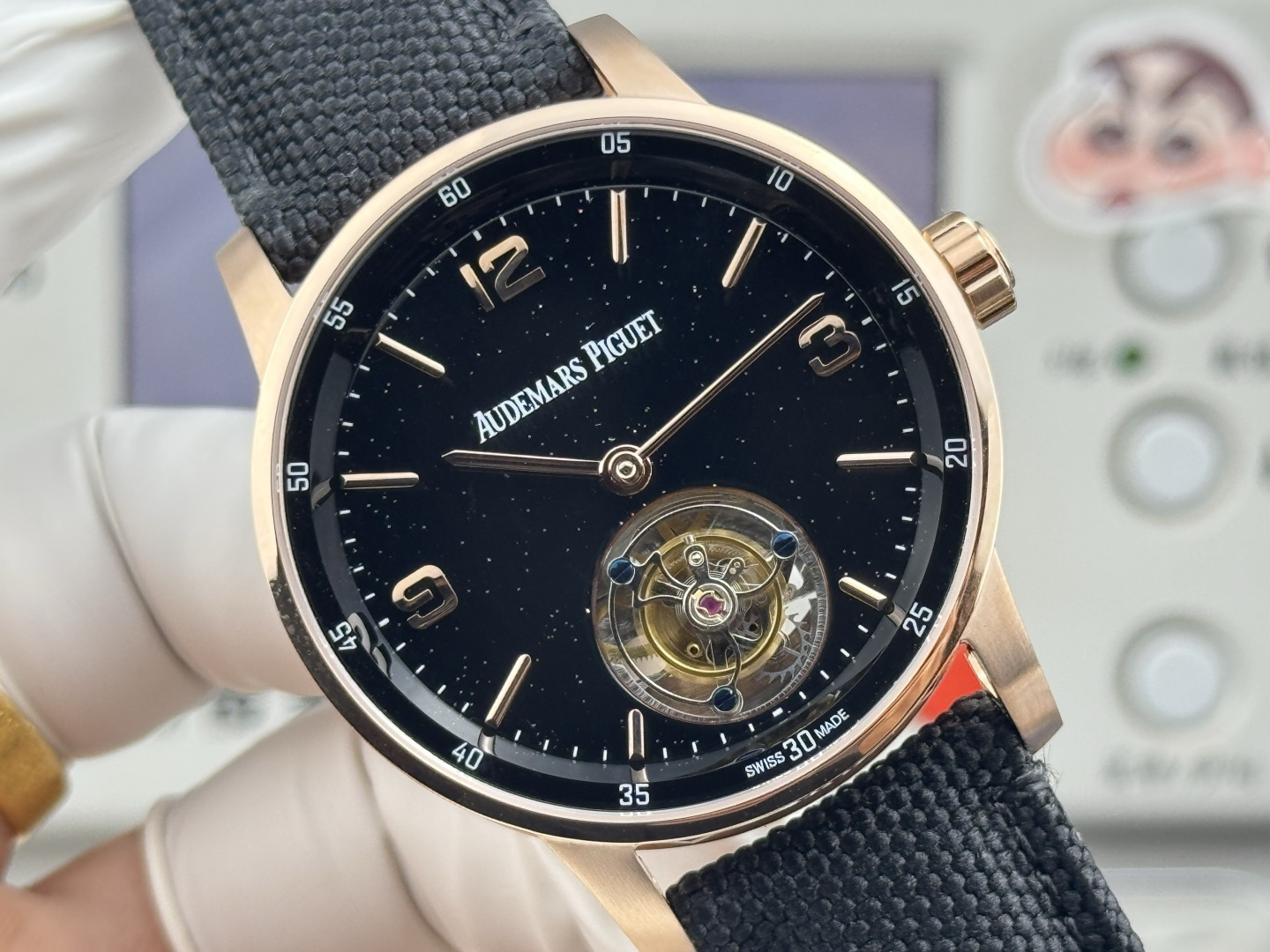
This is where the conversation gets genuinely interesting, because the aventurine enamel dial on the genuine 26396 is one of the most visually arresting dials AP has produced in the modern era. Grand Feu enamel aventurine — that deep, nebular blue-black with suspended copper-gold particles that catch light like a galaxy suspended in glass — is extraordinarily difficult to fake convincingly. The genuine article is fired multiple times in a kiln at temperatures exceeding 800 degrees Celsius. The aventurine particles are real feldspar with copper inclusions. The depth you see in the authentic dial isn’t a surface effect; it’s a volumetric one. You’re looking through layers.
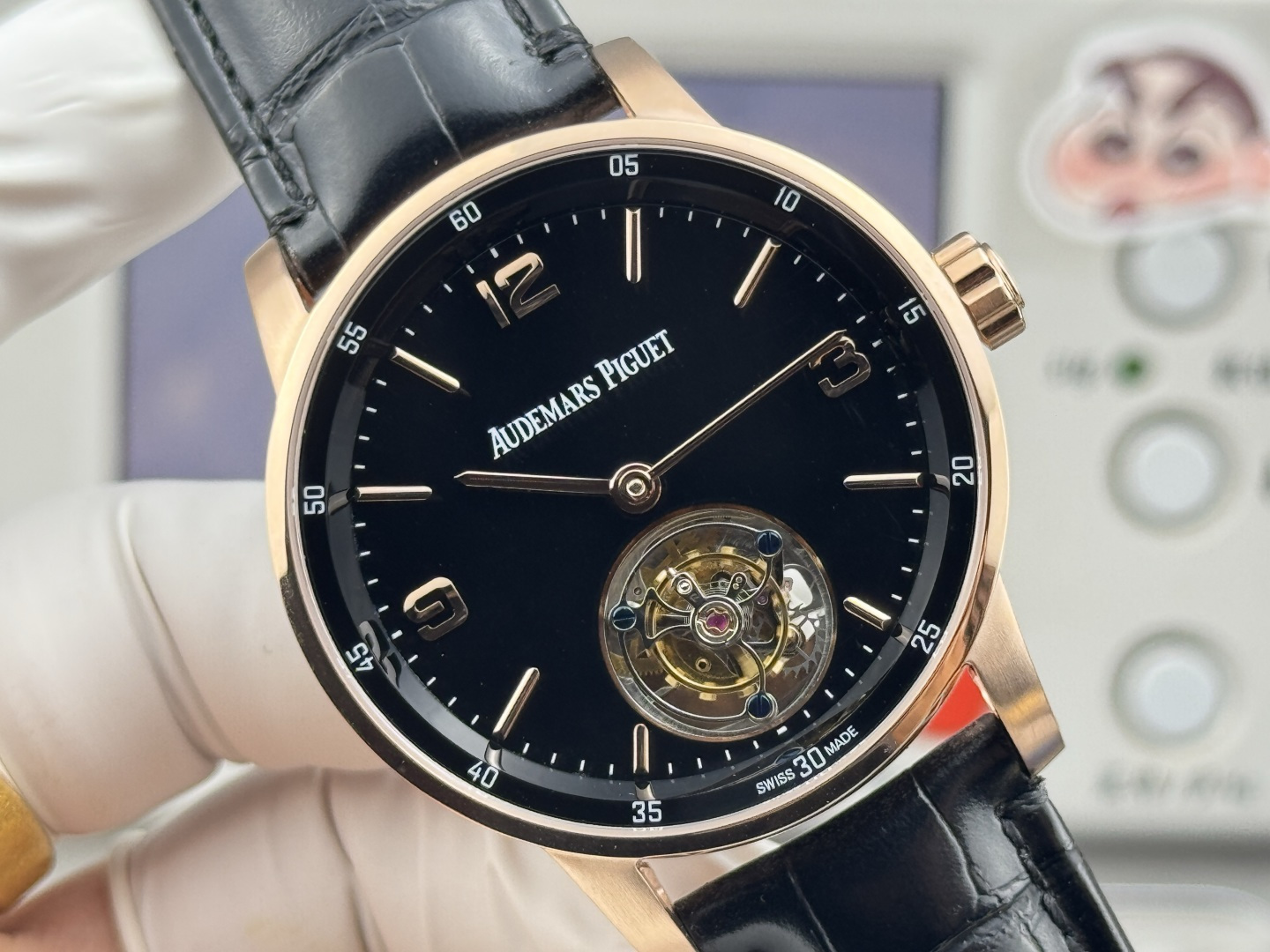
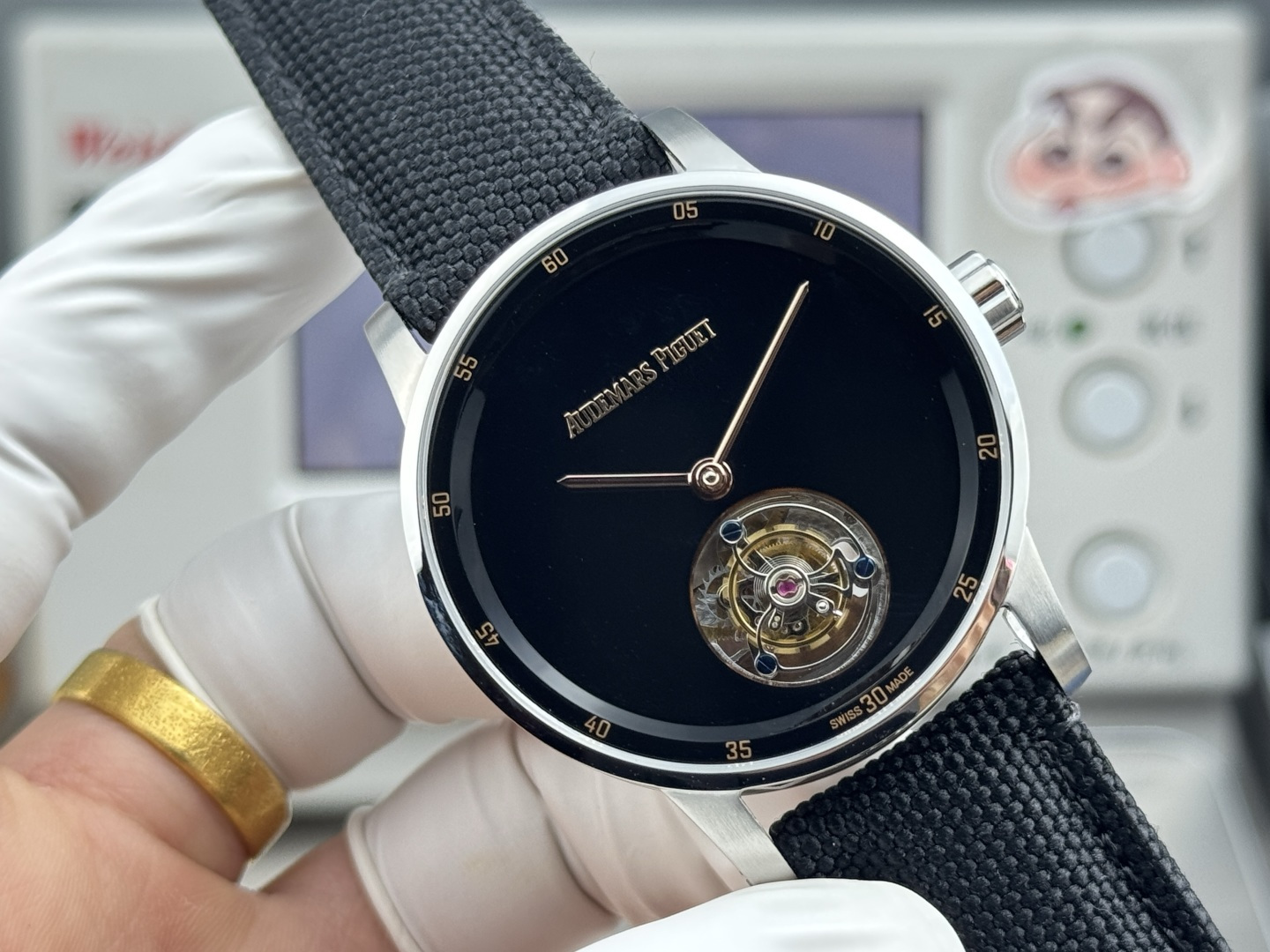
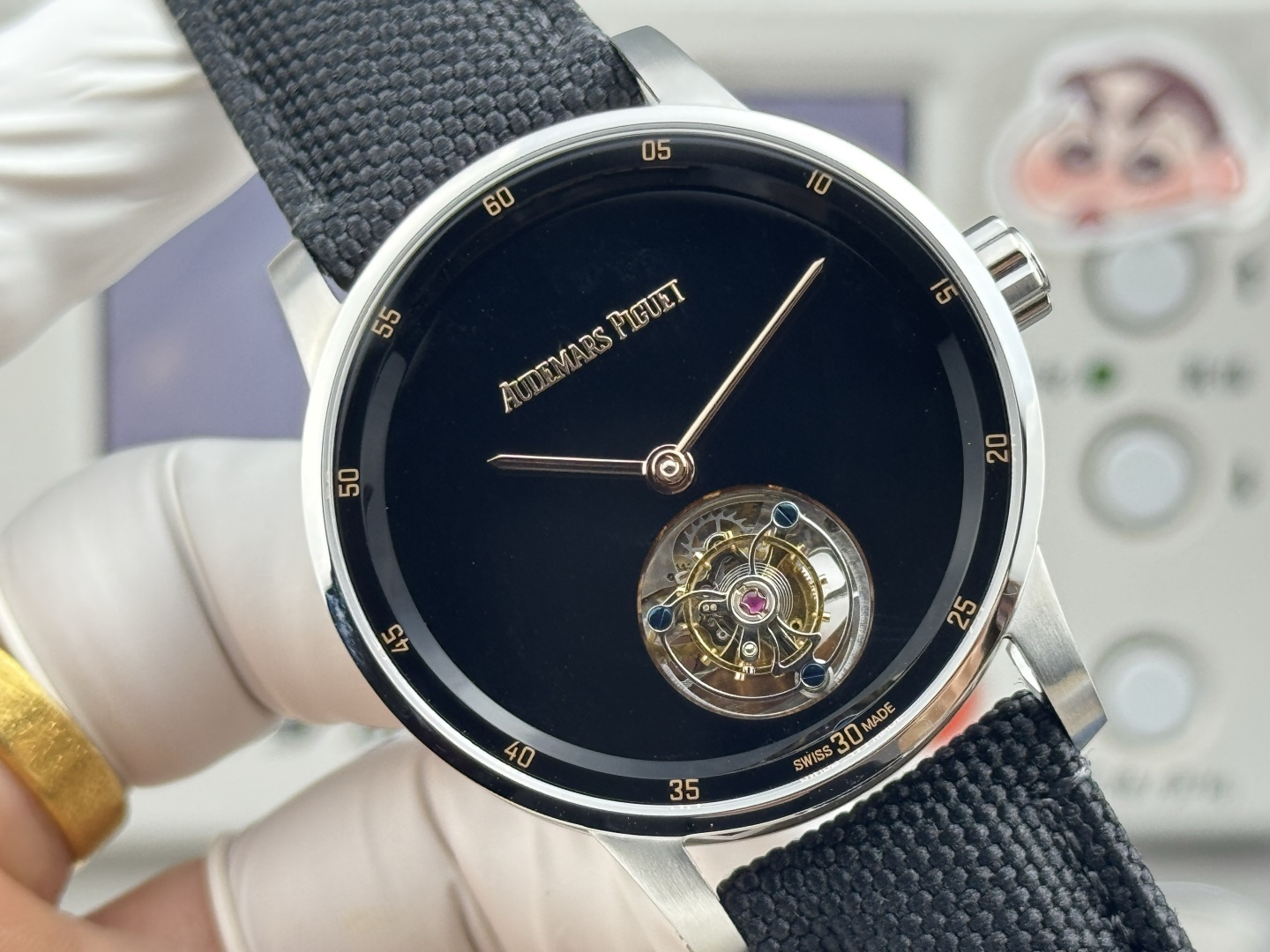
So how does this clone handle it? Better than I expected, worse than it needs to be. The base color is correct — a very deep, near-black blue that shifts toward indigo under warm light. The suspended particle effect is present and catches light convincingly from across a room. At arm’s length, on the wrist, in a restaurant or a meeting room? It reads as aventurine. It has the shimmer. The casual observer — even a watch-aware casual observer — will not clock it as wrong.
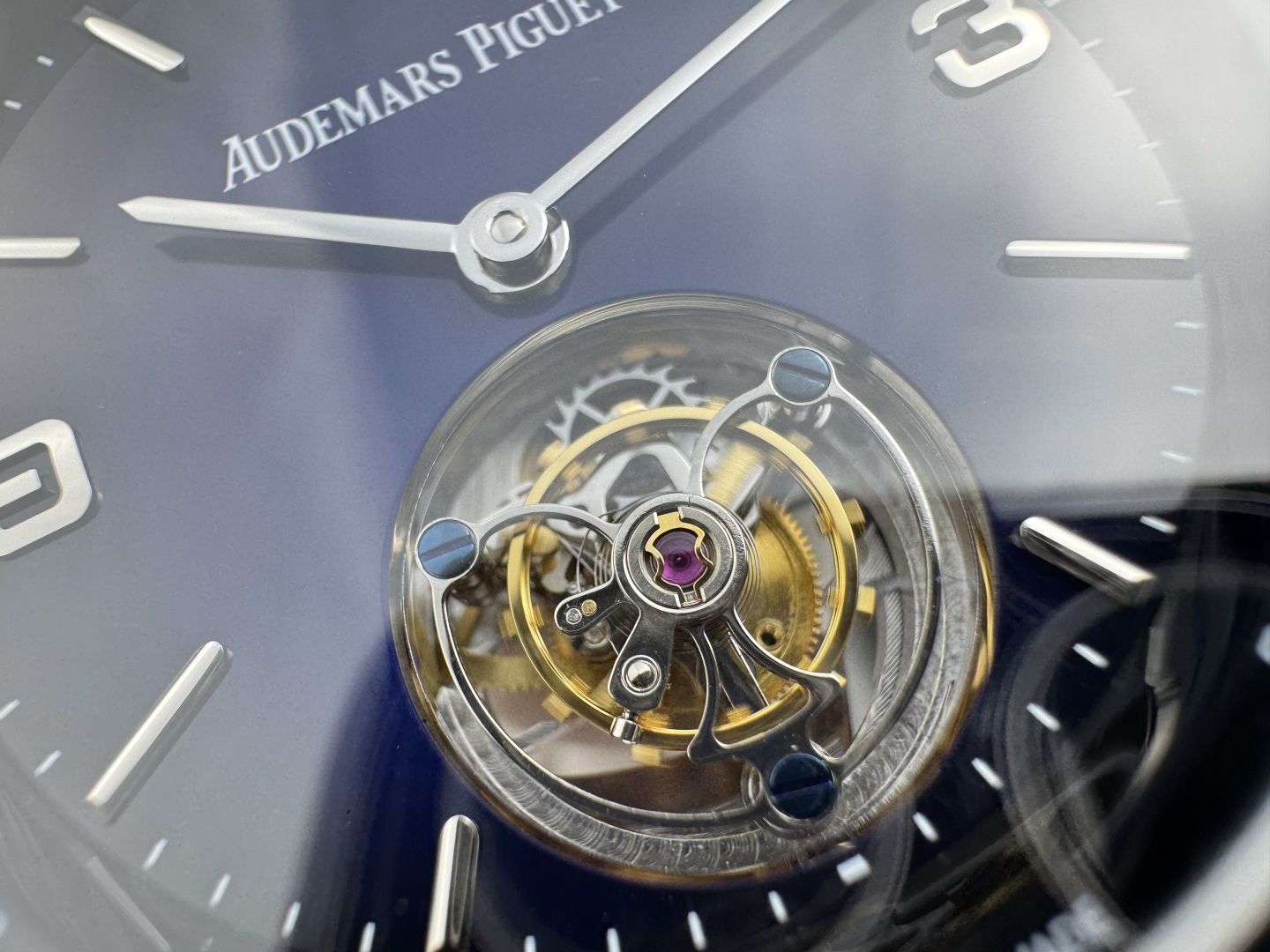
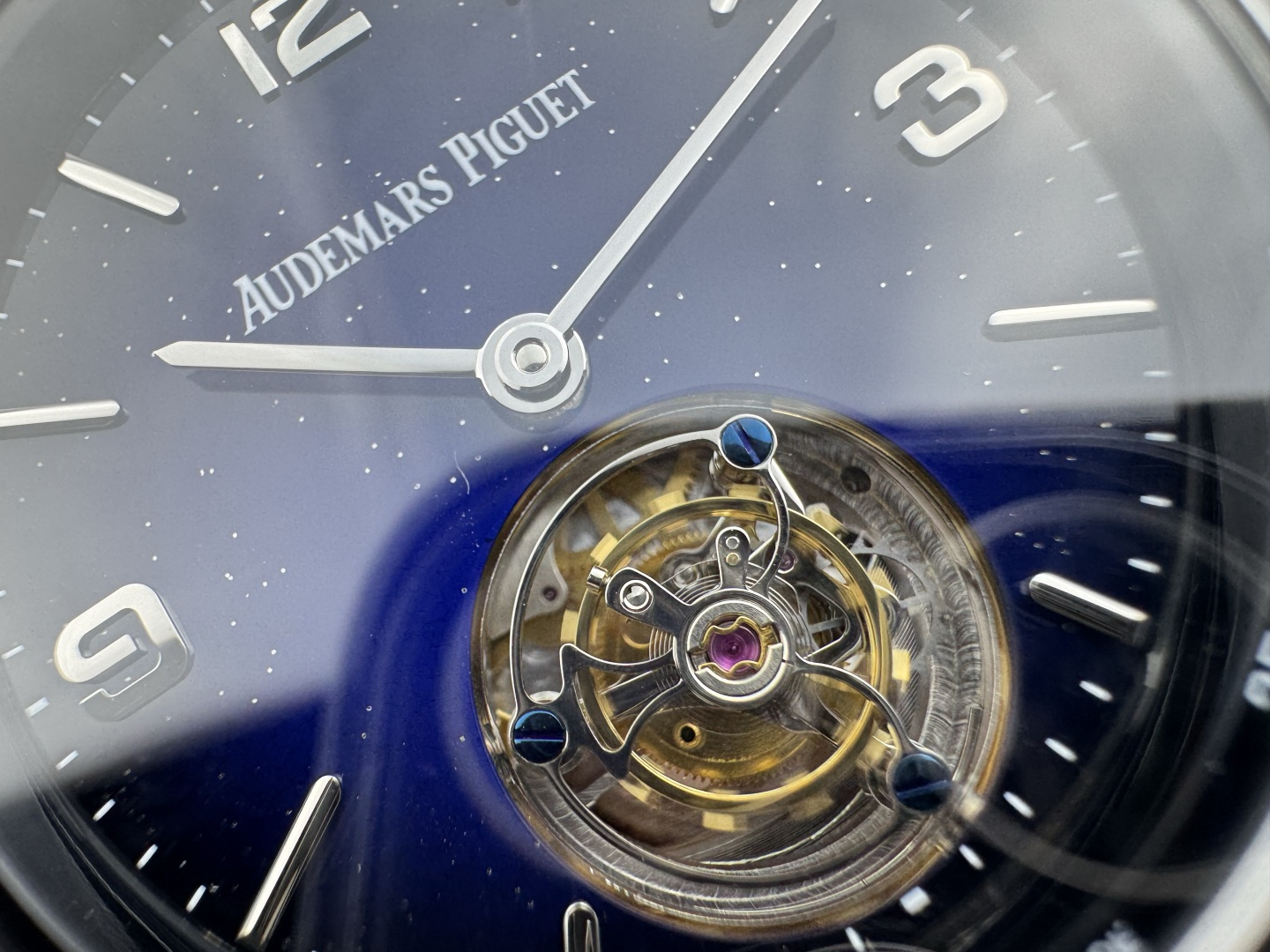
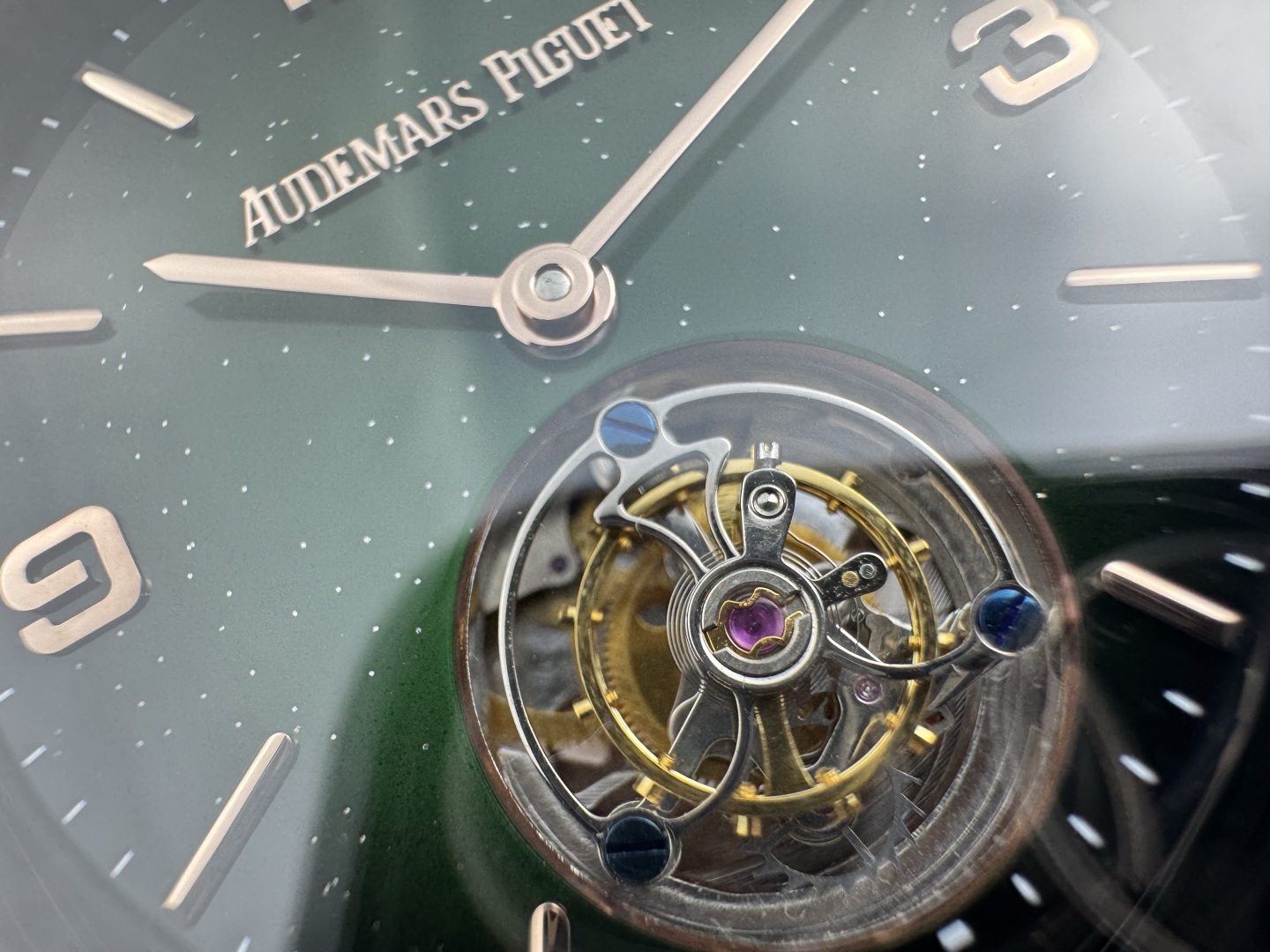
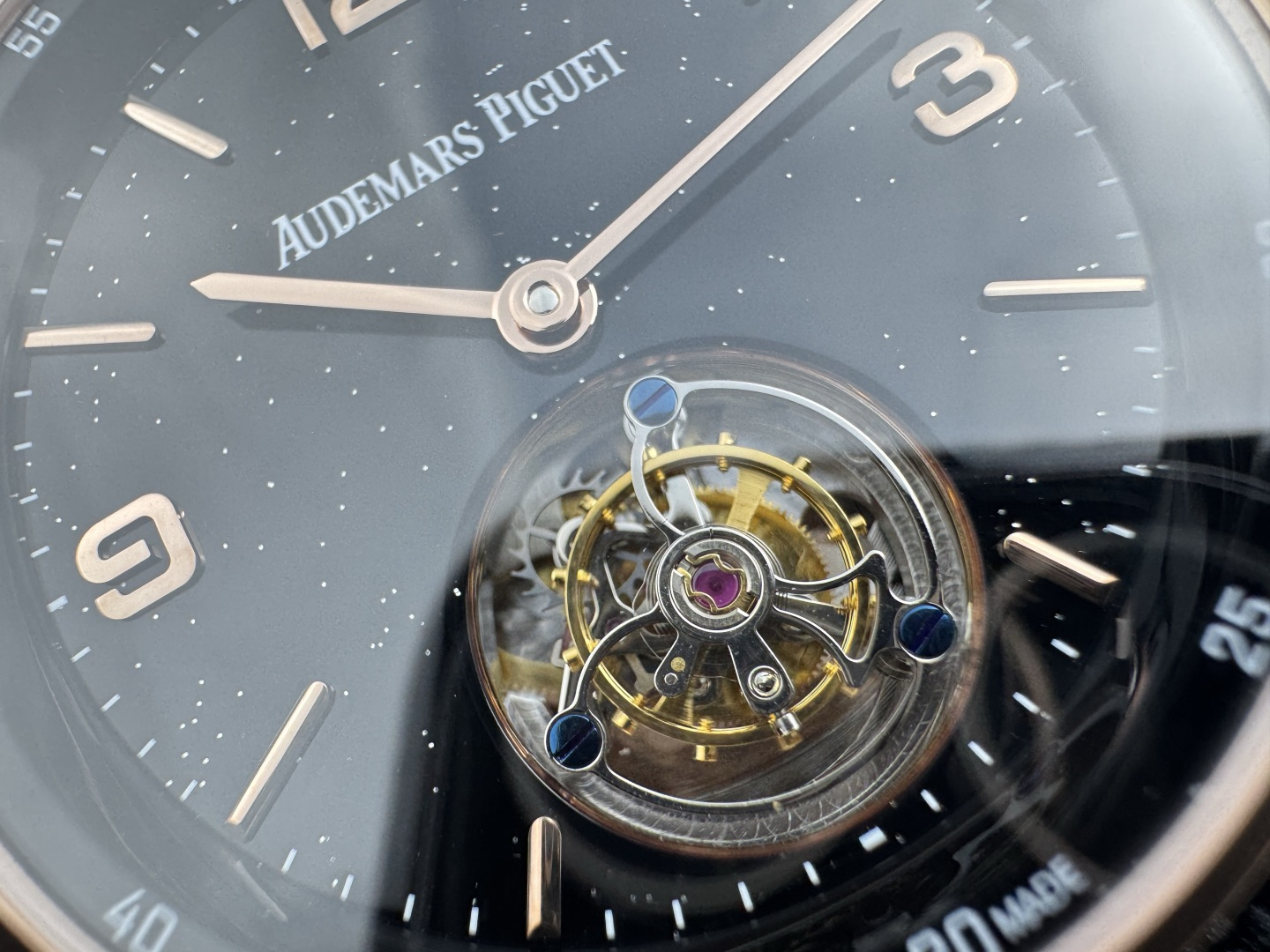
Under the loupe, though, the volumetric depth isn’t there. The genuine aventurine dial has a quality where the particles seem to float at different depths within the material. This dial’s particles are surface-suspended, printed or deposited onto the dial base rather than embedded within fired enamel layers. The effect is flatter. It’s the difference between looking at a photograph of a starfield and looking at an actual night sky — intellectually you know what you’re seeing, but the sense of depth simply isn’t replicable by the same means.
The aventurine effect is convincing at social distances. Under magnification, it exposes itself immediately as a surface treatment rather than a genuine Grand Feu enamel construction. This is the single largest technical gap between this clone and the genuine article.
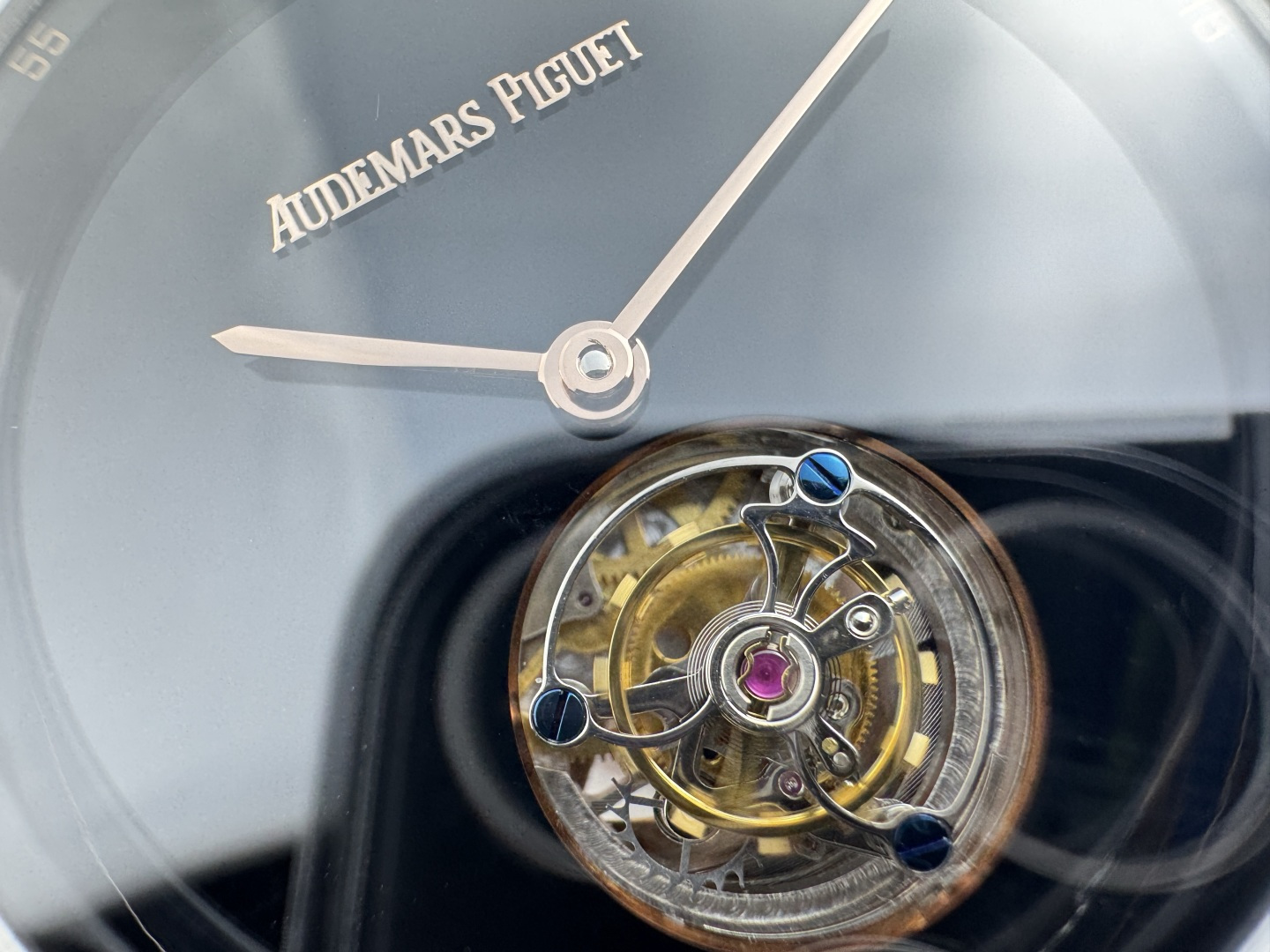
The indices are applied correctly — no pad-printing here, these are physically applied metal indices with the correct proportions. The hand-stack clearance over the tourbillon aperture at six o’clock is adequate; the hands sweep without any visible contact risk. Typography kerning on the “AUDEMARS PIGUET” text at twelve o’clock is clean and correctly spaced. The “AUTOMATIC TOURBILLON” designation below the center is slightly lighter in weight than the reference photography suggests it should be — a minor kerning and weight discrepancy that, again, you’re not catching without direct comparison.
The AR coating bloom on the sapphire crystal deserves specific mention. The genuine CODE 11.59 uses a double-curved sapphire that’s brutally difficult to coat evenly due to its geometry. This clone’s crystal shows the correct blue-green AR bloom, applied evenly across the curve. It’s one of the better AR coating jobs I’ve seen on a clone at this price point. Reflections are genuinely suppressed, and the dial reads clearly under direct light — a failure point for many replicas that use inferior coatings that either reflect too much or show uneven color banding.
Under the Caseback & Exposing ‘The Tell’
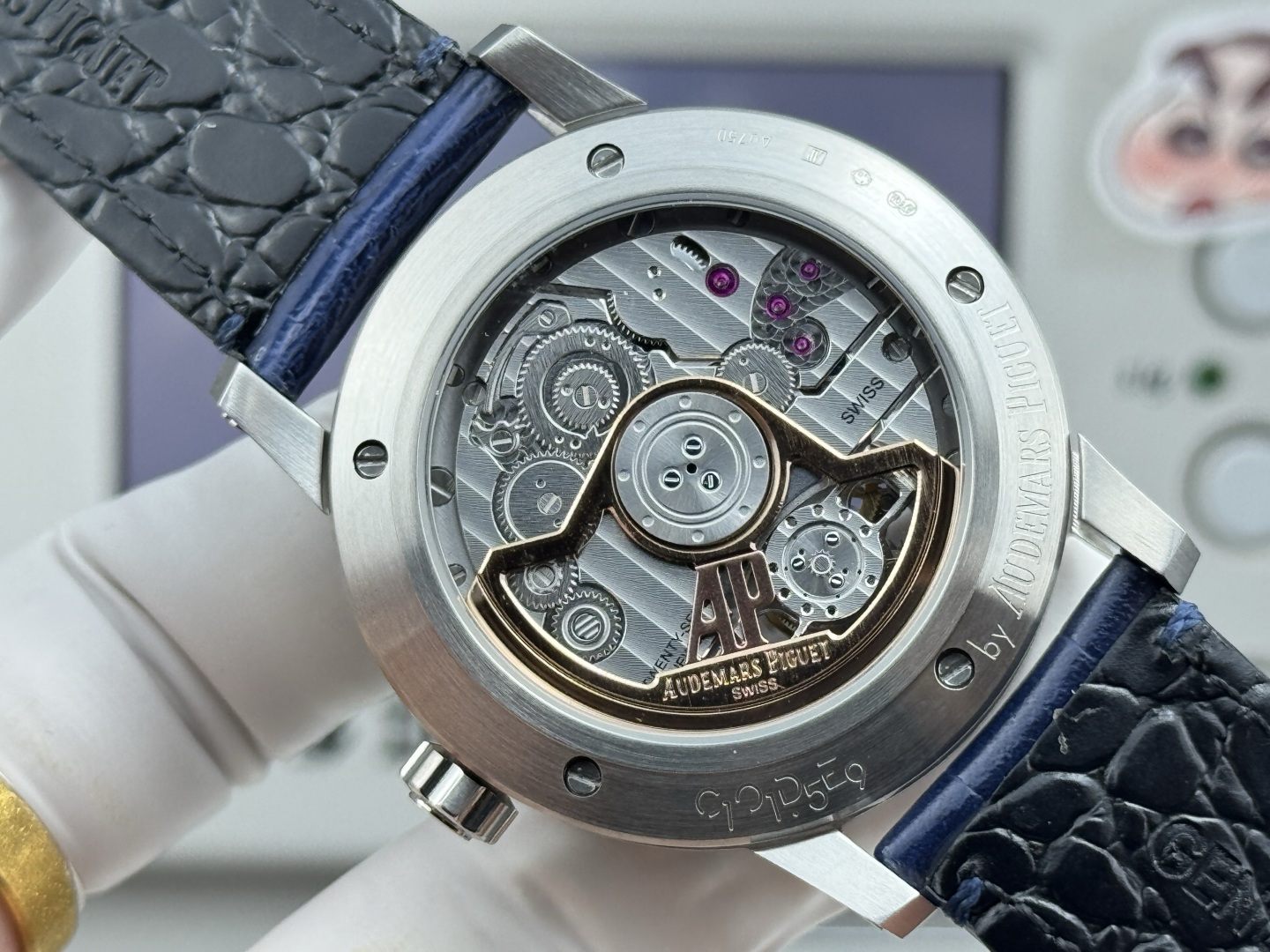
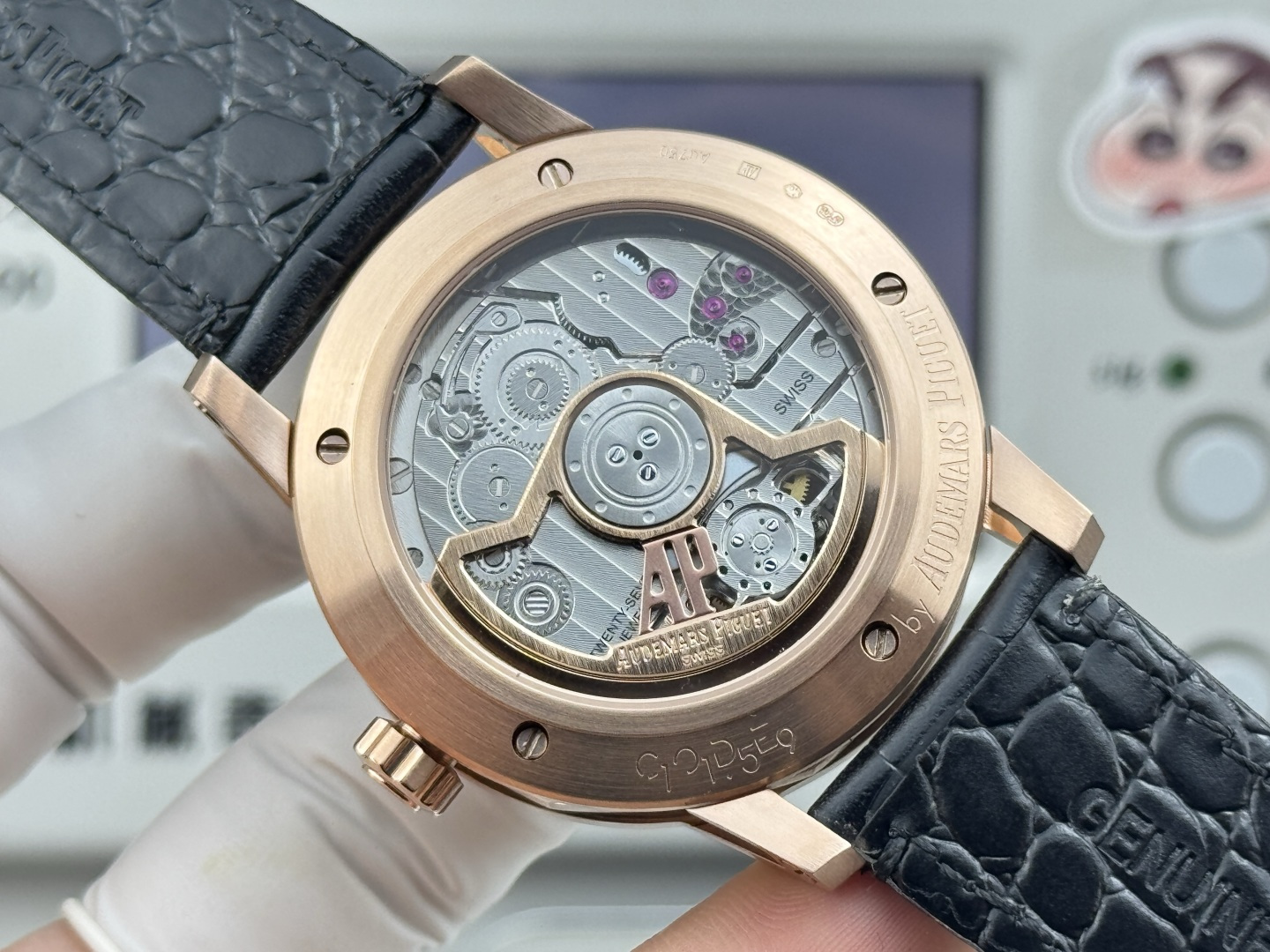
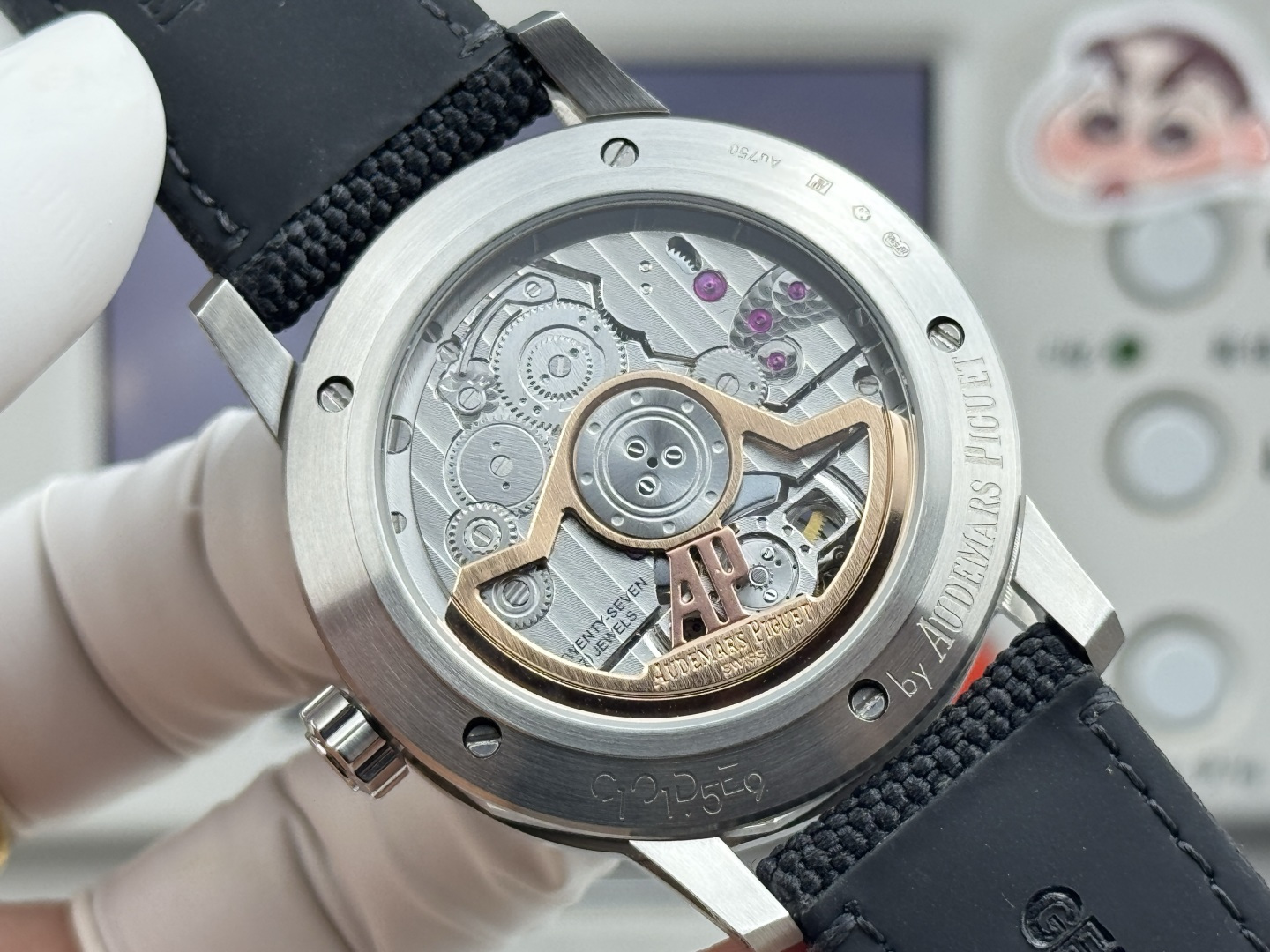
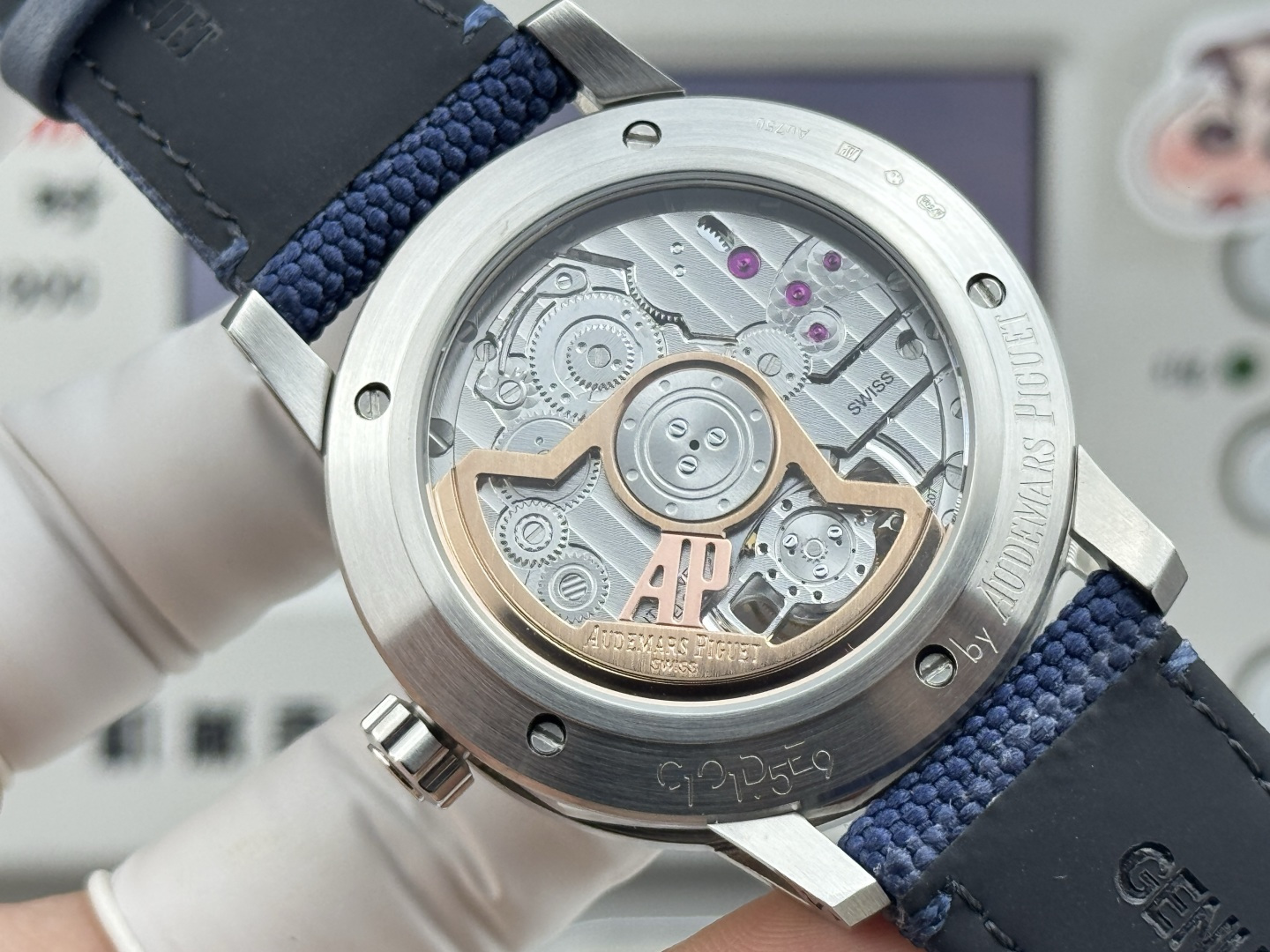
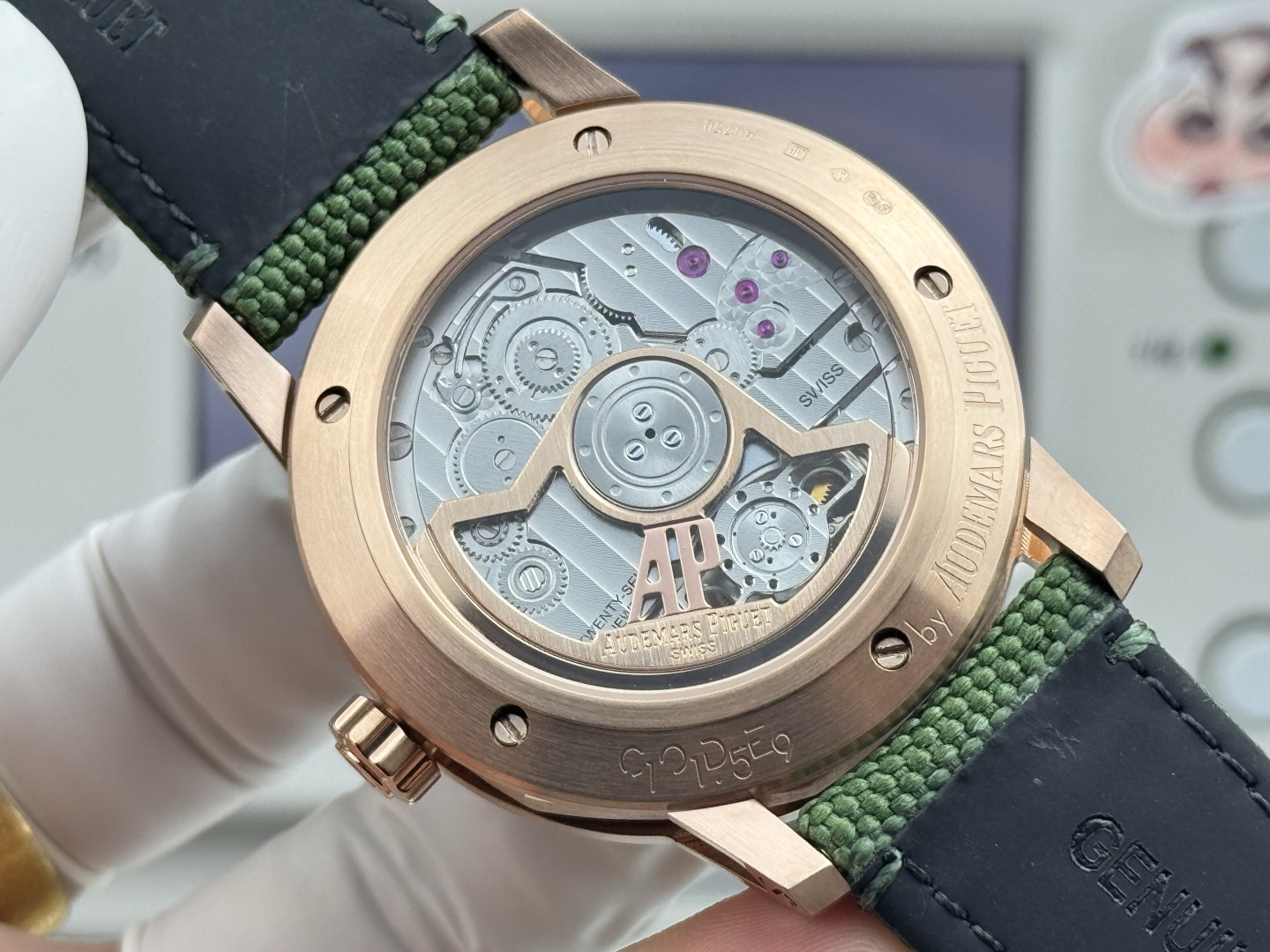
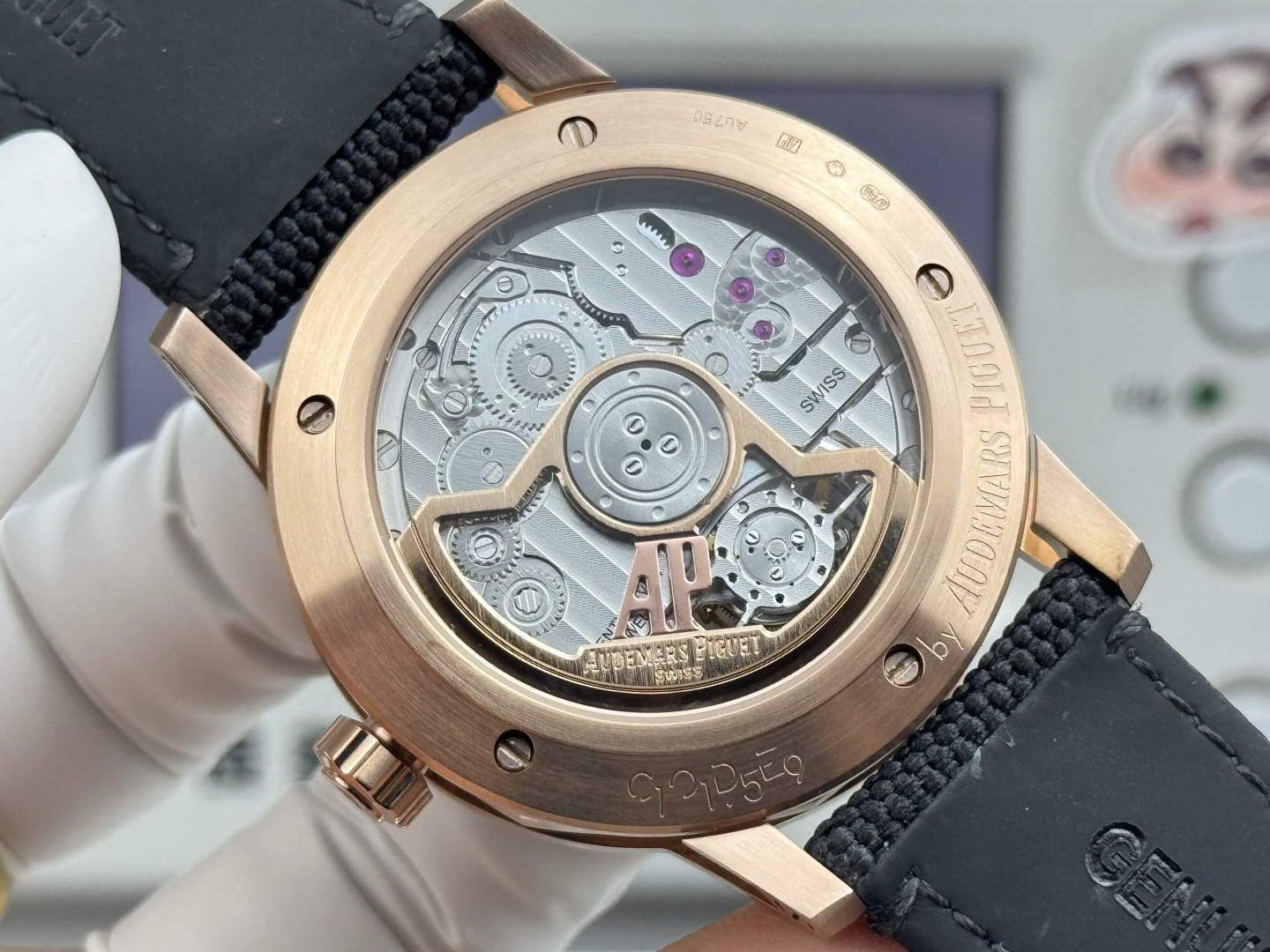
The spec sheet claims a Cal. 2950 automatic tourbillon movement with 60 hours of power reserve. The genuine AP caliber 2950 is a manufacture movement — skeletonized, with a flying tourbillon at six o’clock, Côtes de Genève decoration on the bridges, perlage on the mainplate, and finishing standards that justify a significant portion of that six-figure retail price. Black polishing on the steel components. Beveled and polished anglage on every visible edge. It is, by any objective standard, a masterclass in visible finishing.
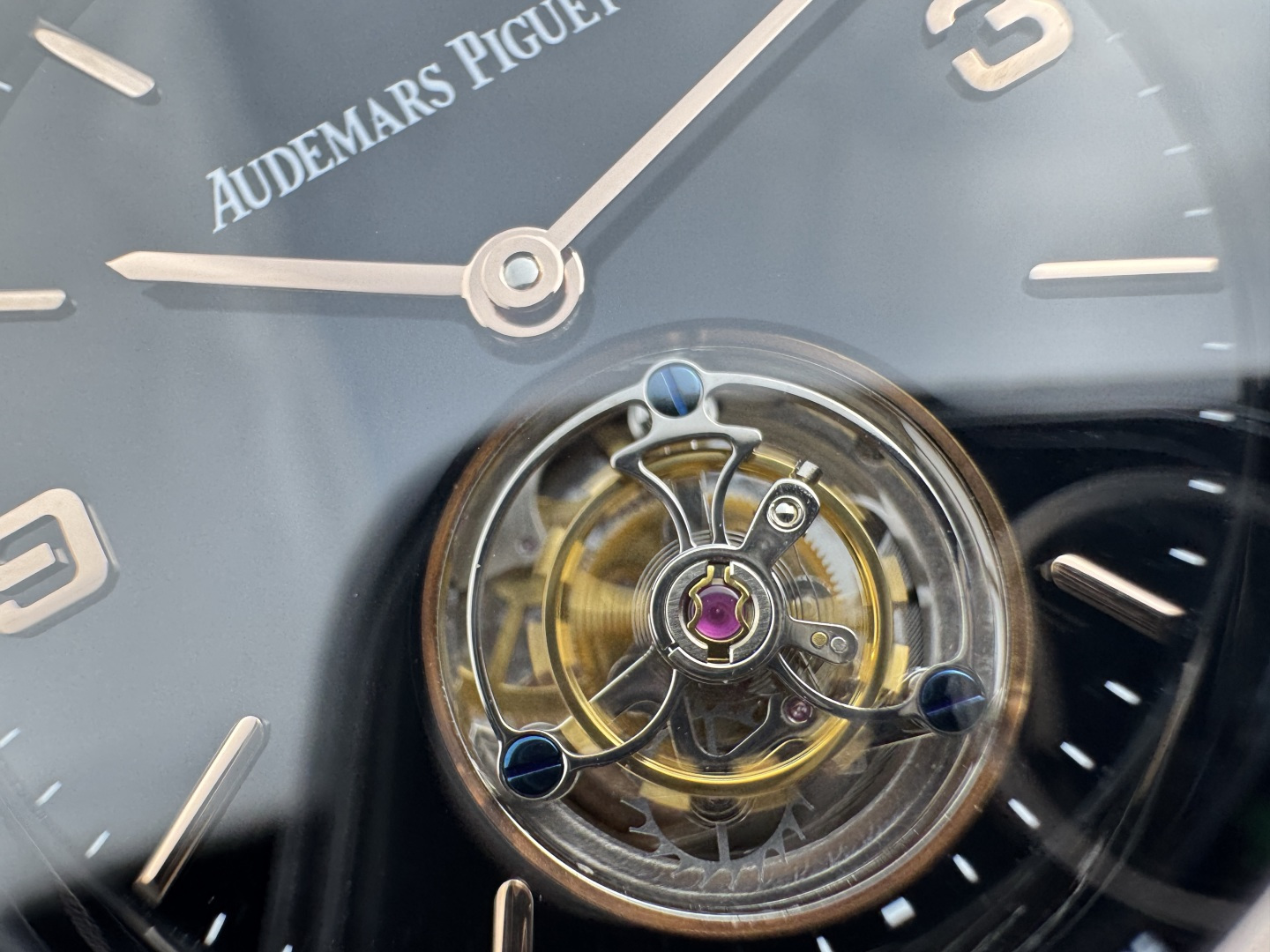
Open the caseback on this clone — which, to its credit, opens cleanly with a standard case wrench, no stripped threads, no resistance — and you are looking at a movement that is functional but not comparable. The tourbillon cage rotates. The beat rate appears correct by ear, approximately 21,600 vph. The rotor swings freely with minimal wobble. These are the functional basics, and they’re met.
But the finishing is where the clone’s movement exposes the entire economic reality of what you’re holding. The Côtes de Genève on the bridges is present but shallow — the parallel lines lack the crisp depth of hand-applied Geneva stripes. The perlage on the mainplate is visible but irregular in spacing. The anglage on the tourbillon bridge is rounded rather than sharply chamfered. Under the loupe, you are not looking at haute horlogerie finishing. You are looking at competent industrial production dressed to approximate it.
The tourbillon cage itself — and this is important — rotates correctly and completes its one-minute revolution consistently. The escapement appears to function without obvious issues. For a wearable daily driver where you want the visual drama of a tourbillon complication, the movement does its job. But anyone who tells you the caliber inside this case is a 1:1 match to the genuine 2950 is selling you something harder to justify than the watch itself.
The three-piece case construction — bezel, case middle, and caseback — fits together without visible gaps. The brushed finishing on the case exterior, mentioned in the spec sheet, is correctly executed: satin-brushed on the case flanks, high-polish on the bezel and lugs, consistent with the genuine reference’s finishing map.
The Question That Stays With You
Here is the thing that I keep coming back to after three days with this piece: the CODE 11.59 was AP’s most controversial modern design at launch, dismissed by a vocal segment of collectors as too baroque, too busy, too much of a departure from the Royal Oak’s austere geometry. Then the waitlists materialized, the grey market prices tripled, and suddenly everyone wanted one. The desire wasn’t purely aesthetic — it was scarcity-induced.
This clone, on the wrist, in the aventurine dial configuration, is a genuinely beautiful object. The AR coating reads correctly. The case proportions are right. The tourbillon is visible and rotating at six o’clock. A stranger at a dinner table will not know. A fellow collector will need to look carefully and specifically. The movement finishing under the caseback is the honest tell — but the caseback is closed.
So the question isn’t really whether this is a good clone. It’s a very good clone. The question is what it says about a market where a $150,000 watch is so effectively gatekept that a functional, visually convincing alternative exists and thrives. AP created the demand. The grey market — legitimate and otherwise — simply responded to it. Is the buyer of this piece being deceived, or are they opting out of a system that was already designed to deceive them about the nature of desire and value? I’m not sure I have a clean answer to that. And I’m not sure the industry wants one.