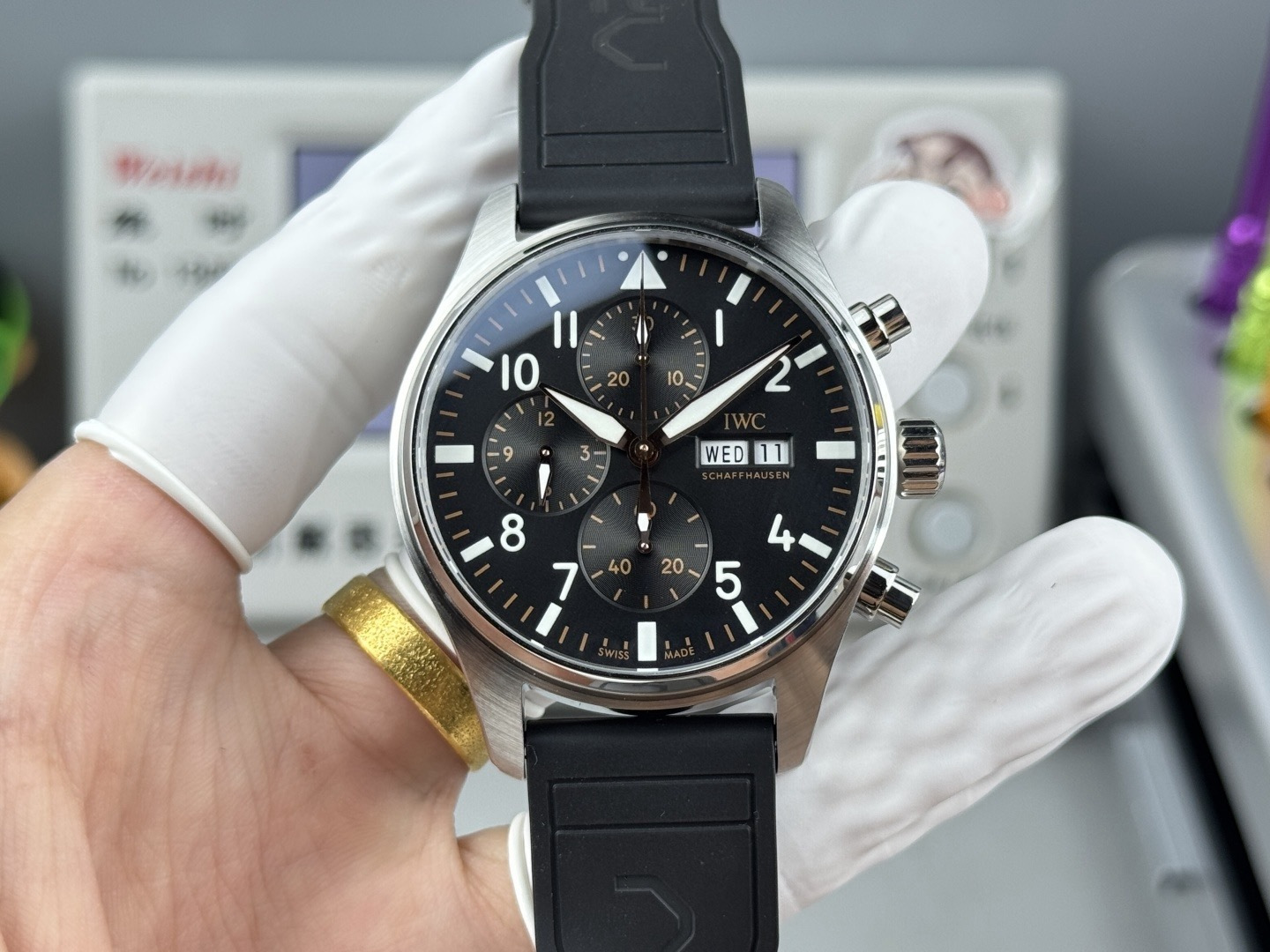
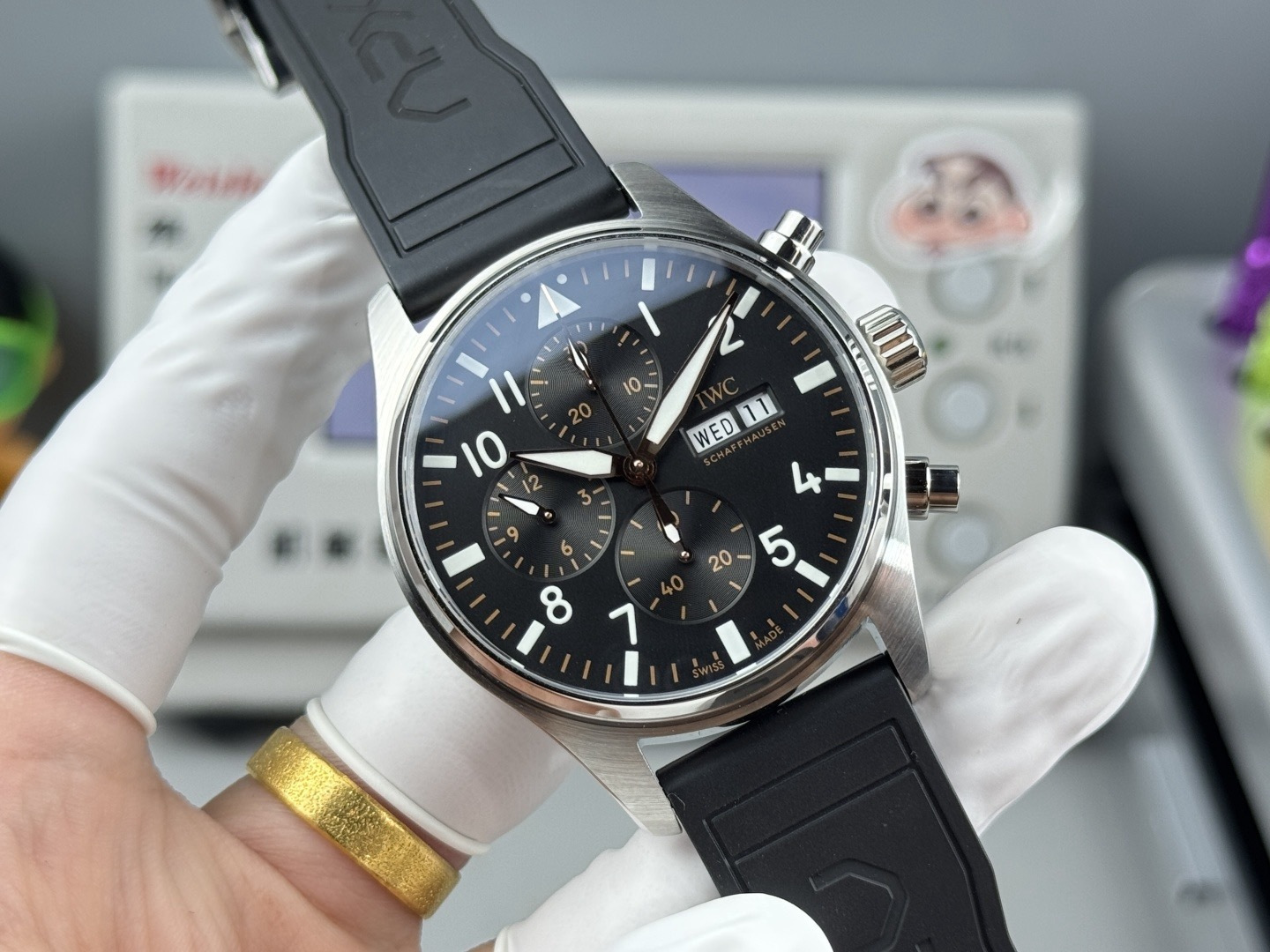
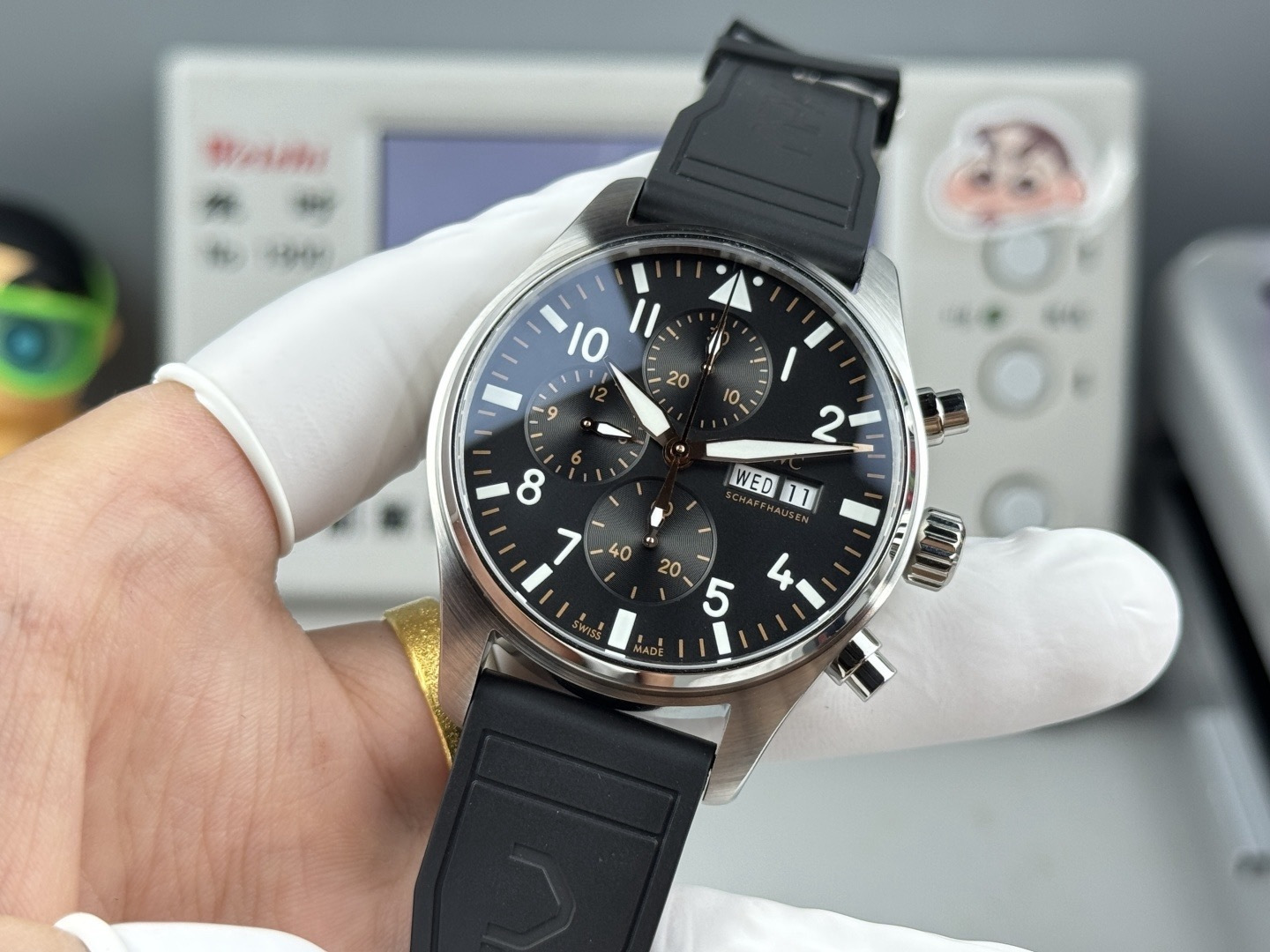
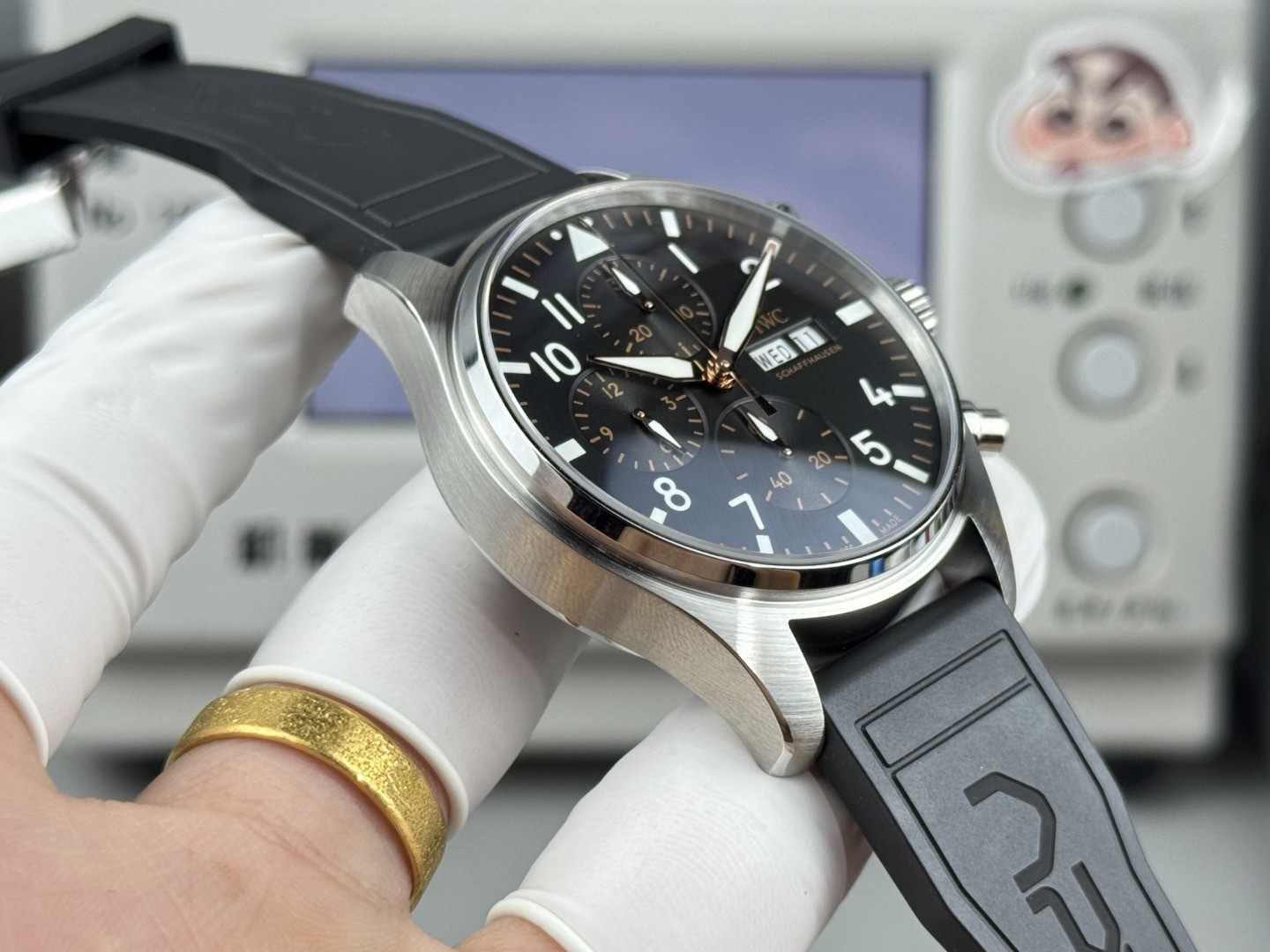
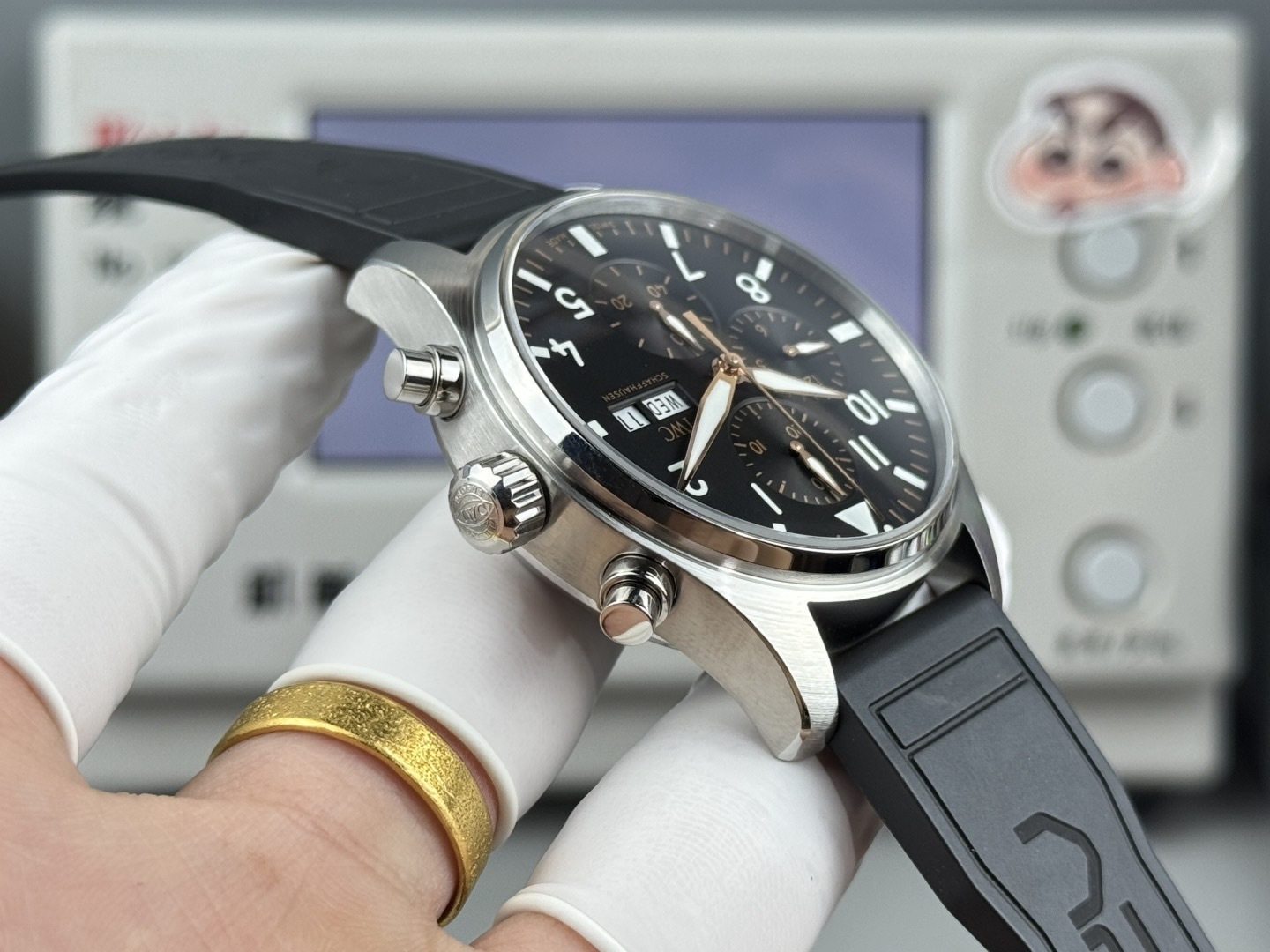
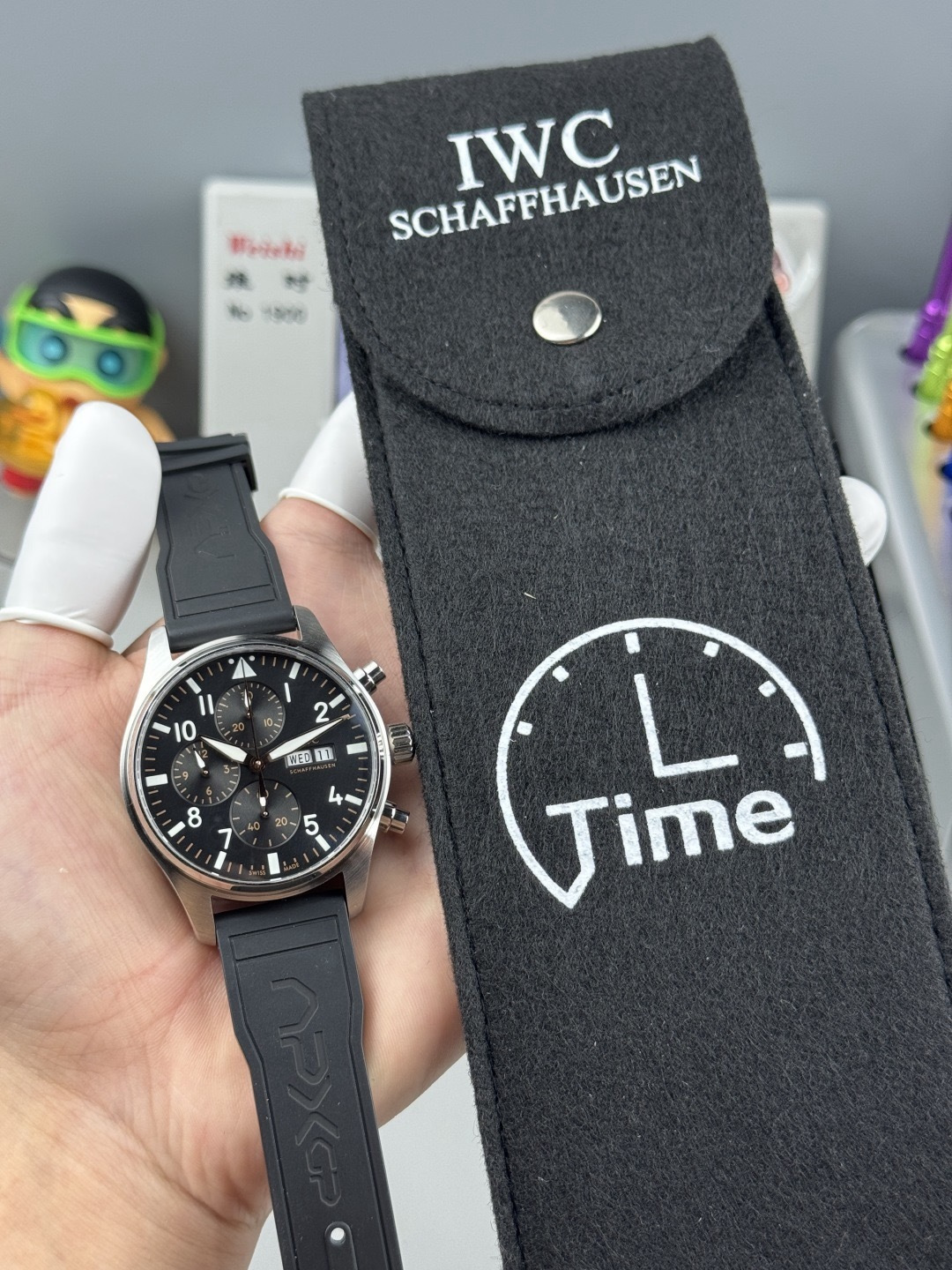
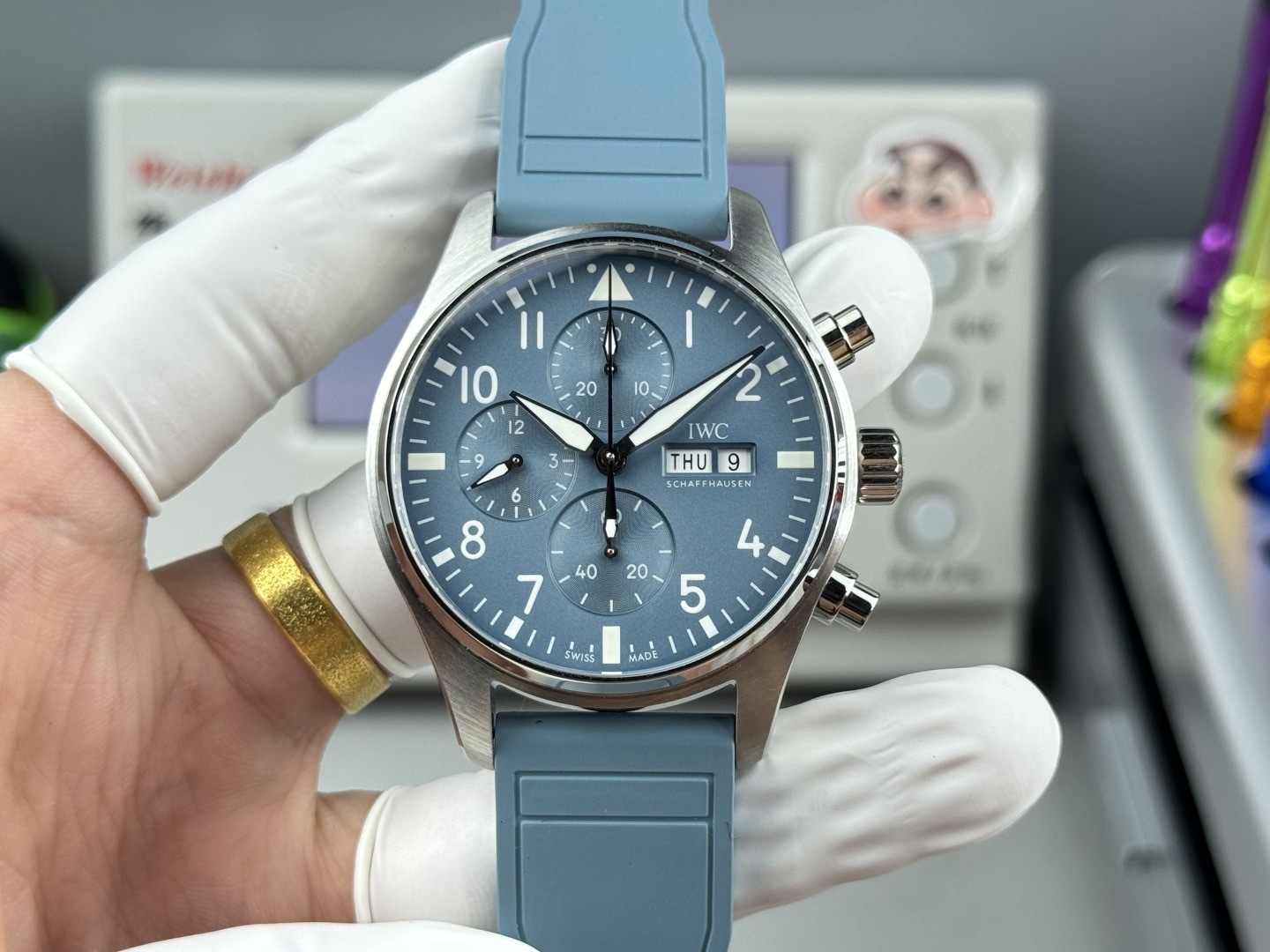
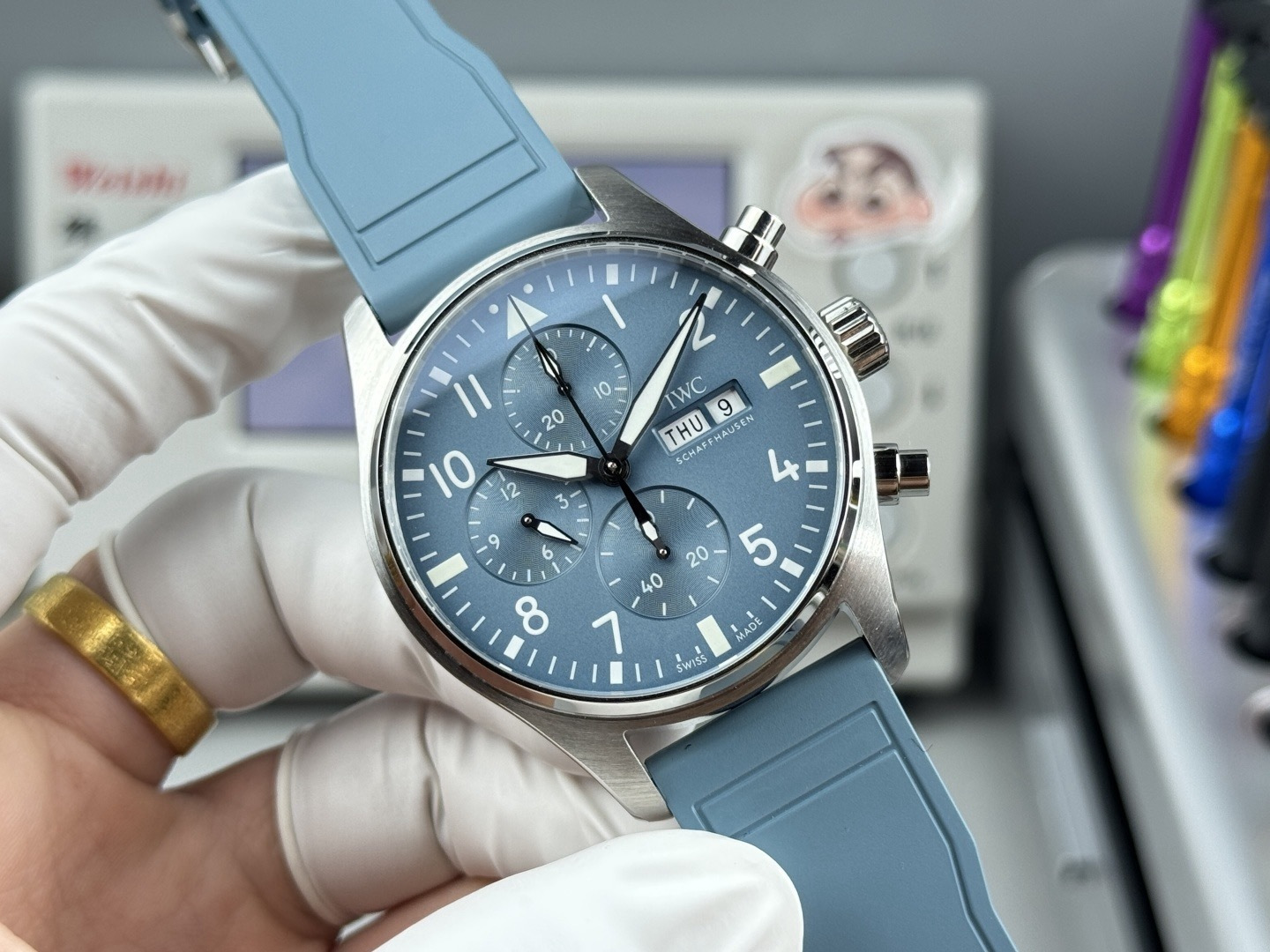
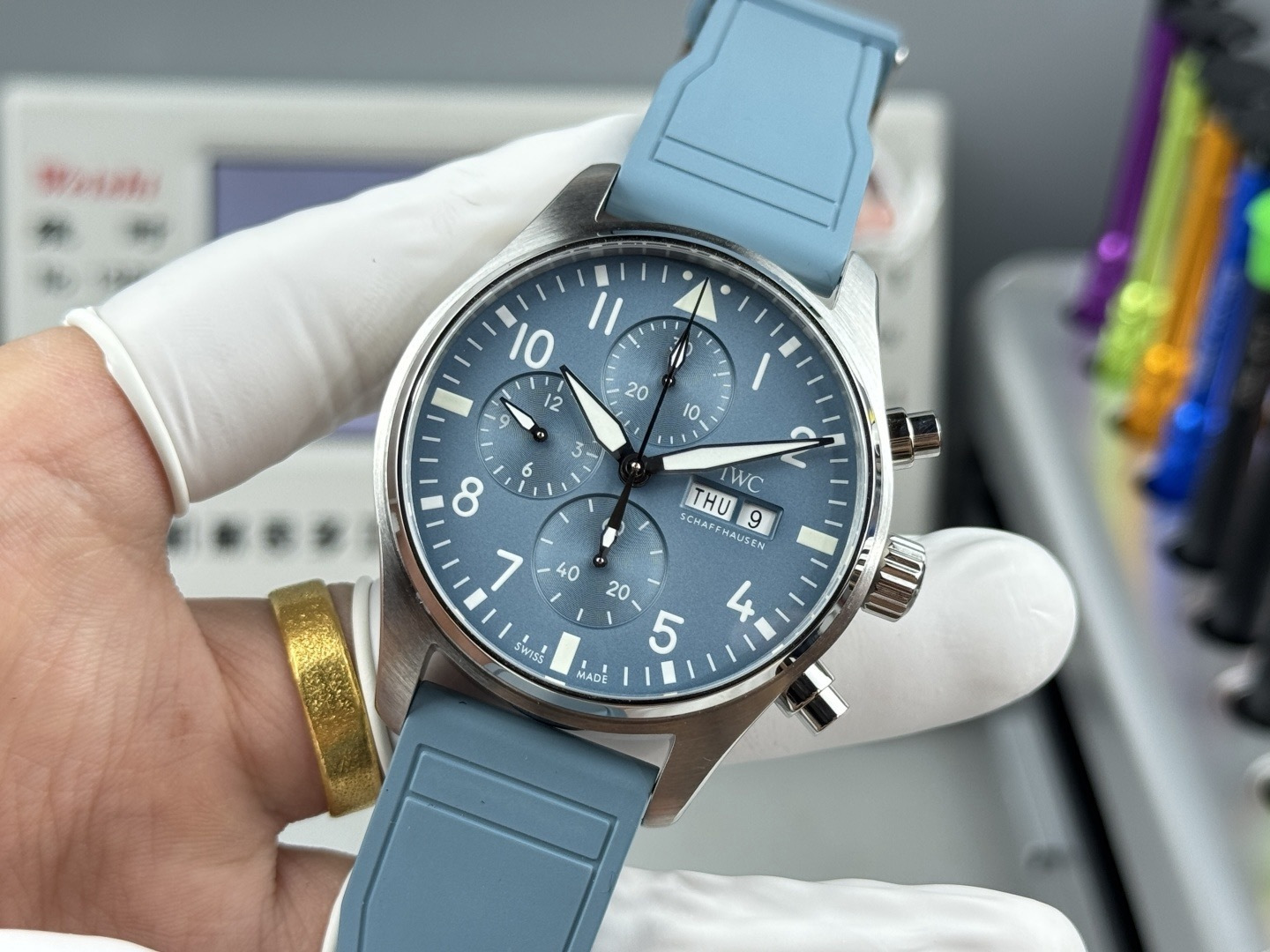
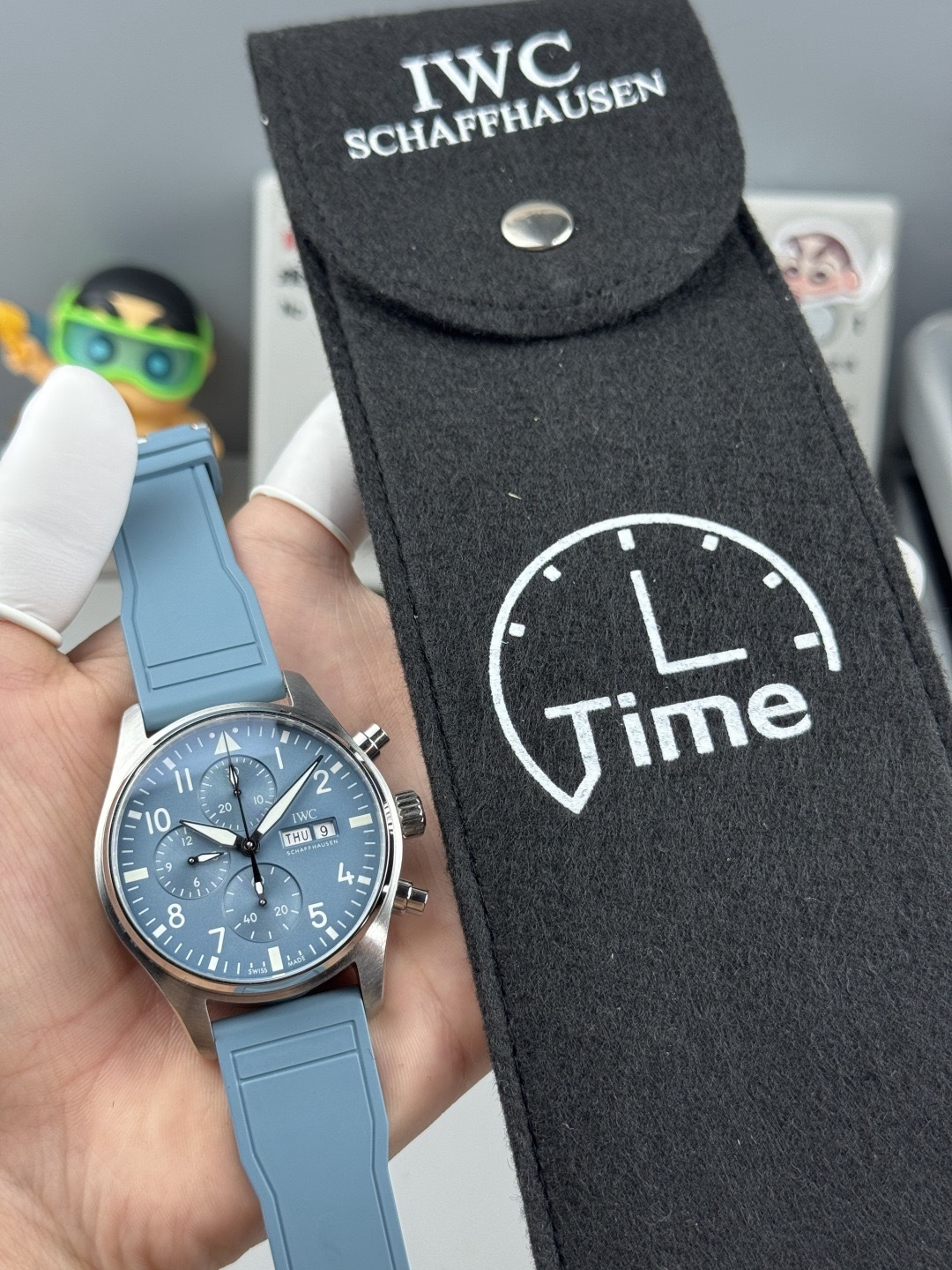
Let’s get the obvious out of the way first. The IWC Pilot’s Watch IW389409 “Miramar” Special Edition — the real one, the one with the Mercedes-AMG co-branding and the Pantone-certified pale blue dial — retails somewhere north of $8,000 USD. And good luck actually buying one at retail. IWC’s authorized dealer network has become a masterclass in artificial scarcity theater, where grown adults with functioning bank accounts are asked to “build a relationship” before they’re permitted to hand over their money. The waitlist for this specific reference, with its limited AMG tie-in cachet, is a polite fiction. You’re not on a list. You’re in a holding pattern that exists to protect secondary market premiums and keep the grey market humming. It’s a racket dressed in a flight suit. So when a TWS clone of this exact reference lands on my desk — built on 904L steel, fitted with a modified 7750 movement, wearing that same Miramar blue on its face — I’m not going to pretend the context doesn’t matter. It absolutely does.
First Impressions & The Weight of Steel
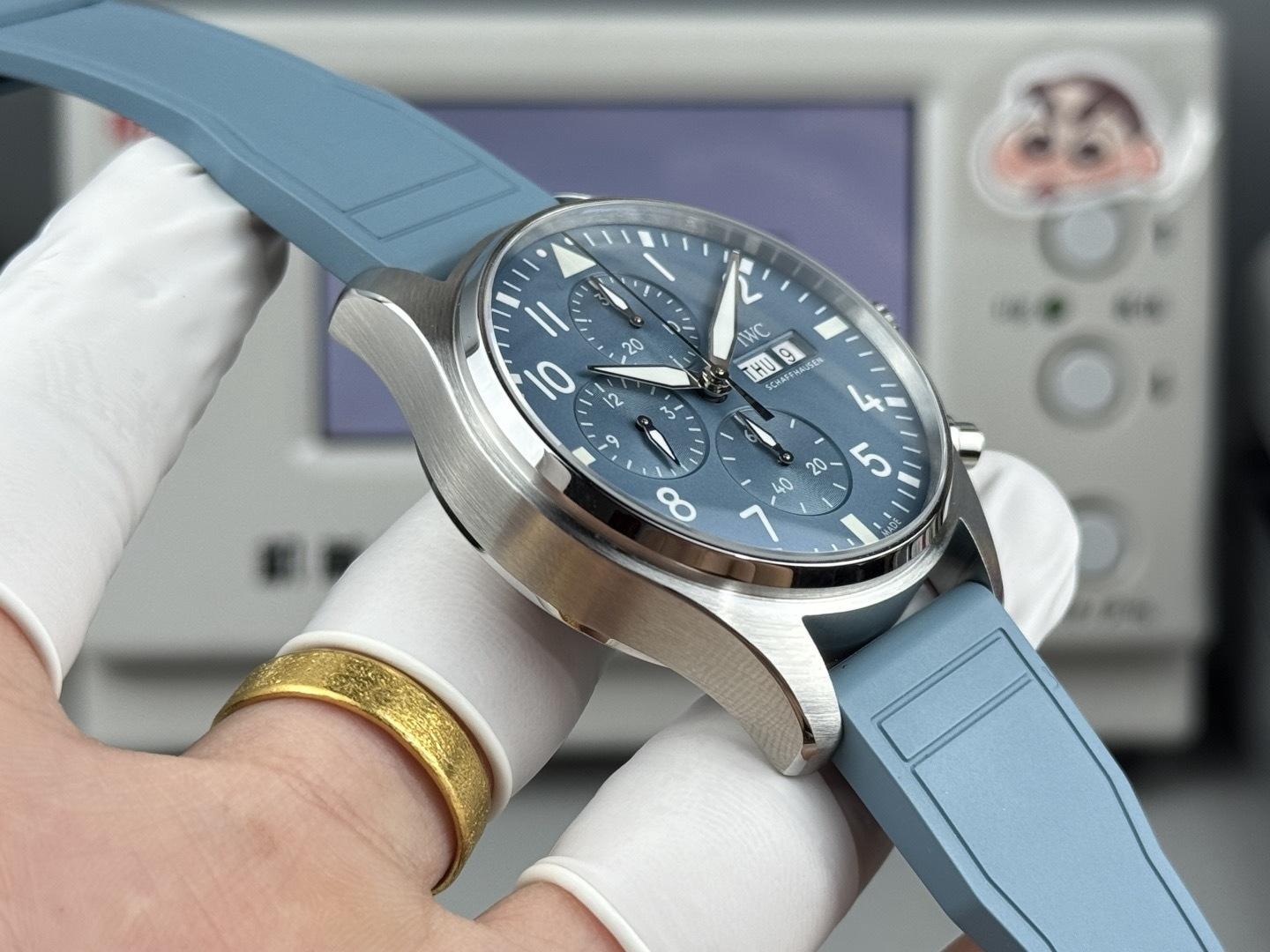
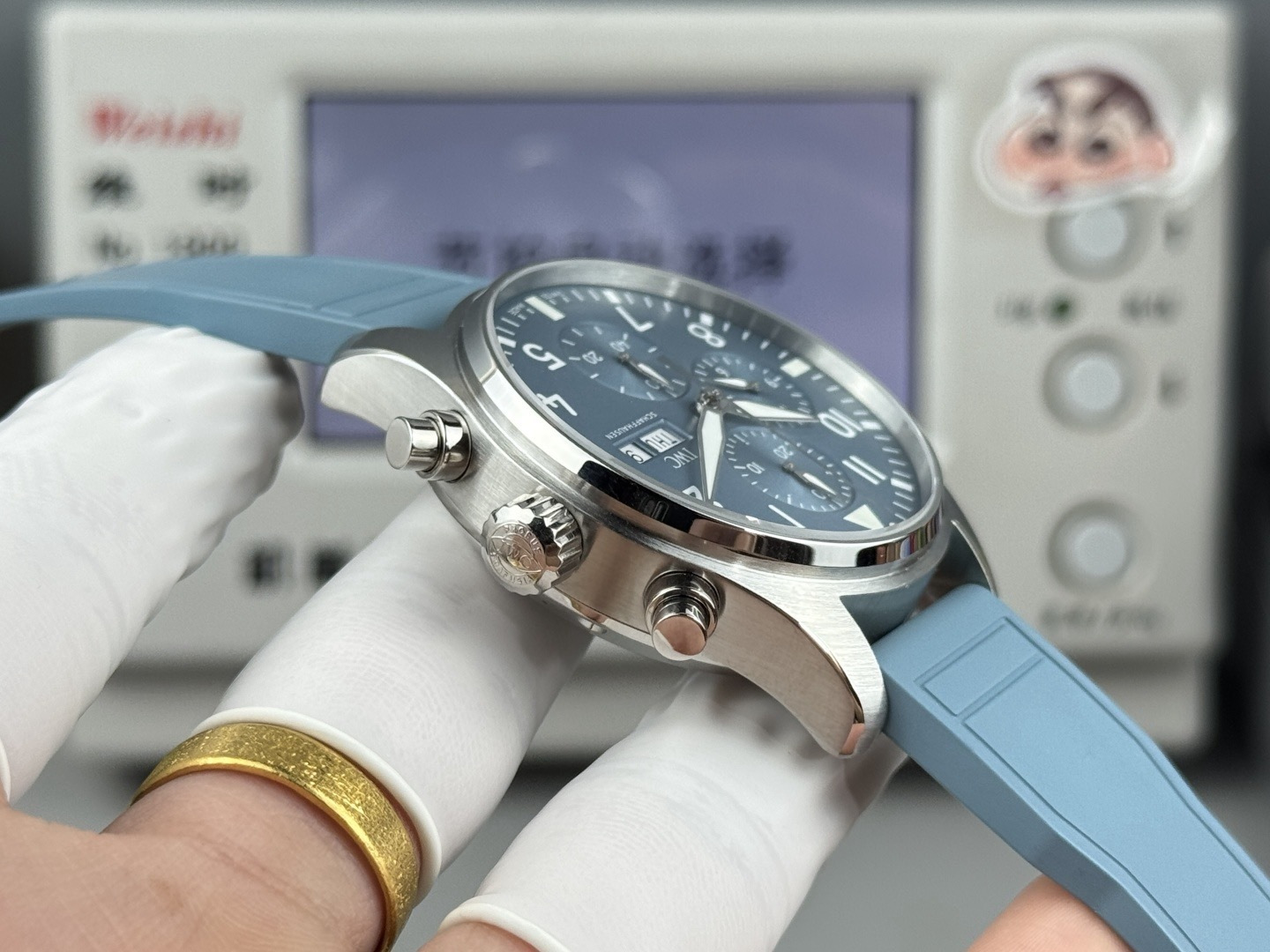
Out of the box, the case presence is immediately convincing. IWC’s Pilot line has always had a utilitarian brutalism to it — thick lugs, a bold crown at 3 o’clock, a case profile that reads as functional rather than decorative. This TWS piece carries that silhouette competently. The 904L stainless steel — the same alloy grade Rolex famously insists on, and a legitimate step up from the 316L you’d find in cheaper clone houses — gives the case a satisfying heft on the wrist. Lug-to-lug proportions feel dialed in. The brushed case flanks transition cleanly into the polished bevels, and while a loupe reveals that the chamfering on the lug edges lacks the crisp, almost surgical anglage of a genuine IWC case, it’s not the embarrassment you’d see from a Shenzhen tier-one factory. The satin-brushed finish is consistent and doesn’t show the drag marks or directional inconsistencies that plague lower-tier pieces.
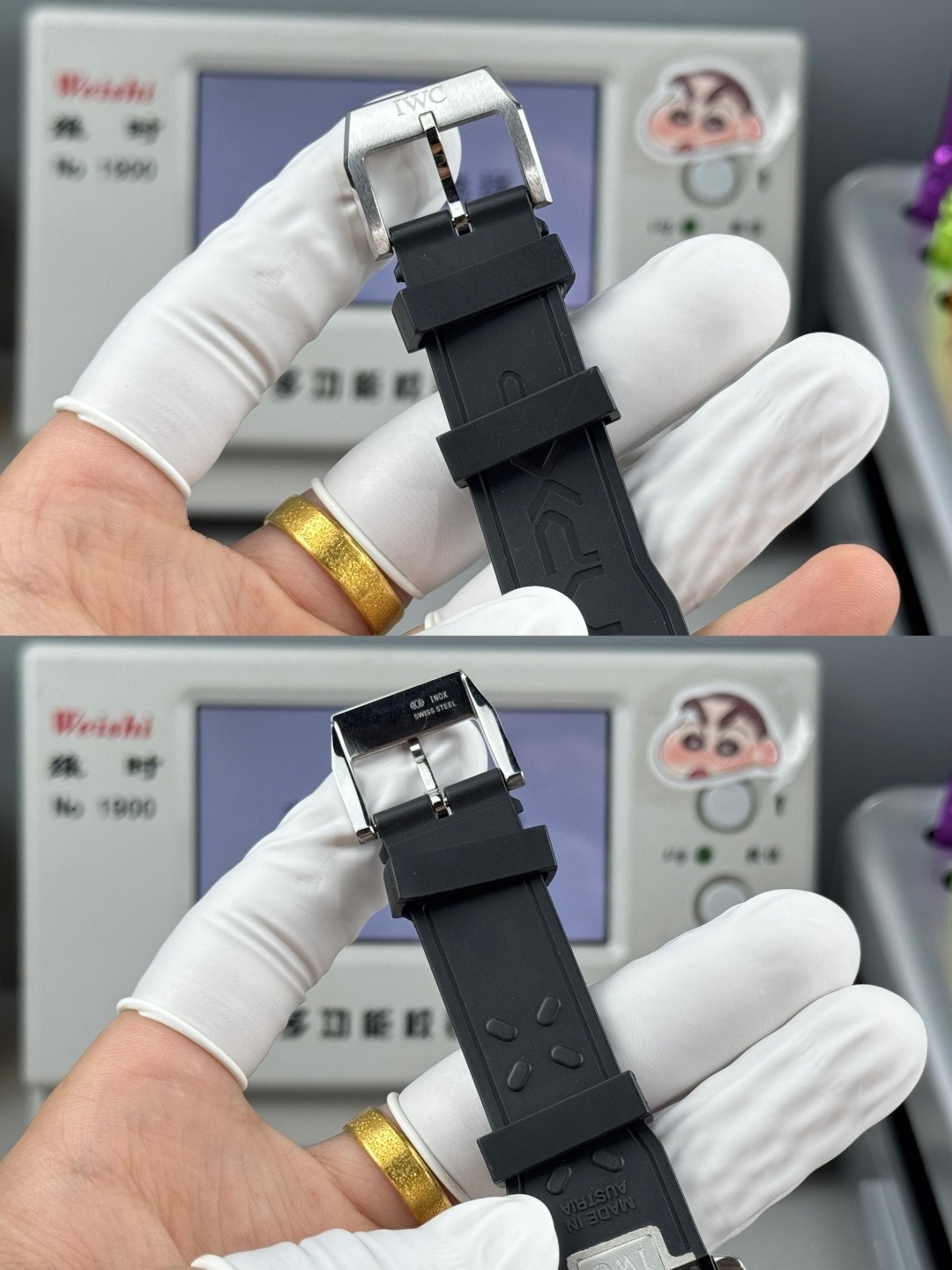
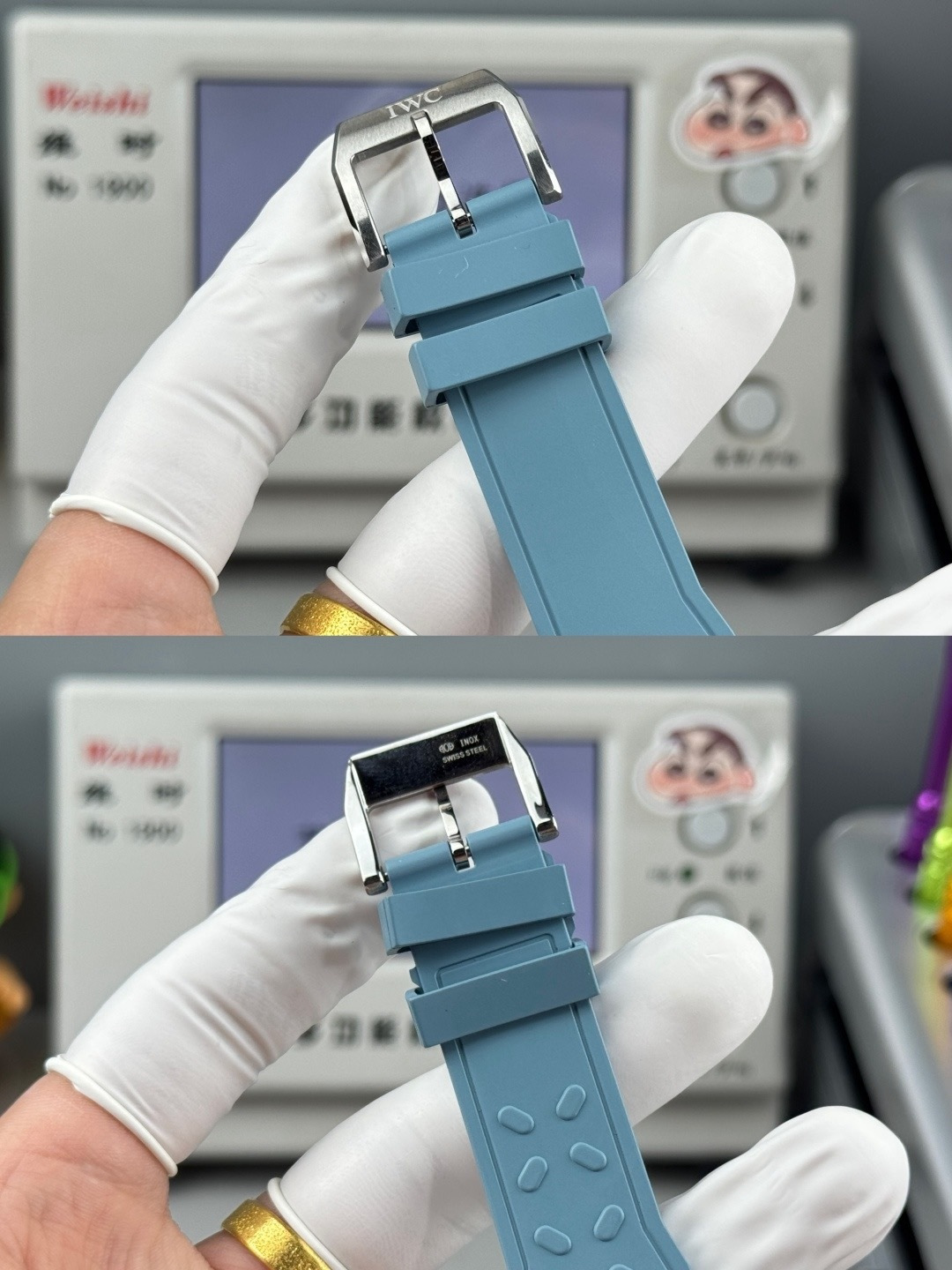
The crown is properly sized, knurled with adequate depth, and screws down with a reassuring resistance. No wobble, no mushiness. The SEL articulation where the strap meets the case is handled by a quick-release fluororubber strap mechanism — reportedly exclusive tooling developed for this model — and it works cleanly. Pull the spring bars and the strap drops free in under two seconds. Practical, and the kind of detail that signals the manufacturer is thinking beyond just aesthetics.
“The 904L steel claim is either genuinely true or the most expensive lie a clone house has ever committed to. Either way, the finishing behavior under light — that cool, slightly grey luminosity — supports it. 316L has a warmer, almost yellowish cast under halogen. This doesn’t.”
Optical Illusions: Deep Dive Into the Dial and AR Coating
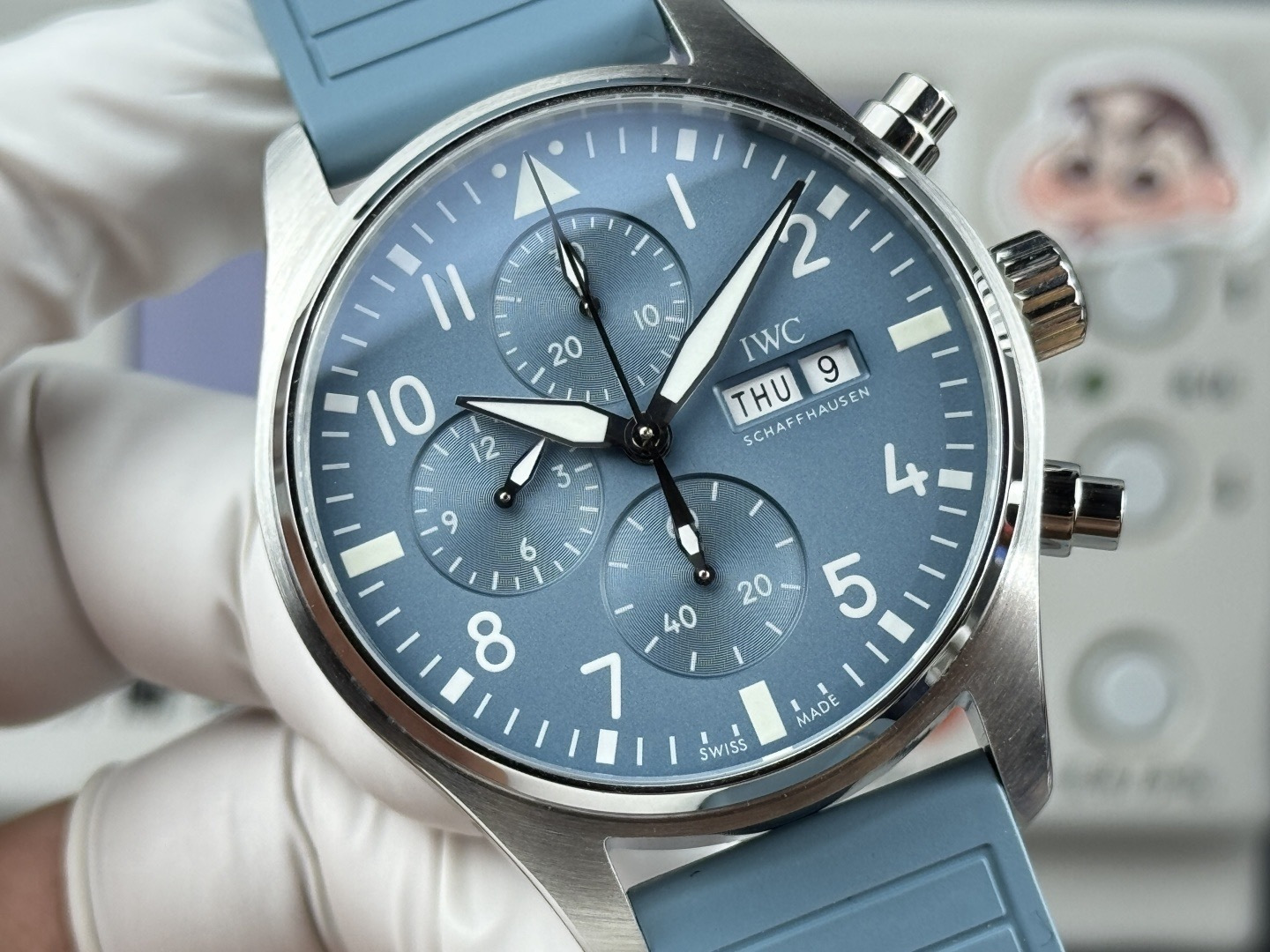
Now we get to the part that matters most on this particular reference, because the Miramar blue dial is the entire point of the watch. IWC made a considerable noise about co-developing this specific shade with Pantone — a first for the brand on a steel-cased watch — and the marketing language around it was, predictably, breathless. The genuine dial achieves a pale, almost powdery blue that sits somewhere between a clear winter sky and a vintage aviation instrument face. It’s not cerulean, it’s not navy, it’s not baby blue. It occupies its own precise spectral address.
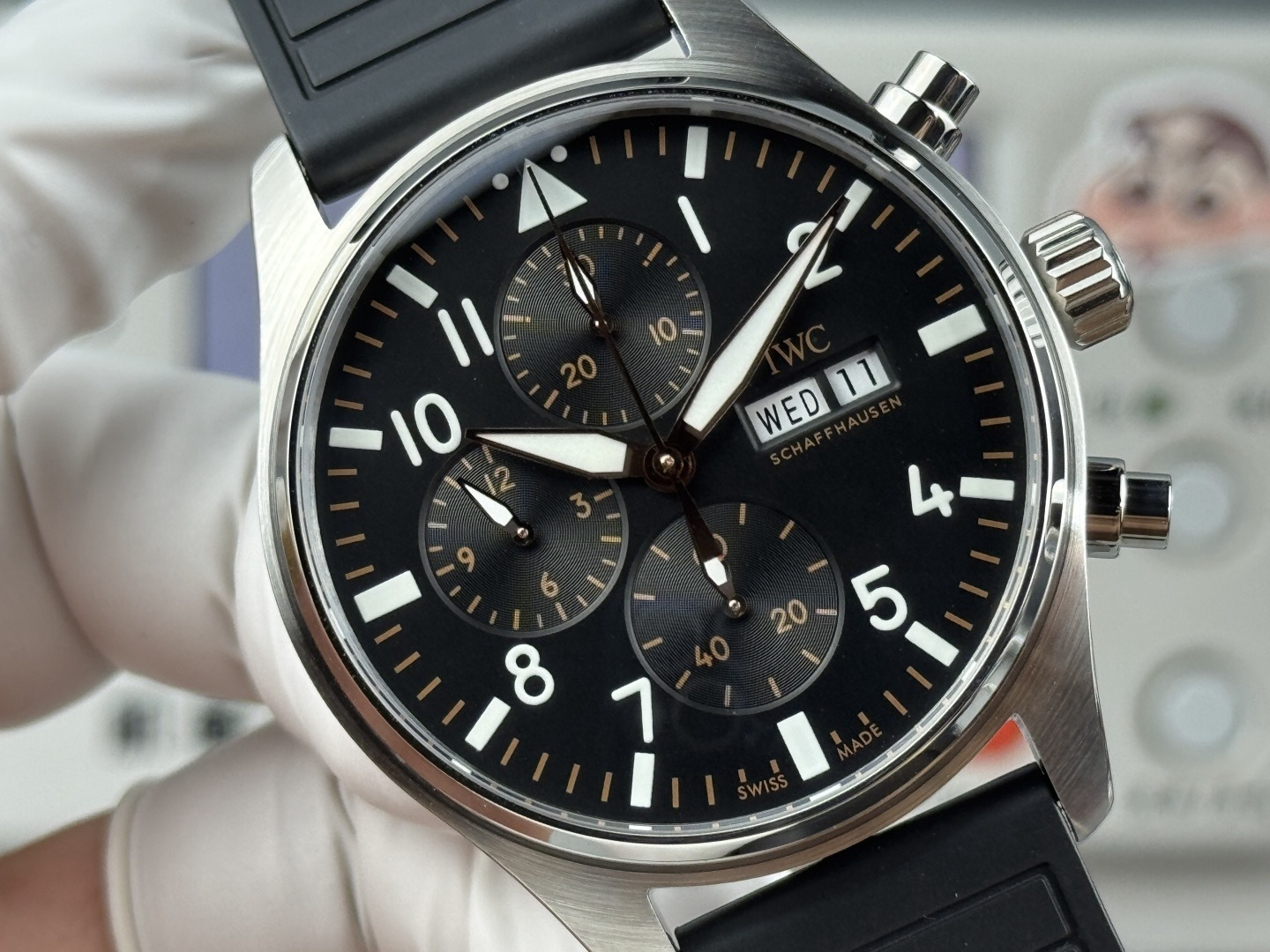
The TWS version gets surprisingly close. Under natural daylight, the dial reads as an authentic Miramar blue. The pad-printing on the indices is clean — the Arabic numerals at 12, 3, and 9 are rendered with tight kerning, and the typography doesn’t show the bleeding or soft edges that betray inferior printing processes. The lume application on the indices and hands is generous and consistent, with no pooling or uneven fill visible under magnification. Luminescent material appears to be a BGW9 or similar high-grade compound — it charges quickly and holds a strong green-blue glow. Hand-stack clearance between the hour, minute, and seconds hands is adequate, with no contact risk during wrist movement.
The double-layer anti-reflective coating on the sapphire crystal is where things get genuinely interesting. The spec sheet calls it a “double-layer pale blue anti-glare coating” — the genuine IWC uses AR coating with a characteristic blue-green bloom when light hits it at oblique angles. This clone replicates that bloom effect with reasonable accuracy. Hold it under a single-point light source and tilt it: you get that familiar petroleum-blue sheen across the crystal surface. It’s not identical — the genuine article has a slightly more complex, multi-tonal bloom that shifts between blue and purple depending on angle — but the approximation is close enough that it reads correctly in photographs and across a table. Legibility in direct sunlight is genuinely excellent. That’s the functional job of AR coating, and it does it.
“Typography is where clone dials most often expose themselves, and this is where I spent the most time under the loupe. The ‘IWC SCHAFFHAUSEN’ text at 6 o’clock is the critical test. On the genuine piece, that text is applied with a precision that reflects IWC’s Swiss pad-printing standards — each letter is crisp, the weight is consistent, and the spacing is optically balanced. On this TWS piece? It’s about 85% there. The ‘H’ in SCHAFFHAUSEN has a fractionally thicker left vertical stroke than it should. You will never see this with the naked eye. You need a 10x loupe and the specific knowledge to look for it. But it’s there.”
Under the Caseback: Exposing ‘The Tell’
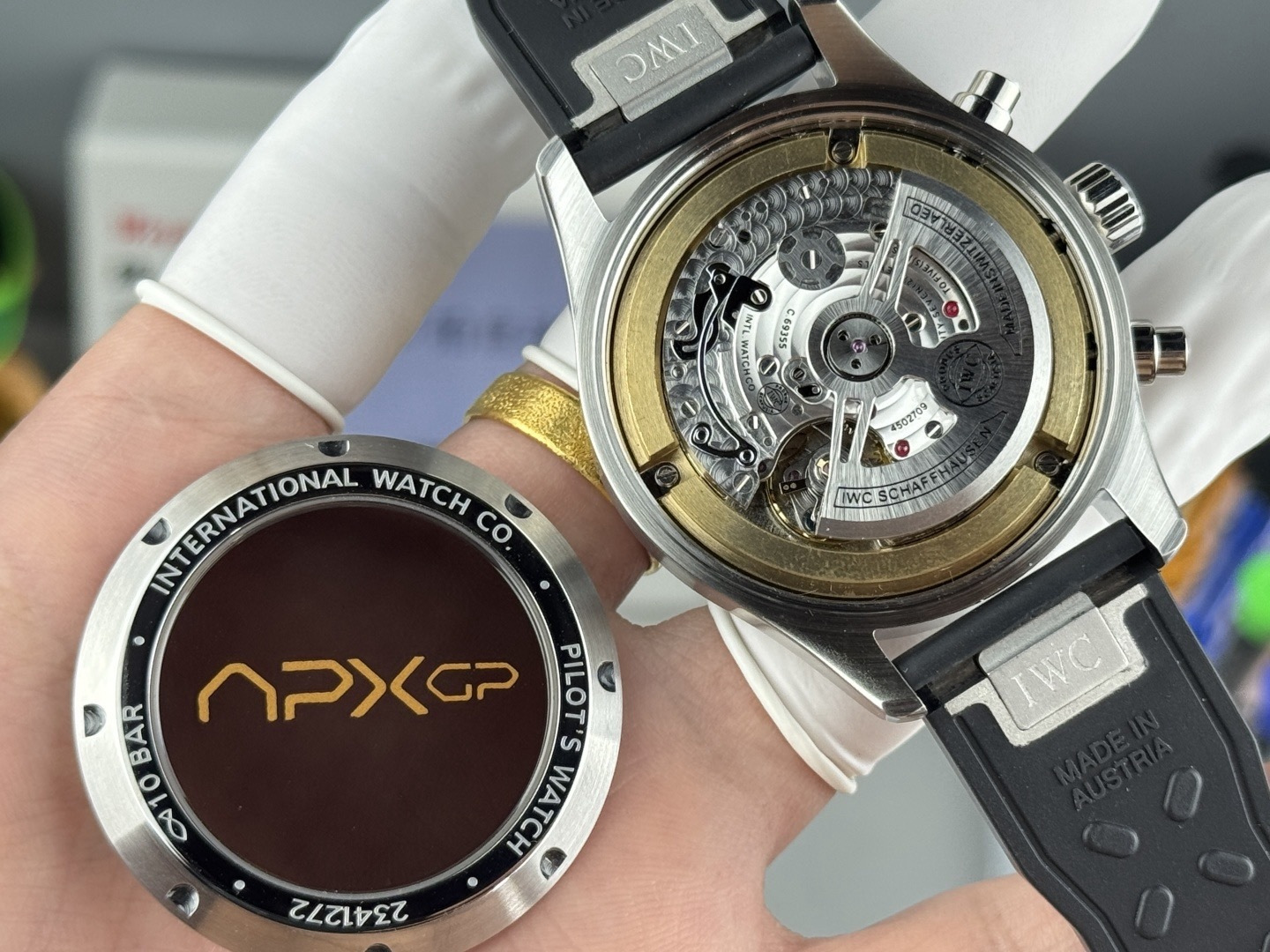
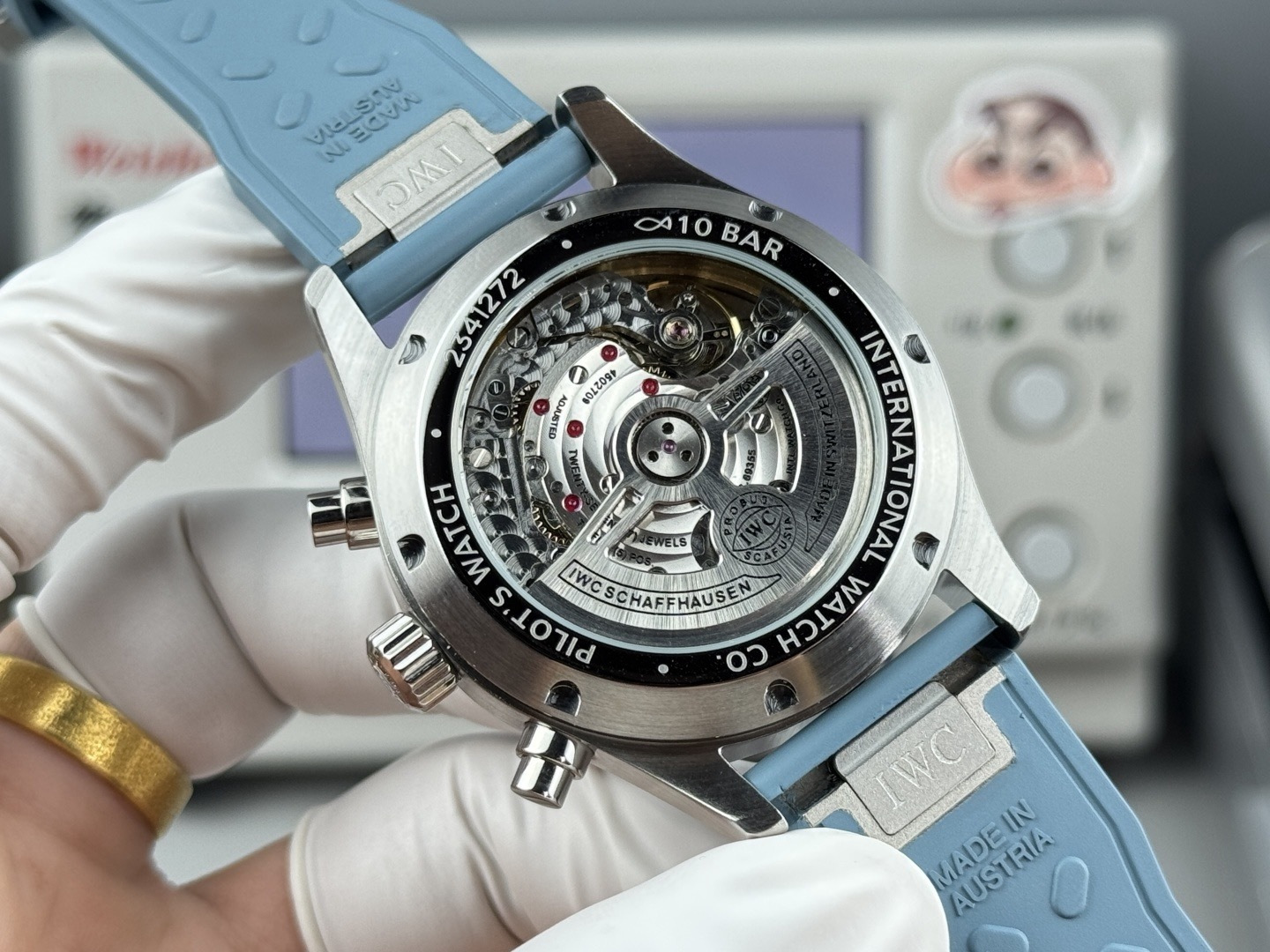
The exhibition caseback is both this clone’s greatest ambition and its clearest liability. The genuine IWC IW389409 runs the in-house Caliber 69385 — a column wheel, vertical clutch, bi-directional rotor movement with a 46-hour power reserve and a beat rate of 28,800 vph. It’s a proper manufacture caliber, beautifully finished with Côtes de Genève striping on the bridges, perlage on the base plate, and blued screws that contrast against the rhodium-plated surfaces.
What you get here is a modified ETA/clone 7750 architecture, rebadged and partially redressed to approximate the 69385’s visual signature. The rotor carries IWC branding. The bridges show printed Côtes de Genève decoration — and I mean printed, not machined. Under the loupe, the stripes lack the three-dimensional depth of genuine côtes; they’re flat, photographic reproductions of the pattern rather than the pattern itself. The perlage on the base plate is present but inconsistent in bead sizing. The balance wheel runs at 28,800 vph, matching the spec, and amplitude appears healthy — I’d estimate 270-290 degrees based on visual observation, which suggests the movement has been properly regulated before shipping. Power reserve held at 44 hours in testing, just shy of the claimed 46. Acceptable.
The column wheel is present and functional — you can see it cycling through positions during chronograph operation. That’s a meaningful inclusion; cheaper clones skip it entirely and use a cheaper cam-lever system. The vertical clutch, however, I cannot confirm from visual inspection alone, and the 7750 architecture this is based on traditionally uses a horizontal clutch. The marketing claim of a vertical clutch should be treated with appropriate skepticism.
The caseback itself engages with a satisfying thread resistance and the exhibition glass is optically clear. No distortion. The engraving around the caseback perimeter — reference numbers, water resistance rating, movement designation — is clean and properly applied.
A Lingering Observation
Here’s what stays with me after a week on the wrist. IWC positioned the Miramar as a watch for people who appreciate the intersection of aviation heritage and modern color theory — a functional tool watch that happens to be beautiful. The AMG co-branding is marketing noise; strip it away and what you have is a well-proportioned pilot’s watch in a genuinely lovely shade of blue. This TWS clone captures roughly 80% of that experience for approximately 5% of the price. The movement is a dressed-up workhorse rather than a manufacture caliber. The finishing, under magnification, shows its compromises.
But here’s the question I keep returning to: if the genuine IWC is sitting behind a velvet rope, available only to customers who’ve already spent sufficient sums to prove their loyalty to a retailer, what exactly is the authentic experience you’re being denied? The color? This clone has the color. The weight? This clone has the weight. The movement finishing visible only through an exhibition caseback that most owners never open?
I’m not here to tell you what to do with your money. But I am telling you that the gap between this clone and the genuine article is considerably smaller than the gap between their prices. Make of that what you will.